










-
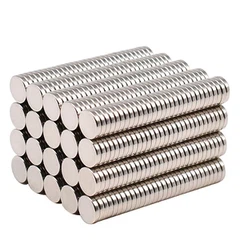
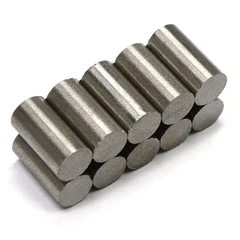
![Round Magnets]() Round MagnetsN52 Sintered Neodymium Round Magnets Description Round magnets is the most cost effective than other shape magnets. It is a regular shape of neodymium magnet. Generally the magnetizing direction is
Round MagnetsN52 Sintered Neodymium Round Magnets Description Round magnets is the most cost effective than other shape magnets. It is a regular shape of neodymium magnet. Generally the magnetizing direction is -
![Neodymium Magnets With Hole]() Neodymium Magnets With HoleAmong those famous rare magnets for you NdFeB magnetic blocks with hole manufacturers, it is a professional supplier in China, welcome to wholesale rare magnets for you NdFeB magnetic blocks with
Neodymium Magnets With HoleAmong those famous rare magnets for you NdFeB magnetic blocks with hole manufacturers, it is a professional supplier in China, welcome to wholesale rare magnets for you NdFeB magnetic blocks with -
![Neodymium Cone Magnet]() Neodymium Cone MagnetCone shaped magnet have an extremely high magnetic energy product, which means that they can provide a very strong magnetic field in a relatively small volume. In addition, it has excellent magnetic
Neodymium Cone MagnetCone shaped magnet have an extremely high magnetic energy product, which means that they can provide a very strong magnetic field in a relatively small volume. In addition, it has excellent magnetic -
![Ring Bonded Magnet Neodymium Magnet]() Ring Bonded Magnet Neodymium MagnetNdFeB bonded magnet ring is a use of bonding process made of ring magnets, mainly by the NdFeB magnetic powder and adhesive mixing curing molding, this magnet has magnetic performance, and high
Ring Bonded Magnet Neodymium MagnetNdFeB bonded magnet ring is a use of bonding process made of ring magnets, mainly by the NdFeB magnetic powder and adhesive mixing curing molding, this magnet has magnetic performance, and high -
![Muti-Pole Magnetized Bonded Magnet]() Muti-Pole Magnetized Bonded MagnetBonded Ring NdFeB Magnet, Isotropic Bonded Rare Earth Neodymium Magnet, Compression bonding Magnet, Permanent Bonded NdFeB Magnetic Components, Multi-poles Diameter or Radial Ring Magnets for
Muti-Pole Magnetized Bonded MagnetBonded Ring NdFeB Magnet, Isotropic Bonded Rare Earth Neodymium Magnet, Compression bonding Magnet, Permanent Bonded NdFeB Magnetic Components, Multi-poles Diameter or Radial Ring Magnets for -
![Bonded Ring NdFeB Magnet]() Bonded Ring NdFeB MagnetBonded Ring NdFeB Magnet, Isotropic Bonded Rare Earth Neodymium Magnet, Compression bonding Magnet, Permanent Bonded NdFeB Magnetic Components, Multi-poles Diameter or Radial Ring Magnets for
Bonded Ring NdFeB MagnetBonded Ring NdFeB Magnet, Isotropic Bonded Rare Earth Neodymium Magnet, Compression bonding Magnet, Permanent Bonded NdFeB Magnetic Components, Multi-poles Diameter or Radial Ring Magnets for -
![Cylinder Bonded Neodymium Magnet]() Cylinder Bonded Neodymium MagnetCustomizable Industrial Permanent Neodymium Magnets Materials Price NdFeB Bonded Magnet OEM
Cylinder Bonded Neodymium MagnetCustomizable Industrial Permanent Neodymium Magnets Materials Price NdFeB Bonded Magnet OEM -
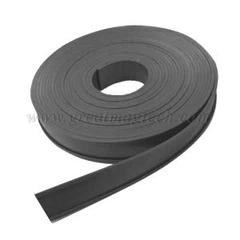
![Permanent Bonded Magnet Strong Magnetic Material]() Permanent Bonded Magnet Strong Magnetic MaterialBonded neodymium powder is used to create these magnets. Powder is melted and mixed with a polymer. Components are then pressed or extruded to create the product. Bonded Neodymium magnets can be
Permanent Bonded Magnet Strong Magnetic MaterialBonded neodymium powder is used to create these magnets. Powder is melted and mixed with a polymer. Components are then pressed or extruded to create the product. Bonded Neodymium magnets can be -
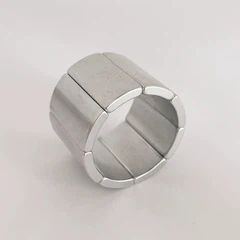
![Bonded Neodymium Arc Magnets For Motor]() Bonded Neodymium Arc Magnets For MotorMagnetic Material Rare Earth Permanent Magnet for Pm Motors Strong Customized High Quality Sintered Neodymium Neo NdFeB Notch Segment Block Aimant Groove Bonded
Bonded Neodymium Arc Magnets For MotorMagnetic Material Rare Earth Permanent Magnet for Pm Motors Strong Customized High Quality Sintered Neodymium Neo NdFeB Notch Segment Block Aimant Groove Bonded -
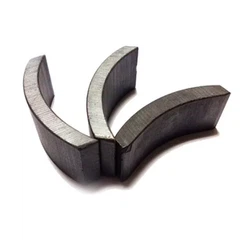
![Arc Segment Neodymium Magnets]() Arc Segment Neodymium MagnetsNeodymium Magnets are made from an alloy containing, amongst others, the elements Neodymium, Iron and Boron (NdFeB). It is the strongest type of magnet and manufactured in a wide range of shapes,
Arc Segment Neodymium MagnetsNeodymium Magnets are made from an alloy containing, amongst others, the elements Neodymium, Iron and Boron (NdFeB). It is the strongest type of magnet and manufactured in a wide range of shapes,


What Are Neodymium Magnets?
Neodymium magnets, also called NdFeB magnets, are rare-earth magnets known for their strong magnetic force in a small size. They’re made from an alloy of neodymium, iron, and boron, then formed into common shapes like discs, blocks, rings, and countersunk parts.
What makes them useful is simple: you get high holding power without taking up much space. That’s why they show up in motors, sensors, fixtures, and many OEM assemblies.
Neodymium magnets can be made with different grades, coatings, and magnetization directions. The right combination depends on your specific temperature, corrosion risk, and the method of magnet mounting in the final product.

Neodymium Magnet Product Types We Supply
By Magnet Shape


If you don't see the shape you need, please click the button below to contact our sales team.
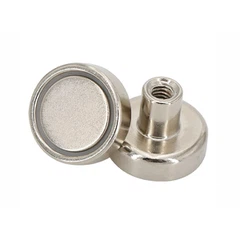
Neodymium Magnets with Countersunk Holes


If you don't see the shape you need, please click the button below to contact our sales team.
Classified By Sintered Neodymium-Iron-Boron


If you don't see the shape you need, please click the button below to contact our sales team.
Specifications of Neodymium Magnets
| Grade | Remanence (Br) | Coercive Force (Hcb) | Intrinsic Coercive (Hcj) | Max Energy Product (BH)max | Working Temp. | ||||
| KGs | T | KOe | KA/m | KOe | KA/m | MGOe | KJ/m³ | Tw(℃) | |
| N35 | 11.7-12.2 | 1.17-1.22 | ≥10.9 | ≥868 | ≥12 | ≥955 | 33-36 | 263-287 | ≤80 |
| N38 | 12.2-12.5 | 1.22-1.25 | ≥11.3 | ≥899 | ≥12 | ≥955 | 36-39 | 287-310 | ≤80 |
| N40 | 12.5-12.8 | 1.25-1.28 | ≥11.4 | ≥907 | ≥12 | ≥955 | 38-41 | 302-326 | ≤80 |
| N42 | 12.8-13.2 | 1.28-1.32 | ≥11.5 | ≥915 | ≥12 | ≥955 | 40-43 | 318-342 | ≤80 |
| N45 | 13.2-13.8 | 1.32-1.38 | ≥11.6 | ≥923 | ≥12 | ≥955 | 43-46 | 342-366 | ≤80 |
| N48 | 13.8-14.2 | 1.38-1.42 | ≥11.6 | ≥923 | ≥12 | ≥955 | 45-49 | 358-390 | ≤80 |
| N50 | 14.0-14.5 | 1.40-1.45 | ≥12.0 | ≥955 | ≥12 | ≥955 | 47-51 | 374-406 | ≤80 |
| N52 | 14.2-14.6 | 1.42-1.46 | ≥10.5 | ≥836 | ≥12 | ≥955 | 49-53 | 390-422 | ≤80 |
| N54 | 14.5-14.9 | 1.45-1.49 | ≥10.5 | ≥836 | ≥11 | ≥876 | 51-55 | 406-438 | ≤80 |
| 35M | 11.7-12.2 | 1.17-1.22 | ≥10.9 | ≥868 | ≥14 | ≥1114 | 33-35 | 263-287 | ≤100 |
| 38M | 12.2-12.5 | 1.22-1.25 | ≥11.3 | ≥899 | ≥14 | ≥1114 | 36-39 | 287-310 | ≤100 |
| 40M | 12.5-12.8 | 1.25-1.28 | ≥11.6 | ≥923 | ≥14 | ≥1114 | 38-41 | 302-326 | ≤100 |
| 42M | 12.8-13.2 | 1.28-1.32 | ≥12.0 | ≥955 | ≥14 | ≥1114 | 40-43 | 318-342 | ≤100 |
| 45M | 13.2-13.8 | 1.32-1.38 | ≥12.5 | ≥995 | ≥14 | ≥1114 | 43-46 | 342-366 | ≤100 |
| 48M | 13.7-14.3 | 1.37-1.43 | ≥12.9 | ≥1027 | ≥14 | ≥1114 | 45-49 | 358-390 | ≤100 |
| 50M | 14.0-14.5 | 1.40-1.45 | ≥13.0 | ≥1033 | ≥14 | ≥1114 | 47-51 | 374-406 | ≤100 |
| 52M | 14.2-14.6 | 1.42-1.46 | ≥13.1 | ≥1043 | ≥14 | ≥1114 | 50-53 | 398-422 | ≤100 |
| 54M | 14.5-14.9 | 1.45-1.49 | ≥13.2 | ≥1051 | ≥14 | ≥1114 | 51-55 | 406-438 | ≤100 |
| 35H | 11.7-12.2 | 1.17-1.22 | ≥10.9 | ≥868 | ≥17 | ≥1353 | 33-36 | 263-287 | ≤120 |
| 38H | 12.2-12.5 | 1.22-1.25 | ≥11.3 | ≥899 | ≥17 | ≥1353 | 36-39 | 287-310 | ≤120 |
| 40H | 12.5-12.8 | 1.25-1.28 | ≥11.6 | ≥923 | ≥17 | ≥1353 | 38-41 | 302-326 | ≤120 |
| 42H | 12.8-13.2 | 1.28-1.32 | ≥12.0 | ≥955 | ≥17 | ≥1353 | 40-43 | 318-342 | ≤120 |
| 45H | 13.2-13.7 | 1.32-1.37 | ≥12.3 | ≥973 | ≥17 | ≥1353 | 43-46 | 342-366 | ≤120 |
| 48H | 13.7-14.2 | 1.37-1.42 | ≥12.5 | ≥995 | ≥17 | ≥1353 | 45-49 | 358-390 | ≤120 |
| 50H | 14.0-14.5 | 1.40-1.45 | ≥12.6 | ≥1003 | ≥17 | ≥1353 | 47-51 | 374-406 | ≤120 |
| 52H | 14.2-14.6 | 1.42-1.46 | ≥13.1 | ≥1043 | ≥17 | ≥1353 | 49-53 | 390-422 | ≤120 |
| 54H | 14.4-14.9 | 1.44-1.49 | ≥13.1 | ≥1043 | ≥17 | ≥1353 | 50-55 | 398-438 | ≤120 |
Note: The above-mentioned data is given at room temperature.
The above-mentioned maximum working temperature of the magnet is changeable due to the ratio of length and diameter, surface coating, and environmental factors.
Production Flow

01
Raw Material

02
Melting

03
HP

04
Jet Mling

05
Processing

06
Sintering

07
Inspection

08
Machining

09
Coating

10
Final Inspection

11
Magnetizing Packing

12
Delivery
Our neodymium magnet production flow is built for consistency, not shortcuts. Each stage follows a clear, repeatable sequence, from material preparation and forming to sintering, machining, coating, and final magnetization. Every step is closely controlled to keep magnetic properties, dimensions, and surface quality within defined targets.
This structured workflow reduces variation between batches and makes quality easier to verify, not harder to chase. By the time magnets reach final inspection, their performance and appearance are already predictable.
Want to learn how each step of the factory process is interconnected? Please click the button below to contact our sales team.
Explore Our Manufacturing Flow
Comparison of Neodymium Magnets with Other Magnets
Samarium Cobalt Magnets vs Neodymium Compare | ||
|---|---|---|
Factor |
|
|
Samarium Cobalt (SmCo) Magnets | Neodymium (NdFeB) Magnets | |
Magnetic strength (energy product) | Strong, but usually lower than top-grade NdFeB | Very strong for its size; often the highest strength option |
Temperature resistance | Excellent for higher-temperature use | Good to moderate, depending on grade; performance drops faster at high heat |
Corrosion resistance | Naturally better corrosion resistance | More prone to corrosion; usually needs coating (Ni, Zn, epoxy, etc.) |
Durability/brittleness | Brittle (can chip if impacted) | Also brittle; can chip and crack if handled roughly |
Cost level | Higher cost | Generally more cost-effective |
Typical use cases | High-temp motors, aerospace, harsh environments, precision instruments | Motors, sensors, fixtures, consumer and industrial assemblies |
Best choice when | Heat and corrosion resistance are the priorities | Maximum strength and compact size are the priorities |


Ferrite Magnet vs Neodymium Compare | ||
|---|---|---|
Factor |
|
|
Ferrite (Ceramic) Magnet | Neodymium (NdFeB) Magnet | |
Magnetic strength | Moderate to low | Very strong for its size |
Size needed for the same force | Larger magnet required | A smaller magnet can achieve the same holding force |
Temperature resistance | Good for many general uses | Depends on grade; strength drops faster at higher heat |
Corrosion resistance | Excellent (doesn’t usually need coating) | More sensitive; typically needs coating in humid or wet environments |
Cost level | Lower cost | Higher cost |
Weight/bulk | Bulkier for the same performance | Compact and lighter for the same force |
Typical use cases | Speakers, general holding, signage, simple motors | Motors, sensors, fixtures, high-performance compact assemblies |
Best choice when | Cost and corrosion resistance matter most | Space is limited, and a higher magnetic force is required |


Benefits of Neodymium Rare Earth Magnets
Compact Size: Neodymium rare-earth magnets deliver high magnetic force in a small footprint. That helps when your design has limited space, or when you want to reduce part weight without losing holding power.
Design Flexibility: They can be produced in many shapes—disc, block, ring, countersunk, and custom profiles. You can also choose different magnetization directions to match how the magnet will sit inside an assembly.
Precision and Stability: With the right grade and consistent magnetization, neodymium magnets support repeatable performance. This is useful for fixtures, sensors, and rotating parts where small changes can affect results.
Superior Magnetic Strength: Compared with many common magnets, NdFeB magnets offer higher strength for the same size. That often means fewer magnets, simpler mounting, or a cleaner product layout.
Wide Range of Applications: You’ll find them in motors, automation tools, magnetic latches, measurement systems, and many OEM products where strong, compact magnets make the design easier to build and scale.
NdFeB Magnets Limitations
Heat Sensitivity
NdFeB magnets lose strength as temperature rises. Some grades handle heat better than others, but it’s important to match the grade to your real working temperature, not just room conditions.
Corrosion Risk
Bare neodymium magnets can corrode in humid air, salt spray, or chemical exposure. In most products, a coating is needed, and the choice of coating should match the environment and handling during assembly.
Brittle Material
These magnets are hard but not tough. They can chip or crack if dropped, squeezed, or snapped together. This matters during shipping and installation.
Safety and Interference
Strong magnets can pinch fingers and attract metal tools quickly. They can also affect electronics and magnetic sensors if placed too close. Simple spacing rules and protective packaging help reduce these issues.


Typical Applications for Neodymium Magnets
Electric Motors and Drives
If you’re trying to get more power from a small motor, neodymium magnets are often the easiest path. You can use ring, arc, or block shapes to fit the rotor layout and keep the magnetic field consistent.
Sensors, Encoders, and Switches
When you need reliable position or speed feedback, you can pair NdFeB magnets with Hall sensors or reed switches. The key is choosing the right magnetization direction so your signal stays stable across units.
Magnetic Holding and Workholding
If your assembly process needs quick positioning, strong holding force, or tool-free clamping, you can use neodymium magnets in fixtures, jigs, and magnetic bases. Small parts can still hold surprisingly well.
Closures and Product Hardware
For covers, doors, and snap-fit closures, you can use compact magnets to simplify the mechanism and keep the exterior clean. This is common in cases, panels, and removable components.
Neodymium Magnet OEM Customization Options
Shapes and Dimensions
You can order common shapes like discs, blocks, rings, arcs, and countersunk magnets, or send a drawing for a custom profile. If your assembly has a tight space, we can help confirm practical tolerances and edge details.
Grade and Temperature Fit
You can choose a magnet grade based on the force you need and the real working temperature. If your product runs warm, selecting the right grade early avoids a strength drop in use.
Magnetization Direction
You can specify axial, radial, multi-pole, or custom magnetization patterns. This matters for motors, sensors, and ring magnets where the pole layout drives performance.
Coating and Surface Protection
You can match coating to your environment and handling needs, such as nickel plating for general use or epoxy-style protection for higher humidity.
Packaging and Inspection
You can request tray packing, separated cells, or assembly-friendly packing to reduce chipping and speed up your line. Inspection items can also be aligned to your incoming QC standard.


Magnetization & Poles Explained
Magnetization is the direction the magnetic field is “set” inside a neodymium magnet. It decides where the north and south poles appear on the part, and how the magnet behaves in your assembly.
The most common option is axial magnetization. The poles are on the two flat faces, so the magnet pulls straight toward steel. Diametrical magnetization puts the poles on opposite sides of a cylinder, which is useful when the magnet needs to interact from the side.
For ring and arc magnets, you may need radial magnetization, where the poles point inward and outward. This is common in motors and rotating systems.
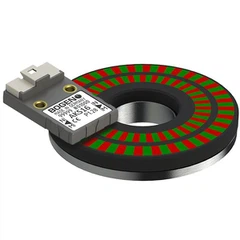
Some designs use multi-pole magnetization, which creates several alternating poles around a ring or along a surface. It can improve sensor signals and smooth rotation, but it must match your target pole count and alignment. If you share your layout, we can suggest a practical magnetization pattern.
Neodymium Magnet Production and Testing Equipment
Testing Workshop


Material Production Equipment


Processing and Production Equipment


Quality Testing Equipment


Packaging Workshop


Want to see how all of this works in actual production? Click the button below to learn more about our manufacturing environment, equipment layout, and quality control processes.
Packaging of Neodymium Magnets


Neodymium magnets may be small, but they require careful handling once they leave the production line. Our packaging process is designed to protect both the magnet’s performance and the safety of transportation. Each magnet is separated, shielded, and secured to prevent chipping, demagnetization, or unwanted magnetic interaction during storage and shipping.
From inner protective layers to reinforced outer cartons, every packaging step follows export and logistics standards, ensuring the magnets arrive intact and ready for use, no surprises, no damage.
Want to learn how magnets are packaged to ensure safe delivery worldwide? Please click the button below.
Customer Feedback on Our Products/Services
Most customers don’t judge a magnet supplier by one good sample. They judge by whether the next order is just as consistent.
In the feedback we receive, buyers often mention that the magnets match the previous batch and perform the same in their tests. That repeatability matters when the magnets go into an assembly or a tool that can’t afford surprises.
Packaging is another point customers bring up. Several messages specifically note that the goods arrived well packed and in clean condition, with parts protected so they don’t chip or rub during transport.
On the service side, customers value the day-to-day basics done well. They like getting a quote quickly, having the part number and specs confirmed without back-and-forth, and receiving clear updates on packing and shipment.
That’s the standard we aim to keep: stable quality, careful packing, and reliable follow-through from sample to bulk.

Our Certificate

CE

ROHS

SGS
FAQs
Q: How should neodymium magnets be stored?
A: Magnets should be stored in a dry environment away from excessive heat and strong opposing magnetic fields. Spacers are often used between large magnets to reduce handling risks and make separation easier.
Q: What tolerances can be achieved for custom neodymium magnets?
A: Tolerance requirements depend on magnet size, shape, and manufacturing method. Precision-ground magnets can achieve tighter dimensional tolerances for demanding industrial applications.
Q: Can neodymium magnets be assembled into magnetic systems?
A: Yes. Magnets are often integrated into magnetic assemblies, including magnetic couplings, magnetic rotors, sensors, holding systems, and custom industrial equipment.
Q: Do neodymium magnets comply with international transportation regulations?
A: Yes. For air shipment, magnets must meet magnetic field restrictions specified by transport regulations. Proper magnetic shielding and packaging are used to ensure compliance.
Q: What factors affect the lifespan of a neodymium magnet?
A: The lifespan is influenced by operating temperature, environmental conditions, mechanical impact, and exposure to reverse magnetic fields. Proper grade selection helps ensure long-term stability.
Q: Can magnets be manufactured according to technical drawings?
A: Yes. Custom production can be based on 2D drawings, 3D models, or detailed specifications. Shape, dimensions, magnetization direction, coating, and magnetic performance can all be customized.
Q: What information should be provided before requesting a quotation?
A: To provide an accurate quotation, it is helpful to confirm: Magnet dimensions、Material grade、Magnetization direction、Surface coating、Operating temperature、Quantity required、Drawing or CAD file (if available), This information helps ensure the recommended magnet matches your application requirements.
Get quality neodymium magnets from professional neodymium magnets manufacturers and suppliers here. Our factory offers the best products with the lowest price.


