












What Are Plate Magnets?
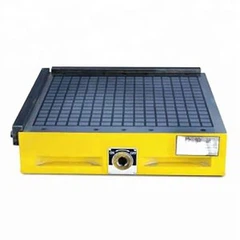
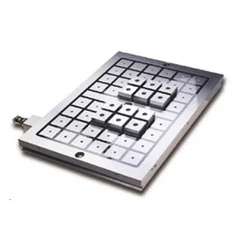
Plate magnets are flat magnetic separators used to remove iron and steel contaminants from bulk material flow. They are commonly installed above conveyors or inside chutes where materials move by gravity or belt.
As material passes the magnet, ferrous particles are attracted to the magnetic field and held on the plate surface, allowing clean material to continue through the process. Plate magnets are widely used in industrial applications due to their simple design, reliable performance, and ability to operate without external power.
-
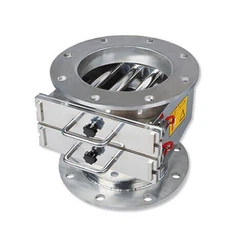
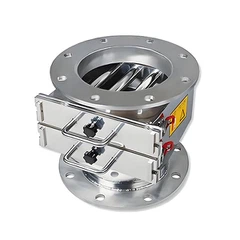
![Spout Magnet Magnetic Plate Separator]() Spout Magnet Magnetic Plate SeparatorSpout Magnetic Plate Separator Spouts Plate magnets are designed to remove ferrous tramp metal from high volume material flow or rapid material flow. Properly designing can prevent wash-off of
Spout Magnet Magnetic Plate SeparatorSpout Magnetic Plate Separator Spouts Plate magnets are designed to remove ferrous tramp metal from high volume material flow or rapid material flow. Properly designing can prevent wash-off of -
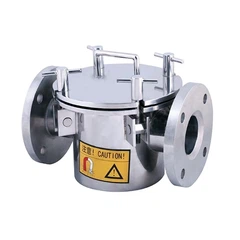
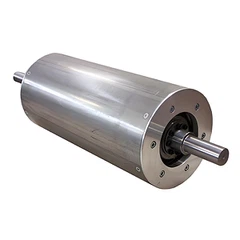
![Suspended Magnets]() Suspended MagnetsLight Duty Suspended / Suspension Plate Magnets Product Description of Light Duty Suspended / Suspension Plate Magnets: Suspended plate Magnets are designed for effective tramp metals extraction from
Suspended MagnetsLight Duty Suspended / Suspension Plate Magnets Product Description of Light Duty Suspended / Suspension Plate Magnets: Suspended plate Magnets are designed for effective tramp metals extraction from -
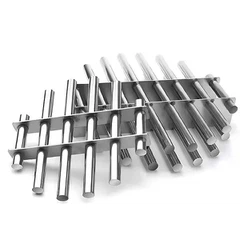
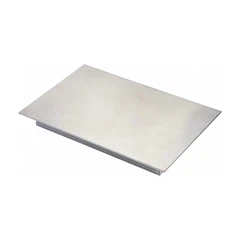
![Exposed Pole Plate Separators]() Exposed Pole Plate SeparatorsExposed Pole Magnetic Steel Plate Separator Exposed Pole (EP) Plate Magnets are designed for removing tramp metals from the low volume materials flow, welded two stainless steel plates on the surface
Exposed Pole Plate SeparatorsExposed Pole Magnetic Steel Plate Separator Exposed Pole (EP) Plate Magnets are designed for removing tramp metals from the low volume materials flow, welded two stainless steel plates on the surface -
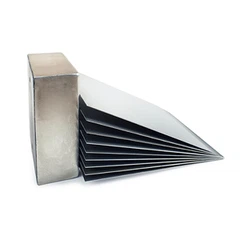
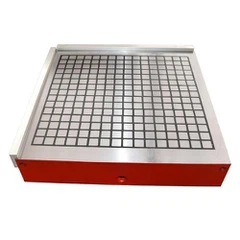
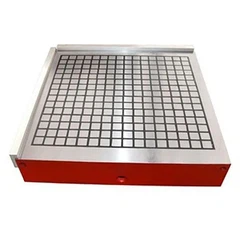
![Flush Face Plate Magnet]() Flush Face Plate MagnetFlush Face Permanent Plate Magnet Flush Face Plate Magnets have ideal metal separation performance when assembled over the flow chute or belt applications with low-density product flows. This design
Flush Face Plate MagnetFlush Face Permanent Plate Magnet Flush Face Plate Magnets have ideal metal separation performance when assembled over the flow chute or belt applications with low-density product flows. This design


Types of Plate Magnets


Key Features of Magnet Plate
Plates with different magnetic action ranges and strong magnetic strength are available.Easy cleaning and assembling.
Housing material is stainless steel 304 or 316L, which has no pollution from materials.
Magnetic plate with different dimensions and extra parts like hinge, handle, and mounting hole can be custom-made.
Choose magnet strengths and sizes to match your requirements.
Self-cleaning models save downtime and labor.

Technical Parameters of Plate Magnets
Specification of Flush Face Plate Magnet
|
|
||||
| Model NO | B | D | T | Weight |
| MM | MM | MM | KG | |
| F60 | 250 | 175 | 51 | 5.7 |
| F120 | 300 | 225 | 76 | 10.4 |
| F150 | 450 | 360 | 111 | 19.1 |
| F60 | 190 | 125 | 36 | 3.7 |
| F120 | 250 | 175 | 46 | 5.9 |
| F150 | 330 | 240 | 56 | 10.3 |

Specification of Spout Magnetic Plate
|
|
|||||
| MODEL NO | B | D | T | Magnets Action Range Dimension | Weight |
| MM | MM | MM | Range | KG | |
| SM60 | 250 | 175 | 51 | 60 | 5.8 |
| SM120 | 300 | 225 | 76 | 120 | 10.5 |
| SM150 | 450 | 360 | 111 | 150 | 19.2 |
| SM60 | 190 | 125 | 36 | 60 | 3.8 |
| SM120 | 250 | 175 | 46 | 120 | 6 |
| SM150 | 330 | 240 | 56 | 150 | 10.4 |

Specifications of Exposed Pole Plate Separators
|
|
|||||
| Model NO | B | D | T | Magnets Action | Weight |
| MM | MM | MM | Range | KG | |
| EP60 | 250 | 175 | 51 | 60 | 5.7 |
| EP120 | 300 | 225 | 76 | 120 | 10.4 |
| EP150 | 450 | 360 | 111 | 150 | 19.1 |
| EP60 | 190 | 125 | 36 | 60 | 3.7 |
| EP120 | 250 | 175 | 46 | 120 | 5.9 |
| EP150 | 330 | 240 | 56 | 150 | 10.3 |

Specifications of Suspended Plate Magnet
|
|
|||||
| Model NO | H | A | B | Magnets Action Range Dimension | Weight |
| MM | MM | MM | Range | KG | |
| SPM180-400 | 180 | 400 | 400 | 180 | 123 |
| SPM180-500 | 500 | 500 | 192 | ||
| SPM250-600 | 250 | 600 | 600 | 200 | 380 |
| SPM250-700 | 700 | 700 | 517 | ||
| SPM350-800 | 350 | 800 | 800 | 220 | 1064 |
| SPM350-900 | 900 | 900 | 1346 | ||
| SPM400-1000 | 400 | 1000 | 1000 | 240 | 1851 |
| SPM400-1100 | 1100 | 1100 | 2240 | ||
| SPM400-1200 | 1200 | 1200 | 2667 | ||


How Plate Magnets Work
Magnet Plate uses embedded permanent magnets to generate a strong magnetic field across the working surface. As material flows through a chute or moves along a conveyor, iron and steel contaminants such as bolts, screws, or metal fragments are pulled out of the product stream.The magnetic field extends into the flowing material, allowing ferrous particles to be captured and held securely on the plate. Clean material continues downstream, while trapped metal remains in place until it is removed during manual cleaning. In some designs, special trap faces help prevent captured metal from being washed off by ongoing material flow. This process provides effective contamination control without the need for power or complex systems.
Ask Our Engineer
Typical Specifications & Performance Range of Magnetic Plates
Plate magnets are available in different sizes and strengths to fit various industrial applications. Dimensions such as width, length, and thickness are chosen based on conveyor or chute size and the amount of material moving through the system. Mounting styles—including suspended, flush-mounted, or spout-mounted—affect both installation and performance.The magnetic strength is measured in gauss at the plate surface, and the effective capture depth determines how well the magnet removes ferrous particles. Stronger magnets are used for fine metal contaminants or fast-moving material, while standard-strength magnets are suitable for larger metal pieces and slower flows.
Other important factors include operating temperature, corrosion resistance, and ease of cleaning. Some designs have trap faces or removable sections to keep captured metal in place until it is cleared. Choosing the right specifications helps ensure effective separation, protects equipment, and maintains product quality.
Discuss Your Requirements

Compare Permanent Plate Magnets vs Rare Earth Plate Magnets
| Feature | Permanent Plate Magnets | Rare Earth Plate Magnets |
|---|---|---|
| Magnetic Material | Ferrite / Ceramic | Neodymium (NdFeB) |
| Magnetic Strength | Moderate, suitable for general applications | Very high, ideal for fine particles and strong separation |
| Temperature Resistance | Can handle moderate temperatures (up to ~250°F / 120°C) | Limited by grade, some high-temperature variants are available |
| Durability | Corrosion-resistant, long-lasting | Strong but may require coating to prevent corrosion |
| Applications | Standard industrial processes, bulk material handling | High-performance separation, fine powders, critical contamination control |
| Power Requirement | None, fully permanent | None, fully permanent |
| Cost | Lower | Higher, due to stronger material and manufacturing complexity |

Plate Magnet Dimensional Inspection & Tolerance Verification
This image documents the dimensional inspection process of a plate magnet using a digital caliper, a standard step in industrial quality control. Key dimensions such as length, width, thickness, and depth are measured to confirm the magnet matches design drawings and installation requirements.Accurate sizing is critical for plate magnets. Even small deviations can affect the fit inside chutes, housings, or conveyors, leading to gaps where material can bypass the magnetic field. By recording precise measurements at multiple points, manufacturers ensure consistent geometry, proper alignment, and reliable performance in real operating conditions.
Dimensional inspection also supports repeatability in batch production, helping users receive plate magnets that install smoothly and perform as expected without on-site modification.
Plate Magnet Gauss Testing
Gauss testing is used to measure the magnetic strength of Magnet Plate, ensuring they perform effectively in removing ferrous contaminants. A Gauss meter is placed near or on the magnet surface to measure the magnetic field in Gauss.This test helps verify that the magnet maintains consistent strength, meets design specifications, and can reliably capture metal particles during operation. Regular Gauss testing is a key step in quality control for industrial plate magnets.
The image shows a Gauss meter measuring the surface field of a plate magnet, demonstrating the high-strength testing process.
Discuss Your Requirements


Custom Plate Magnet Options for Specific Applications
Size & Dimensional Customization
Plate magnets can be manufactured with customized length, width, and thickness to match specific chute openings, conveyor widths, or installation spaces.Magnetic Strength & Configuration
Magnetic intensity can be adjusted based on application needs. Options include standard ferrite magnets for general use or rare-earth magnets for higher-gauss requirements. Internal magnet layouts may also be optimized to improve capture efficiency across the working surface.Mounting & Installation Design
Mounting features such as threaded holes, side flanges, hinges, or suspension points can be customized to suit fixed, spout-mounted, or suspended plate magnet installations.Housing Material & Surface Finish
Stainless steel grade, surface polishing level, and sealing structure can be customized for food, pharmaceutical, or corrosive environments. Smooth finishes also make cleaning easier and support hygiene compliance.Application-Specific Adaptations
For special conditions such as high material flow, abrasive products, or limited clearance, plate magnets can be adapted with reinforced housings, trap faces, or shielding designs to maintain stable performance over long-term operation.OEM / ODM Available
Industrial Applications of Plate Magnets
Food & Beverage Processing
Plate magnets are widely used in food and beverage lines to remove tramp metal from powders, grains, sugar, flour, and other bulk ingredients. Installed in chutes or at discharge points, they help protect downstream equipment and support product safety standards.Chemical & Pharmaceutical Manufacturing
Plate magnets are applied in chemical and pharmaceutical processes where material purity is critical. They help remove fine ferrous particles from raw materials and intermediate products without affecting material flow or formulation.Mining & Mineral Processing
In mining and mineral handling systems, plate magnets are used to remove ferrous contaminants from ore, sand, and crushed materials. This reduces wear on crushers, conveyors, and milling equipment.Recycling & Waste Handling
Recycling facilities use plate magnets to separate unwanted metal from bulk waste streams. They are commonly installed over conveyors or at transfer points to improve sorting efficiency and protect processing machinery.Powder & Bulk Material Handling
Across industries that handle dry powders or bulk solids, plate magnets provide a simple and reliable solution for metal contamination control. Their passive design makes them suitable for continuous operation with minimal maintenance.

How to Choose the Right Magnetic Plate
Material Characteristics
Start by understanding the material being processed. Particle size, flow speed, moisture content, and abrasiveness all affect how a magnetic plate should be designed. Fine or fast-moving materials usually require higher magnetic strength and a more focused magnetic field.Installation Location
The available space and mounting position play a key role in the selection. Magnetic plates installed in chutes, spouts, or over conveyors may require different profiles, thicknesses, or mounting holes to ensure proper coverage and easy access for cleaning.Magnetic Strength Requirements
Not all applications need the highest Gauss level. Larger metal pieces can be captured with standard-strength magnets, while fine metal dust or weakly magnetic particles often need rare-earth options for effective separation.Operating Environment
Consider temperature, corrosion risk, and exposure to chemicals or washdown procedures. These factors influence the choice of magnet material, housing construction, and sealing method.Maintenance & Cleaning Needs
Evaluate how often the magnet will need to be cleaned and how accessible it will be during operation. Designs with smooth surfaces or hinged structures can reduce downtime and simplify routine maintenance.
Magnetic Shielding Test for Plate Magnets
Before shipping, plate magnets are tested for magnetic shielding to ensure they do not affect nearby equipment or pose safety risks during transport. The test checks that the magnetic field is focused on the working surface while stray magnetism is minimized around the sides and back of the magnet. Proper shielding protects other materials, machines, and personnel during handling and shipment.

Packaging of Plate Magnets
Magnetic plates are carefully packaged to ensure safety, stability, and compliance during storage and transportation. Before packing, each magnet is wrapped to protect the stainless steel surface from scratches and moisture. Protective films or plastic wrap are commonly used as the first layer.To reduce magnetic interference, proper magnetic shielding is applied during packaging. Non-magnetic spacers and thick foam inserts help isolate the magnetic field and prevent attraction between units. As shown in the images, plate magnets are secured inside custom-fit foam or wooden crates to keep them fixed in position and avoid movement during transit.
For bulk shipments, cartons or wooden cases are clearly labeled with magnetic warning signs. This packaging method helps protect workers, nearby equipment, and other cargo while ensuring the plate magnets arrive in good condition and ready for installation.
FAQs
Q: Can plate magnets be used in food-grade environments?
A: Yes. Plate magnets can be manufactured with food-grade stainless steel housings and smooth surfaces, making them suitable for food and pharmaceutical processing when proper standards are required.
Q: Can plate magnets handle high-temperature materials?
A: Yes, but the temperature limit depends on the magnet material used. High-temperature designs are available for applications involving elevated heat.
Q: Can plate magnets be customized for unusual sizes or shapes?
A: Yes. Plate magnets can be custom-made to match specific equipment dimensions, mounting requirements, and process conditions.
Q: How do I know if a plate magnet is strong enough for my process?
A: Selection depends on factors such as material type, layer thickness, and contamination risk. Providing basic process details helps determine the right option.
Q: Do plate magnets need special installation tools?
A: No. Most plate magnets are designed for simple installation using standard mounting hardware or existing flanges.
Get quality magnetic plate from professional magnetic plate manufacturers and suppliers here. Our factory offers the best products with the lowest price.
suspended magnet in coal handling plant, suspended magnet suppliers, suspended permanent magnet


