











What Is an Electromagnetic Chuck?
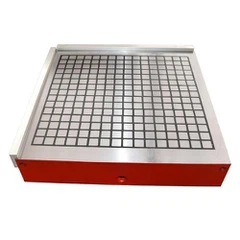
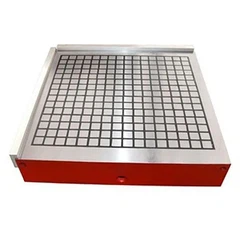
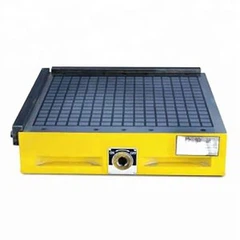
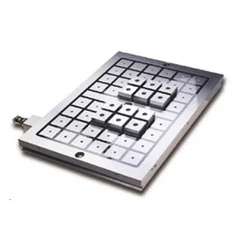
An electromagnetic chuck is a specialized workholding device used in manufacturing and machining. It uses electric current to generate a magnetic field, firmly holding ferrous metal parts in place during grinding, milling, or turning.Unlike a normal clamp, it does not press the workpiece with screws or jaws. Instead, the magnetic force pulls the part evenly against the chuck surface.
This helps keep the workpiece steady during machining. It can also reduce setup time, make clamping and release easier, and support more repeatable work on surface grinders, milling machines, and other metalworking equipment.
Get a Quote
-
![Magnetic Clamping System Injection Moulding Machine Mold Change]() Magnetic Clamping System Injection Moulding Machine Mold ...Quick Mold Change System, also called Magnetic Clamping System. Compared with the traditional mold change, the mold change time is greatly reduced, and one operator can easily and safely replace the
Magnetic Clamping System Injection Moulding Machine Mold ...Quick Mold Change System, also called Magnetic Clamping System. Compared with the traditional mold change, the mold change time is greatly reduced, and one operator can easily and safely replace the -
![Magnetic Clamping System For Quick Mold Change]() Magnetic Clamping System For Quick Mold ChangeMagnetic Clamping System, Quick Mold Change System is applied to the injection molding machine, die casting machine, punching machine, and turning machine through magnetic plate compatible with mold
Magnetic Clamping System For Quick Mold ChangeMagnetic Clamping System, Quick Mold Change System is applied to the injection molding machine, die casting machine, punching machine, and turning machine through magnetic plate compatible with mold -
![X11 Powerful Electromagnetic Chuck for Surface Grinder]() X11 Powerful Electromagnetic Chuck for Surface GrinderPowerful Electromagnetic Chuck For Surface Grinder Description of Powerful Electromagnetic Chuck For Surface Grinder: Powerful electromagnet magnetic Chuck is used for holding onto magnetic materials
X11 Powerful Electromagnetic Chuck for Surface GrinderPowerful Electromagnetic Chuck For Surface Grinder Description of Powerful Electromagnetic Chuck For Surface Grinder: Powerful electromagnet magnetic Chuck is used for holding onto magnetic materials -
![High Precision Magnet Sucker Chuck With Long Service Life]() High Precision Magnet Sucker Chuck With Long Service LifeGME permanent magnet chuck is suitable for a various plane of grinder, single angle precision grinding EDM machines. Process after special treatment, so that the adjustment is higher accuracy.
High Precision Magnet Sucker Chuck With Long Service LifeGME permanent magnet chuck is suitable for a various plane of grinder, single angle precision grinding EDM machines. Process after special treatment, so that the adjustment is higher accuracy. -
![X91 Strong Electromagnetic Chuck For Grinding Machine]() X91 Strong Electromagnetic Chuck For Grinding MachineStrong Electromagnetic Chuck F or M illing M achine Be different from ordinary electromagnetic chuck, multi-function powerful type is one of our patented products. According to requirements, using
X91 Strong Electromagnetic Chuck For Grinding MachineStrong Electromagnetic Chuck F or M illing M achine Be different from ordinary electromagnetic chuck, multi-function powerful type is one of our patented products. According to requirements, using


How Magnetic Workholding Works in Machining
Magnetic workholding uses magnetic force to hold a metal workpiece on the chuck surface during machining. In an electromagnetic chuck, the magnetic field is created when an electric current passes through the internal coils.Once the chuck is powered on, the magnetic force moves through the pole plate and into the workpiece. This pulls the part down evenly across the contact surface.
The workpiece must be ferromagnetic, such as steel or iron. Non-magnetic materials like aluminum, copper, or plastic cannot be held directly by an electromagnetic chuck.
When machining is finished, the power is turned off. A demagnetization controller can help remove the remaining magnetism, making it easier to take the part off the chuck. This process helps improve setup speed and workpiece stability.
Ask Our Engineer

Technical Specifications for Industrial Magnetic Chucks
 | ||||||||||||
| Model | Dimension(mm) | N.W (KG) | DCV | A | ||||||||
| A | B | C | D | E | F | G | I | J | ||||
| GMEEM 200X630 | 200 | 630 | 30 | 550 | 22(4+18) | 192 | 20 | 100 | 30 | 18.5 | 110 | 1 |
| GMEEM 250X500 | 250 | 500 | 30 | 400 | 22(4+18) | 244 | 20 | 95 | 30 | 25 | 110 | 1 |
| GMEEM 300X600 | 300 | 600 | 30 | 510 | 22(4+18) | 285 | 20 | 88 | 30 | 21 | 110 | 1.1 |
| GMEEM 300X680 | 300 | 680 | 30 | 600 | 22(4+18) | 296 | 20 | 116 | 30 | 31 | 110 | 1.36 |
| GMEEM 300X800 | 300 | 800 | 30 | 730 | 22(4+18) | 296 | 20 | 116 | 12 | 41 | 110 | 1.8 |
| GMEEM 300X1000 | 300 | 1000 | 30 | 900 | 22(4+18) | 294 | 20 | 110 | 12 | 51 | 110 | 2 |
| GMEEM 320X800 | 320 | 800 | 30 | 704 | 22(4+18) | 314 | 20 | 100 | 12 | 61 | 110 | 1.46 |
| GMEEM 320X1000 | 320 | 1000 | 30 | 900 | 22(4+18) | 314 | 20 | 110 | 12 | 71 | 110 | 2 |
| GMEEM 400X800 | 400 | 800 | 30 | 704 | 22(4+18) | 392 | 20 | 105 | 10 | 81 | 110 | 1.45 |
| GMEEM 400X1000 | 400 | 1000 | 30 | 904 | 22(4+18) | 392 | 20 | 105 | 10 | 91 | 110 | 1.9 |
| GMEEM 500X1000 | 500 | 1000 | 30 | 858 | 22(4+18) | 492 | 20 | 105 | 10 | 101 | 110 | 2 |
| GMEEM 600X1000 | 600 | 1000 | 30 | 858 | 22(4+18) | 592 | 20 | 107 | 10 | 101 | 110 | 2.4 |
| GMEEM 800X1000 | 800 | 1000 | 30 | 858 | 22(4+18) | 795 | 20 | 115 | 15 | 101 | 110 | 3.2 |
| GMEEM 500X1500 | 500 | 1500 | 30 | 1372 | 22(4+18) | 492 | 20 | 112 | 15 | 101 | 110 | 5 |

Key Advantages of Electromagnetic Chucks
Strong and Uniform Holding Force
The magnetic force is spread across the chuck surface. This helps hold steel plates, molds, and flat parts more evenly than point clamping.Fast Clamping and Release
The operator can clamp or release the workpiece by switching the power supply. This reduces setup time, especially for repeated machining work.Improved Machining Accuracy
Because the workpiece is pulled flat against the magnetic chuck, it stays more stable during grinding or light milling. Better contact can help reduce vibration and improve machining consistency.Suitable for Automation Systems
Electromagnetic chucks can be connected with machine controls. This makes them useful for CNC machining, automatic loading systems, and production lines that need repeatable clamping.Get a Quote
Electromagnetic vs Permanent vs Electro-Permanent Magnetic Chucks
| Type | How It Works | Main Advantages | Best Used For | Limitations |
|---|---|---|---|---|
| Electromagnetic Chuck | Uses electric current to create a magnetic force | Adjustable holding force, fast clamping and release, good for repeated work | Surface grinding, milling, CNC machining, and steel plate processing | Needs continuous power during operation |
| Permanent Magnetic Chuck | Uses permanent magnets to hold the workpiece | No power needed while clamping, simple structure, stable for general use | Small workshops, general grinding, light-duty machining | Holding force is less adjustable |
| Electro-Permanent Magnetic Chuck | Uses electric power only to switch magnetism on or off | Holds parts without continuous power, suitable for energy-saving clamping | CNC machining, automated production, heavy workpieces | Higher initial cost and a more complex control system |
What Affects Magnetic Holding Force?
Workpiece Thickness
Thin steel parts are usually harder to hold than thicker parts. If the workpiece is too thin, the magnetic force may not pass through it well, and the part may lift, slide, or vibrate during grinding.Contact Area Between Workpiece and Chuck Surface
Good contact is important. Chips, rust, oil, burrs, or small gaps can reduce the holding force. A clean, flat surface helps the electromagnetic chuck hold the workpiece more securely.Ferromagnetic Material Properties
Electromagnetic chucks are mainly used for steel, iron, and other ferromagnetic materials. Some alloy steels respond differently to magnetic force, so the actual holding effect may change from one material to another.Pole Pitch and Magnetic Circuit Design
Pole pitch affects how the magnetic field reaches the workpiece. Small or thin parts often need a finer pole design, while larger steel plates may work better with a wider pole arrangement.Discuss Your Requirements

How to Select a Magnetic Chuck for Your Machine
Selection by Machine Type
Check the machine first. A surface grinder usually needs good flatness and even magnetic force. A milling machine needs stronger holding because the tool pushes the part from the side. For CNC machining, the magnetic chuck also has to match the table size, T-slot position, and control method.Selection by Workpiece Size and Shape
The chuck should support most of the workpiece surface. Small parts, thin plates, long steel strips, and uneven shapes may not need the same pole design. If the part only touches the chuck in a few places, the holding force will be weaker.Selection by Grinding, Milling, or EDM Operation
Grinding needs stable contact and low movement. Milling needs better resistance to side force. EDM machining may need a magnetic chuck with better sealing or corrosion resistance because the working fluid is often used.Selection by Required Holding Force
Do not choose only by chuck size. Also, check the workpiece weight, contact area, cutting force, and material. For repeated jobs, the chuck should hold firmly but still allow easy loading and release.Discuss Your Requirements
Common Applications of Electromagnetic Chucks
- Surface Grinding: Electromagnetic chucks are commonly used on surface grinders to hold steel parts flat during grinding. They are useful for plates, blocks, and precision parts that need a smooth and even surface finish.
- Milling: In milling work, the chuck helps hold ferrous metal parts without using many side clamps. It is more suitable for light or medium milling, especially when the cutting force is controlled, and the workpiece has enough contact area.
- CNC Machining: For CNC machining, an electromagnetic chuck can reduce setup time and make repeated clamping easier. It is often used when the same type of workpiece needs to be loaded and removed many times.
- Mold Manufacturing: Mold bases, mold plates, and die components often require stable holding during grinding or finishing. A magnetic chuck can help keep these flat parts steady without blocking the machining area.
- Steel Plate Processing: Electromagnetic chucks are also used for holding steel plates during grinding, cutting, or inspection. For larger plates, chuck size, pole design, and holding force should be matched carefully.
Request a Solution

Custom Magnetic Chuck Solutions for OEM and Industrial Buyers
Custom Chuck Size
Standard magnetic chucks may not fit every machine table or workpiece. For OEM projects and industrial buyers, the chuck size can be made according to the machine table length, width, mounting space, and working area.Custom Pole Arrangement
Different parts may need different pole layouts. Thin plates, small blocks, and larger steel workpieces do not always need the same design. A custom pole arrangement can help improve contact and holding force during machining.Custom Voltage and Controller Matching
Electromagnetic chucks should match the local power supply and control system. Voltage, cable layout, power supply unit, and demagnetization controller can be selected according to the buyer’s equipment.Custom Mounting Structure for Different Machines
Some machines need special mounting holes, T-slot positions, or base structures. A custom magnetic chuck can be designed to fit surface grinders, milling machines, CNC machines, or other metalworking equipment more easily.OEM / ODM Available
Packaging of the Electromagnetic Chuck
At Great Magtech, electromagnetic chucks are packed according to the product size, weight, and shipping method. We usually use a wooden case to help protect the chuck during loading, sea freight, and inland transport.Before packing, the chuck surface is covered to reduce scratches and dust. The cable, controller, and other related parts are placed together in the case, so the customer can check the complete set after receiving the goods.
We also add inner protection to reduce movement inside the package. This is important because an electromagnetic chuck is heavy, and the machined surface should be kept in good condition during transport.
Shipping marks, labels, or customer-required information can be added to the wooden case when needed. This helps make the package easier to identify at the warehouse, port, or job site.
Get a Quote

FAQ
Q: What materials can an electromagnetic chuck hold?
A: An electromagnetic chuck is mainly used for ferromagnetic materials, such as steel, iron, and some alloy steels. It cannot directly hold aluminum, copper, brass, plastic, or other non-magnetic materials.
Q: What is the difference between an electromagnetic chuck and a permanent magnetic chuck?
A: An electromagnetic chuck uses electric power to create a magnetic force. A permanent magnetic chuck uses built-in magnets and does not need power during clamping. Electromagnetic models are easier to control and release.
Q: How should I choose the right magnetic chuck?
A: Check the machine type, workpiece size, material, thickness, machining process, and required holding force. For special parts or repeated production, a custom magnetic chuck may be a better choice.
Q: Does an electromagnetic chuck need regular maintenance?
A: Yes. The chuck surface should be kept clean and flat. Metal chips, grinding dust, oil, and rust can reduce contact between the workpiece and the magnetic chuck. The cable, controller, and power supply should also be checked regularly.
Q: Is an electromagnetic chuck safe to use?
A: It is safe when used correctly. The operator should check the workpiece material, contact area, holding force, and power connection before machining. For milling or heavier cutting, extra care is needed because side force can move the part.
Q: How long does an electromagnetic chuck last?
A: Service life depends on usage, maintenance, working environment, and electrical conditions. Keeping the surface clean, avoiding overload, and checking the controller and cable can help the chuck work more reliably over time.
Q: Will an electromagnetic chuck affect machining accuracy?
A: A good electromagnetic chuck can help improve workpiece stability, but accuracy also depends on the machine condition, chuck flatness, workpiece contact, and correct setup. If the chuck surface is worn or uneven, grinding accuracy may be affected.
Get quality electromagnetic chucks from professional electromagnetic chucks manufacturers and suppliers here. Our factory offers the best products with the lowest price.


