











-
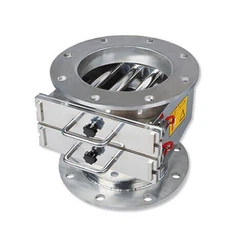
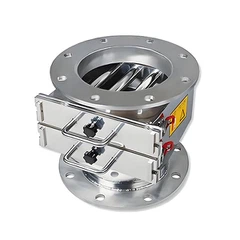
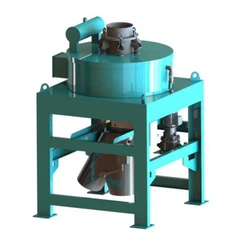
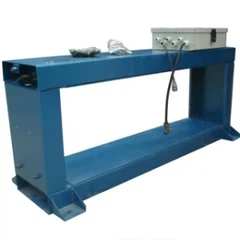
![Dry Electromagnetic Separator]() Dry Electromagnetic SeparatorElectromagnetic Separator for Dry Powder, DRY Electromagnetic Separators, Magnetic Separation Equipment manufacturer.Used for demagnetization and screening of new energy materials and mineral powder
Dry Electromagnetic SeparatorElectromagnetic Separator for Dry Powder, DRY Electromagnetic Separators, Magnetic Separation Equipment manufacturer.Used for demagnetization and screening of new energy materials and mineral powder -
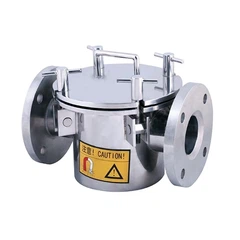
![Wet Electromagnetic Separator]() Wet Electromagnetic SeparatorElectromagnetic Separator, electromagnetic separator machine, electromagnetic metal separator machine.Electromagnetic separators are mainly used for the purification and screening of battery
Wet Electromagnetic SeparatorElectromagnetic Separator, electromagnetic separator machine, electromagnetic metal separator machine.Electromagnetic separators are mainly used for the purification and screening of battery


What Is an Electromagnetic Separator?
The Electromagnetic Separator is a high-intensity magnetic separation system designed for process lines that need stable, repeatable iron removal from fine powders or slurries. It is typically applied when product cleanliness targets are strict—such as lithium-ion battery materials, powder metallurgy, additive manufacturing feedstocks, ceramics, and high-spec mineral processing.
Depending on your material form and contamination level, GME configures the system by feed type (dry/wet), target impurity size range, and throughput, and then matches coil power, cooling method, and separation medium accordingly. In production, the separator is used to remove ferrous and weakly magnetic contaminants before they impact downstream equipment, yield, or quality consistency.
For easier integration, the design emphasizes a compact footprint, clear control logic, and maintenance-friendly access to key wear parts, so performance stays consistent over long runs, not just in short tests.
Electromagnetic Separator Type

Dry Electromagnetic Separator
1. This dry electromagnetic separator machine can remove micron-level trace magnetic substances (including weak magnetic substances).
2. The stable high magnetic induction working area is greatly improved.
3. Customized screen gaps can be used to deal with materials of different properties.
4. Adding a variable-frequency vibration device makes material unloading smoother and can completely remove iron impurities.
5. The internal finishing of the filter cylinder ensures a stable structure, and no replacement or maintenance is required.
Wet Electromagnetic Separator
1. The electromagnetic separator machine can remove micron-level trace magnetic substances (including weak magnetic substances).
2. The stable high magnetic induction working area is greatly improved.
3. Various types of screens can be used to deal with materials of different properties.
4. An automatic cleaning system can be installed to achieve fully automatic operation.
5. A high-power cooling system can be installed to further improve the working magnetic induction intensity.

Technical Parameters of the Electromagnetic Separator
Dry Electromagnetic Separator
|
|
||||||||||
| Model | Work Pressure | Surface Magnetism (Gs) |
H (mm) |
Pipe Diameter (mm) |
A (mm) |
B (mm) |
C (mm) |
Number of Magnetic Rods | Energy Consumption (KW) |
Processing Capacity (m³/h) |
| YCJL-273-FA-7 | ≤1.0MPa | 12000 | 2292 | 89 | 770 | 950 | 273 | 7 | 0.55 | 20m³/h |
| YCJL-325-FA-7 | 15000 | 2292 | 125 | 770 | 950 | 325 | 7 | 0.55 | 40m³/h | |

Wet Electromagnetic Separator
|
|
|||||||
| Model | Background Magnetic Field (Gs) | Work Magnetic Field (Gs) |
Inner Diameter (mm) |
Weight (T) |
Power (KW) |
Processing Capacity (kg/h) |
Size (mm) |
| DCGF250-3500 | 3500 | 0-14000 | 250 | 2.6 | 12 | 300-800 | 1440×1522×1845 |
| DCGF250-6000 | 6000 | 0-24000 | 250 | 3.2 | 19 | 300-800 | 1440×1522×1845 |
| DCGF300-3500 | 3500 | 0-14000 | 300 | 2.9 | 13 | 600-1000 | 1540×1622×1845 |
| DCGF300-6000 | 6000 | 0-24000 | 300 | 3.4 | 23 | 600-1000 | 1540×1622×1845 |
| DCGF350-3500 | 3500 | 0-14000 | 350 | 3.2 | 16 | 800-1300 | 1640×1722×1845 |
| DCGF350-6000 | 6000 | 0-24000 | 350 | 3.6 | 25 | 800-1300 | 1640×1722×1845 |

For more information or to request technical drawings without watermarks, please click the button below to contact our sales team.

Benefits of Using Electromagnetic Separator Equipment
1. Optimized for Wet or Dry Material: The electromagnetic separator can process both wet and dry materials. This ensures efficient separation even in conditions where moisture might be a concern.
2. Effective Iron Separation: The separator makes iron separations of grain sizes under 0.01mm. This is achieved by directing the magnetic flux to the unit's center, enhancing the flux density without any magnetic leakage. This ensures that even minute iron particles are effectively separated.
3. Vibration for Improved Flow Rate: Including vibration in filters ensures the effective removal of iron, which improves the screen flow rate. This means that the processed material flows smoothly without obstructions.
4. No Magnetic Leakage: The design of the GME electromagnetic separator ensures that there is no magnetic leakage. This means that the magnetic force is fully utilized for the separation process, ensuring maximum efficiency.
5. Wide Range of Products: We offer a variety of electromagnetic separators. This ensures that customers have a range of options to choose from based on their specific needs.
Dry vs Wet Electromagnetic Separator
| Decision Factor | Dry Type (Electromagnetic Separator) | Wet Type (Electromagnetic Separator) |
|---|---|---|
| Feed form | Dry powder or granules | Slurry/liquid suspension |
| Moisture level | Low moisture, free-flowing | Medium to high moisture, pumpable |
| Typical process position | Dry processing line (inline iron removal) | Wet grinding/slurry line (inline iron removal) |
| Best-fit industries | Powder metallurgy, additive manufacturing powders, dry minerals, chemical powders | Battery slurries, ceramic slurries, wet minerals, coatings |
| Particle size focus | Fine powders with stable feeding | Fine particles carried in slurry for stable capture |
| Throughput stability | Depends on the feeder and vibration settings | Usually stable with controlled pump flow |
| Separation medium/matrix | Screen or matrix + vibration discharge | Matrix in slurry chamber + flushing cycle |
| Discharge method | Vibration discharge, manual/assisted removal | Valve discharge / flushing discharge (easier to automate) |
| Cleaning approach | Manual cleaning; more frequent if the powder is sticky | Scheduled flushing; easier routine cleaning |
| Main advantages | No water required; simpler for dry lines | Better for slurry: stable flow and easier discharge/cleaning |
| Main limitations | Requires consistent feeding and dust control | Requires slurry handling and water/cooling support |
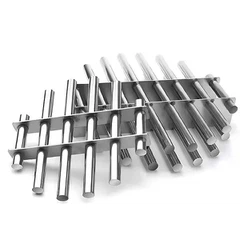
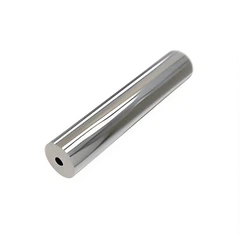
Magnetically Conductive Medium
The magnetically conductive medium used inside an electromagnetic separator is commonly made from 430 ferritic stainless steel, selected for strong magnetic conductivity and practical corrosion resistance.
A good medium is judged by two operating behaviors.
When the coil is energized, it should concentrate the magnetic field efficiently to capture fine ferrous and weakly magnetic contaminants.
When power is switched off, it must demagnetize quickly so trapped particles release cleanly, preventing carryover and making discharge reliable.
During welding and fabrication, the microstructure of 430 stainless steel can change locally, which affects both demagnetization speed and corrosion performance. For this reason, the medium requires controlled processing and heat treatment to restore stable properties and consistent separation behavior.
Because feed materials vary in particle size, moisture, and contamination level, we use different medium specifications and structures to match the application and achieve stronger, more consistent iron removal.


Electromagnetic Separator OEM Customization Options
Process Type: Dry powder or wet slurry configuration
Magnetic System: Coilting/field intensity matched to impurity level and throughput
Magnet Magnetic Medium (matrix): Structure, size, and balance capture vs clean release
Working Gap & Chamber Design: Tunedicle size distribution and flow behavior
Cooling Package: Air, water, or oil cooling based on duty cycle and ambient temperature
Discharge & Cleaning: Manual discharge, assisted discharge, or automated flushing cycles
Controls: PLC logic, interlocks, sensors (temperature/flow), and optional VFD settings
Interfaces: Inlet/outlet size, mounting points, and layout to fit your line
Material protection: corrosion-resistant parts or wear-resistant lining for abrasive feeds
To quote accurately, please share your material name, feed form (dry/slurry), particle size (D50/D90), moisture or solid content, target Fe level (ppm), throughput, and power supply conditions.
Applications of the Electromagnetic Separator
Lithium-ion Battery Materials: Cathode/anode powders and slurry lines where iron control matters
Powder Metallurgy & Additive Manufacturing: Fine metal powders that require clean, stable separation
Ceramics & Glass: Ceramic powders, kaolin, feldspar, and glaze materials
Mining & Mineral Processing: Quartz, silica sand, feldspar, and other fine mineral products
Chemicals & Pigments: Titanium dioxide, carbon black, and other high-purity powders
Recycling Streams: Removing tramp iron from processed material to protect downstream equipment

Why Great Magtech’s Electromagnetic Separator?
You don’t buy an electromagnetic separator for “magnet strength” alone. You buy it for stable iron removal, predictable discharge, and easy integration into a real production line.
Great Magtech designs its electromagnetic separators around those practical needs. We offer both dry and wet configurations, with screen and medium options that can be matched to different powders or slurries. For dry systems, variable-frequency vibration helps keep discharge smooth when materials don’t flow consistently. For wet systems, automatic cleaning and high-power cooling options support longer runs with less manual intervention.
We also focus on consistency. Key components are built for repeatable performance across batches, and the layout is made for maintenance access, so uptime is easier to protect after installation.
If you share your material type, particle size range, throughput, and target cleanliness level, we can recommend a configuration that fits your line instead of forcing a one-size-fits-all model.
FAQs
Q: How is discharge handled during the operation?
A: Dry systems typically use vibration discharge, and options like variable-frequency vibration can improve unloading consistency. Wet systems usually discharge through flushing/valves and can add automatic cleaning.
Q: What are common installation mistakes to avoid?
A: Using the wrong feed form (powder vs slurry), inconsistent feeding, poor dust control on dry lines, and skipping routine inspection/cleaning are the most common causes of unstable results.
Q: How do we verify performance after installation?
A: Agree on acceptance points in advance (throughput, discharge stability, and target cleanliness level). If you provide a material sample and your target spec, the setup can be tuned to meet your site conditions.
Q: What causes iron removal to become unstable over time?
A: The most common reasons are inconsistent feeding, powder caking/bridging, screen/medium contamination, and insufficient cooling during long duty cycles.
Q: Does higher magnetic strength always mean better separation?
A: Not always. Strong field performance helps, but real results also depend on medium design, residence time, feed stability, and how cleanly the separator can discharge captured contamination.
Get quality electromagnetic separator from professional electromagnetic separator manufacturers and suppliers here. Our factory offers the best products with the lowest price.
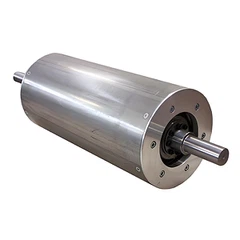
magnetic pulley belt conveyor, magnetic drum separator, used magnetic head pulley for sale


