
















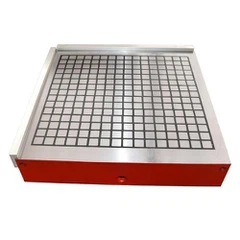
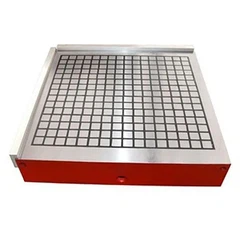

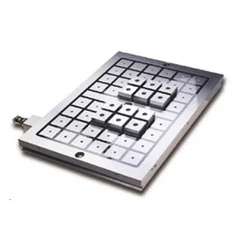


What Are Rare Earth Magnets?
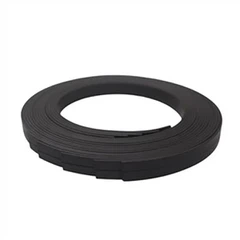
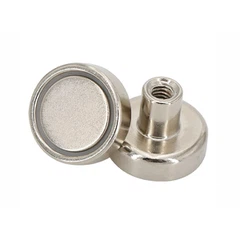
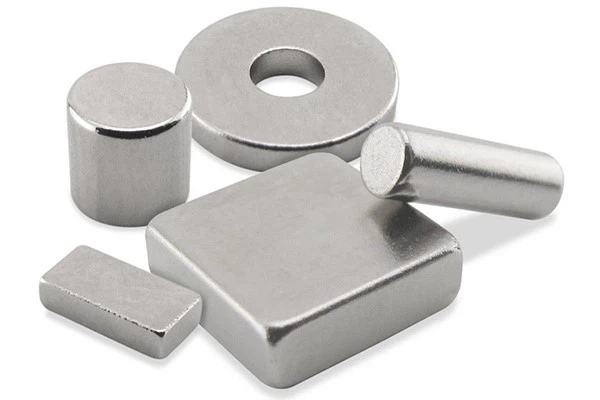
Rare earth magnets are strong permanent magnets made from rare earth elements. The two most common types are neodymium magnets (NdFeB) and samarium cobalt magnets (SmCo). They are much stronger than ferrite or ceramic magnets of the same size. Because of this, you can use smaller magnets to achieve the same holding force.
Rare-earth magnets are extremely brittle and also vulnerable to corrosion, so they are usually plated or coated to protect them from breaking, chipping, or crumbling into powder.
-
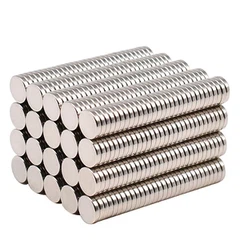
![Round Magnets]() Round MagnetsN52 Sintered Neodymium Round Magnets Description Round magnets is the most cost effective than other shape magnets. It is a regular shape of neodymium magnet. Generally the magnetizing direction is
Round MagnetsN52 Sintered Neodymium Round Magnets Description Round magnets is the most cost effective than other shape magnets. It is a regular shape of neodymium magnet. Generally the magnetizing direction is -
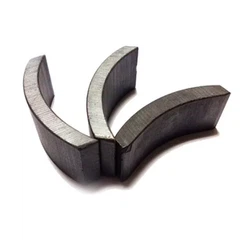
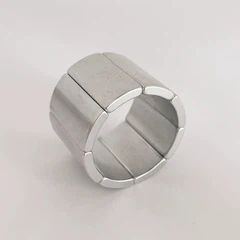
![Arc Magnets]() Arc MagnetsNeodymium arc magnets for permanent motor generator magnets Description Neodymium arc magnets is a special shape of rare earth magnet, Neodymium segment magnets are also called neodymium arc magnets,
Arc MagnetsNeodymium arc magnets for permanent motor generator magnets Description Neodymium arc magnets is a special shape of rare earth magnet, Neodymium segment magnets are also called neodymium arc magnets, -
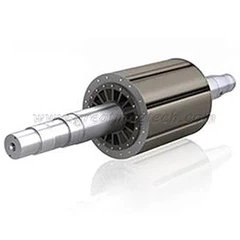
![Generator Magnet]() Generator MagnetAimant Neodyme Generator Magnet for P ermanent M agnet M otor Features of Generator Magnet ●Material: Neodym magnet, Aimant Neodyme, PMSG NdFeB magnet ●Specification: Customized as per client’s
Generator MagnetAimant Neodyme Generator Magnet for P ermanent M agnet M otor Features of Generator Magnet ●Material: Neodym magnet, Aimant Neodyme, PMSG NdFeB magnet ●Specification: Customized as per client’s -
![Samarium Cobalt]() Samarium CobaltSuper Permanent Strong Samarium Cobalt Magnets Description Of Super Permanent Strong Samarium Cobalt Magnets Permanent strong Samarium Cobalt Magnets are made of Sintered SmCo Magnet,
Samarium CobaltSuper Permanent Strong Samarium Cobalt Magnets Description Of Super Permanent Strong Samarium Cobalt Magnets Permanent strong Samarium Cobalt Magnets are made of Sintered SmCo Magnet, -
![Neodymium Magnets With Hole]() Neodymium Magnets With HoleAmong those famous rare magnets for you NdFeB magnetic blocks with hole manufacturers, it is a professional supplier in China, welcome to wholesale rare magnets for you NdFeB magnetic blocks with
Neodymium Magnets With HoleAmong those famous rare magnets for you NdFeB magnetic blocks with hole manufacturers, it is a professional supplier in China, welcome to wholesale rare magnets for you NdFeB magnetic blocks with -
![Neodymium Cone Magnet]() Neodymium Cone MagnetCone shaped magnet have an extremely high magnetic energy product, which means that they can provide a very strong magnetic field in a relatively small volume. In addition, it has excellent magnetic
Neodymium Cone MagnetCone shaped magnet have an extremely high magnetic energy product, which means that they can provide a very strong magnetic field in a relatively small volume. In addition, it has excellent magnetic -
![Ring Bonded Magnet Neodymium Magnet]() Ring Bonded Magnet Neodymium MagnetNdFeB bonded magnet ring is a use of bonding process made of ring magnets, mainly by the NdFeB magnetic powder and adhesive mixing curing molding, this magnet has magnetic performance, and high
Ring Bonded Magnet Neodymium MagnetNdFeB bonded magnet ring is a use of bonding process made of ring magnets, mainly by the NdFeB magnetic powder and adhesive mixing curing molding, this magnet has magnetic performance, and high -
![Muti-Pole Magnetized Bonded Magnet]() Muti-Pole Magnetized Bonded MagnetBonded Ring NdFeB Magnet, Isotropic Bonded Rare Earth Neodymium Magnet, Compression bonding Magnet, Permanent Bonded NdFeB Magnetic Components, Multi-poles Diameter or Radial Ring Magnets for
Muti-Pole Magnetized Bonded MagnetBonded Ring NdFeB Magnet, Isotropic Bonded Rare Earth Neodymium Magnet, Compression bonding Magnet, Permanent Bonded NdFeB Magnetic Components, Multi-poles Diameter or Radial Ring Magnets for -
![Bonded Ring NdFeB Magnet]() Bonded Ring NdFeB MagnetBonded Ring NdFeB Magnet, Isotropic Bonded Rare Earth Neodymium Magnet, Compression bonding Magnet, Permanent Bonded NdFeB Magnetic Components, Multi-poles Diameter or Radial Ring Magnets for
Bonded Ring NdFeB MagnetBonded Ring NdFeB Magnet, Isotropic Bonded Rare Earth Neodymium Magnet, Compression bonding Magnet, Permanent Bonded NdFeB Magnetic Components, Multi-poles Diameter or Radial Ring Magnets for -
![Cylinder Bonded Neodymium Magnet]() Cylinder Bonded Neodymium MagnetCustomizable Industrial Permanent Neodymium Magnets Materials Price NdFeB Bonded Magnet OEM
Cylinder Bonded Neodymium MagnetCustomizable Industrial Permanent Neodymium Magnets Materials Price NdFeB Bonded Magnet OEM


Types of Rare Earth Magnets
 |
 |
|
Neodymium Magnets |
Samarium Cobalt Magnets |
How Rare Earth Magnets Work
Rare earth magnets work because of the way their internal structure is aligned. During manufacturing, the
material is exposed to a strong magnetic field. This process forces tiny magnetic regions inside the
material to line up in the same direction.
Once aligned, they stay that way. This alignment creates a permanent magnetic field. The magnet then
produces north and south poles, which allow it to attract steel and other magnetic materials.
Neodymium magnets are especially strong because their atomic structure supports a high magnetic energy
level. This means you can get a strong holding force from a small piece of material.
When placed near steel, the magnetic field flows through the metal, creating attraction. The closer the
contact, the stronger the force.

Technical Drawings of Rare Earth Magnets
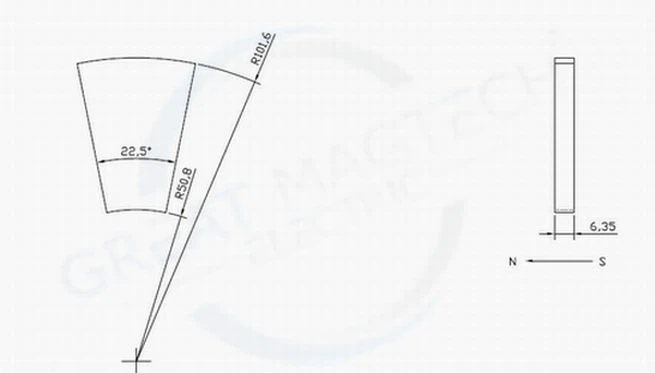
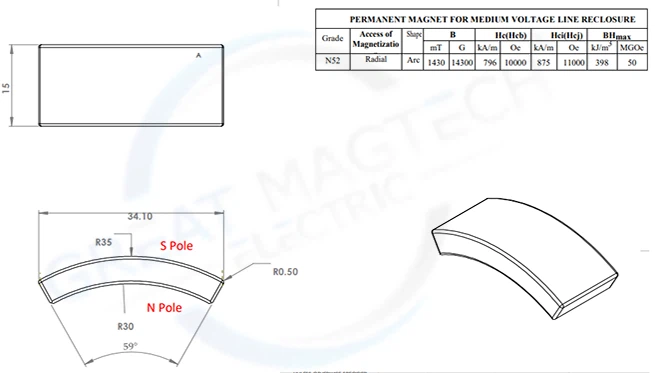
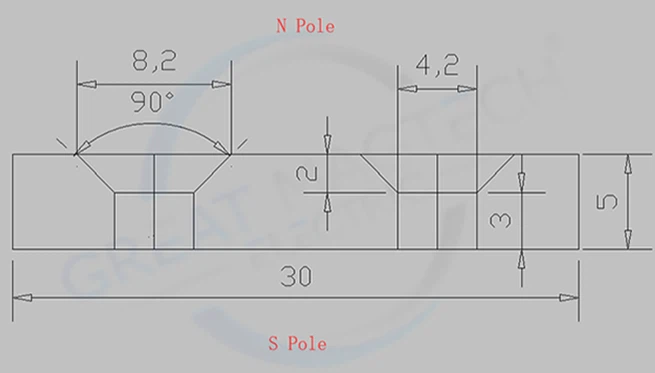
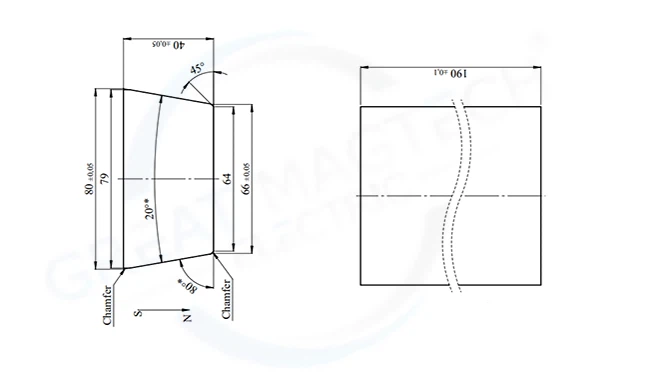
Technical drawings play an important role in rare earth magnet production. They define shape, size,
tolerance, magnetization direction, and key functional details. Clear drawings reduce misunderstanding
and help ensure that the final magnet matches your design.
Rare earth magnets can be manufactured in many forms, including blocks, discs, rings, arcs, trapezoids,
and custom profiles. Engineering drawings typically include:
Overall dimensions (length, width, thickness, radius)
Chamfers, countersunk holes, or special features
Angle and arc measurements for segment magnets
Magnetization direction (N pole and S pole marking)
Tolerance requirements
For example, arc magnets often show inner and outer radius, angle degree, and thickness. Countersunk
magnets include hole diameter and angle specifications. Complex shapes may require 3D views to clearly
show geometry.
If you would like to view more technical diagrams, or require technical drawings without watermarks, please click the button below to contact our sales team.
Demagnetization Curve
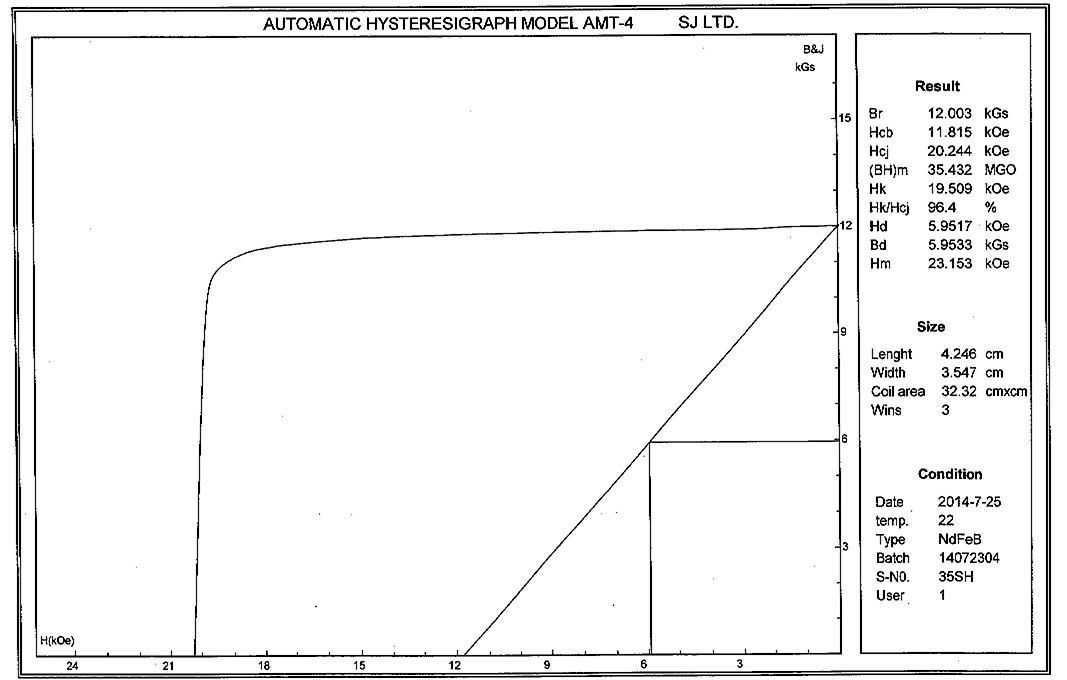
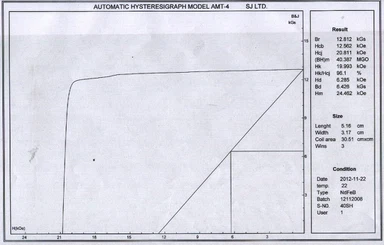
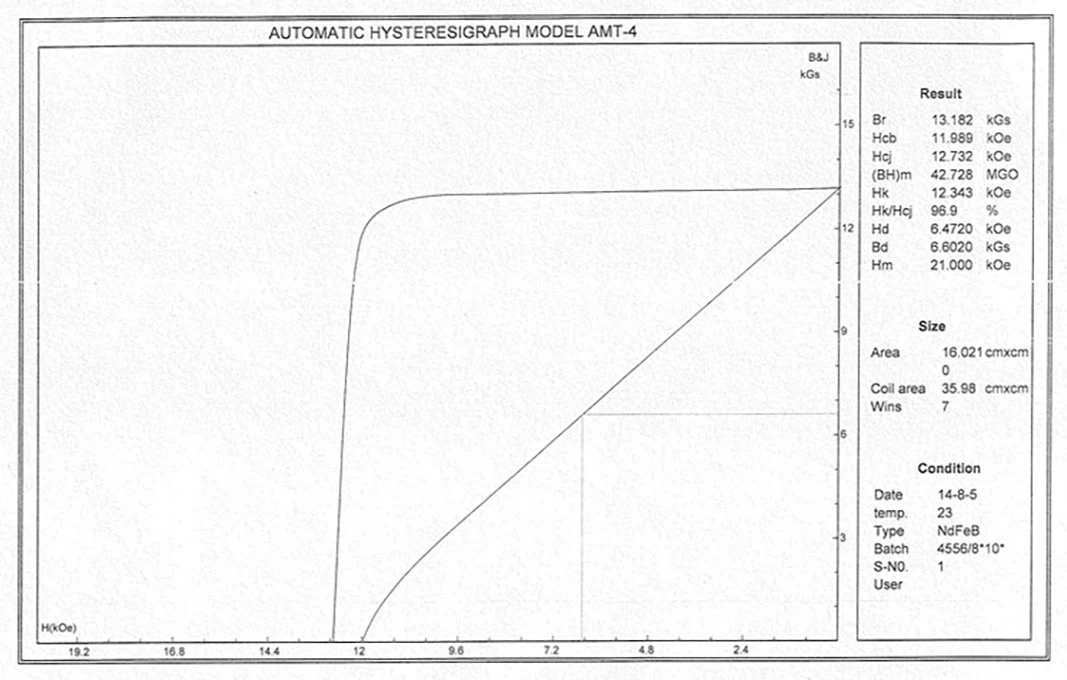
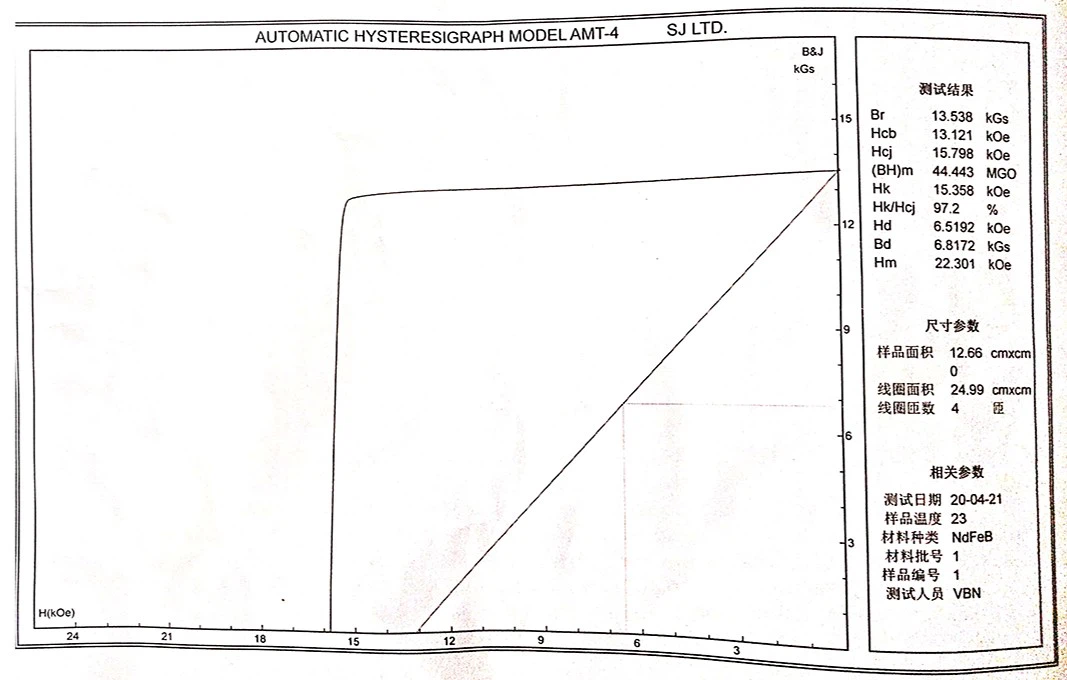
To learn more about demagnetization curves, please click the button below to contact us.
Rare Earth Magnets vs Ferrite Magnets
When choosing between rare earth magnets and ferrite magnets, you should consider strength, size, temperature, and cost. Both are permanent magnets, but their performance is quite different.
| Feature | Rare Earth Magnets | Ferrite Magnets |
|---|---|---|
| Magnetic Strength | Very high | Moderate |
| Size for Same Force | Smaller | Larger |
| Material Types | NdFeB, SmCo | Ceramic (Ferrite) |
| Temperature Resistance | Good (depends on grade) | Stable at higher temperatures |
| Corrosion Resistance | May require coating | Naturally corrosion-resistant |
| Cost | Higher | Lower |
| Common Applications | Motors, sensors, electronics | Speakers, simple fixtures, general use |
Neodymium Magnet Grades Chart
The values shown are typical reference ranges. Actual magnetic properties may vary slightly depending on the manufacturer and production batch.
| Grade | Br (kGs) | Hcj (kOe) | (BH)max (MGOe) | Max Working Temp* |
|---|---|---|---|---|
| N35 | 11.7–12.2 | ≥12 | 33–35 | 80°C |
| N38 | 12.2–12.6 | ≥12 | 36–38 | 80°C |
| N40 | 12.4–12.9 | ≥12 | 38–40 | 80°C |
| N42 | 12.8–13.2 | ≥12 | 40–42 | 80°C |
| N45 | 13.2–13.5 | ≥11 | 43–45 | 80°C |
| N48 | 13.5–13.8 | ≥10.5 | 45–48 | 80°C |
| N50 | 13.8–14.2 | ≥10.5 | 47–50 | 80°C |
| N52 | 14.3–14.7 | ≥10.5 | 49–52 | 80°C |
| N35M | 11.7–12.2 | ≥14 | 33–35 | 100°C |
| N40H | 12.4–12.9 | ≥17 | 38–40 | 120°C |
| N42SH | 12.8–13.2 | ≥20 | 40–42 | 150°C |
| N35UH | 11.7–12.2 | ≥25 | 33–35 | 180°C |
| N30EH | 11.2–11.7 | ≥30 | 30–33 | 200°C |

Magnetic Grades Explained
Magnetic grade tells you how strong a neodymium magnet can be and how it performs under temperature. It
is not just a number. It reflects several key magnetic properties.
Take N42SH as an example. The number “42” represents the maximum energy product (BHmax). In
simple terms, a higher number means the magnet can store more magnetic energy and usually provide a
stronger force in the same size.
The letters at the end show temperature resistance.
For example:
No suffix → up to 80°C
H → up to 120°C
SH → up to 150°C
UH → up to 180°C
EH → up to 200°C
If your application runs at higher temperatures, the suffix becomes more important than the number.
You should also pay attention to Hcj (intrinsic coercivity). A higher Hcj means better resistance to
demagnetization, especially in high heat or strong reverse magnetic fields.
A higher grade does not always mean a better choice. The right grade depends on temperature, size limits,
magnetic circuit design, and cost balance.
Pull Force vs Magnetic Flux Density
Pull force and magnetic flux density describe different aspects of magnet performance. They are related,
but not the same.
Magnetic flux density (often measured in Gauss or Tesla) shows how strong the magnetic field is at a
specific point. It tells you how concentrated the magnetic field is on the surface or in the air
gap.
Pull force refers to the mechanical force required to separate a magnet from a thick steel plate under
ideal contact conditions. It is usually measured in kilograms or newtons.
A magnet can have high surface flux but still show lower pull force if contact is not perfect. Surface
condition, air gap, and steel thickness all affect real holding strength.

How Distance Affects Magnetic Force
Contact vs Air Gap
When a magnet touches a thick steel plate directly, the force is at its highest. This is because the magnetic field flows smoothly into the steel. If there is a gap, even 1 or 2 millimeters, the force can drop sharply. Paint, coating, plastic covers, or uneven surfaces all create small air gaps. A tiny space makes a big difference.
Why the Force Drops
Magnetic fields weaken rapidly in open air. As distance grows, the field spreads out and becomes less
concentrated. That means less attraction.
When choosing a magnet, you should always consider:
Surface condition
Material thickness
Possible coatings or insulation layers
Real working conditions rarely match laboratory testing. Understanding distance effects helps you select
the right magnet with a safe margin.
Production Flow

01
Raw Material

02
Melting

03
HP

04
Jet Mling

05
Processing

06
Sintering

07
Inspection

08
Machining

09
Coating

10
Final Inspection

11
Magnetizing Packing

12
Delivery
Our neodymium magnet production flow is built for consistency, not
shortcuts. Each stage follows a clear, repeatable sequence, from material preparation and forming to sintering,
machining, coating, and final magnetization. Every step is closely controlled to keep magnetic properties,
dimensions, and surface quality within defined targets.
This structured workflow reduces variation between batches and makes quality easier to verify, not harder to chase.
By the time magnets reach final inspection, their performance and appearance are already predictable.
Want to learn how each step of the factory process is interconnected? Please click the button below to contact our
sales team.
Explore Our Manufacturing Flow
How to Choose the Right Rare Earth Magnet
Define the Required Force
Estimate the load you need to hold or move. Consider whether the force is a direct pull or a side load. Add a safety margin, especially if vibration or movement is involved.
Check Temperature Conditions
Temperature has a strong effect on magnet performance. If your application runs above normal room temperature, choose a grade with the proper suffix, such as H or SH. High heat can reduce magnetic strength over time.
Consider Size and Space Limits
If space is limited, you may need a higher energy grade to achieve the required force. Smaller magnets can deliver strong performance, but only within proper design conditions.
Review Surface and Environment
Moisture, corrosion, and coatings can affect durability. Select suitable surface treatment and protection based on your environment.


Magnetization Direction Explained
There are several common types.
Axial magnetization – The magnetic poles are on the top and bottom faces.
Radial magnetization – The poles are on the inner and outer diameters, often used in ring
magnets.
Diametrical magnetization – The poles are on opposite sides across the diameter.
The direction must match your application.
If the magnetization is wrong, the magnet may not perform as expected. Before ordering, confirm how the
magnetic field should be aligned in your design.
Demagnetization and Long-Term Stability
Rare earth magnets are stable under normal conditions, but certain factors can reduce their strength over
time. Temperature is one of the most important.
Neodymium magnets can permanently lose strength if exposed to excessive heat or reverse magnetic fields.
When the operating temperature exceeds the rated limit, part of the magnetic alignment inside the
material can change.
High impact or strong opposing magnetic force can also affect stability.
In most indoor applications, magnets keep their strength for many years. However, in high-temperature or
demanding environments, choosing the correct grade and design helps prevent unwanted performance loss.


Dimensional and Magnetic Tolerances
Every rare earth magnet is produced within certain tolerance limits. No manufacturing process is
perfectly exact, so small variations are normal.
Dimensional tolerance refers to the allowed difference in size. For example, thickness or diameter may
vary slightly, often within ±0.05 mm or ±0.1 mm, depending on the part size and machining
method.
Magnetic tolerance is also important. Properties such as Br and Hcj may vary slightly between batches.
These differences are controlled within industry standards, but they are not identical for every
piece.
For precision applications, you should confirm both size tolerance and magnetic performance range before
ordering. Clear specifications help ensure the magnet fits properly and performs as expected in your
assembly.
Rare Earth Magnets Surface Coating Options
| Coating Type | Corrosion Resistance | Appearance | Thickness | Best For | Notes |
|---|---|---|---|---|---|
| Nickel (Ni-Cu-Ni) | Good (indoor use) | Bright metallic | 10–20 μm | General industrial use | Most common coating |
| Zinc (Zn) | Moderate | Matte silver | 5–15 μm | Dry environments | Lower cost option |
| Epoxy (Black) | High | Black finish | 20–30 μm | Humid or outdoor use | Better salt spray resistance |
| Gold (Au) | Good | Gold finish | Thin layer over nickel | Medical & electronics | Higher cost |
| Silver (Ag) | Moderate | Silver metallic | Thin coating | Conductive applications | Used in electronics |
| Phosphate | Basic | Dark grey | Thin layer | Indoor dry use | Often primer coating |
| PTFE (Teflon) | High chemical resistance | Smooth matte | Variable | Chemical environments | Reduces friction |
| Parylene | Excellent moisture protection | Transparent | Very thin | Medical & precision electronics | Uniform coating process |
| Rubber Coating | Very high surface protection | Black rubber | Thick layer | Mounting applications | Adds friction & shock absorption |
| Stainless Steel Sleeve | Excellent mechanical & corrosion resistance | Metallic | Structural shell | Marine & harsh conditions | Not a plating, full enclosure |
Typical Applications by Industry
Motors and Electric Drives
Neodymium magnets are widely used in electric motors. You can find them in industrial motors, electric vehicles, and small household appliances. Their high energy density helps improve torque while keeping the motor size compact.
Sensors and Electronics
In sensors and electronic devices, magnets help detect position, speed, or rotation. Small magnets are often used inside switches, encoders, and precision instruments. Stable magnetic output is important in these applications.
Renewable Energy
Wind turbines and other energy systems use rare-earth magnets in generators. Strong magnetic fields help increase efficiency and reduce energy loss.
Medical and Laboratory Equipment
Samarium cobalt magnets are sometimes selected for medical devices and imaging systems. They offer good temperature stability and reliable performance.
Industrial Equipment
Rare earth magnets are also used in magnetic separators, clamping systems, and holding assemblies. Their compact size makes them suitable for tight installation spaces.


Custom Rare Earth Magnet Solutions
Custom Shape and Dimensions: Magnets can be produced in block, ring, disc, arc, or special shapes. If your design has limited space or unique geometry, dimensions can be adjusted to match your drawing. Tight tolerance control can also be discussed for precision assemblies.
Grade and Performance Selection: You can choose different magnetic grades based on the required force and working temperature. High-temperature grades are available for demanding environments. The goal is to balance performance, stability, and cost.
Magnetization Direction: Axial, radial, diametrical, or multi-pole magnetization can be specified. The correct magnetization direction is critical for motors, sensors, and magnetic circuits.
Surface Treatment and Assembly: Surface coating options can be selected based on humidity and corrosion risk. In some cases, magnets can be supplied as part of a magnetic assembly with additional components.
Our Certificate


Safety and Handling Guidelines
Prevent Pinch Injuries
Keep your fingers clear when two magnets are close to each other. Large magnets can pull together with a strong force. Wearing protective gloves can reduce risk during handling.
Avoid Impact and Breakage
Neodymium magnets are hard but brittle. If they collide, they may chip or crack. Handle them gently and avoid dropping them on hard surfaces.
Keep Away from Sensitive Devices
Strong magnetic fields can affect electronic devices, credit cards, and medical equipment. Keep magnets away from pacemakers and other medical implants.
Control Temperature Exposure
Do not expose magnets to temperatures above their rated limit. Excessive heat can reduce magnetic
strength.
Store magnets in a dry place and keep them separated with spacers if necessary. Careful handling helps
maintain both safety and long-term performance.

FAQs
Q: What is the difference between neodymium and samarium cobalt magnets?
A: Neodymium magnets offer higher magnetic strength in a smaller size. Samarium cobalt magnets provide better temperature stability and corrosion resistance. The choice depends on your working conditions.
Q: How is pull force measured?
A: Pull force is tested on thick, clean steel under ideal contact conditions. Real performance may vary depending on air gap, surface finish, and steel thickness.
Q: What information should I provide before requesting a quote?
A: It helps to confirm: Required force, Magnet size or drawing, Working temperature, Magnetization direction, Surface coating requirements. Clear technical details allow for more accurate recommendations.
Q: Is a higher grade always better?
A: Not necessarily. A higher magnetic grade may increase cost and reduce temperature stability. The correct grade should match your specific load, temperature, and space conditions.
Q: What causes surface rust on neodymium magnets?
A: Neodymium material can corrode if the coating is damaged. Scratches, moisture exposure, or harsh chemicals may lead to surface rust. Choosing the right coating helps reduce this risk.
Q: How should magnets be shipped?
A: For air shipment, magnets must meet magnetic field safety limits. Proper shielding and anti-magnetized packaging help ensure compliance with transport regulations.
Q: Can rare earth magnets be machined after magnetization?
A: Machining a magnet after it has been magnetized is not recommended. Rare earth magnets are hard and brittle, and cutting or drilling can cause cracking. It may also affect magnetic performance. Most machining should be completed before magnetization.
Get quality rare earth magnets from professional rare earth magnets manufacturers and suppliers here. Our factory offers the best products with the lowest price.


