









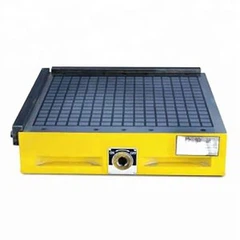
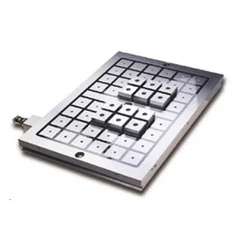


These include the efficiency of the mineral processing business, where competition forms the basis, resulting in improved productivity and profit. Magnetic separation remains one of the most efficient techniques for sorting out minerals that have many qualities of elegance. This process is applicable in the mining, metallurgical, and materials processing industries to get rid of undesirable ferromagnetic contaminants in the final products.
The incorporation of magnetic separation into your process will hence result in high purity of the product, fewer processing costs, and enhanced yields. The Great Magtech has provided the need for methods of separation, which keeps on rising as industries need to improve their operational efficiency with the use of cheap ways. Knowledge of how magnetic separation operates and its uses can be of assistance to a business when employing the process of mineral processing.
Understanding Magnetic Separation in Mineral Processing
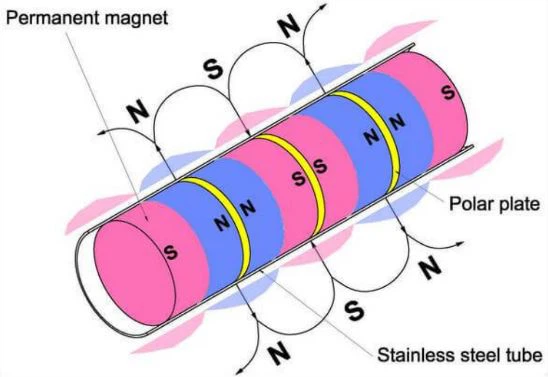
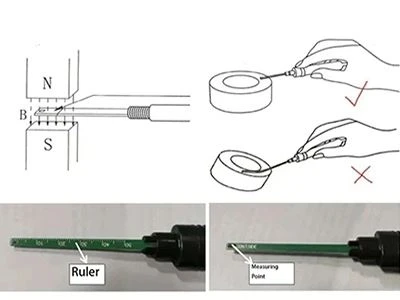
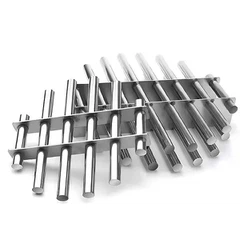
Magnetic separation is a technique that uses magnetic force to pull ferrous materials from those which are non-ferrous materials. It is more effective when used in engineering industries like mining and recycling since it requires accuracy and quick movement. The process of separating the material, which is applied by the application of a magnetic field is applied where ferromagnetic material is separated from non-magnetic materials.
This basic and effective mechanism is helpful in the process of reducing the presence of undesired particles as well as increasing the desired mineral concentration. The process of using magnets is favorable as it is efficient in energy usage and also perfect for rapidly sorting large quantities of minerals. Newer designs of magnetic separators have, therefore, evolved more sophisticated technical characteristics that make them suitable for any application in the industry.
How Does Magnetic Separation Work?
Magnetic separation, is a technique that of categorizing a given material that is made up of magnetic and non magnetic parts through the usage of a magnetic field. The iron which is part of ferrous materials, these materials are usually pulled by the magnet while the non-ferrous materials go through the separator.
Magnetic separation can be done in different ways depending on the operation that an organization requires. Coarse materials use dry magnetic separation, which is ideal for materials that are found in a slurry or a fine powdered substance. High-intensity magnetic separation applies to weak magnetic minerals such as hematite, while low-intensity magnetic separation applies to strongly magnetic minerals such as magnetite. This helps in deciding on the most suitable method that will enhance the purity of the extracted materials as well as enhance production experiences.
Types of Magnetic Separators Used in Mineral Processing
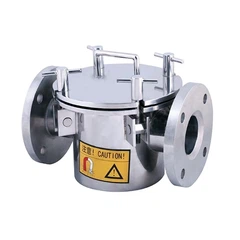
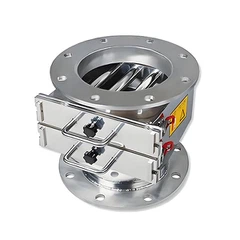
There are various types of magnetic separators with differences in the degree of separation and the kind of minerals in the ore that can be separated with their usage.
Drum Magnetic Separators
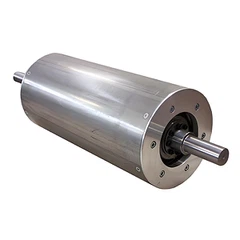
Drum magnetic separators are used broadly in mining industries for the removal of ferromagnetic materials from raw feed materials. These separators use rotating drums that draw magnets that are employed in making distinctions between the magnetic and nonmagnetic minerals in the process of mineral extraction. The drum thereby revolves, enabling it to always scoop and unload ferrous materials. There are dry and wet types, which can be used under different processing conditions.
Overband Magnetic Separators
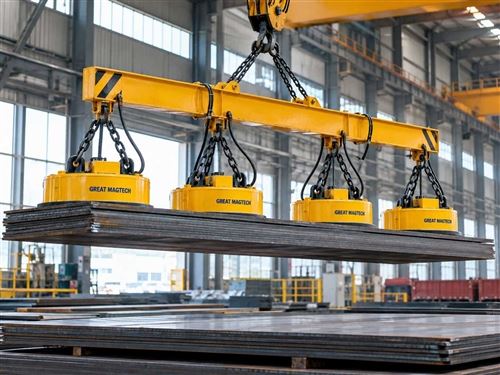
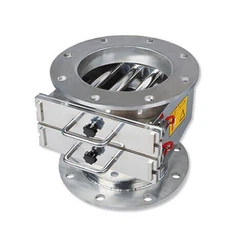
It is, therefore, essential to use overband magnetic separators to help filter out undesired metallic items in the conveyor belts before proceeding through more delicate equipment. These separators are generally mounted at a higher level than the conveyors, where the ferrous contaminant is constantly removed to ensure proper functionality. None of them has a drawback to the belt system, which can elastically transport and discharge the ferrite magnetic material. Overband electro-magnetic separators are used in various sectors like mining, recycling, material handling, etc., where there is a risk of metal tramp iron exposure to machinery.
Magnetic Pulley Separators

Magnetic pulley separators are utilized as additional pulleys to conveyor belts and substituted standard pulleys at discharge points, with the functionality of removing ferrous material before the next process. These separators operate in a way that generates a dense magnetic field on the head pulley, which attracts magnetite particles whenever the material is conveyed. While non-magnetic materials move forward, the magnetic particles get attracted toward the drum and, therefore, are rejected from the process stream. They are most suitable for use in large quantity handling systems, such as in the mining and quarrying industries.
High-Gradient Magnetic Separators (HGMS)
High-gradient magnetic separators are particularly used when the size of minerals is fine-associated with the slurry process, where a stronger magnetic field is required to separate the weak magnetic particles. To its deepest point, these separators utilize matrix elements to conduct a magnetic field that ensnares any magnetic material that exists. These HGMS units are mainly applied in industries that involve the processing of kaolin, feldspar, and silica sand for purity purposes. They are very useful in enhancing the precipitation of minerals, especially from low-grade ores, and enhancing extraction rates.
Eddy Current Separators
Even though eddy circuit separators are not original magnetic separators, they make use of magnets in removing non-ferromagnetic materials that are comprised in the circuit, such as aluminum circuits and copper circuits, for improved recycling and use of resources. The operation of these separators depends on the generation of an AC field, followed by die and eddy currents in a conductor, which are further repelled from non-metallic substances. They are commonly used in recycling, especially in waste stream recycling, which involves the sorting of intermixed materials, including metals. Eddy current separators increase the purity of the material and increase the yield of non-ferrous metals, which have a lot of value in the general market.
Applications of Magnetic Separation in the Industry
Magnetic separation is an indispensable process in various industrial sectors, enhancing both productivity and material quality. In the mining and mineral processing industry, it helps extract iron ore, remove magnetic minerals from non-magnetic ores, and purify metal concentrates.
The recycling and waste management sector relies on magnetic separation to recover valuable ferrous metals from mixed waste streams and electronic waste. In food processing, magnetic separators ensure product safety by eliminating metal contaminants from bulk ingredients. The ceramic and glass manufacturing industry benefits from magnetic separation by removing iron impurities from raw materials, improving the final product's clarity and quality.
Additionally, chemical and pharmaceutical industries use magnetic separation to refine raw compounds and eliminate unwanted elements. Across industries, magnetic separation contributes to sustainable practices, reducing waste and enhancing resource recovery.

Choosing the Right Magnetic Separator for Your Business
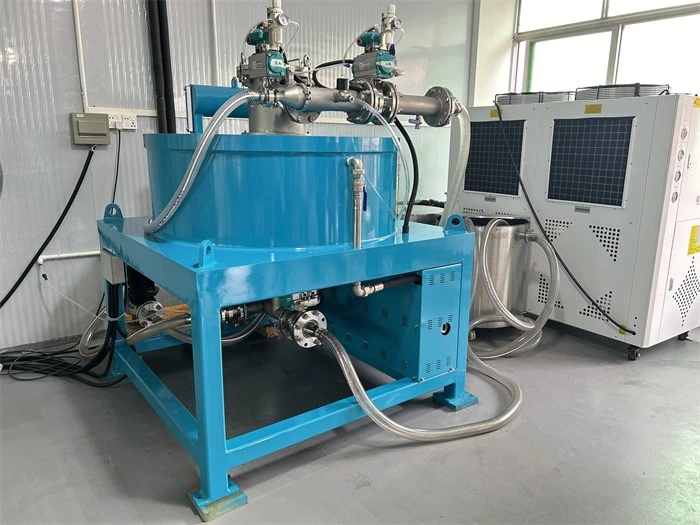
The choice of the appropriate magnetic separator, like the Great Magtech, must be properly made in order to enable the ideal separation for the specific minerals being handled. First, the material content of each business must be determined to identify if the impurities are weak or strongly magnetic. Throughput capacity is another factor, as high throughputs can only be handled by high-capacity separators.
Another important factor is the operating environment; whether the process occurs in a dry or wet setting determines the type of separator to be used. Power consumption is also a critical consideration, especially when using a modern, multi-stage system designed to optimize separation efficiency. These advanced separators are engineered to operate with minimal power while delivering maximum results, making them ideal for high-performance applications.
Another factor to be discussed in this technical area is the service/maintenance element. If the whole system were to be kept for a longer period, costs could, in the long run, be as low as possible. When these aspects have been considered, it becomes easier for firms to get the right magnetic separation system that would effectively boost their performance.
Best Practices for Implementing Magnetic Separation
Indeed, to gain maximum benefits from magnetic separation, it is worth adhering to some guidelines and standard procedures when installing and operating the system. It is important to have properly working magnetic separators, and proper functioning can only be attained if the equipment used is maintained regularly to avoid degrading performance as time progresses. In terms of optimality, adequate positions for separators should be placed at appropriate points in the processing line, which reduces contamination levels. It is also possible due to regular testing and calibration, which help them check how well the separators work and if any changes are needed. Training employees on operational procedures plays a significant role in increasing productivity and the use of magnetic separation methods. There is, however, a possibility of combining magnetic separation with other processing techniques for enhanced material selectivity and reduction of waste production. By following the best practices presented above, efficiency in businesses will be high, and thus, there will be a high chance of achieving better separation outcomes.
Conclusion
Magnetic separation in mineral processing is beneficial for B2B seller to optimize its business and save the cost by providing much better quality products on their end. When one learns of the various kinds of magnetic separators and uses of each kind, his or her business will proceed to make right decisions that will enhance the kind of processing that is done.
Selecting suitable magnetic separators is crucial in the mineral processing industry, and it provides a competitive edge to a business. Due to the development of better magnetic technologies in separation, the future seems to be continually enhanced, both in terms of accuracy and in the lifespan of the magnetic separator. It can be said that in the future, industries will begin to incorporate more complex magnets into their systems to complement various business processes. The following guidelines, along with appropriate equipment, should be used in the utilization of magnetic separation to optimize business development and profitability.