


























The simple question of "Is Lead Magnetic?" may seem obvious, but it opens up a broader exploration of magnetism in metals and how different materials respond to magnetic fields. Lead is a heavy, soft, and ductile metal that has been used as a material in a variety of applications, from plumbing to radiation shielding. The magnetic behavior of lead is not something that can be understood overnight and requires an understanding of atomic structure, magnetic classification, and the behavior of magnetic materials in practical applications.
We will evaluate whether lead is magnetic, investigate the science behind lead magnetism, and explore applications of lead in everyday life. By comparing lead with strongly magnetic metals such as iron and with materials used in permanent magnets, we can better understand how magnetic properties differ among metals. The important evidence revealed in the literature can serve as a guide to elucidate lead's magnetism and further explore this interesting topic.
Understanding Magnetism: The Basics
To answer whether lead is magnetic, first, we must understand what magnetism means and how it behaves in materials. Magnetism is a physical phenomenon of the movements of electric charge, specifically electrons, in an atom within a material. Materials are divisible into three categories based on behaviors:
● Ferromagnetic materials: These materials - iron, nickel, cobalt - exhibit strong magnetic properties. They can become magnetized or create permanent magnets. Ferromagnetic materials have unpaired electrons as delivered through the atomic structure that can align in domains to form magnetism.

● Paramagnetic materials: These materials - aluminum, magnesium - are weakly magnetized in a magnetic field. They have unpaired electrons that will be magnetically aligned in a magnetic field, but will lose their magnetism once the magnetic field is removed.

● Diamagnetic materials: Include bismuth, copper, and lead, and they are all very weakly repelled by a magnetic field. You will find that it has very weak repelling behavior, which, when acting in a magnetic field, you do not have a net magnetic moment, therefore, the feedback you feel when one of these metals is magnetically challenged will be weaker than conventional magnetic materials.

Whether a leadchain material is classed in orientation of either of these two categories will depend on the atomic/electronic structure, which we will further explore in depth on the example of lead.
Is It Lead Magnetic?
According to research, lead is a diamagnetic material. Therefore, it is not magnetic in the sense that it attracts or sticks as most people think of magnetism. Lead cannot be a permanent magnet because, like diamagnetic materials, it repels magnetic fields only weakly and is always affected by them.
Furthermore, lead is diamagnetic, which is confirmed by its electronic state. The same effect occurs with all types of diamagnetic materials (all electrons are paired). Therefore, when exposed to a magnetic field, there is no continuous magnetic moment continuum between the up and down spin magnetizations, because all the electrons are either "paired" with each other or spinning in opposite directions, which ultimately results in all the voltage being distributed to each pair of electrons.
Therefore, applying a magnetic field simply meant that once the field was applied, the orbiting electrons would adjust their orbit ever so slightly to generate an opposing magnetic field, meaning there would be a weak repulsion. This effect is so subtle that most people would have to find themselves in a controlled testing lab to see this effect, such as suspending a piece of lead in a strong magnetic field.
Lead lacks ferromagnetism or paramagnetism, so it cannot be used in scenarios such as magnetic attraction, electromagnets, etc. However, its diamagnetic properties are valuable in specific areas such as magnetic levitation experiments, magnetic storage devices, or electromagnets. However, its diamagnetic properties are very useful in some special fields, such as magnetic levitation experiments, where diamagnetic materials can be suspended above strong magnetic fields.
Lead's non-magnetic properties help industries that need to minimize magnetic interference. For example, lead can be used in shielding components to avoid undesirable magnetic events in medical imaging systems such as MRI machines.
Why is Lead Diamagnetic Rather Than Ferromagnetic or Paramagnetic?
● Practical Applications of Lead's Diamagnetism: While lead's diamagnetism may be a trivial detail, many practical applications stem from lead's diamagnetic characteristics. Below, we discuss some of the practical applications, as well as considerations related to lead's non-magnetic properties.
● Radiation Protection: Lead has a high density and is an effective radiation absorber, and is often used to protect against ionizing radiation such as X-rays and gamma rays. In addition, lead's nonmagnetic properties also make it very useful in the healthcare field, as it can effectively prevent potential interference with expensive, sensitive equipment, especially MRIs. As much literature has shown, lead used for MRI shielding can effectively suppress the effects of the MRI instrument's magnetic field on magnetic offsets.
● Electronics and Instruments: Similar to above, in electronics, we prefer to use non-magnetic materials in devices that will operate in or around magnetic fields, often used when sensitive elements may be present. Since lead is diamagnetic, it is often preferred for many connectors, shielding, or soldering applications, where it may be on or in a magnetic design.
● Scientific Studies: Lead can be used for more complex scientific research, such as investigating so-called "magnetic levitation." In magnetic levitation applications, components or materials are driven in strong magnetic fields to levitate diamagnetic materials (including lead) to study the properties of materials under near-frictionless interactions. Such studies usually involve physics, materials science, or engineering, among others.

● Limitations in Magnetic Applications: While lead lacks magnetic properties such as ferromagnetism or paramagnetism, it does limit applications to magnetic attraction, retention, and storage, especially because of its density and that of elements such as iron or neodymium... For example, lead does not have the capacity of a magnetic storage medium or motor, or transformer that iron and neodymium offer.
Lead and copper are both diamagnetic metals, but they have very different practical applications because of their other material properties. Copper is a great conductor of electric current and is a material that is used for its metallic properties, hence the wire found in your computer, for example. Lead has a very high density and malleability, both of which make it an excellent choice for use as a shielding material and in other types of plumbing use. The comparison of lead in this broader context helps to underscore that the use of a material involves its full set of properties, and the property of a material to interact with a magnetic field is only one property in the total use, based on a variety of criteria.
Industrial Separation of Magnetic and Non-Magnetic Metals
Because lead is not magnetic, it cannot be separated using magnetic force alone. However, in many industrial environments, materials are rarely processed in isolation. Mixed metal streams often contain both ferrous and non-ferrous metals.
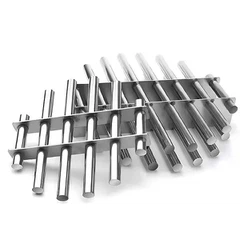
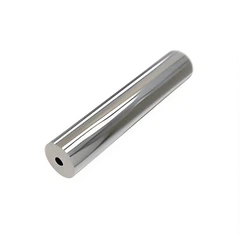
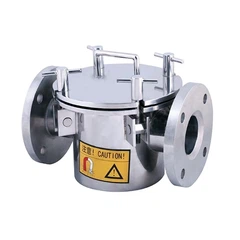
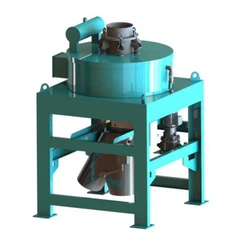
In metal recycling and manufacturing systems, magnetic separators are commonly used to remove iron and steel from mixed material flows. During this process, magnetic materials are extracted while non-magnetic metals such as lead remain unaffected.
This selective behavior is essential in scrap processing lines, alloy preparation, and waste recovery facilities. A properly configured metal recycling magnetic separator allows operators to isolate ferrous metals efficiently before further classification or processing.
In situations where both magnetic and non-magnetic metals must be separated, magnetic systems are often combined with additional sorting technologies to complete the material recovery process.
The Future of Lead: A Changing Perspective
The demand for non-magnetic materials (i.e., lead) may change as technology advances. For example, in quantum computing, advances in imaging, and advanced technologies that require tight control of magnetic fields, an opportunity for the use of lead may arise, leveraging its diamagnetic nature. However, efforts are underway to find alternatives to lead if it can or must be avoided from an environmental standpoint.
For instance, researchers are looking at applications of tungsten or bismuth to take the place of lead when potential radiation exposure is present. Bismuth, while diamagnetic like lead, also has a much lower density, which could limit its possible applications in radiation shielding. Ultimately, the onus is on material scientists to develop new alloys or composites that afford similar characteristics to lead without the negative issues surrounding lead.
Conclusion
In conclusion, while lead is not magnetically aligned like iron or other ferrous metals, it is diamagnetic and exhibits a very weak repulsive response to magnetic fields. This behavior results from the paired electrons within its atomic structure, which prevent the formation of strong magnetic domains. Because of this, lead cannot function as a permanent magnet and does not respond to magnetic attraction in practical industrial environments.
Lead's non-magnetic properties make it suitable for applications where magnetic neutrality is required, such as radiation shielding and certain precision electronic environments. At the same time, its health and environmental considerations limit its broader industrial use.
Understanding the difference between magnetic and non-magnetic metals is essential in material processing and metal separation industries. At Great Magtech, we focus on magnetic separation technologies designed to distinguish ferrous metals from non-magnetic materials in industrial processing systems. Proper knowledge of material magnetism helps ensure accurate equipment selection and efficient separation strategies.
FAQs
Q: Is lead ever attracted to a magnet under strong conditions?
A: No. Even in very strong magnetic fields, lead does not become attracted like iron or steel. It exhibits weak diamagnetic behavior, meaning it slightly repels magnetic fields rather than being pulled toward them.
Q: Can magnetic separators remove lead from scrap metal?
A: No. Magnetic separators remove ferrous metals such as iron and steel. Lead, being non-magnetic, will remain in the material stream and must be separated using other methods.
Q: Can lead interfere with magnetic equipment?
A: Lead itself does not interfere with magnetic systems because it does not respond strongly to magnetic fields. However, it may be present alongside magnetic metals that do require separation.
Q: What industries need to distinguish between magnetic and non-magnetic metals?
A: Metal recycling, scrap processing, alloy manufacturing, and material recovery facilities all rely on understanding magnetic properties to separate materials effectively.
Q: Is lead safer to use in magnetic environments compared to ferromagnetic metals?
A: From a magnetic interaction perspective, lead does not experience strong attraction forces in magnetic fields. However, safety considerations related to lead are primarily health and environmental concerns rather than magnetic behavior.