










When you use a magnetic rod, the Gauss value is often used to judge its strength, but knowing the number is not the same as knowing how to measure it correctly. In real use, testing is where confusion starts, because small changes in probe position, contact, or angle can lead to very different readings even on the same magnet. This makes it difficult to tell whether the rod actually meets your requirement or not. You are not just checking a number; you are checking how the magnet performs under real conditions, and if the method is not consistent, the result can be misleading. This guide focuses on how to test the gauss of a magnetic rod in a practical and repeatable way, so your measurement reflects the actual condition of the magnet rather than just a random value.
What Is Gauss in Magnetic Rods?
Gauss is a unit used to measure the strength of a magnetic field. When you look at a magnetic rod, the Gauss value usually refers to the magnetic field at its surface, where metal particles are most likely to be captured. This is the number you often see in specifications, such as 8000 or 12000 gauss.
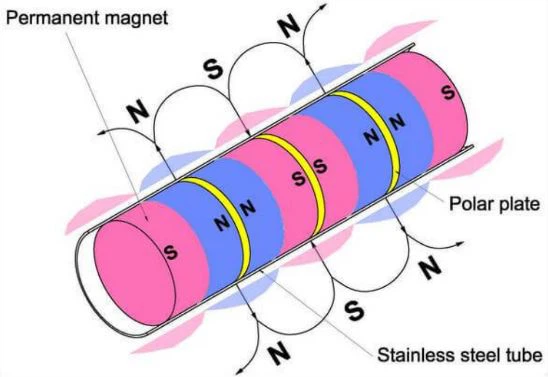
But not all parts of the rod have the same strength. The magnetic field is strongest near the surface and weaker as you move away. This means the measured value depends on where and how you test it. In most cases, what matters is the peak surface gauss, since that is where separation happens.
So when you check Gauss, you are not just reading a number. You are measuring how strong the magnetic field is at a specific point.
Why Testing Gauss Is Important
Testing the gauss of a magnetic rod is not just a technical step. It helps you understand whether the magnet is doing its job in your process.
Verifying Magnetic Performance
The Gauss value gives you a direct way to check how strong the magnetic field is at the surface. If the value is lower than expected, the rod may not capture metal particles effectively. This can affect separation results without being obvious at first.
Supporting Quality Control
In many applications, especially in food or industrial processing, consistent performance matters. Testing Gauss helps confirm that each magnetic rod meets the required standard. It gives you a measurable reference instead of relying on an assumption.
Detecting Changes Over Time
Magnetic strength can change due to factors like temperature, impact, or long-term use. Regular testing helps you notice these changes early. Small drops in Gauss can lead to reduced efficiency.
Ensuring Reliable Operation
If you depend on magnetic separation to protect equipment or product quality, testing becomes part of routine maintenance. It helps you keep the system working as expected without unexpected performance issues.
Tools Required to Measure Gauss
To measure the gauss of a magnetic rod, you need the right tools. The reading depends not only on the magnet, but also on how the measurement is taken.
Gauss Meter
A Gauss meter is the main device used to measure magnetic field strength. It shows the value in gauss or tesla, depending on the setting.
You use it to read the magnetic field at a specific point on the rod.

TM-801EXP Magnetism Tester Tesla
Send Inquiry Now

WT103 Gauss Meter Magnetic Detector
Send Inquiry Now
Hall Probe
The hall probe is the sensing part of the Gauss meter. It detects the magnetic field and sends the signal to the device.
Different probe types can give slightly different readings, so it is important to use the right one for surface measurement. The probe position matters.
Probe Orientation
How you hold the probe affects the result. If the angle is off, the reading may be lower than the actual value.
For consistent results, the probe should be placed flat against the surface, with stable contact.
Calibration and Setup
Before testing, the Gauss meter should be calibrated. This ensures the reading is accurate and reliable.
You should also check:
Battery level.
Probe condition.
Measurement unit setting.
A small setup error can lead to a large difference in the final value.
How to Test the Gauss of a Magnetic Rod (Step-by-Step)
Testing Gauss is simple in theory, but small mistakes can change the result. Following a clear method helps you get consistent readings.
Step 1: Prepare the Gauss Meter
Start by turning on the Gauss meter and selecting the correct unit, usually Gauss. Make sure the device is calibrated according to its instructions.
Check a few basic things before you begin:
Battery level.
Probe condition.
Zero setting.
A stable starting point matters.
Step 2: Position the Magnetic Rod
Place the magnetic rod in a stable position. It should not move during testing. If the rod is part of a system, make sure nearby metal objects do not interfere with the measurement. External influence can affect the reading.
Step 3: Place the Probe Correctly
Hold the hall probe flat against the surface of the rod. The sensing face of the probe should make full contact.
Do not tilt it. Do not hover above the surface. Even a small gap can reduce the measured value.
Step 4: Find the Peak Gauss Point
Move the probe slowly along the surface of the rod. The magnetic field is not uniform, so some areas will show higher values than others. Look for the highest reading. This is usually near the centerline of the rod or directly above the internal magnet structure.
Step 5: Record the Measurement
Once you find the peak value, hold the probe steady and record the reading. For better accuracy, repeat the measurement at several points along the rod. Consistency is more important than a single reading.
Step 6: Repeat and Compare
Test multiple rods if needed and compare the results. If the readings vary too much, check your method again. It may not be the magnet. It may be how you measured it.
Step 7: Maintain a Consistent Method
Always use the same probe type, position, and testing steps. This helps ensure that your results can be compared over time.
Without consistency, the numbers lose meaning. A controlled method gives you a reliable way to evaluate magnetic performance.
Where to Measure on a Magnetic Rod
Where you measure the gauss on a magnetic rod has a direct effect on the result. The magnetic field is not the same across the entire surface, so choosing the right points matters.
Surface Contact Area
The most common place to measure is directly on the surface of the rod. This is where the magnetic field is strongest and where metal particles are captured during use.
Always keep full contact between the probe and the surface.
Centerline vs Edge
The magnetic field is usually strongest along the centerline of the rod. As you move toward the edges, the field may become weaker.
For this reason, measurements are often taken:
Along the centerline.
At several points around the surface.
This helps you see how the field changes.
Multiple Measurement Points
One reading is not enough. You should move the probe along the rod and record values at different positions.
The goal is to find the peak Gauss value, not just a random point. Consistent positioning leads to more reliable results.
Common Mistakes When Measuring Gauss
Measuring Gauss seems simple, but small errors can lead to misleading results. Most problems come from how the test is done, not the magnet itself.

Incorrect Probe Angle
If the probe is not placed flat against the surface, the reading can drop. Even a slight tilt changes how the sensor detects the magnetic field.
Keep the probe aligned and stable.
Inconsistent Contact
A small gap between the probe and the rod can reduce the measured value. This often happens when the probe is not held firmly or moves during testing.
Full contact is important.
Measuring at Random Points
The magnetic field is not uniform across the rod. If you test only one spot, the reading may not represent the actual peak value.
You should:
Move along the surface.
Check multiple positions.
Skipping Calibration
If the Gauss meter is not calibrated, the readings may not be accurate. This is often overlooked, especially during quick checks.
A small setup mistake can affect the final result more than expected.
Factors That Affect Gauss Readings
The Gauss value you measure is not only about the magnet itself. Several external factors can change the reading, even when the magnetic rod stays the same.
Distance from the Surface
Magnetic strength drops quickly as the distance increases. If the probe is not in full contact with the rod, the reading will be lower. Even a small gap matters.
Probe Type and Orientation
Different probes respond differently to the magnetic field. If the probe type or angle is not correct, the measurement may not reflect the actual value.
Temperature
Magnetic materials can be affected by temperature. Higher temperatures may reduce magnetic strength, which can lower the measured gauss value. This is more noticeable in demanding environments.
Surface Coating Thickness
Many magnetic rods have a protective coating. A thicker layer creates more distance between the probe and the magnet inside. This can slightly reduce the measured value.
External Interference
Nearby metal objects or magnetic fields can affect the reading. Testing in a controlled environment helps reduce this problem.
How Often Should You Test Magnetic Rods?
How often you test a magnetic rod really depends on how you use it. If your process runs all the time or the product needs to stay very clean, it is better to check the gauge more often. This helps you catch any drop in magnetic strength early. If your process is simple and stable, you can test less often. It is also a good idea to check the magnet after installation, during regular maintenance, or if it has been exposed to heat or impact. In simple terms, if the magnet plays an important role in your process, testing it regularly helps you avoid problems later.

Magnetic Tube
Send Inquiry Now

Square Magnetic Rod
Send Inquiry Now

Magnetic Filter Rod
Send Inquiry Now

Neodymium Magnetic Rods
Send Inquiry Now
FAQs
Q: Can you test Gauss without a Gauss meter?
A: Not accurately. You may see if a magnet attracts metal, but you cannot measure the actual strength without a proper Gauss meter.
Q: Why do Gauss readings change on the same rod?
A: This usually happens because of testing conditions. Probe position, angle, and contact can all affect the reading, even on the same magnet.
Q: Does the size of the magnetic rod affect Gauss?
A: Yes. The design and size of the rod can influence how the magnetic field is distributed, which can affect the measured value at different points.
Q: What is a typical Gauss range for magnetic rods?
A: Many industrial magnetic rods are in the range of 8000 to 12000 gauss at the surface, but the exact value depends on the material and design.
Q: Can a magnetic rod lose strength over time?
A: Yes, but it usually happens slowly. Normal use does not cause a quick drop, but high temperature, strong impact, or corrosion can reduce magnetic strength.
Q: Can magnetic rods be customized for different applications?
A: Yes. Magnetic rods are often customized based on how you use them. This can include changes in size, magnetic strength, surface finish, or internal design to match your process.
Q: Are custom coatings or surface finishes available?
A: They are. Different coatings or finishes can be applied based on the environment, such as corrosion resistance or hygiene requirements for food or chemical use.
Conclusion
Testing the gauss of a magnetic rod comes down to doing it the same way every time. If the probe angle changes or the contact is not stable, the number can shift even when the magnet has not changed. That is why a simple, repeatable method matters more than taking one quick reading.
In daily use, you are not just checking a value. You are checking whether the magnet is still doing its job. If the reading starts to drop or the results are inconsistent, it is usually a sign that something needs attention. Keeping a basic testing routine helps you avoid guessing. It also makes it easier to compare results over time.
At Great Magtech, magnetic rods can be supplied in different sizes and strength levels, including options for specific materials and working conditions. If your setup is not standard, it can be useful to look at a design that fits how your process actually runs.