
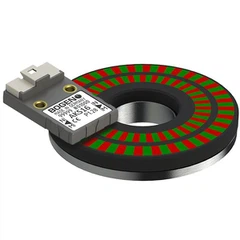
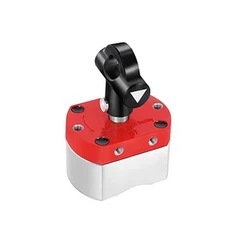









In modern life, magnetic tools have become an indispensable part of our daily life with their unique performance and wide range of application scenarios. From simple magnetic hooks to complex magnetic measuring instruments, magnetic tools not only improve the convenience of our lives but also play an important role in the fields of industry, medical treatment, etc. This article will help you understand the common magnetic tools and their applications in life, and reveal the "big power" behind these small tools.
1. Basic Principles of Magnetic Tools
The reason why magnetic tools can play various practical functions lies in the clever application of the principle of magnetism. Magnetism is one of the four fundamental forces in nature, which originates from the magnetic field generated by the movement of electrons inside magnetic materials. When two magnets are close to each other, an attractive or repulsive force will be generated between them, which is the common magnetic phenomenon we are familiar with.

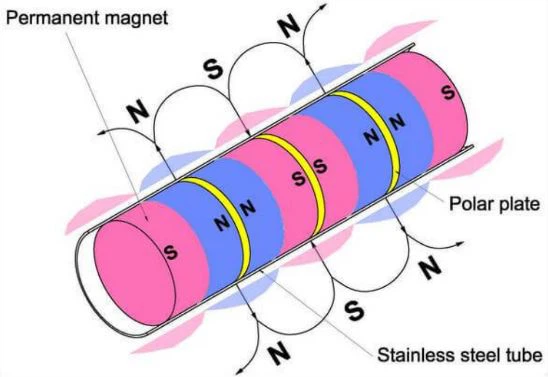
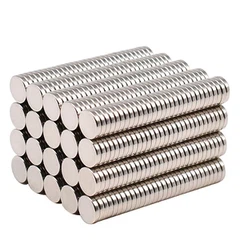
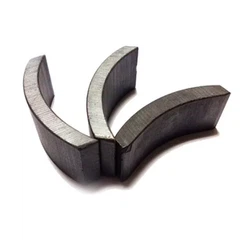
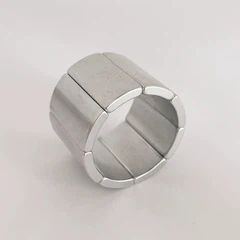
Modern magnetic tools mainly use two types of magnets: Permanent magnets, such as neodymium magnets(a rare earth magnet), can maintain magnetism for a long time and do not require external energy to maintain.

While electromagnets need to be powered to generate a magnetic field, the magnetic force can be adjusted at any time by controlling the current.
The choice of magnetic materials directly affects the performance of magnetic tools. Ferromagnetic materials such as iron, nickel, and cobalt are easily magnetized and are commonly used materials for making magnetic tools. Among them, neodymium iron boron magnets have become the preferred material for modern powerful magnetic tools due to their extremely high magnetic energy product and relatively high cost performance. Understanding these basic principles can help us better select and use various types of magnetic tools, and also let us understand why some magnetic tools perform better than others similar products.
2. 10 Common Magnetic Tools and Applications in Life
Pot Magnets

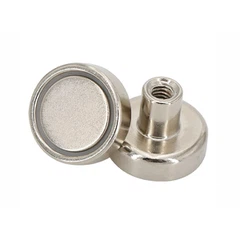
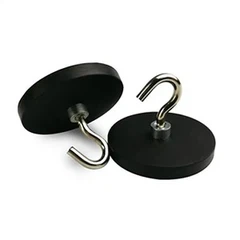
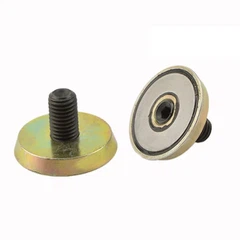
Pot magnets are made of high-quality metal or rubber parts combined with magnets. Through special magnetic circuit design and production methods, their magnetic force is many times stronger than that of a single magnet. It can be easily fixed on metal surfaces such as refrigerator doors, kitchen cabinets, metal railings, etc., and used to hang keys, towels, tools and other items. Its strong adsorption force ensures that the hook will not fall off easily during daily use.
Magnetic Screwdriver Set

Magnetic screwdrivers contain multiple screwdriver heads of different specifications and types, and one or more magnetic handles. Its main feature is that the screwdriver head is magnetic, can adsorb screws, and is easy to operate. It is particularly suitable for delicate work such as assembling furniture and repairing electronic products. Some high-end sets are also equipped with replaceable magnetic heads that can adapt to different types of screws, realizing multiple uses of one tool.
Magnetic Mobile Phone Holder

Magnetic mobile phone holders are usually composed of magnets and metal parts. The magnet generates a magnetic field, and the mobile phone is fixed to the holder through the attraction of the magnetic field. The back of the phone needs to be made of metal (such as steel sheets, iron sheets, etc.) or have magnetic accessories (such as magnetic phone cases) to attract the magnet of the bracket. It allows drivers to easily view navigation without distracting the phone, greatly improving driving safety. When choosing, the bracket's rotation flexibility, magnetic strength, and compatibility with the phone model should be considered.
Fridge Magnets

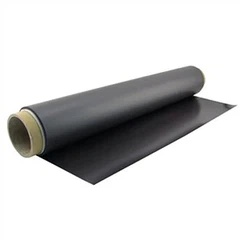
Ferrite magnetic materials or other permanent magnetic materials. The atomic structure inside these materials has a special arrangement that enables them to generate a magnetic field. Fridge magnets can also be used to fix notes, photos, or important documents, making the kitchen space tidier and orderly. Some well-designed refrigerator magnets even have note clips or small containers, further expanding their practicality.
Rubber Coated Magnets

The rubber coated magnets is composed of sintered NdFeB magnets, magnetic conductive sheets, and rubber shells. Its core is a magnet, and a layer of rubber material is wrapped on the outside. This structure can effectively prevent the magnet from breaking due to collision or corroding due to environmental factors. It can be used to fix cabinet doors, lighting fixtures, door stops, tools, banners, etc.
Magnetic Hooks
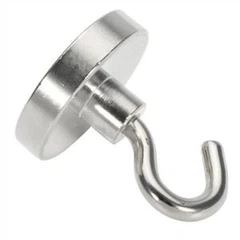
The magnetic hook is made of magnetic material and can generate a strong attraction with magnetic materials such as iron, cobalt, and nickel. This magnetism allows it to firmly adhere to metal surfaces such as refrigerator doors and filing cabinets. For example, an ordinary magnetic hook can easily be attached to the iron shell of a refrigerator and carry items of a certain weight, such as keys and shopping lists.
Magnetic Door Catch

Magnetic door catches, also known as electromagnetic locks or magnetic locks, are devices that use electromagnetic principles to lock and open doors. Its core working mechanism is to use the strong suction generated by the electromagnet to tightly adsorb the door leaf and door frame together to achieve a locking effect. Magnetic door catches are widely used in commercial buildings in different scenarios. Electromagnetic locks are often used at the entrances and exits of office buildings, shopping malls, hotels, and other places to provide safety and convenience.
Magnetic Knife Holders
The magnetic knife holder is a kitchen storage tool designed using the principle of magnetic adsorption. Through the built-in strong magnet or magnetic material, the knife is fixed on the surface of the knife holder by hanging or attaching, so as to achieve convenient storage and use of the knife. It is generally installed on the wall or other vertical surface, which is convenient for users to reach out and use. It is suitable for home kitchens and is also widely used in restaurants, professional chef workstations and other places.
Magnetic Window Cleaner
The core principle of the magnetic window cleaner is to use magnetic adsorption. Two cleaning plates with strong magnets are respectively adsorbed on the inner and outer sides of the glass, and the magnetic force between the two is used to keep synchronous movement to achieve simultaneous cleaning of the inner and outer glass. You can clean the outer window without leaning out of the window, avoiding the risk of high-altitude operations. It is suitable for office buildings, residential buildings, hotels, etc.
Magnetic Wristband
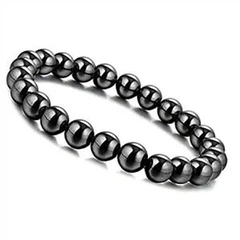
It absorbs metal objects through built-in magnets and is worn on the wrist so that tools can be quickly accessed when needed, while avoiding the tools from falling or being lost. In our lives, mechanics and maintenance technicians use magnetic wristbands to easily store and access screws and small tools when repairing and maintaining equipment.
3. What Are the Advantages of Magnetic Tools Compared to Ordinary Tools?
1. Adsorption Function
Magnetic tools can use their magnetic field to adsorb metal workpieces, and the adsorption process of magnetic tools is relatively simple and quick. As long as the workpiece is placed within the effective adsorption range of the magnetic tool, it can be fixed, which greatly improves work efficiency.
Ordinary tools usually require auxiliary devices such as clamps to fix the workpiece, which may take more time to adjust and install.
2. Convenience of Operation
Magnetic tools can be attached to the side of a metal toolbox or workbench.
Ordinary tools usually need to be placed in a specific location in the toolbox. If the toolbox has limited space or no suitable partitions, the tools may be mixed together, making it difficult to quickly find the required tools.
3. Processing Accuracy
The adsorption force of magnetic tools can keep the workpiece stable during processing.
Ordinary tops may cause parts to jump due to uneven clamping force or uneven force during processing, affecting processing accuracy.
4. Safety
When working at high altitudes or in a small space, magnetic tools can be adsorbed on nearby metal structures, reducing the risk of tools falling.
4. Guide to Purchasing Magnetic Tools
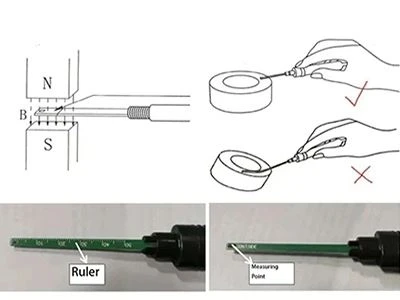
When buying magnetic tools, magnetic strength is one of the most critical considerations. Magnetic force is usually measured in "Gauss" or "Tesla". For daily household tools, 3000-5000 gauss is sufficient. If stronger adsorption is required, such as a tool organizer for the workshop, products with 8000 Gauss or above should be selected. However, it should also be noted that too strong a magnetic force may cause safety hazards or inconvenience in use. The appropriate strength should be selected according to actual needs.
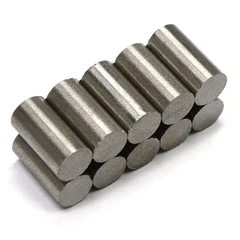
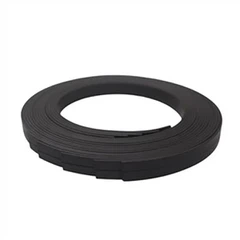
Size and shape also affect the practicality of magnetic tools. Round magnets are suitable for most general scenarios, while bar or ring magnets are suitable for specific applications. Thickness directly affects the penetration ability of the magnetic force. Thicker magnets can maintain a good adsorption effect at a certain distance. For occasions that require concealed installation.
5. Maintenance and Care of Magnetic Tools
Proper maintenance can significantly extend the service life of magnetic tools. Cleaning the surface of the magnet is a basic maintenance measure. Use a soft dry cloth to wipe it regularly to remove metal debris and dust. If rust appears on the surface of the magnet, it can be gently polished with fine sandpaper and then applied with a thin layer of anti-rust oil. It should be noted that corrosive chemicals should be avoided when cleaning, which may damage the surface coating of the magnet.
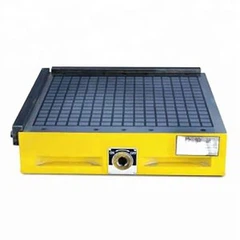
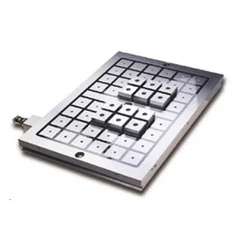
When storing magnetic tools, attention should be paid to the choice of environment. High temperature, severe vibration, and strong alternating magnetic fields can cause magnets to demagnetize, so they should be kept away from heat sources, avoid knocking, and do not store magnets near electrical appliances that can generate strong magnetic fields, such as generators and transformers. For some magnetic tools that require high magnetic strength, such as magnetic suction cups, it is necessary to check their magnetic properties regularly. The adsorption capacity of the magnetic suction cup can be tested by adsorbing a certain weight of iron blocks.
6. Conclusion

Magnets have long become an indispensable part of our lives. From simple refrigerator magnets to professional magnetic tools, from home organization to cutting-edge technology, the application of magnetism runs through all aspects of our lives. It not only plays a role behind the scenes, enhancing the function, safety, and efficiency of various fields and industries, but also brings us many conveniences. Understanding the principles, applications, and purchase points of these common magnetic tools can not only help us use them more efficiently but also inspire us to discover more potential possibilities for magnetic applications.