








When you choose a magnetic separator, the type of machine can change how your entire process performs. Drum magnetic separators and roller magnetic separators are often used for similar goals, but they do not work in the same way. The difference shows up in how materials move and how particles are separated. If you are dealing with large volumes of material, a drum separator may handle the flow more easily. If your focus is on finer particles or higher purity, a roller separator may give you better control. The challenge is not understanding what each machine does, but knowing which one actually fits your working conditions. In this guide, you will see how their designs differ, how they perform, and how to choose the right option for your process. Please continue reading the following content.
What Is a Drum Magnetic Separator?
A drum magnetic separator is an industrial device used to automatically separate ferrous (magnetic) materials from non-ferrous (non-magnetic) materials in bulk processing. You will often see it in operations where large volumes of material move continuously, such as mining, recycling, or aggregate handling.

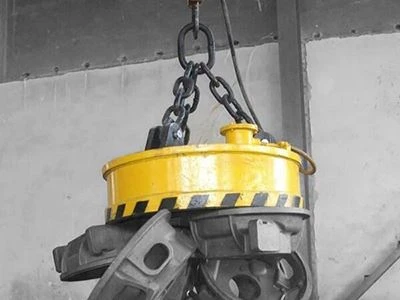
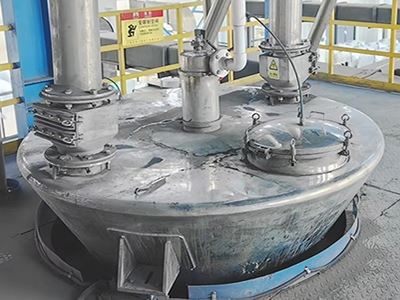
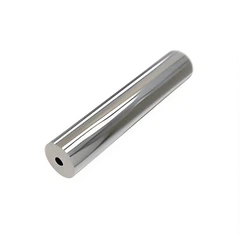
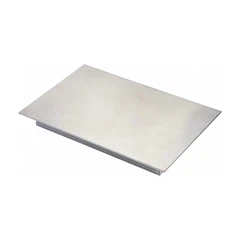
Drum Magnetic Separator
Send Inquiry Now

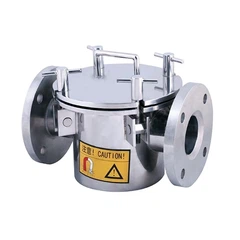
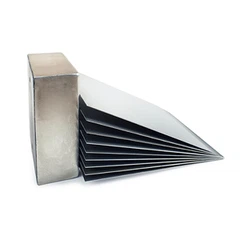
Drum Magnetic Separator
Send Inquiry Now

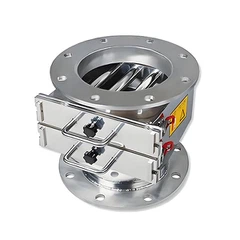
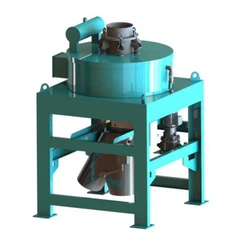
Drum Magnetic Separator
Send Inquiry Now

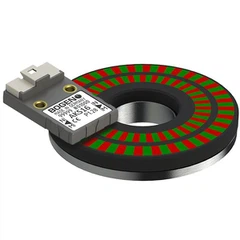
Drum Magnetic Separator
Send Inquiry Now
It typically consists of a rotating stainless steel drum with stationary magnets inside. As material flows onto the drum, magnetic particles are attracted to the surface and carried along as the drum turns, while non-magnetic material falls away. The captured metal is then released at a separate discharge point.
What Is a Roller Magnetic Separator?
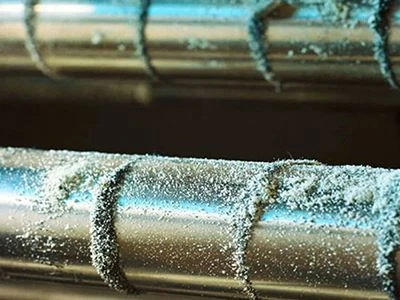
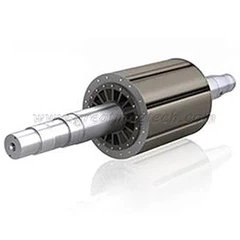
A roller magnetic separator is a high-intensity dry separation device used to remove ferrous impurities from granular or powder materials. You will often see it in processes where higher purity and more precise separation are required. It typically uses a rotating magnetic roller, often built with rare-earth magnets to create a strong magnetic field. Material is fed in a thin layer across the roller surface, allowing better contact between particles and the magnetic field. Magnetic particles are attracted and separated, while non-magnetic material continues along a different path.
This type of system includes designs such as induced-roll magnetic separators and magnetic head rollers and is commonly used in industries such as mining, food processing, recycling, and chemicals.

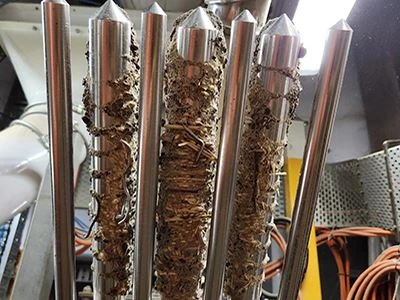
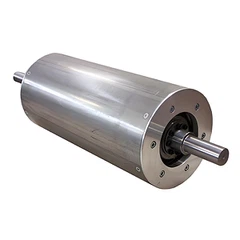
Permanent Magnetic Pulley
Send Inquiry Now

Magnetic Roller
Send Inquiry Now
Design Differences Between Drum and Roller Separators
| Design Aspect | Drum Magnetic Separator | Roller Magnetic Separator |
| Structure | Rotating drum with internal stationary magnets | Rotating high-intensity magnetic roller |
| Magnetic System | Lower to medium intensity, wide magnetic field | High-intensity field, often using rare-earth magnets |
| Material Flow | Bulk material flows over or around the drum | Material is fed in a thin, controlled layer |
| Separation Approach | Continuous bulk separation | Precision separation with higher control |
| Contact Area | Larger surface area for high-volume handling | Focused contact for fine particle interaction |
| Installation | Often integrated with conveyors or chutes | Usually requires a controlled feeding system |
| Footprint | Larger, designed for heavy-duty applications | More compact but needs a precise setup |
| Operation Type | Suitable for continuous, high-throughput processes | Designed for controlled, fine separation processes |
In simple terms, drum separators are built for handling larger volumes with a steady flow, while roller separators are designed for more precise separation where material control is critical.
Working Principle Comparison
Both drum and roller magnetic separators use magnetic force to remove metal particles, but they do it in different ways depending on how the material moves.
A drum magnetic separator works with bulk flow. Material is fed onto a rotating drum, and magnetic particles are attracted to the surface as the drum turns. These particles stay attached while the drum rotates and are carried to a separate discharge point. Non-magnetic material falls away early in the process.

A roller magnetic separator works differently. Material is fed in a thin, controlled layer onto a high-intensity magnetic roller. Because the layer is thin, particles have more direct contact with the magnetic field. Magnetic particles are pulled toward the roller, while non-magnetic particles continue along a separate path.

In simple terms:
Drum → bulk separation, higher throughput
Roller → thin-layer separation, higher precision
The difference comes down to flow control and how much contact the material has with the magnetic field.
Drum Magnetic Separator Vs Roller Magnetic Separator: Performance Comparison
| Performance Factor | Drum Magnetic Separator | Roller Magnetic Separator |
| Magnetic Strength | Low to medium intensity | High intensity (often rare-earth magnets) |
| Separation Precision | Moderate, suitable for bulk removal | High, suitable for fine and weakly magnetic particles |
| Throughput Capacity | High, handles large volumes continuously | Lower requires controlled feeding |
| Material Size Range | Best for coarse to medium particles | Best for fine particles and powders |
| Separation Efficiency | Good for general contamination removal | Higher for achieving a cleaner, higher purity output |
| Contact with Magnetic Field | Limited contact due to bulk flow | Increased contact due to thin-layer feeding |
| Energy Consumption | Generally lower | May be higher depending on system design |
| Stability in Operation | Stable for continuous, heavy-duty use | More sensitive to feed consistency and setup |
In practice, drum separators are preferred when volume and stability matter most, while roller separators are chosen when precision and higher purity are required.
Advantages and Limitations of Drum Magnetic Separators
Drum magnetic separators are built for steady, large-scale material handling. They work well in many industrial settings, but they are not suited for every situation.
Advantages
One of the main strengths is high throughput. You can process large volumes of material continuously without frequent interruptions.
The design is also simple and stable. With fewer moving parts and a fixed magnetic system inside the drum, the operation is predictable and easy to manage.
Maintenance is relatively straightforward. In most cases, you only need to:
Check the drum surface.
Monitor wear over time.
Drum separators are also effective for removing larger ferrous particles from bulk material flows.
Limitations
Separation precision is limited. Because material moves in bulk, smaller or weakly magnetic particles may not be captured effectively.
The magnetic field is not as strong as high-intensity systems. This can affect performance when higher purity is required.
Material contact with the magnetic surface is also less controlled. This means separation depends more on flow conditions than on precise particle interaction.
In short, drum separators are reliable for volume, but less suitable when fine separation is needed.
Advantages and Limitations of Roller Magnetic Separators
Roller magnetic separators are designed for more controlled and precise separation. They are often used when material quality matters more than volume.

Advantages
One of the main advantages is high separation precision. Because material is fed in a thin layer, particles have better contact with the magnetic field. This improves capture efficiency.
The magnetic strength is also higher. Many systems use rare-earth magnets, which help remove fine or weakly magnetic particles that other systems may miss.
You can achieve higher product purity with this setup.
Roller separators are especially useful when working with:
Fine powders.
Small particle sizes.
Materials that require cleaner output.
Limitations
Throughput is lower compared to drum systems. Because the material must be spread in a thin layer, processing large volumes can take more time.
The system is also more sensitive to feeding conditions. If the material is not evenly distributed, separation performance may drop.
Maintenance and setup can be more demanding. You need to ensure:
Stable feeding.
Correct alignment.
Consistent operation.
In simple terms, roller separators offer better precision but require more control during operation.
When Should You Choose a Drum Magnetic Separator?
A drum magnetic separator is a practical choice when your process focuses on handling large volumes of material with steady flow. If your goal is to remove general ferrous contamination without slowing down production, this type of system fits well.
It works best in situations where throughput matters more than fine precision.
You should consider a drum separator if your application involves:
Bulk material handling.
Continuous production lines.
Coarse to medium particle sizes.
In these conditions, the system can operate smoothly without requiring strict control over how material is fed.
It is also a good option when your process does not need extremely high purity. For example, removing larger metal fragments before further processing is often enough.
Another point to consider is stability. Drum separators are less sensitive to variations in material flow, which makes them easier to manage in heavy-duty environments.
When Is a Roller Magnetic Separator a Better Choice?
A roller magnetic separator is the better option when your process needs higher separation precision rather than high throughput. If your goal is to remove fine or weakly magnetic particles, this type of system gives you more control. It works best when material quality matters more than processing speed.
You should consider a roller separator if your application involves:
Fine powders or small particle sizes.
Materials that require higher purity.
Separation of weakly magnetic particles.
Because the material is fed in a thin layer, each particle has more contact with the magnetic field. This makes it easier to capture smaller or less responsive contaminants.
It is also useful when you need to improve the final product quality, not just remove large metal pieces.
However, the system requires more stable feeding conditions. If your process can maintain controlled flow and consistent input, a roller magnetic separator can deliver more precise results.
Selection Checklist: Drum vs Roller Separator
| Selection Factor | Drum Magnetic Separator | Roller Magnetic Separator |
| Material Size | Coarse to medium particles | Fine particles and powders |
| Throughput Requirement | High, continuous bulk processing | Lower, controlled feeding is required |
| Required Purity Level | Moderate purity acceptable | High purity required |
| Magnetic Particle Type | Strongly magnetic particles | Weakly or finely magnetic particles |
| Material Flow Type | Bulk flow, less controlled | Thin-layer, controlled flow |
| Moisture Condition | Suitable for wet or dry materials | Mainly for dry materials |
| Feeding Stability | Less sensitive to variations | Requires stable and even feeding |
| Space and Installation | Larger footprint, easier integration | More compact but needs a precise setup |
| Process Goal | Volume and efficiency | Precision and separation quality |
FAQs
Q: Can drum and roller magnetic separators be used together in one process?
A: Yes. In some systems, a drum separator is used first to remove larger magnetic particles, and a roller separator is added later to handle finer or weaker contaminants. This combination can improve overall separation results.
Q: How does material moisture affect the choice?
A: Moisture can change how material flows and how particles interact with the magnetic field. Drum separators can handle wet or slurry materials more easily, while roller separators are usually better suited for dry conditions.
Q: Can these separators handle non-ferrous contamination?
A: No. Both systems are designed to remove magnetic or ferrous materials. Non-ferrous metals require different types of separation equipment.
Q: Which system is easier to integrate into an existing line?
A: Drum separators are generally easier to install because they work well with bulk flow and standard conveyor setups. Roller separators may require more precise feeding systems and alignment.
Q: Can these separators be customized for different materials?
A: Yes. Both drum and roller magnetic separators can be customized based on your material properties. This may include changes to magnetic strength, drum or roller size, and system configuration. A better match usually leads to better results.
Q: Are there special designs for food or chemical industries?
A: Yes. For these industries, systems can be built with improved sealing, smoother surfaces, and materials that meet hygiene or corrosion resistance requirements.
Conclusion
Choosing between a drum magnetic separator and a roller magnetic separator comes down to what your process actually needs. If you are moving large volumes and want a stable, continuous system, a drum separator usually fits better. If your focus is on removing fine or weakly magnetic particles and improving product purity, a roller separator is often the more suitable option. The difference is not just in design.
It shows up in daily operation. Factors such as material size, flow control, and required purity all affect how each system performs. A mismatch can lead to lower efficiency or unnecessary complexity.
At Great Magtech, both drum and roller magnetic separators are available for different working conditions. If your process involves specific materials, space limitations, or performance targets, it can be helpful to consider a setup designed around those details. A solution that matches your process tends to run more smoothly and stay consistent over time.