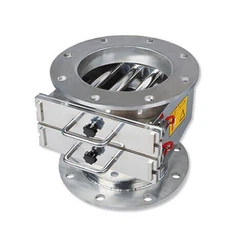
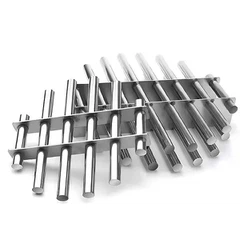








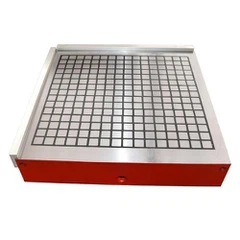
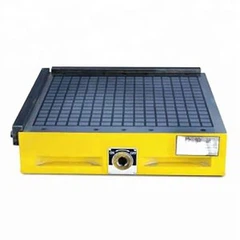
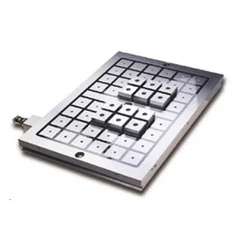


Iron impurities or iron-containing contaminants are a significant source of hazards in the bulk processing industry, including machinery damage, cargo deterioration, and unplanned downtime. Suspension conveyor magnets are an essential component of efficient metal separation and preservation technology for companies in industries such as mineral mining, reuse and recycling, food manufacturing, concrete, energy production, chemicals, and plastics.
An extensive technical description of hanging conveyor magnets, including their design, operation, and usage in industry, is presented in this article.
Significance and Goal
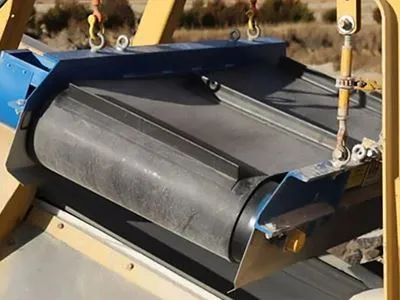
A magnetic separator called a suspended conveyor magnet is placed on top of a conveyor's belt or cascade to obtain and eradicate the iron pollutants from an ongoing stream of materials. This, without disrupting conveyor processes, makes it an excellent solution for large-scale industrial applications.
The primary objective is to maintain downstream machinery, including pulverisers, grinding machines, and crushing machines, while improving product quality by removing unwanted metals like iron.
How Does It Operate?
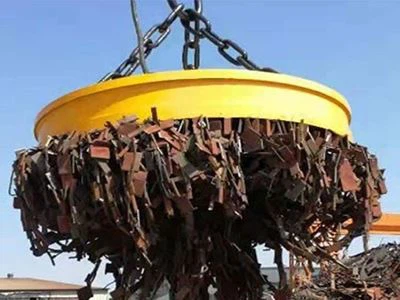
The purpose of a suspended conveyor magnet is to catch ferromagnetic impurities as products travel beneath a conveyor belt or chute. Iron-based metallic substances, including screws, nuts and bolts, cables and instruments, are magnetised to, lifted and separated from large amounts of material such as rock, fossil fuels, wheat, mineral deposits, or biodegradable garbage using a magnetic pull.

The Establishment of Magnetic Fields
Whether the magnet is a permanent magnet or an electromagnetic magnet, it will produce a magnetic field that penetrates the heavy material below (the layer of transport material):
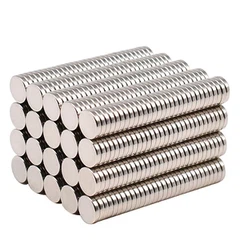
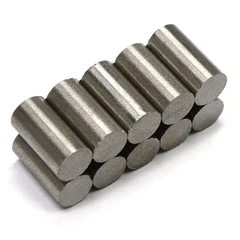
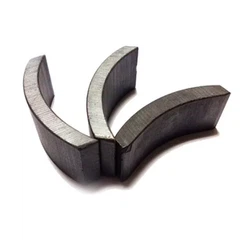
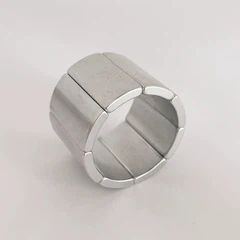
Permanent magnets create a steady field with no electrical energy through the application of ferrite or rare-earth elements (like neodymium).
Electromagnets are powered by electric coils, which provide a field strength that may be adjusted for denser and more stringent substrate layers.
Attracting Tramp Iron
Each iron particle in a magnetised environment is drawn uphill towards the magnet face when substances pass beneath it. This ensures that ferrous contaminants, both surface and concealed, are removed.
Emission or Retention of Metal
The captured metal in manual-cleaning magnetic fields remains in place until it is extracted physically during planned upkeep. In self-cleaning variants, ferrous materials are transported to a disposal terminal using a motorised belt that rotates constantly across the magnet face, enabling continual separation.
Various Conveyor Suspended Magnet Types
Permanently Suspended Magnets
They are made of rare-earth or high-performance ceramic magnets such as ferrite. Since no electricity is required, it is ideal for smaller loads or reliable small batch work. It helps reduce processing and maintenance costs.
Suspended Electromagnetic Magnets
In such magnets, electrically charged cables are used to create a powerful magnetic field. They are more effective when using larger tramp metals and heavier weights. Air- or oil-cooled cooling systems are required in these magnetic operations. They are ideal for demanding uses such as industrial reuse and coal mining.
Significant Technical Parameters
The following factors should be taken into account while designing a suspended magnet for commercial use:
Don't forget to know about the type of magnet - Electromagnetic or Permanent.
Inform people about the suspension height - The distance between the magnet face and the supplied material.
Learn about a magnet face area - Determined by the load thickness and conveyor width.
Keep in mind the magnetic field strength - Apply a specific Gauss value (like 5,000-15,000 Gauss).
Focus on cleaning method - Self-cleaning or manual.
Last but not least, mounting techniques -In-line (parallel) or cross-belt (perpendicular).
The Setup and Linkage
Usually, one of the following techniques is used for setting up suspended magnets:
Cross-belt configuration - It is usually utilised for basic tramp metallic material deletion; the magnet spans the conveyor's width.
In-line configuration - It is located above head pulleys or passageways for deeper segregation, oriented in a given direction towards which material flows.
For simple adjustment of elevation and repair accessibility, mounting options might embrace extendable brackets, frames made of steel, or retractable chains.
The Potential Uses in Industry
Waste Handling & The Process of Recycling
Metallic substances must be detached from polymers, wood, or other types of materials since the recycling process handles mixed-material cargoes. In e-waste extraction facilities, construction and demolition (C&D) amenities, and municipal solid waste (MSW) plants, suspended magnets are utilised overhead the conveyor systems.
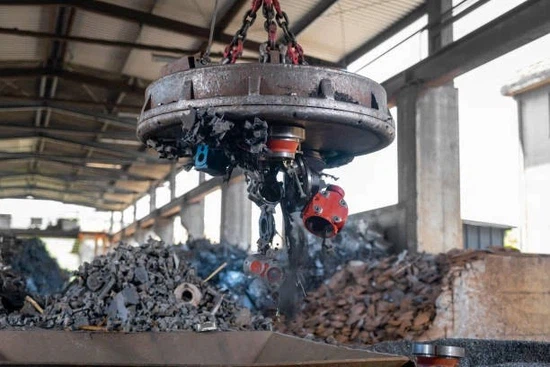
Industry Advantages: It accelerates the efficiency of recovery and increases the pristine condition of the finished goods channel for reconditioning or remarketing.
Production of Cement and Minerals
The metal iron must be removed before the initial components engage the rotary kiln or crusher to avoid corrosion and damage to the machinery. Rebar, screws, and other metallic trash are removed from limestone and sandstone on conveying systems using suspended conveyor magnets.
Industry Advantages: It ensures guaranteed and constant productivity and preserves material uniformity in the manufacturing of cement.
The Agriculture Sector & Food Manufacturing
In food processing, even trace amounts of metal can cause quality control checks to fail or raise a warning. Above conveyor belts carrying grain, flour, or large quantities of spices, suspended magnets provide the first line of defense.
Industry Advantages: It is necessary to adhere to HACCP guidelines and safeguard brand image by avoiding foreign body exposure.
The Cellulose, Paper, and Wood Industries
It is of general information that blades and rollers in sawmills and paper mills are susceptible to breakage from stray iron shards of timber or equipment. In the course of infeed conveyors, suspended magnets aid in the removal of metal fragments, staples, and hooks.
Industry Advantages: It helps in reducing machine breakdowns and preserving the quality of the goods in settings with quick handling.
Electricity Production & Coal Management
In industries like power generation and coal-handling, the metal should be removed from such power plants to prevent obstructions and safeguard pulverisers and conveyor parts. Coal flows effectively and continuously thanks to suspended magnets, which are frequently electromagnets in this situation.
Industry Advantages: It provides consistent fuel delivery, which lowers security hazards and boosts thermal efficacy.
Production of Glass and Ceramics
The industry of ceramic tiles and polymer producing goods can display flaws due to metal shards. Before materials reach the melting or shaping steps, suspended magnets are used to eliminate these impurities.
Industry Advantages: It enhances the result's quality and lowers manufacturing losses due to flaws.
Stone Quarrying and the Extraction
In the mining sector, tramp metal can cause major damage to screens, grinding machinery, and crushing apparatus. To remove metal impurities from gravel, the mineral limestone, and unprocessed mineral deposits, suspended magnets are positioned above primary as well as secondary conveyors. This lowers maintenance expenses and downtime while also safeguarding expensive industrial equipment.

Industry Advantages: It provides an extended lifespan of machinery and a steady flow of manufacturing in demanding, high-volume processes.
The Effects of Corporate Management and ROI
Without any doubt, suspended magnets provide quantifiable functioning and monetary benefits for business-to-business purchasers:
Dropped Downtime: It provides a smaller percentage of delays in production brought on by damaged equipment.
Lowering Service Expenditures: It helps in preventing metal-related tears on capital machinery.
Enhanced Product Standards: The high-quality products provide a way to boost customer confidence and comply with regulations.
Energy Reserves: Permanent magnetic devices don't need electricity; electromagnets can be optimised for efficiency.
Common Problems and Solutions
Decrease in Capture Efficiency
Check the demagnetization of the magnet.
Verify whether the suspension height has changed.
Confirm whether the material thickness has increased.
Abnormal Temperature Rise
Electromagnetic coil insulation test.
Cooling system efficiency check.
Load current verification.
Mechanical Failure
Cleaning mechanism jamming treatment.
Suspension system balance adjustment.
Strengthening anti-vibration measures.
Key Takeaway
If we conclude the discussion of the article, a suspended conveyor magnet is significantly beyond simply an extra add-on; it is necessary to preserve the product's quality, security, and operational dependability. It is of high importance to choose the right magnetic separator since it can significantly affect the plant's general effectiveness and a successful outcome, whether it is being used for precise food manufacturing or large-scale mineral processing.
If you are dire to achieve the best results, then working closely with a skilled producer of specialised magnetic equipment is essential. Do not forget to check that the magnet is set up for your particular conveyor system, material properties, and processing requirements.