



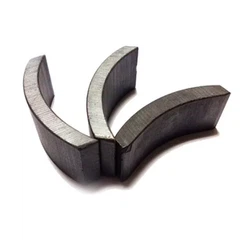












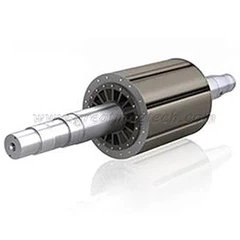



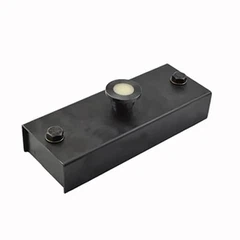








Magnets are an indispensable key component in modern industrial and technological applications. Permanent magnets and electromagnets are two main types, each with its unique advantages. Permanent magnets can generate a stable magnetic field without external energy and are widely used in motors, generators, and consumer electronics. At the same time, electromagnets can flexibly control magnetism by adjusting the current and are commonly found in medical equipment, industrial machinery, and scientific research instruments. Their differences can help engineers optimize technical solutions and allow ordinary users to have a deeper understanding of the working principles of everyday equipment. The versatility and importance of magnetic technology fully demonstrate its important position and wide application value in modern life.
What Is the Definition of a Permanent Magnet?

Permanent magnets are usually made of metals such as iron, nickel, cobalt, and rare earth elements. They are materials that can maintain magnetism for a long time. They can continuously generate a stable magnetic field without an external power supply and can adsorb ferromagnetic materials for a long time after magnetization. However, "long-term" is not absolute. High temperature, severe vibration, or a strong reverse magnetic field may cause demagnetization.
Permanent Magnet Classification
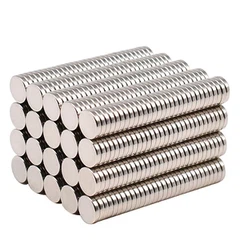
NdFeB Permanent Magnet: NdFeB permanent magnets are mainly composed of neodymium, iron, and boron. They have extremely high magnetic energy product and coercivity and are currently the highest performance permanent magnet materials. Their excellent magnetic properties make them widely used in high-performance fields such as electronic equipment, new energy vehicles, aerospace, etc., especially in scenarios with extremely high requirements for magnetic field strength and precision.
Samarium Cobalt Permanent Magnet: Is a high-performance permanent magnet material composed of samarium and cobalt. With its high coercivity and excellent temperature stability, it can maintain stable magnetic properties in high-temperature environments up to 350°C, and also has excellent radiation resistance. Although its cost is significantly higher than that of common permanent magnet materials such as NdFeB.

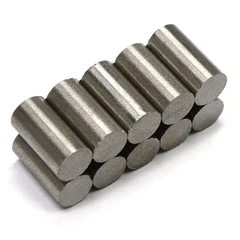
Alnico Permanent Magnet: Mainly composed of aluminum, nickel, cobalt, and other elements, with high remanence but low coercive force and weak anti-demagnetization ability. Outstanding temperature stability (-60°C to 500°C), but it performs well in applications such as instruments and sensors that require high temperature stability. It is a traditional high-performance permanent magnet material.

Ferrite Permanent Magnet: Ferrite permanent magnet is mainly composed of iron oxide, which has low cost and medium magnetic properties. It is widely used in home appliances, toys, small motors, and other fields. It is suitable for cost-sensitive applications with medium magnetic properties requirements. It is one of the most widely used permanent magnet materials.

Working Principle of Permanent Magnet
The reason why permanent magnets can maintain their magnetism for a long time is that they are composed of countless tiny magnetic domains, which are oriented and arranged under the action of an external magnetic field to form a macroscopic magnetic field; even if the external magnetic field is removed, the direction of the magnetic domains is still "locked" due to the high coercivity of the material, thereby continuously generating a stable magnetic field pointing from the north pole N to the south pole S. This characteristic originates from the orderly arrangement of magnetic moments generated by unpaired electrons in atoms, and is maintained by strong magnetocrystalline anisotropy, allowing permanent magnets to exert magnetic force for a long time without external energy.

What Scenarios Can Permanent Magnets Be Used In?
Permanent magnets can provide a stable magnetic field without an external power supply and are widely used in the following scenarios:
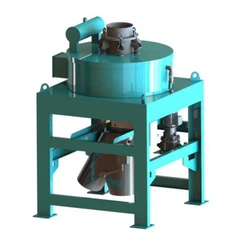
Industrial Manufacturing: Permanent magnets are widely used in industrial manufacturing, mainly in motors, generators, magnetic separation equipment, sensors, and automated control systems. Wind turbines and industrial robots rely on high-performance permanent magnets to improve efficiency and precision.
Medical Field: It is also used in dental magnetic attachments, hearing aids, surgical instruments, and certain rehabilitation equipment to help improve the accuracy and treatment effects of medical technology.
Transportation: Permanent magnets play a key role in the transportation sector, especially in electric vehicles (EV) and high-speed rail technology. Permanent magnet synchronous motors (PMSMs) have become the mainstream drive solution for electric vehicles due to their high efficiency and high power density.
Daily Life: Fridge magnets are a multifunctional gadget that can decorate the refrigerator and make the kitchen more beautiful and interesting, and can also fix shopping lists, notes, photos, and other items for easy viewing. Some magnets also come with note clips or hooks, which are more practical. It not only beautifies the home, but also facilitates life.
What Is the Definition of an Electromagnet?
An electromagnet is a device that works based on the magnetic effect of an electric current. It is mainly composed of an iron core and a conductive coil wound around the iron core. When the coil is energized, the iron core is magnetized and generates a strong magnetic field. When the power is turned off, the magnetic field disappears. This design allows the size and presence of the electromagnet's magnetic force to be flexibly controlled by turning the power on and off, and can quickly start and stop the magnetism in practical applications. Its working principle is a concrete manifestation of the "electromagnetism" phenomenon in electromagnetism.
How Do Electromagnets Work?
When current passes through a wound coil, a magnetic field is generated; if an iron core (such as soft iron) is added to the center of the coil, the iron core will be magnetized by the magnetic field, and its internal magnetic domains will be arranged directionally, thereby greatly enhancing the overall magnetic field strength. When the power is turned on, the electromagnet generates a strong magnetic force; after the power is turned off, the iron core is quickly demagnetized, and the magnetic force disappears. The strength of the magnetic field can be adjusted by the current size, the number of coil turns, or the iron core material.

Advantages of Electromagnets
Electromagnets have the advantages of adjustable magnetic strength, demagnetization upon power failure, fast response speed, flexible and variable magnetic field, low cost, and high stability, making them play an irreplaceable role in industrial automation, medical equipment, and scientific research.
Common Uses of Electromagnets
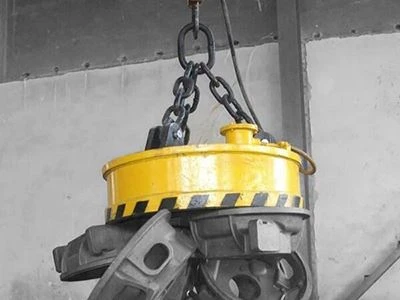
Industrial Application: An electromagnetic crane is an industrial piece of equipment that uses electromagnetic principles to move large metal objects. It is mainly used in steel mills, ports, waste recycling stations, and other places that need to efficiently handle magnetic materials.
Transportation: Maglev trains use the magnetic field of electromagnets to levitate on tracks, reducing friction and increasing speed.
Medical Field: Magnetic resonance imaging (MRI) uses strong magnetic fields and pulsed imaging to examine the inside of the human body; electromagnetic therapy devices relieve muscle pain and promote blood circulation.
Electronic Devices: Speakers use electromagnets and coils to convert electrical signals into sound, providing an auditory experience.
The Difference Between Permanent Magnet and Electromagnet

Permanent magnets are made of hard magnetic materials and can maintain a constant magnetic field for a long time without an external power supply, but the strength of the magnetism cannot be adjusted, and it is easy to demagnetize at high temperatures or a strong reverse magnetic field; while electromagnets are composed of coils and iron cores. When powered on, they generate a magnetic field, the strength and direction of which can be flexibly controlled by the current. The magnetism disappears after the power is turned off. The energy consumption is related to the strength of the magnetic field, but it can be reduced by a pulse power supply or superconducting coils. The core difference between the two is that permanent magnets are passive, simple, and durable, while electromagnets are active, controllable, and flexible, but rely on a continuous power supply.
|
Characteristic |
Permanent Magnets |
Electromagnet |
|
Magnetic Field Source |
The magnetic properties of the material itself |
Magnetic field generated by a coil of current |
|
Energy Equivalents |
No external energy is required to maintain the magnetic field, but an external magnetic field is required for magnetization |
Requires a continuous power supply to maintain the magnetic field (except for superconducting electromagnets) |
|
Magnetic Field Strength |
Fixed, depending on the material |
Adjustable, depending on the current |
|
Control Flexibility |
Not adjustable |
The current can be quickly switched on and off, or the intensity can be adjusted |
|
Temperature Effect |
High temperature may demagnetize, and completely demagnetize above the Curie temperature (about 310°C for NdFeB and about 450°C for ferrite) |
High temperature affects coil resistance, but it recovers after cooling |
|
Service Life |
Long (unless demagnetized or physically damaged) |
Depends on the coil insulation aging or overheating |
|
Cost |
High initial cost (rare materials) |
High operating costs |
Which Is Stronger, an Electromagnet or a Permanent Magnet?
The strength of electromagnets and permanent magnets depends on the specific application scenario. Electromagnets generate magnetic fields by passing electricity, and their magnetic force can be flexibly controlled by adjusting the current and the number of coil turns. They can instantly reach extremely strong magnetic fields, but they rely on a continuous power supply. Permanent magnets have stable magnetic field strength, do not require energy, and are small in size, but their magnetic force is fixed, and they are easily demagnetized at high temperatures. Electromagnets are stronger, and permanent magnets are better in terms of long-term stability and energy efficiency.
How to Choose Permanent Magnets and Electromagnets
Magnetic Field Strength and Controllability
Permanent magnets can provide a stable magnetic field without the need for an external power supply, and are suitable for applications that require a constant magnetic field, but their magnetic field strength is fixed and difficult to adjust. Electromagnets can flexibly control the magnetic field strength by adjusting the current, and can even completely shut down the magnetic field, which is suitable for scenarios that require dynamic adjustment or high-frequency switching, but they require a continuous power supply and may generate heat. Therefore, if the application requires high stability and no adjustment, permanent magnets are better; if real-time control of the magnetic field is required, electromagnets are more suitable.
Energy Consumption and Efficiency
When choosing between permanent magnets and electromagnets, key factors such as energy consumption and efficiency need to be considered comprehensively. Permanent magnets do not require a power supply, have low energy consumption and high efficiency, and are suitable for long-term stable use, but the magnetic field is not adjustable and may decay; the magnetic field of electromagnets is adjustable and has high intensity, but a continuous power supply is required, and energy consumption is high. Permanent magnets are preferred in low-energy and maintenance-free scenarios, and electromagnets are selected when dynamic adjustment or strong magnetic fields are required. Cost, volume, and environmental factors must also be considered.
Environmental Adaptability
Permanent magnets are affected by high temperature, strong vibration, time factors (long-term aging), and reverse magnetic fields.
Demagnetization may occur in the environment, and its performance is greatly affected by temperature, but it is more reliable in the absence of power or harsh electrical environments; electromagnets are relatively stable to temperature changes and can compensate for environmental influences by adjusting current, but humid and corrosive environments may damage the insulation of their coils. Therefore, permanent magnets have more advantages in extreme temperatures, vibration, or no power conditions, while electromagnets are more suitable in scenes with controllable environments and the need for magnetic field regulation.
Cost and Maintenance
Permanent magnets have a higher initial cost but are maintenance-free and are suitable for long-term use scenarios; electromagnets have a lower purchase cost but require a continuous power supply and may incur maintenance costs. In long-term operation, permanent magnets have a cost advantage because they do not consume energy, while electromagnets are suitable for applications that require frequent adjustment of the magnetic field. When choosing, it is necessary to comprehensively evaluate the total cost of the equipment over its life cycle, including energy consumption and maintenance expenses.
FAQs
Q: Electromagnets Require a Continuous Supply of Electric Current. Is This True or False?
A: An electromagnet indeed requires a continuous supply of electric current to maintain its magnetism because the magnetic field of an electromagnet is generated by the current flowing through the conductor, and once the current is interrupted, the magnetic field disappears.
Q: Permanent Magnet or Electromagnet?
A: Permanent magnets are more environmentally friendly than electromagnets because they do not require a continuous power supply and consume less energy. However, permanent magnets contain rare earth materials, and mining and recycling have environmental costs; electromagnets can also reduce impacts if they use clean electricity and recyclable materials. Overall, permanent magnets have obvious energy consumption advantages, while electromagnets have greater sustainable potential with the support of green energy.
Q: Can Permanent Magnets Be Used in Conjunction with Electromagnets?
A: They can be used in combination. Permanent magnets provide a stable magnetic field, reducing the power consumption required by electromagnets; electromagnets can flexibly adjust the magnetic field strength or direction to make up for the shortcomings of permanent magnets that cannot be adjusted. This hybrid solution strikes a balance between energy saving and controllability. It is commonly used in the fields of motors and magnetic levitation. It can reduce energy consumption and meet dynamic control requirements.
Q: Which Is Stronger, an Electromagnet or a Permanent Magnet?
A: The strength of electromagnets and permanent magnets varies depending on their use. Electromagnets adjust the magnetic field through an electric current. The magnetic force is adjustable and can be made very strong. They are often used in devices that require variable magnetic fields. Permanent magnets can maintain their magnetism without a power supply, but their strength is fixed, and they are afraid of high temperatures. In short, electromagnets have a stronger and more controllable magnetic force, while permanent magnets are more durable and energy-efficient.
Q: Can the Electromagnet Be Turned On and Off?
A: The magnetism of an electromagnet can be turned on and off by turning it on and off. When current passes through the coil of an electromagnet, a magnetic field is generated, which is magnetic; once the current is cut off, the magnetic field disappears, and the magnetism is turned off. This characteristic makes electromagnets very practical in situations where frequent control of magnetism is required.
Summary
Permanent magnets and electromagnets each have their own irreplaceable advantages and application scenarios. Permanent magnets occupy an important position in many fields with their zero energy consumption, stability, and compactness, while electromagnets play a key role in situations where flexible magnetic fields are required due to their adjustable and controllable characteristics. With the advancement of materials science and power electronics technology, the performance boundaries of the two are constantly being expanded, and more innovative hybrid application solutions may appear in the future.