

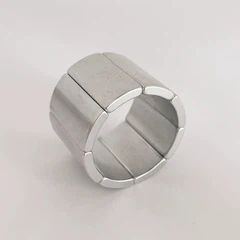
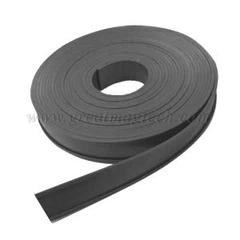
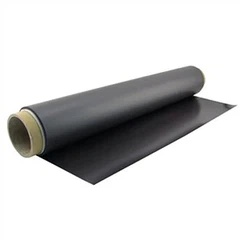
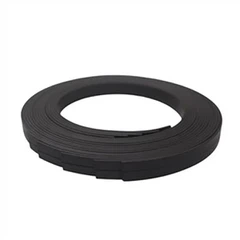



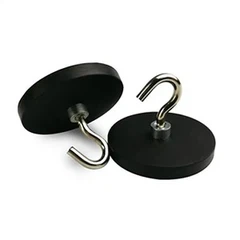
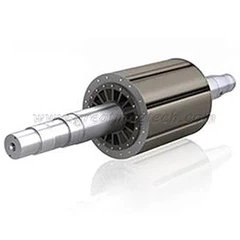


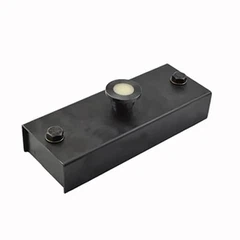


Magnetic gears are a new type of transmission device that uses magnetic field interaction to transmit power. Unlike traditional mechanical gear transmission, it does not achieve power transmission through physical contact. The core component of magnetic gears is permanent magnets, which are cleverly arranged in the structure of the gears to form a specific magnetic field distribution. When the gear at the input end rotates, its magnetic field interacts with the magnetic field of the gear at the output end, thereby driving the output end gear to rotate.
Features of Magnetic Gears
Zero Mechanical Wear
Magnetic gears use non-contact magnetic field coupling transmission, which fundamentally eliminates the physical friction of traditional mechanical gears and achieves zero mechanical wear. It greatly extends the life of the equipment and reduces maintenance requirements. It is especially suitable for high-end industrial scenarios that are long-term operation or difficult to repair, and improves system reliability.
No Vibration and Low Noise
Magnetic gears achieve contactless transmission through permanent magnets, eliminating friction and vibration, reducing noise by more than 60%, and running extremely quietly. Its wear-free characteristics greatly extend its life, making it particularly suitable for use in scenarios with high requirements for quietness, such as precision instruments and medical equipment.
Overload Protection Function
The magnetic gear uses permanent magnets for non-contact transmission and has an automatic overload protection function. When overloaded, the magnetic coupling slips and cuts off the power, and automatically recovers after the overload is released. It is wear-free and has a fast response, making it suitable for precision and frequent start-stop systems.
High Efficiency
Magnetic gears are non-contact transmission devices that use the magnetic field interaction between permanent magnets to transmit motion and torque. Their core feature is that they do not require mechanical engagement and avoid friction and wear. Their transmission efficiency is as high as over 90%, significantly better than traditional gears. Their performance is particularly outstanding under high-speed and high-torque conditions.
Pollution-Free Transmission
Magnetic gears use permanent magnets for non-contact transmission, and do not require lubricating oil, eliminating the oil and metal debris pollution of traditional gears. Its clean and pollution-free transmission characteristics make it an ideal choice for industries with strict cleanliness requirements such as medical, food, and semiconductors, achieving true green and environmentally friendly transmission.
Working Principle of Magnetic Gears
Magnetic gears use the magnetic field coupling between permanent magnets to achieve non-contact power transmission. Their working principle is based on the magnetic force of opposite poles attracting each other and like poles repelling each other. When the active rotor rotates, its circumferentially arranged permanent magnets generate a rotating magnetic field, which pulls the permanent magnets of opposite polarity on the driven rotor to move synchronously through magnetic lines of force, thereby achieving torque transmission. Due to the lack of mechanical meshing, magnetic gears have the advantages of zero wear, low noise, and no lubrication. At the same time, the transmission ratio can be adjusted through the design of the magnetic field modulation ring (magnetic ring). The typical structure includes inner and outer rotors and a magnetic modulation ring in the middle to achieve precise control of speed and torque.
Magnetic Gears and Traditional Mechanical Gears

Magnetic gears use magnetic field coupling to achieve non-contact transmission without physical contact, so they are frictionless, maintenance-free and have a long life, but they may be affected by magnet degradation and eddy current losses .
Traditional mechanical gears rely on direct meshing of tooth surfaces to transmit power through contact friction, which is highly efficient but subject to wear, requires regular lubrication, and has more noticeable noise and vibration. Magnetic gears are suitable for high-precision, low-maintenance scenarios, while mechanical gears are more mature and reliable in heavy-load and high-torque applications.
|
Comparison Items |
Magnetic Gear |
Traditional Mechanical Gears |
|
Transmission Mode |
Magnetic field coupling (non-contact) |
Tooth meshing (direct contact) |
|
Wear Mechanism |
No mechanical wear |
There is friction and wear |
|
Lubrication Requirements |
No lubrication required |
Requires regular lubrication |
|
Noise Level |
<50dB (almost silent) |
60-90dB |
|
Transmission Efficiency |
90%-95% |
95%-98% |
|
Torque Density |
Medium to low (continuously improving) |
High |
|
Overload Protection |
Automatic skidding |
Possible broken teeth |
|
Maintenance Cycle |
100,000 hours + maintenance-free |
5,000-20,000 hours of maintenance required |
|
Cost |
Higher (permanent magnetic material) |
Lower |
Why Choose Magnetic Gears
The selection of magnetic gears is mainly based on the advantages of contactless transmission, high efficiency, low maintenance, and long life. Compared with traditional mechanical gears, magnetic gears transmit power through magnetic field coupling, avoiding friction, wear, and mechanical noise caused by physical contact, and significantly improving transmission efficiency and reliability. Since no lubrication and sealing are required, it reduces maintenance requirements and is suitable for high-cleanliness, high-vacuum, or corrosive environments. In addition, magnetic gears can also achieve overload protection, automatically decouple when the load changes suddenly, and avoid equipment damage. It is an ideal choice for high-performance, long-cycle applications.
Types of Magnetic Gears
Permanent Magnet Type Magnetic Gear
Permanent magnet type magnetic gear uses a permanent magnet to achieve non-contact torque transmission without external excitation. Typical structures include coaxial type, parallel axis type, and axial magnetic field type. It is frictionless, maintenance-free, and low-noise, but the torque is limited by the performance of the magnet and high-temperature demagnetization must be avoided. It is suitable for precision transmission anda clean environment.

Electromagnetic Type Magnetic Gear
Electromagnetic gears achieve contactless transmission through excitation windings and can adjust the current to change the transmission ratio. They have the advantages of fast response and high precision. They are mainly divided into two types, synchronous and asynchronous. They are suitable for occasions that require precise speed regulation, such as CNC machine tools and wind power, but they have disadvantages large excitation loss. With the advancement of power electronics technology, new intelligent control electromagnetic gears have become a research focus.
Hybrid Excitation Type Magnetic Gear
Hybrid excitation magnetic gears combine the advantages of permanent magnets and electromagnetic windings. The permanent magnets provide the basic magnetic field, and the electromagnetic windings achieve dynamic adjustment, which is both efficient and controllable. Its composite structure can adjust the transmission characteristics in real time, and is suitable for scenes such as electric vehicles that require wide speed regulation and high precision. However, the structure is complex and the cost is high, which is an important development direction of magnetic gear technology.

How to Choose Magnetic Gears
Identify Application Requirements
The specific application scenarios and technical requirements of magnetic gears need to be clarified, including transmission type (rotation or linear motion), torque/thrust requirements, speed range, transmission ratio, space limitations (axial or radial dimensions), environmental conditions, and life and maintenance requirements. The coaxial type with high torque density is suitable for compact rotary transmission, while the linear type is more suitable for precision linear motion conversion.
Determine the Transmission Type
Choose the type of magnetic gear according to the form of motion. If rotational transmission is required and space is limited, give priority to coaxial or axial types; if rotational linear motion conversion is required, choose the linear type. Coaxial type is suitable for large transmission ratio scenarios, axial type is conducive to balancing axial force, and linear type can replace mechanical screws to achieve frictionless transmission.
Evaluate Transmission Performance Parameters
Comparing the performance of different structures, the coaxial type has high torque density and is suitable for medium and low speeds with high torque; the axial type can share the magnetic force due to the dual rotor design and is suitable for high speeds; the linear type needs to pay attention to thrust and positioning accuracy. At the same time, check whether the transmission ratio matches the requirements.
Analyze Space and Installation Constraints
Consider the installation space and layout. Coaxial type requires radial space, axial type requires axial space but flexible diameter, and linear type requires linear travel space. Coaxial type can be selected for narrow and long spaces, axial type for flat design requirements, and linear type for long travel linear motion. It is also necessary to check whether the structure is easy to integrate with other components.
Weighing Reliability and Cost
Evaluate the advantages of non-contact transmission (maintenance-free, wear-free) and costs of coaxial and axial types require precision magnetic adjustment rings, and the linear magnetic adjustment parts have high processing complexity. If the environment requires sealing, the sealing of magnetic gears is more advantageous. At the same time, compare the manufacturing costs of permanent magnet materials and magnetic adjustment structures.
Application of Magnetic Gears
Wind Power Generation: Replace traditional mechanical gearboxes, reduce mechanical wear and lubrication requirements, and improve system reliability. Suitable for direct-drive wind turbines, reducing maintenance costs.
Semiconductor Manufacturing: Realize dust-free and oil-free transmission in a vacuum or ultra-clean environment (photolithography machine, wafer transfer system).
Satellites and Spacecraft: Avoid lubrication volatilization problems of mechanical gears. Lubricating oil in the space environment is easy to evaporate and contaminate optical devices.
Collaborative Robots: Achieve smooth transmission through magnetic gears and improve the safety of human-machine interaction.
Chemical and Nuclear Industries: Replaces traditional gears in corrosive, high temperature, or radiation environments without seals or lubrication.

Precautions for Using Magnetic Gears
Installation and Alignment
When installing magnetic gears, strict mechanical alignment must be ensured to avoid uneven magnetic field distribution due to axis offset or angle deviation, which may affect transmission efficiency or cause vibration. Before installation, the mating surfaces should be cleaned, and the accuracy of the shaft, coupling, and supporting structure should be checked. If necessary, a laser alignment instrument should be used for calibration. Magnetic gears have high rigidity requirements for the mounting base, and it is necessary to ensure that it is firmly fixed to avoid air gap changes due to looseness during operation. In addition, after installation, the gear needs to be manually turned to check the smoothness of rotation, and after confirming that there is no jamming or abnormal friction, power on for trial operation.
Load and Speed Limit
When using magnetic gears, their rated load and speed limits must be strictly observed to avoid overloading or overspeeding. Excessive loads may cause magnet demagnetization or transmission failure, while excessive speeds may cause increased eddy current losses, excessive temperature rise, and even damage to magnet performance. At the same time, long-term operation near the critical speed should be avoided to prevent structural damage caused by resonance. It is recommended to retain a certain safety margin in actual applications and regularly monitor operating parameters to ensure that the equipment works stably within the allowable range.
Temperature Management
The temperature must be strictly controlled during operation to avoid demagnetization of permanent magnets or degradation of material properties due to overheating. The operating environment temperature should generally be kept below the temperature resistance level of the magnets. At the same time, the temperature changes of the gearbox and magnet parts must be monitored to ensure good heat dissipation. Under high-speed or heavy-load conditions, it is recommended to install a cooling system to reduce temperature rise. In addition, frequent start-stop or overload operations should be avoided to reduce the impact of instantaneous temperature rise on the magnetic transmission system. Regularly check the operating status of the cooling device to prevent failures caused by poor heat dissipation.
Magnetic Field Interference and Safety
Magnetic gears will generate a strong magnetic field when working. Care should be taken to avoid electromagnetic interference to the surrounding precision instruments. During installation, ensure that a sufficient safe distance is maintained from sensitive equipment, and take magnetic shielding measures if necessary. Operators should avoid carrying items that are easily affected by magnetic fields, such as credit cards and mechanical watches. At the same time, pacemaker wearers should stay away from strong magnetic field areas. Regularly check the magnet fixing structure to prevent safety accidents caused by the magnet falling off. During maintenance or disassembly, non-magnetic tools must be used, and attention should be paid to the adhesion force between magnets to avoid the risk of pinching.
Materials and Corrosion Protection
Long-term stable operation is closely related to its material selection and corrosion protection. When selecting materials, it is necessary to select corrosion-resistant magnet materials and oxidation-resistant metal components according to the working environment. In humid, salt spray, or chemically corrosive environments, surface protection treatments such as electroplating, spraying, or sealed packaging should be adopted for magnets and metal parts. Regularly check the corrosion of key components, clean pollutants in time, and apply protective layers. At the same time, avoid direct contact between magnetic gears and corrosive media such as acids and alkalis to extend their service life. For special working conditions, consider adopting fully sealed structures or inert gas protection and other enhanced protection measures.
Summarize
As a revolutionary transmission technology, magnetic gears are changing the way power is transmitted in many industrial fields. Although there are some technical and cost challenges, with the advancement of material science and manufacturing technology, magnetic gears are expected to become the preferred transmission solution for many high-end applications in the next decade. For users who pursue high reliability, low maintenance, and a clean environment, magnetic gears provide solutions that traditional mechanical transmission cannot match.