









A loose screw or a sliver of worn machinery can slip into your product line and turn into a recall, a damaged mixer, or a complaint you can't take back.
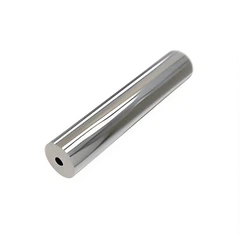
A magnetic rod is one of the simplest ways to stop that before it happens. It's a cylindrical tool - a permanent magnet and a magnetic core, sealed inside a stainless steel tube - that sits inside your product flow and pulls out ferrous metal as material passes by. No power, no moving parts, just a magnet doing its job.
If you're sourcing separation equipment or specifying it for a new line, here's what you actually need to know about how magnetic rods work and where they fit.
What Is a Magnetic Rod?
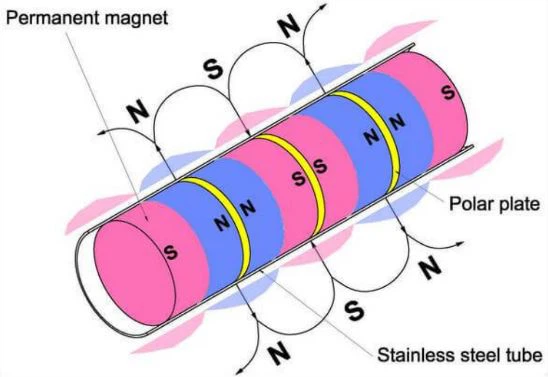
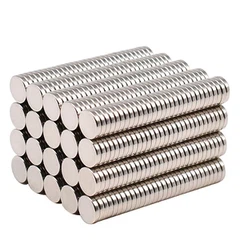
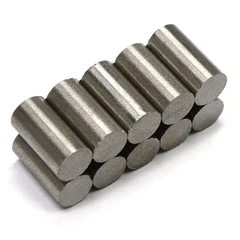
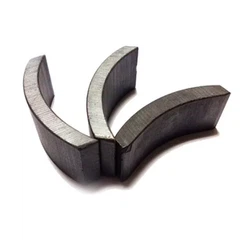
A magnetic rod is a cylindrical separator built to pull metal out of a product stream. Inside, you'll usually find a permanent magnet - often neodymium, though ferrite and samarium cobalt are options too - paired with a magnetic conductor, all sealed inside a stainless steel tube, often grade 304 or 316.

Most rods aren't a single solid magnet. They're built from magnet discs and conductor discs stacked alternately along the tube, which concentrates the magnetic field into strong bands right at the surface - where it actually needs to grab metal.
That stainless steel housing matters too. It keeps the magnet from touching your product directly, resists corrosion, and holds up under repeated washdowns.
Strength is measured in Gauss, and commercial rods typically run anywhere from about 2,500 to 15,000 Gauss.
How Does a Magnetic Rod Work?
As material moves past, the rod's magnetic field reaches out and grabs anything ferrous: iron filings, steel fragments, worn bits of machinery. Those particles stick to the surface and stay there, even as more material keeps flowing past them.
Everything non-magnetic just keeps moving, untouched. That's really the whole mechanism - no motors, no sensors, no moving parts. The rod works passively the entire time material is running
Eventually, the captured metal has to come off. On many rods, you pull it out and wipe the surface clean, or push the buildup to one end where it releases in one motion.
What Can (and Can't) a Magnetic Rod Catch?
Not every piece of metal in your product stream reacts to a magnetic rod the same way. What it's made of decides whether it gets caught at all - and its shape decides how easily.
What It Catches
A magnetic rod only catches what's actually magnetic - mainly iron and steel, along with a shorter list of metals like nickel and cobalt. Aluminum, brass, copper, and most non-magnetic stainless steel pass right through, untouched. If your contamination problem involves those metals, a magnetic rod won't help you.
Why Shape Still Matters
Even among ferrous metals, shape changes the outcome. A long, thin piece of wire or a jagged shaving gets caught easily, because it has plenty of edge and surface for the field to grab onto. A small, round ball bearing or a compact cube is harder to catch - there's less edge exposed, and it can tumble past before the magnetic pull takes hold.
That's why two pieces of metal with the same weight can behave completely differently near the same rod. A flat sliver might get pulled in from a short distance away, while a rounded pellet practically has to touch the surface before it sticks.
Where Magnetic Rods Are Used
You'll find magnetic rods anywhere metal contamination can ruin a product or wreck your equipment downstream:
• Food and Beverage: Catches stray staples, wire, and worn machinery parts before they trigger a recall.
• Pharmaceuticals: Protects powder and tablet lines where even a trace of metal fails quality checks.
• Plastics Processing: Keeps metal fragments out of extruders, where they'd otherwise chew up expensive tooling.
• Chemicals: Pulls contamination from bulk powders and granules before they reach sensitive equipment.
• Ceramics: Removes iron specks from clay and glaze, since even trace amounts show up as dark spots after firing.
• Coal Handling and Power Generation: Protects crushers and conveyors from tramp metal in bulk material streams.
• Battery Material Processing: Screens raw powders for metal contamination before it reaches the next stage.
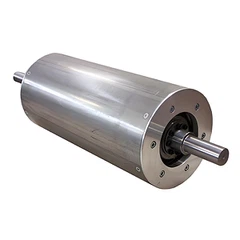
Whether you're running a food line or a battery plant, the equipment changes - hopper, pipe, or conveyor - but the job stays the same.
Magnetic Rod Configurations
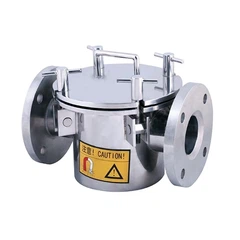
A single rod isn't always the right setup. Depending on your flow and layout, magnetic rods get built into a few different configurations:
• Magnetic Rod: one rod dropped into a pipe or small chute, for setups where there's just one flow path to protect.

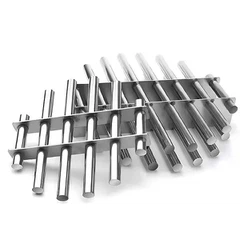
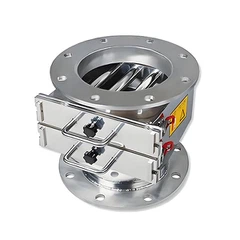
• Magnetic Grate: several rods arranged side by side in a frame, so material falls through the gaps between them; used for higher-volume flows.

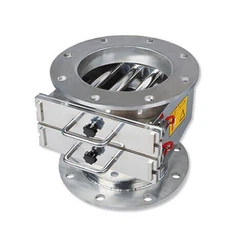
• Drawer Magnet: rods housed in a slide-out drawer, so you can pull the whole unit for cleaning without shutting down the line for long.

Which one fits depends on how your material moves, not just how strong the magnet is.
What Affects a Magnetic Rod's Capture Efficiency?
A magnetic rod can be plenty strong on paper and still underperform once installed. A few factors decide how much it actually catches:
Distance from the Flow
The magnetic field is strongest right at the surface and drops off fast. A rod set even slightly off to the side misses far more than one sitting directly in the stream.
Flow Rate
Material moving too fast doesn't spend enough time near the rod for weakly-attracted particles to get pulled in.
Particle Size and Shape
Small, rounded fragments are harder to catch than large or jagged ones, for the reasons already covered above.
Rod Spacing
In a grate or rack, rods placed too far apart leave gaps that material can slip through untouched.
Gauss rating matters, but it's only one piece. A high-strength rod in the wrong spot still lets contamination through.
Safety Considerations When Using a Magnetic Rod
Magnetic rods are simple to use, but the field itself isn't something to treat casually - especially with the stronger, high-Gauss versions.
Pinch and Impact Hazards
A strong rod can pull a loose tool, bolt, or another magnet toward it fast enough to crush a finger caught in between. Keep loose metal objects and tools away from the rod during installation or cleaning.
Interference with Electronics
The field can affect pacemakers, other implanted medical devices, and sensitive equipment like hard drives or credit cards. Anyone with a pacemaker should keep a safe distance, and you'll want to keep the rod away from magnetic storage media.
How to Choose the Right Magnetic Rod
Picking the right magnetic rod comes down to a handful of practical questions about your setup:
• Magnetic Strength: Match the Gauss rating to your contamination level; fine powder and heavy tramp metal need more pull than a basic cleanup pass.
• Diameter and Length: Sized to fit your hopper, pipe, or chute; wider diameters cover more flow, but need enough clearance to install.
• Material Grade: 304 stainless for general use, 316 or 316L for better corrosion resistance.
• Temperature Rating: Check your process temperature against the rod's rated range before you order.
• End Style: Threaded, smooth, or countersunk, depending on how the rod mounts into your existing equipment.
• Cleaning Frequency: A rod that's awkward to remove ends up cleaned less often than it should be, so factor in how easy access will be.
If you're not sure which combination fits your line, send us your specs and we'll help you match the right rod to the job.
Conclusion
A magnetic rod is a simple idea that does a genuinely important job. What separates a good setup from a mediocre one isn't the concept. It's the details: the right strength for your material, the right configuration for your flow, the right housing for your environment. Get them right, and it quietly does its job for years without anyone thinking about it.
FAQ
Q: What's the difference between a magnetic rod and a metal detector for removing metal contamination?
A: A magnetic rod physically removes ferrous metal as material flows past it. A metal detector only flags what's there - including non-ferrous metals a rod can't catch - so you'll usually want both working together, not one instead of the other.
Q: Can a magnetic rod be used with stainless steel products?
A: It depends on the grade. Most 300-series stainless, like 304 or 316, isn't magnetic, so it'll pass through your rod untouched. Some 400-series grades are magnetic and get caught like any other ferrous fragment.
Q: Where does metal contamination in a production line usually come from?
A: Mostly from wear - machinery parts, blades, and fasteners that loosen or erode over time. The rest usually comes in with your raw ingredients or packaging, or from tools accidentally left in the process.
Q: Does a magnetic rod need electricity to operate?
A: No. A standard magnetic rod runs entirely off the permanent magnet inside it - no power, no wiring, no controls needed. If you add automated cleaning, like a pneumatic or motorized wiper, that part will need power.
Q: Do magnetic rods require any certification for food or pharmaceutical use?
A: The rod itself isn't certified, but you can have it built to meet what your industry requires - food-grade stainless steel, smooth welds, and construction that supports FDA or HACCP compliance.
Q: What affects the price of a magnetic rod?
A: Mainly the magnet grade, the stainless steel grade, and any custom end styles or dimensions you need. Buying directly from a manufacturer instead of a reseller usually costs you less too.