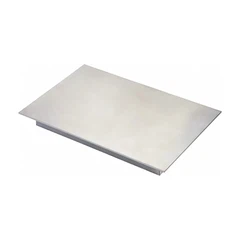
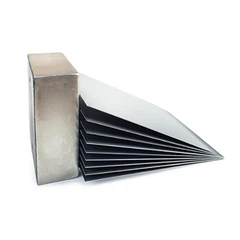








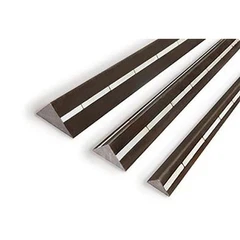
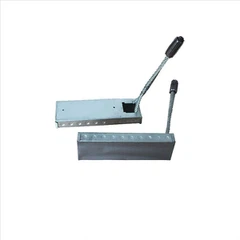

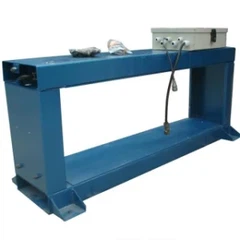



Flexible magnets are a special type of magnetic material that can be bent repeatedly without breaking or losing their magnetic function. Unlike ordinary hard magnets, this type of material has excellent flexibility and plasticity, and some varieties can even be curled into a tube. If a traditional magnet is forcibly bent, it will inevitably break and be damaged. During the manufacturing process, specially treated magnetic particles are evenly mixed into a liquid adhesive and then fixed to the substrate through hot pressing or coating processes. In addition to this common process, some products will use processing methods such as injection molding or extrusion molding. The key is how to perfectly combine hard magnetic powder with a flexible substrate to maintain both magnetism and flexibility.

Types of Flexible Magnets
Flexible magnets are available in several forms depending on structure, magnetization method, and application requirements. Although they are produced from similar base materials, their performance and industrial usage can vary significantly.
| Type | Structure & Form | Thickness Range | Magnetization | Typical Applications | Key Advantages |
|---|---|---|---|---|---|
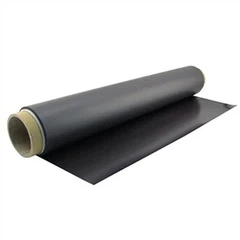
| Flexible Magnetic Sheet | Supplied in rolls or flat sheets | 0.3mm – 3mm | Isotropic or anisotropic | Printing, signage, removable labels | Easy cutting, printable surface, cost-effective |
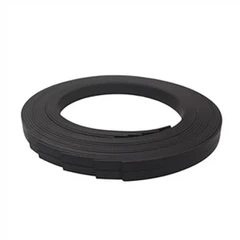
| Flexible Magnetic Strip | Narrow rolls with continuous magnetic length | 1mm–5mm | Often multipole | Door seals, sensors, and positioning systems | Stronger linear holding force, ideal for sealing |
| Adhesive-Backed Magnetic Tape | Magnetic strip with pressure-sensitive adhesive | 0.5mm–2mm | Isotropic | Retail displays, lightweight fixtures | Quick installation, no mechanical fastening needed |
| Extruded Magnetic Profile | Custom-shaped extruded rubber magnet | Custom | Anisotropic | Refrigerator gaskets, industrial sealing | Designed for tight sealing and structural fit |
| Die-Cut Flexible Magnet | Precision cut into specific shapes | Custom | Isotropic or anisotropic | Appliance parts, branding products, OEM components | Customizable geometry, efficient integration |
How Do Flexible Magnets Work?
Flexible magnets are flexible magnetic materials made by mixing magnetic powder with elastic matrix materials and then undergoing a magnetization process. Its working principle is based on the fact that the magnetic particles in the composite material are oriented and arranged under the action of an external magnetic field to form an ordered magnetic domain structure, thereby obtaining macroscopic magnetism. Even if the material is bent or deformed, the magnetic particles dispersed in the flexible matrix can still maintain the direction of the magnetic moment, so that the whole exhibits stable magnetic properties. This design retains the suction characteristics of traditional magnets and has the mechanical properties of being bendable and cuttable, making it suitable for application scenarios that require fitting to curved surfaces or dynamic deformation.
Flexible Magnets vs Neodymium Magnets
Flexible magnets and neodymium magnets are designed for different performance priorities. The table below highlights their key differences in material structure, magnetic strength, durability, and application suitability.
| Feature |
|
|
|---|---|---|
| Flexible Magnets | Neodymium Magnets | |
| Material Composition | Ferrite powder mixed with a rubber or plastic binder | Rare-earth alloy (Nd-Fe-B) |
| Magnetic Strength (BHmax) | Typically 0.6 – 1.6 MGOe | Typically 30 – 52 MGOe |
| Flexibility | Flexible, bendable, can be rolled or cut | Rigid and brittle |
| Impact Resistance | Good resistance to cracking | Prone to chipping or cracking |
| Thickness Range | 0.3mm – 5mm (customizable) | Usually solid blocks or discs |
| Temperature Resistance | Up to 70–80°C (standard grades) | 80–200°C depending on grade |
| Corrosion Resistance | Naturally corrosion-resistant | Requires protective coating (Ni, Zn, Epoxy) |
| Processing | Easy to cut, slit, or die-cut | Requires machining; difficult to cut |
| Cost Level | Lower cost-effective for large areas | Higher due to the rare-earth material |
| Typical Applications | Sealing systems, signage, appliance gaskets, display panels | Motors, sensors, electronics, high-force assemblies |
| Best For | Large surface coverage with moderate holding force | Compact applications requiring very high magnetic strength |


Flexible magnets are ideal when flexibility, surface coverage, and cost control are priorities.
Neodymium magnets are preferred when maximum magnetic strength is required in a small, compact space.
Choosing between them depends on load requirements, installation constraints, environmental exposure, and budget considerations.
How Are Flexible Magnets Made?
Raw Material Preparation
The manufacture of flexible magnets first requires the preparation of magnetic powder and polymer substrate. Commonly used magnetic powders include ferrite or neodymium iron boron, which need to be ground to a micron level to ensure uniform dispersion. Polymer materials, such as rubber or thermoplastic elastomers, give magnets flexibility.
Mixing and Plasticizing
The magnetic powder is mixed with the polymer matrix and additives in an internal mixer or twin-screw extruder. Under heating conditions, the material gradually plasticizes, forming a uniform magnetic composite. The key to this step is to ensure that the magnetic particles are evenly distributed in the polymer matrix to avoid agglomeration; otherwise, it will affect the magnetic and mechanical properties of the final product.
Molding Process
The mixed material can be formed in different ways. Calendering is suitable for producing thin magnetic sheets or strips, using a roller press to press the material into the required thickness. Extrusion molding is used to make long strips, tubular, or special-shaped magnets, which are shaped by molds and then cooled and solidified. Injection molding is suitable for complex shapes, where molten material is injected into a mold and then formed. For high-performance flexible magnets, compression molding can be used to densify the material under high temperature and pressure to improve the magnetic properties.
Magnetization Treatment
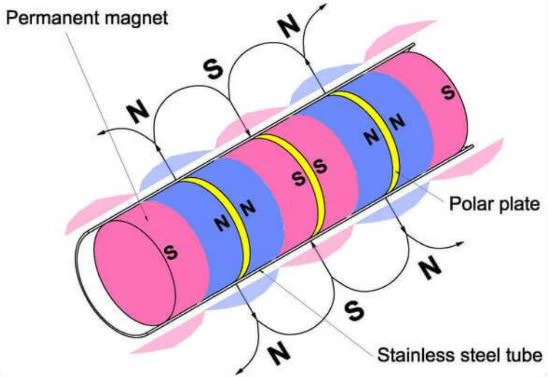
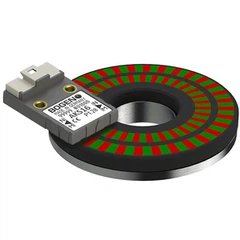
After forming, the flexible magnet needs to be magnetized to have magnetic properties. A strong magnetic field is applied by a magnetizer to orient the magnetic particles inside the material or keep them randomly distributed. According to application requirements, multi-pole magnetization can also be performed, such as the NS pole alternating arrangement mode commonly used in refrigerator door seals. Magnetization is a key step in determining the final magnetic properties, and the magnetic field strength and direction need to be precisely controlled.
Post-Processing and Surface Treatment
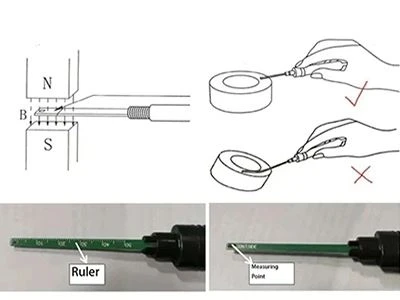
The magnetized products need to be post-processed. The cutting/punching process processes the bulk material into a specific shape. Laser cutting or die punching can be used. To improve durability, the surface can be coated to prevent oxidation and wear. Finally, a Gauss meter is used to detect the magnetic flux to ensure that the product meets the design standards and rejects unqualified products.
What Are the Advantages and Disadvantages of Flexible Magnets
Advantages
Flexible magnets have excellent bendability and plasticity, can easily fit various curved surfaces, and adapt to complex shapes of application scenarios, such as advertising displays, refrigerator magnets, toys, etc. They are light in weight, easy to cut and process, have good magnetic properties, and can be stably adsorbed on metal surfaces. In addition, flexible magnets are corrosion-resistant, anti-aging, have a long service life, and are relatively low in cost, making them suitable for large-scale production and use.

Disadvantages
The magnetic force of flexible magnets is usually weaker than that of traditional rigid magnets and may not perform well in scenarios requiring high-strength magnetic attraction. They have poor high-temperature resistance, and prolonged exposure to high-temperature environments may cause magnetic attenuation or deformation. In addition, the magnetic properties of flexible magnets may decrease after repeated bending or stretching, affecting the use effect.
Applications of Flexible Magnets
Flexible magnets: Can be made into refrigerator magnets of various shapes and patterns to decorate refrigerator doors. They can also be used to fix items such as notes and photos.
Advertising Stickers: Flexible magnets can be made into advertising stickers, which can be easily attached to surfaces such as car bodies, refrigerator doors, metal display racks, etc., to promote products or brand information.
Laptop Accessories: Magnetic laptop stand, fixed on the metal surface by the adsorption of flexible magnets, easy to use.
Magnetic Puzzles and Toys: Flexible magnets can be made into magnetic puzzles, magnetic building blocks, and other toys, which are suitable for children to build and learn creatively.
Industrial Equipment Identification: Used to make identification plates on industrial equipment, which are attached to the surface of metal equipment through magnetism for easy replacement and maintenance.

How to Choose Flexible Magnets
Determine Magnetic Performance Requirements
Choose the appropriate magnetic strength according to the application scenario (adsorption, sealing, or transmission). Rubber magnets are low-cost and flexible, while NdFeB composite magnets are more magnetic but more expensive.
Consider Environmental Adaptability
In high temperature, humid, or outdoor environments, you need to choose heat-resistant, corrosion-resistant, or UV-protected materials to avoid magnetic attenuation or aging.
Select Shape and Size
Flexible magnets can be customized into thin sheets, strips, or complex shapes, and both thickness and flexibility must be taken into consideration to avoid being too thin to affect the magnetic force or too thick to reduce bendability.

Installation Method Matching
The adhesive-backed, sewable, or embedded design is suitable for different fixing needs, such as advertising stickers, sealing strips, or smart wearable devices.
What Precautions Should Be Taken When Using Flexible Magnets
When using flexible magnets, be gentle and avoid repeated folding, forceful stretching, or scratching with sharp objects to prevent the magnetic layer from breaking or weakening. At the same time, keep away from high temperatures. NdFeB magnets are prone to demagnetization when exceeding 80°C, and the rubber layer may also deform. Avoid exposure to the sun or proximity to heat sources. When cleaning, wipe with a damp cloth. Do not soak or use strong acid or alkali cleaners. Store after drying to prevent mildew. Proper use can extend its life.
FAQs
Q: Are flexible magnets waterproof?
A: Flexible magnets themselves are water-resistant because ferrite materials do not rust. However, surface coatings and adhesive layers may vary in durability. For outdoor applications, PVC-coated or UV-treated surfaces are recommended to improve weather resistance and extend service life.
Q: How long do flexible magnets last?
A: Under normal indoor conditions, flexible magnets can maintain stable performance for many years. In outdoor or high-humidity environments, lifespan depends on UV exposure, temperature fluctuation, and adhesive quality. Proper material selection significantly increases durability.
Q: What is the maximum working temperature of flexible magnets?
A: Standard flexible magnets typically operate up to 70–80°C. Exceeding this range may reduce magnetic performance. For higher temperature requirements, customized material formulations should be considered.
Q: Can flexible magnets be cut or shaped easily?
A: Yes. One of the main advantages of flexible magnets is their ease of cutting and processing. They can be trimmed with scissors, die-cut into custom shapes, or slit into narrow strips, depending on application needs.
Q: How do I choose the right flexible magnet thickness?
A: Thickness selection depends on required holding force, mounting surface condition, and environmental factors. Thicker magnets generally provide stronger pull force, but proper testing is recommended to balance performance and cost.
Q: What is the difference between isotropic and anisotropic flexible magnets?
A: Isotropic flexible magnets have uniform magnetic properties in all directions and are generally more cost-effective. Anisotropic magnets are magnetized in a preferred direction during production, resulting in stronger magnetic performance. For applications requiring higher pull force, anisotropic grades are typically recommended.
Q: Can flexible magnets be customized?
A: Yes. Flexible magnets can be customized in thickness, width, magnetization pattern, surface finish, adhesive type, and die-cut shape. Custom solutions are common in industrial sealing, branded products, and OEM manufacturing projects.
Conclusion
Flexible magnets offer a practical balance between performance, flexibility, and cost. They are ideal for applications where moderate magnetic strength, easy installation, and custom shaping are required. From industrial sealing systems to advertising displays and appliance components, choosing the right type, thickness, and magnetization pattern directly affects product performance and durability.
Selecting a reliable manufacturer is just as important as selecting the magnet itself. Consistent material quality, precise magnetization control, and strict production standards ensure stable magnetic force and long-term reliability.
At Great Magtech, we specialize in manufacturing and customizing flexible magnetic solutions for industrial and commercial applications. With advanced production lines, strict quality control procedures, and global export experience, we support OEM and bulk supply projects with tailored specifications.
If you are looking for a dependable, flexible magnet manufacturer, contact Great Magtech today to discuss your technical requirements and request a customized quotation.