

















Searching for the perfect magnet can be quite tricky as their properties should be exceptional to serve the purpose you are using. The basic difference in magnets is the composition which is very complicated to understand. The composition dictates the strength and usage of these magnets. Even though it is a tricky business to find a suitable magnet it is possible to do so without having any major degree in magnetism. The key is to understand the properties and usage of magnets and choose the one that offers supremacy in services. One such magnet is NdFeB which is gaining popularity because of its wide applicability in multiple industries. The reason for its popularity is not just the ability to serve multiple industries rather it is doing so in an efficient manner.
Wondering why NdFeB is ruling the magnetic world? Well, you are in luck because in this blog you will find out an in-depth analysis of NdFeB Magnet vs. Other Magnetic Materials to find out why it is leading the charts.

Why search for a superior magnetic material?
To begin with, you must understand the importance of choosing the right magnet for your industry. Magnets are widely used in multiple industries which makes them extremely important materials for commercial usage.
To understand the importance of magnets, you need to get yourself acquainted with the uses of magnets. Almost every other industry uses magnets for one process or the other. Magnets are being used in multiple industries including mining, automotive, magnetic sweepers, adhesive magnets, industrial ceramics, plastic and glass, magnetic resonance imaging, food, dentistry, electric motors, jewelry, pharmaceutical industries, and display production.
This widespread usage of magnets requires that you choose the perfect magnet that offers exceptional production results rather than compromising them. When choosing a magnet there are several factors to consider which include:
Magnetic strength: It represents the ability of a magnet to produce a magnetic field that is strong enough to assist in the industrial procedure.
Space constraints: The ability of a magnet to work exceptionally even when it is smaller in size. This is especially important when you have space constraints to conduct industrial procedures.
Efficiency: It represents the efficiency of the magnet to produce and retain the magnetic field adequately until the end of the industrial procedure.
Temperature change adaptive: The magnet's ability to resist magnetism even when the temperature changes drastically during the procedure matters a lot. A magnet that demagnetizes at high temperatures cannot offer optimal results when used commercially.
Technology-advanced usage: The magnet should be strong enough to be used in technologically advanced commercial procedures. As the advancement in technology has evolved the industrial procedures it is desired that the magnet supports the advanced procedures rather than sabotaging them.
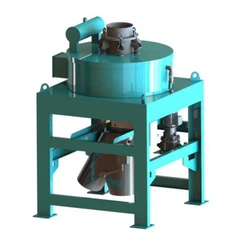
Precision and accuracy: Magnet should offer precise and accurate processing results. Some procedures rely on the precision of magnetism such as when used as magnetic separators to dispose of the ferric impurities from the substance (mostly used in food industries). If the magnet fails to offer precise and accurate results in such procedures then the entire process will fail. For instance, if the magnet fails to separate the impurities then they can stay mixed with the material can cause hazardous results when packed in final products (especially food), and can also break down the machine they run through.
Specialized application: For some specialized applications you need to have special magnets with great capabilities. Procedures like magnetic levitation systems cannot work with ordinary magnets and you must use superior magnets with the perfect mix of characteristics to use in such procedures.
Each of these characteristics is important when choosing a magnet for commercial usage. The defining factor is the presence of all desired characteristics in the magnet that you require for the commercial process you are working on.
What are NdFeB magnets?
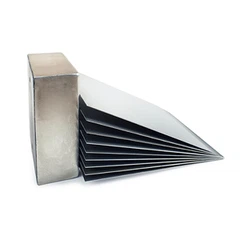
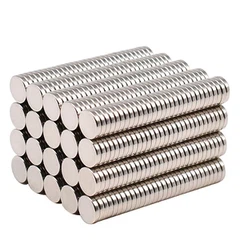
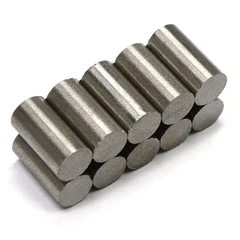
Coming towards our star magnet that offers stellar performance when used commercially. If you haven't guessed it already then I am referring to NdFeB magnet. NdFeB or Neodynium magnet is composed of alloys of Neodynium (Nd), iron (Fe), and boron (B). Known for exceptional strength, this permanent rare earth magnet is currently the strongest magnet available.

NdFeB Magnet vs. Other Magnetic Materials
Let me unveil the difference between NdFeB Magnet vs. Other Magnetic Materials which will help you understand why NdFeB magnets are most sought-after magnets in all industries.
Rare Earth magnets: NdFeB is a rare earth magnet which means that it is manufactured from rare-earth elements' alloys which makes it more powerful than other non-rare-earth magnets. These magnets are stronger than other magnets from 2 to 7 times. They can lift exceptionally high in comparison to other magnets.
Great magnetic strength: As compared to other magnets, NdFeB shows great magnetic strength which makes it suitable for commercial use where strong magnetic strength is required. Many commercial processes strictly require high magnetic strength which makes NdFeB superior to other magnets in usage because in such cases other magnets are inadequate for usage. When it comes to high product energy NdFeB surpasses other magnets as it has more magnetic strength when measured on per per-unit basis. This is why as compared to the commercially used magnets like ceramic and Alnico, NdFeB has much more magnetic strength and offers superior results.
Cost: When it comes to cost, NdFeB is quite pricey in comparison to other commercially used magnets. That can be a drawback if price is a huge concern for you. When you compare the prices of NdFeB Magnet vs. Other Magnetic Materials such as ceramic the cost difference is huge which can make you think twice about your magnetic choice. Though the performance of NdFeB is also great if you are working on a budget-controlled process then it must be not the right choice for you.
Weight and size: NdFeB is great for commercial application in lightweight and small-in-size structures as compared to other magnets. It can offer exceptional magnetic strength in lightweight and small structures. This makes them extremely desirable in industrial processes where weight and space are of great concern. Other magnets like ceramic magnets need larger sizes to show comparable magnetic strength which makes them inadequate for industrial procedures where small-size structures are being at work.
Temperature stability: Temperature sensitivity is a defining factor in finalizing the magnets for commercial usage. This is because most industrial procedures require processing at high temperatures. NdFeB is very sensitive to changes in temperature. It can even demagnetize at higher temperatures which can cause trouble and compromise the results of the industrial process. Though special grade NdFeB can somewhat stay stable in high temperatures other magnets like Alnico can be much more stable and insensitive to changes in temperature. NdFeB can demagnetize at temperatures more than 175 degrees to 480 degrees depending upon the grade.
Corrosion resistance: one of the biggest concerns of industrial procedures is the risk of magnetic corrosion. Corrosion can compromise the performance of processes which is why you need to ensure that either the magnet is resistant to corrosion or it is treated/coated to resist corrosion. As compared to most magnets, NdFeB can easily get corrosion making it prone to deterioration. This is why if you are using NdFeB then you need to treat it with preventive coating or plating to ensure that it doesn't corrode. As compared to NdFeB, other magnets like Alnico magnet and SmCo magnet are more resistant to corrosion in specified environments making them more useful even without protective coating.
Resistance to external magnetic fields: You might not be aware that magnets can get demagnetized in the presence of a strong external magnetic field. This can compromise their ability to work commercially and sabotage the result of industrial procedures. Comparison of NdFeB Magnet vs. Other Magnetic Materials shows that NdFeB is more resistant to external magnetic field and does not demagnetize as compared to other magnets. This is because NdFeB is the strongest magnet of all which helps it to repel the external magnetic field no matter how strong it is.
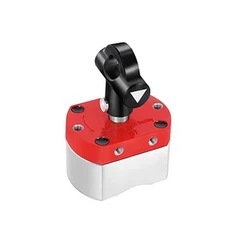
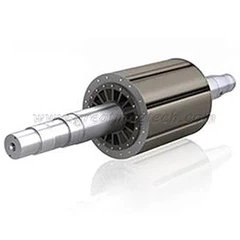
Commercial applications: When it comes to commercial usage, NdFeB is more viable than other available magnets. The ability to offer superior magnetic strength in small-size processing makes them the best choice for industrial applications. NdFeB is widely used in sensors, consumer electronics, electric motors, and medical devices. In comparison other magnets like Alnico are more useful when corrosion resistance and temperature stability are crucial factors. But wait! NdFeB can also be used in such situations by first treating it with preventive coating and then putting it to use.
In a nutshell, NdFeB magnets are the best call if you need superior magnetic strength in a compact size and lightweight. But if you are looking for a magnet to work under temperature changes and anti-corrosion then other magnets can serve the purpose instead. Your requirements dictate which magnet is the best fit for you. If the procedure isn't too critical then you can also use coated and special grade NdFeB to prevent corrosion and demagnetization respectively.