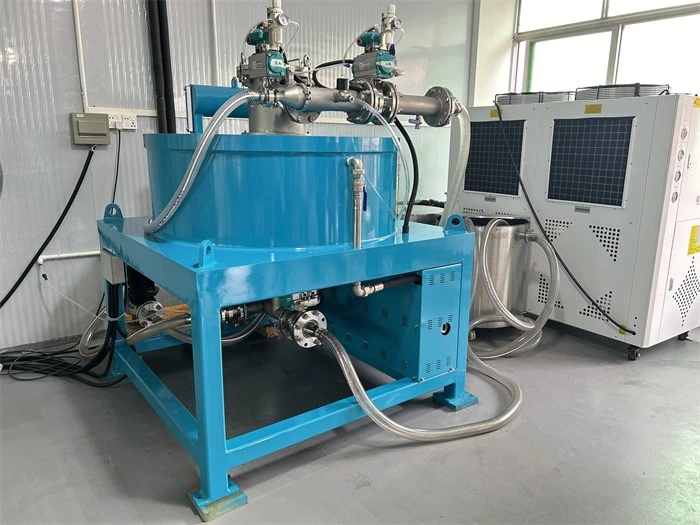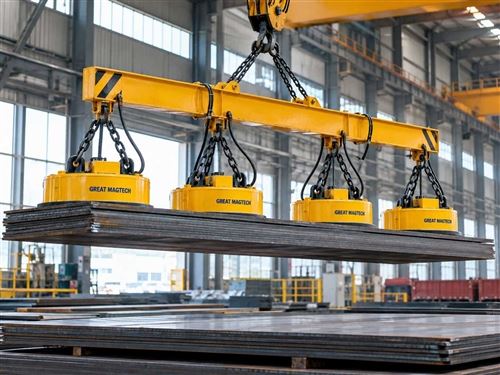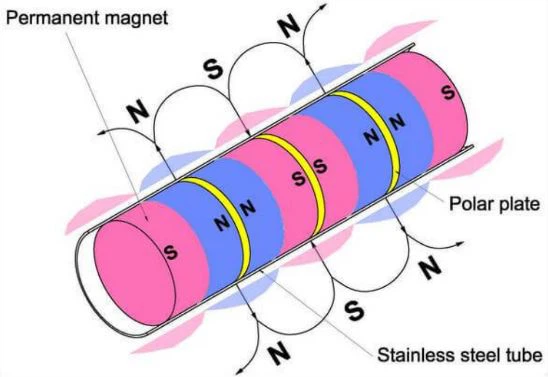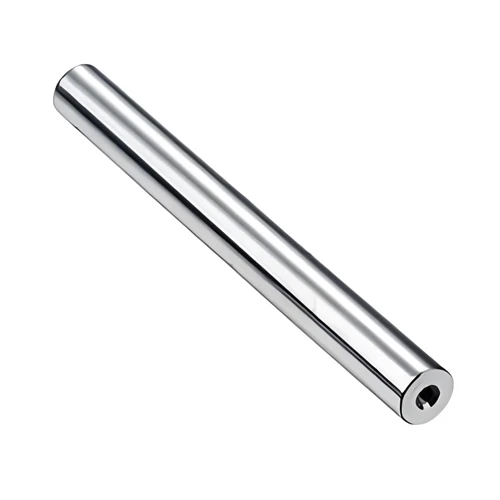
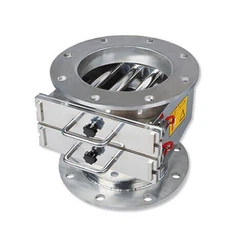
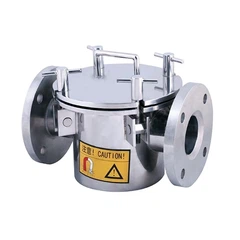
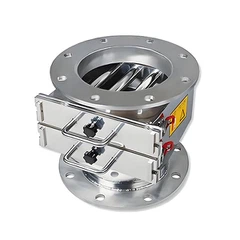
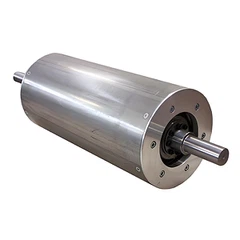
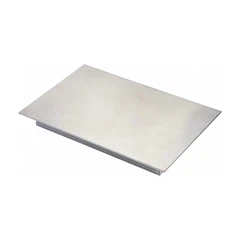
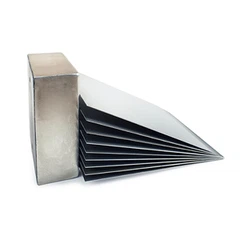
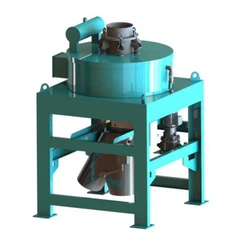

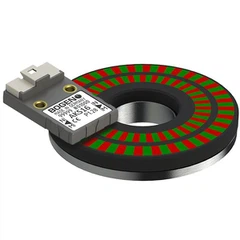
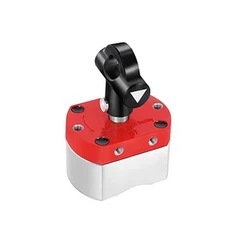








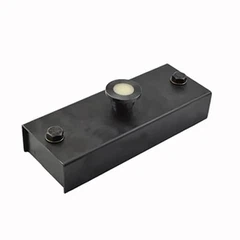
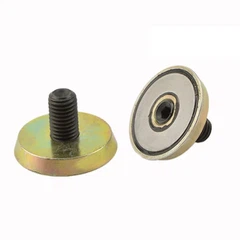
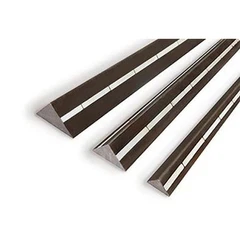
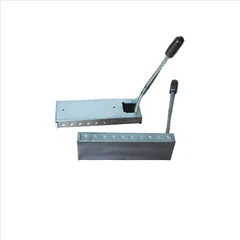


For many important industries like mining, food industry, pharmaceuticals, plastics, etc, even the tiniest contaminants can cause a big issue, compromising the quality of the final product, causing serious damage to expensive equipment, thus leading to costly repairs and losses due to downtime. That's where the gravity feed magnetic separator becomes useful. Especially designed to remove ferrous impurities from free-flowing powders, liquids, and granules, and comprises powerful magnets.

Basic Working Principle
A gravity feed magnetic separator relies on the principle of gravity for material flow, These separators are an efficient and cost-effective solution for different industries to keep operations smooth and contamination-free.
1. Raw material enters the separator through a feed hopper or chute.
2. The material flows past a high-intensity magnetic field, where ferrous particles are attracted and held.
3. The purified material continues through the separator and is discharged.
4. Captured metal contaminants are held in a designated area and removed manually or automatically.
Elements of a Gravity Feed Magnetic Separator
To understand the working of a gravity feed magnetic separator work, it's essential to know their core components.
Feed Hopper/Chute
Acts as the entry point for materials.
Directs material flow in a controlled manner to ensure even exposure to the magnetic field.
Can be designed in various shapes and sizes to accommodate different processing needs.
Magnetic Field Generator
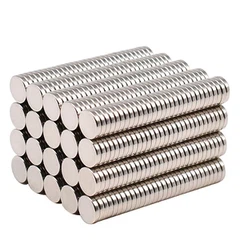
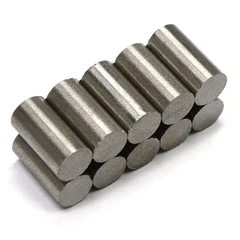
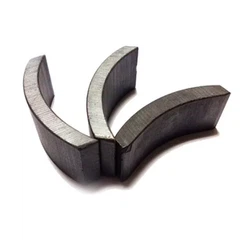
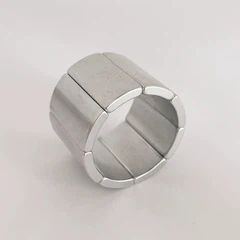
Permanent Magnets use high-intensity rare earth or ceramic magnets to attract and hold ferrous contaminants.
Electromagnets (in some models generate a controlled magnetic field but require an external power source.
The magnet strength and placement determine the separator's effectiveness.
Collection Area for Separated Contaminants
A specially designed section where trapped metal particles accumulate.
Prevents re-contamination by ensuring metal fragments do not re-enter the material flow.
In self-cleaning models, metal contaminants are automatically discharged.
Discharge Outlet for Clean Materials
The final point where purified materials exit the separator.
Designed to ensure a smooth, uninterrupted flow without affecting processing speed.
In some configurations, the separator may be integrated into a production line for continuous operation.
Comparison Between Different Types of Magnetic Separators
|
Feature |
Drum Magnetic Separator | Conveyor Belt Magnetic Separator |
Overband Magnetic Separator |
Electromagnetic Separator |
|
Material Movement |
Use a rotating drum |
Uses a conveyor belt |
Uses a moving belt |
Uses electromagnetic force |
|
Best for |
High capacity separation |
Bulk materials (mining, recycling) |
Large tramp metals |
Fine and weakly magnetic metals |
|
Separation Method |
The drum captures the iron particles |
A magnet pulls metal from moving material |
The belt removes large metal pieces |
A strong electromagnetic field attracts metal |
|
Power Requirement |
The drum motor requires power |
The belt requires power |
Motorized belt needs power |
High power consumption |
|
Energy Efficiency |
Ease (motorized roller) |
Moderate (belt uses energy) |
Higher (belt + motor) |
High power usage (continuous operation) |
|
Maintenance Needs |
Medium (drum maintenance) |
Medium (belt wear) |
High (belt and motor servicing) |
High (cooling, power checks) |
|
Cost Efficiency |
Medium (drum maintenance) |
Moderate cost |
High cost (motorized belt) |
Very high cost (power-intensive) |
|
Metal Retention |
Captures small to medium-sized metals |
Good for large contaminants |
Best for big metal pieces |
Strongest magnetic hold |
|
Industries Used In |
Metal recycling, mining |
Mining, bulk handling, recycling |
Scrap yards, recycling |
Metallurgy, labs, precision sorting |
Comparison of Gravity Feed Magnetic Separator Types
Several common types of gravity-fed magnetic separation equipment, covering their design features, applicable scenarios, main advantages, and usage limitations, so that you can choose the appropriate magnetic separation solution according to your actual needs.
|
Type |
Design |
Best For |
Strengths |
Limitations |
|
Small magnetic bars inside hoppers or chutes |
Small-scale, low-flow materials |
Easy to install, low cost |
Not for high-volume flow |
|
|
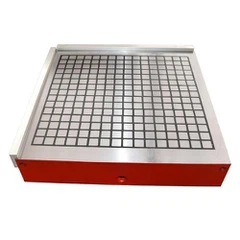
Magnetic Plates |
Flat plates are mounted in inclined or vertical chutes |
Bulk material flow, processing lines |
Strong magnet, removes tramp iron |
Needs regular cleaning |
|
Magnetic bars in a pull-out drawer |
High-flow processing, food, chemicals |
High efficiency, easy cleaning |
Can slow material flow |
|
|
Rotating drum with a strong magnetic field |
Large-volume processing, mining, and recycling |
Continuous separation handles high capacity |
High cost, needs space |
|
|
Hump Magnets |
Two angled magnetic plates for high-flow systems |
Fast-moving grains, powders, and plastics |
Strong separation works in pipelines |
Bulky, may need modifications |
Benefits of Using Gravity Feed Magnetic Separators
Gravity feed magnetic separators are useful to keep equipment and products safe from contaminants and damage.
Enhanced Product Purity
Captures iron filings, bolts, and shavings from materials like flour, sugar, and plastic pellets.
Prevents all types of metal impurities from entering finished products in food and pharmaceutical processing.
Stops metal contaminants from reaching motors, blades or other moving parts, thus reducing wear and tear and eventually equipment failure.
Cost-Effectiveness
Prevent raw materials as well as prevent contaminated batches from being discarded, especially in food processing, pharmaceuticals, or plastic manufacturing.
Minimizes slowdowns in industries where high-speed processing and automation are essential.
Compliance with Industry Standards
Ensures food safety compliance and meets HACCP, FDA, and BRC requirements for food and beverage manufacturers.
Follows manufacturing regulations and supports compliance with ISO 9001, GMP, and industrial safety guidelines.
Reduces the chance of lawsuits, regulatory fines, and product bans.
Common Applications of Gravity Feed Magnetic Separators
Gravity feed magnetic separators are used in different industries to avoid any type of metal contamination that can compromise product quality.
Chemicals and Pharmaceuticals
During the production of tablets or capsules, metal dust is removed from medicinal powders and mineral supplements before compression.
Extracts ferrous contaminants from fertilizers, industrial salts, and pigment powders.
Ensures clean ingredients in foundation powders, baby powders, and mineral-based cosmetics.

Plastics Manufacturing
Captures ferrous fragments before injection molding, extrusion, or blow molding in plastic pellet production.
Ensures contamination-free materials for PET bottle recycling, HDPE, and LDPE resins.
In 3D printing material processing, fine metal particles are removed from polymer powders and resin-based materials.
Food Industry
Ferrous debris is removed from important crops like rice, wheat, oats, corn, and barley before the milling process.
Captures metal particles from refined and raw sugar, cake flour, and baking mixes.
Avoids accumulation of metal contaminants in ground spices, herb powders, and seasoning blends.
Mining and Recycling Industry
In metal ore processing, ferrous impurities are extracted from iron, copper, aluminum, and rare earth minerals.
Unwanted metal parts from shredded cars, electronic waste, and construction debris are removed from scrap metal recycling.
Separates metal contaminants from broken glass, wooden pallets, and furniture waste.
Cement and Construction Materials Industry
In cement production, ferrous impurities from limestone, gypsum, and clay mixtures are removed before kiln processing.
Filters out tramp metal from crushed stone, concrete aggregates, and fine sand.
Ensures pure raw materials for porcelain, ceramic, and roofing tiles.
Selection Criteria for a Gravity Feed Magnetic Separator
Selecting the right gravity feed magnetic separator is essential for efficient metal removal, smooth processing, and equipment protection.
Material Type & Flow Rate
The type of material being processed determines the magnetic strength, the separator's design, as well as operational efficiency.
Material Form
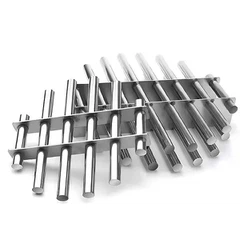
Dry powders and fine particles (flour, sugar, spices, cement) require high-intensity magnetic grates or drawer magnets.
Granules and pellets (plastic resins, grains, fertilizers) work best with magnetic plates or drum separators.
Wet or sticky materials (e.g., slurry, wet food ingredients, or damp minerals) need custom coatings or specialized separators to prevent clogging.
Particle Size
Microscopic metal particles (iron dust, filings): Requires high-intensity rare earth magnets for effective separation.
Larger contaminants (nuts, bolts, wire pieces): Standard ferrite magnets or plate separators work well.
Flow Rate & Volume
High-speed production lines (e.g., bulk grain handling, chemical processing) require continuous-feed drum or hump magnets.
Small-scale operations can use drawer or plate separators with periodic manual cleaning.
Magnetic Strength & Field Intensity
The strength of the magnetic field determines how effectively metal contaminants are captured and retained.
|
Magnet Type |
Best For |
Key Features |
|
Standard Ferrite Magnets |
Large tramp metal (bolts, nails, screws) |
Low cost, good for coarse material |
|
High-Intensity Rare Earth Magnets (Neodymium) |
Fine iron dust, weakly magnetic metals |
Strongest magnetic force, best for food & pharma |
|
Electromagnets (in specialized models) |
Adjustable metal separation |
Requires power, suitable for various applications |
Selection Based on Metal Size
Fine metal contaminants (iron dust, shavings, small flakes): Requires neodymium rare earth magnets for optimal efficiency.
Medium to large metal contaminants (screws, bolts, large filings): Standard ferrite magnets work well.
Mixed contamination levels: A multi-stage separator (grates + plates) may be required.
Separator Design & Configuration
Different separator designs are suited to specific industries and material types.
|
Separator Type |
Best For |
Key Advantages |
|
Magnetic Grates |
Fine powders (flour, sugar, spices, chemical powders) |
Compact, easy to install, affordable. |
|
Magnetic Plates |
Granular materials (grains, plastic pellets) |
Strong field, effective for tramp iron. |
|
Drawer Magnets |
High-flow lines (food, pharma, plastics) |
High efficiency, removable trays for easy cleaning. |
|
Drum Magnetic Separators |
Bulk processing (mining, cement, recycling) |
Continuous separation, high capacity. |
|
Hump Magnets |
High-speed pipelines (grains, cement, chemicals) |
Dual magnetic plates for enhanced separation. |
Application-Based Selection
For food Industry, drawer magnets (for powders), hump magnets (for bulk grain handling).
For plastics manufacturing, plate separators (for resin pellets), drum separators (for recycling).
Drum separators (for high-volume processing) for mining and recycling.
Drawer magnets (for fine powders), plate magnets (for granulated chemicals).
Ease of Cleaning & Maintenance
Regular cleaning is essential to maintain separation efficiency and prevent contamination buildup.
|
Cleaning Type |
Best For |
Key Features |
|
Manual Cleaning |
Low production volume, small-scale operations |
Requires periodic removal of trapped metal. |
|
Self-Cleaning (Automatic Cleaning) |
High-speed, continuous production lines |
Uses mechanical or pneumatic systems to remove contaminants automatically. |
Selecting the right gravity feed magnetic separator ensures efficient operation and reliable performance. A well-chosen system enhances overall productivity while maintaining smooth and consistent processing. With the right approach, industries can achieve effective separation, reducing disruptions and improving workflow.
Maximize purity, protect your equipment, and power your efficiency with Great Magtech, your ultimate magnetic separation partner!