







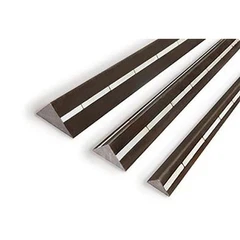
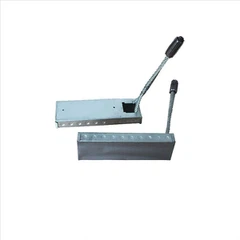
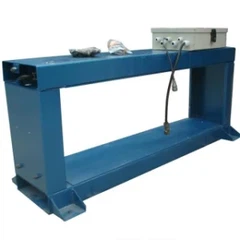
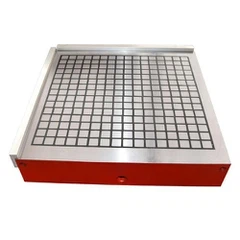
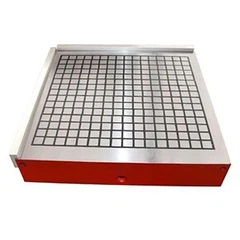
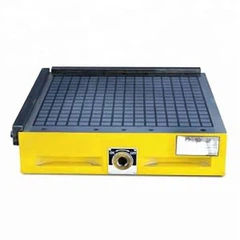
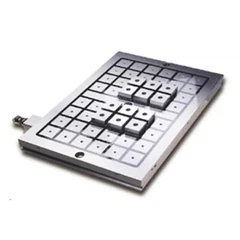


Choosing a plate magnet based only on magnetic strength or size can lead to poor metal separation. Even a powerful magnet may struggle if your material flows too fast, forms a thick layer, or passes too far from the magnetic surface.
So, how do you choose a plate magnet that works for your application?
You need to consider more than surface Gauss. Your material type, metal contaminants, flow conditions, and installation space all affect your choice. This guide walks you through the key factors to help you select a magnetic plate separator that fits your equipment and separation needs.
Understand Your Material and Separation Requirements
Before choosing a plate magnet, you need to understand your material, target contaminants, flow conditions, and separation goal.
Material Characteristics
Start with how your material behaves. Fine powders, plastic granules, grains, and bulk solids can flow very differently. Damp or sticky materials may clump and reduce the amount of material exposed to the magnetic surface.
Particle size and density also affect how evenly the material passes the magnetic surface.
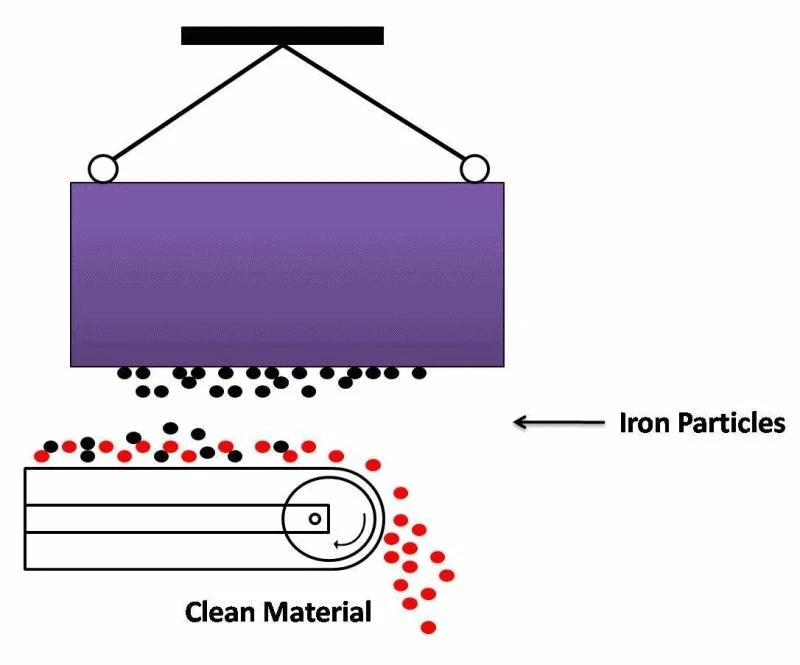
Ferrous Contaminant Type and Size
Identify the metal you need to remove. Large ferrous objects, such as bolts and nuts, behave differently from fine iron particles or metal fragments caused by equipment wear.
You should consider three things:
- Metal type: Is the contamination iron, carbon steel, or another material with magnetic properties?
- Particle size: Are you removing large pieces of tramp metal or small metal fines?
- Particle shape: Are the contaminants flat, round, irregular, or long and thin?
Material Flow Rate and Burden Depth
Your processing capacity alone doesn't tell you how difficult metal separation will be. The same throughput can produce a thin material layer in a wide chute or a much deeper layer in a narrow one. Ferrous particles buried deeper in the material are farther from the magnetic surface and may be harder to capture.
Flow speed matters too. Faster-moving material spends less time passing through the magnetic field, which can reduce the chance of capturing contaminants.
Separation Objective
Finally, consider why you need magnetic separation.
If your main goal is equipment protection, you may be concerned about large pieces of tramp metal that could damage crushers, mills, or other downstream equipment.
If your goal is product contamination control, you may need to remove much smaller ferrous particles to meet your product quality requirements.
These goals can require different separation performance, so you should define the target contaminant and separation result before selecting the magnet.
Choose the Right Plate Magnet Design
Once you understand your material flow and separation needs, you can choose a plate magnet design that fits your equipment. Different designs work best in different positions, especially when material moves quickly or changes direction.
The table below compares four common types of industrial plate magnets.
| Plate Magnet Type | Suitable Conditions | Typical Installation | Key Consideration |
| Flush Face Plate Magnet | Choose this design when material flows in a shallow, low-density layer across the chute. | Install it above the material flow or conveyor. | Make sure the magnetic surface covers the main material path. |
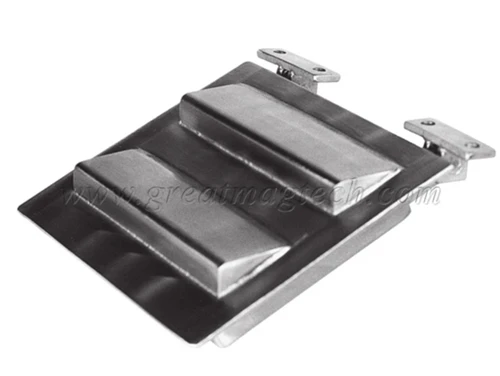
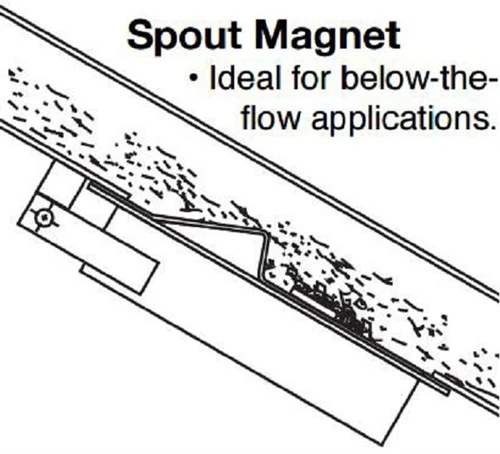
| Spout Magnetic Plate | Choose this design for material moving through a spout or chute, especially at higher flow rates. | Install it inside the spout or chute. | Make sure captured metal stays away from the main material flow. |
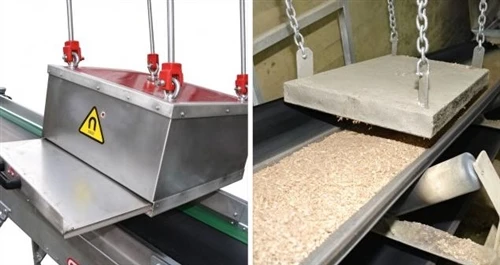
| Suspended Plate Magnet | Choose this design when bulk material moves on a conveyor. | Suspend it above the conveyor belt. | Make sure the magnetic field reaches the material layer. |
| Exposed Pole Plate Magnet | Choose this design when material can pass close to the exposed magnetic poles. | Install it below or alongside the material flow. | Make sure the material passes close enough to the magnetic poles. |
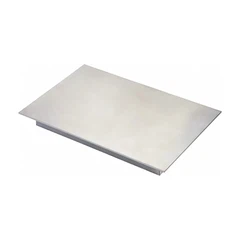
Your material path should guide your choice. For example, if you have a slow, shallow flow passing beneath a magnetic surface, a flush face plate magnet may be suitable. Its smooth face also limits areas where material can collect.
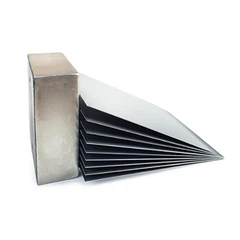
If your material moves quickly through a spout, you need to consider what happens after the metal reaches the magnet. A spout plate with a stepped or shaped trap face can help keep captured metal away from the main flow, reducing the chance that it will be carried back into the material.
For conveyor applications, a suspended plate magnet lets you remove ferrous metal without placing the magnet directly in the material path. An exposed pole design may be more suitable when your process allows material to pass close to the magnetic poles.
Not every application is suitable for a plate magnet. If your material cannot pass close enough to the magnetic surface, or your process requires continuous automatic metal discharge, you may need a different magnetic separator design.
The right choice depends on how your material moves through the equipment, not simply which magnet has the strongest advertised field.
Evaluate Magnetic Strength and Field Depth
A higher Gauss rating doesn't always mean better metal separation. You need to look at the magnetic field at the actual working distance, not just the value measured at the surface.
Surface Gauss vs. Magnetic Field Depth
Surface Gauss measures magnetic flux density at a specific point on the magnet's surface. It helps you compare magnetic fields, but it doesn't tell you how well a magnet will capture metal at a distance.
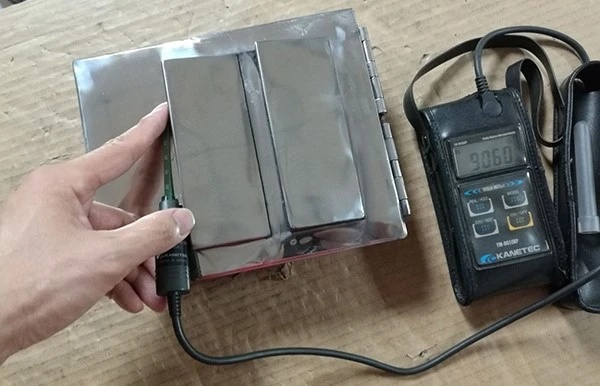
Magnetic field depth is a practical way to describe how the magnetic field performs at increasing distances from the plate. As the distance increases, the field generally becomes weaker. The magnetic force acting on a metal particle also depends on the field gradient, not just the Gauss reading.
For example, if your material forms a thick layer, metal near the top may be harder to capture than metal close to the plate. A magnet with high surface Gauss but limited field reach may not perform as well as one designed to produce a useful field farther from its surface.
When comparing specifications, check both the surface Gauss and the magnetic field at your required working distance.
Ferrite vs. Neodymium Plate Magnets
The magnetic material also affects performance, size, cost, and temperature limits.
- Ferrite magnets are generally more affordable and have good temperature resistance. They can work well in industrial separation when paired with a suitable magnetic circuit.
- Neodymium magnets offer higher magnetic strength for their size. They are useful when you need a compact design or stronger magnetic performance within a limited space. However, you must check the temperature rating of the specific magnet grade.
Neither material is automatically the better choice.
Your magnetic circuit, pole arrangement, and working distance also affect performance, so you should compare the complete magnetic assembly rather than choosing based on Ferrite or Neodymium alone.
Magnetic Capture vs. Holding Force
Capturing metal and keeping it attached are two different tasks.
Magnetic capture happens when a ferrous particle is attracted toward the plate. The magnetic force must be sufficient to pull the particle away from the moving material.
Holding force helps keep that particle on the magnetic surface after capture. If your material moves quickly or strikes the plate with force, captured metal may be dislodged and carried back into the flow.
This is why surface Gauss alone cannot tell you how well a plate magnet will retain contaminants. You also need to consider the magnetic circuit, pole design, and forces acting on the captured metal.
For demanding applications, ask your supplier for magnetic field measurements at relevant distances and suitable performance test data rather than relying on a single Gauss value.
Match Plate Size and Installation to Your Equipment
After you evaluate magnetic performance, you need to make sure the plate magnet physically fits your equipment. A magnet that works well in testing may still be unsuitable if the working area is too small or the installation distance is too large.
Plate Width and Material Coverage
Start with the actual material flow width, not just the conveyor or chute width. Your magnetic plate should cover the area where material passes through the magnetic field.
You should check:
- Material flow width and distribution
- Plate width and effective magnetic area
- Chute or conveyor opening
- Possible gaps where material could bypass the magnetic field
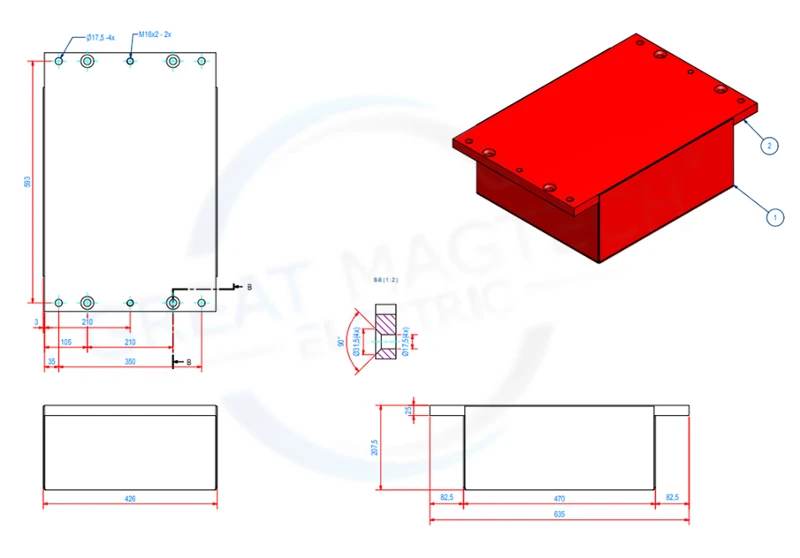
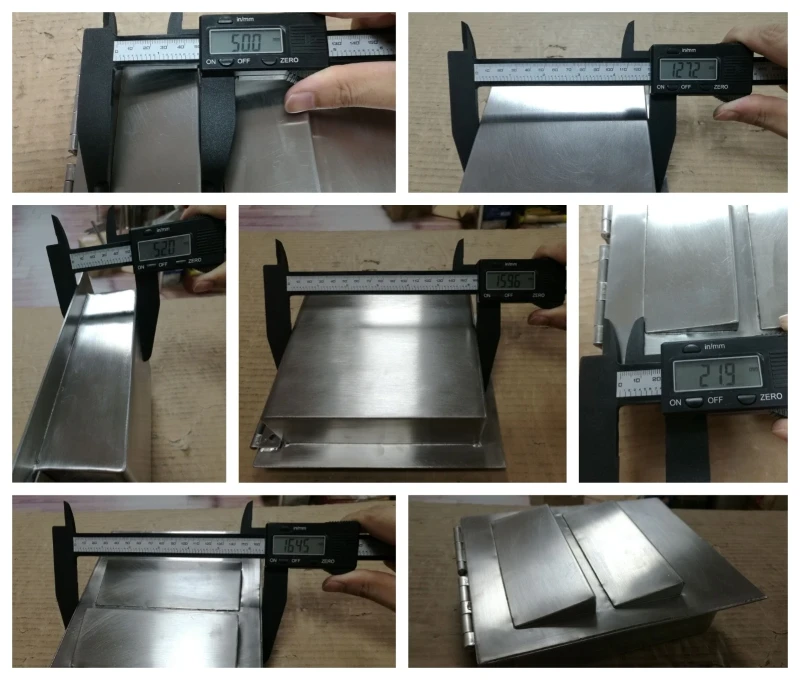
The outside dimensions of a plate magnet are not always the same as its effective magnetic area. Check the product drawing before you confirm the size.
Working Gap and Magnetic Exposure Length
Next, check the actual working gap between the magnetic surface and your material. You should measure this distance together with the material burden depth to understand how much of the material will pass within the effective magnetic field.
You should also consider the effective magnetic exposure length along the material flow. A longer magnetic area can give ferrous particles more opportunity to enter and remain within the magnetic field. However, a longer plate does not automatically mean better separation. Flow speed, magnetic circuit design, and material distribution still affect the result.
Mounting Position and Mechanical Fit
Your installation position should match the way material moves through the equipment. Depending on the design, you may install the plate above a conveyor, inside a chute or spout, or beneath the material flow.
Before ordering, check the available space and mounting details, including:
- Mounting holes and connection points
- Available clearance
- Support or suspension structure
- Access for cleaning
- Space needed to remove captured metal
For an existing system, use the actual equipment dimensions and drawings rather than estimating from photos.
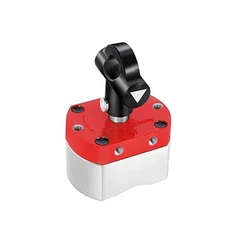
For example, GreatMagtech's SM120 Spout Magnetic Plate lists dimensions of 300 mm × 225 mm × 76 mm and a stated Magnetic Action Range of 120 mm. When reviewing a specification like this, you should confirm what each dimension represents and how the stated action range was measured. It should not automatically be treated as a guaranteed metal capture distance.
The goal is simple: match the magnetic coverage, working distance, and mounting structure to your actual material path.
Account for Operating Conditions and Maintenance
Your plate magnet also needs to handle the conditions around it. Temperature, moisture, corrosion, wear, and cleaning methods can all affect long-term performance.
Operating Temperature
Check the actual temperature around the magnet, including normal operating and cleaning temperatures. Different magnet materials and grades have different temperature limits. If your process runs hot, confirm the selected magnet grade can handle the required temperature.
Housing Material and Environmental Resistance
Choose the housing material based on your operating environment. Stainless steel is commonly used where corrosion resistance and clean surfaces are important.
You should consider:
- Moisture and humidity
- Corrosive materials or chemicals
- Washdown and cleaning agents
- Food-contact or sanitary requirements
- Abrasive material that may wear the surface
For demanding environments, 304 or 316L stainless steel may be considered depending on your corrosion and hygiene requirements.
Cleaning and Maintenance
Captured ferrous particles build up on the magnetic surface over time. If you leave them in place, they can reduce the available capture area and make cleaning more difficult.
Your cleaning method should match how quickly contaminants accumulate. If you run a continuous process, easy access for inspection and cleaning can reduce maintenance time and unnecessary downtime. Consider this access during selection so the plate magnet can be inspected and cleaned safely.
Verify Plate Magnet Performance Before Ordering
Before you place an order, you need to confirm that the proposed plate magnet matches both your equipment and your application. A product drawing and a Gauss value are useful, but they do not tell you everything.
Confirm Technical Specifications and Drawings
Start with the final technical drawing and make sure the details match your equipment:
- Overall dimensions and working area
- Mounting holes and connection points
- Magnet material and housing material
- Required tolerances
- Custom features or special surface requirements
For an OEM or ODM project, you should also confirm the drawing revision before production. A small change in mounting dimensions can create problems when the magnet is installed into an existing system.
Check Magnetic Test Data and Conditions
When you compare magnetic performance, check how the data was measured. Confirm the measurement point, test method, and working distance. If your application has strict separation requirements, an application test using representative material and contaminants can give you a more useful result.
Agree on OEM/ODM Acceptance Requirements
For a custom plate magnet, confirm the acceptance requirements before production starts. This is especially important when the magnet will be integrated into your own equipment.
You should agree on:
| Verification Item | What to Confirm |
| Technical Drawing | Approved dimensions, tolerances, and mounting details |
| Magnetic Test Data | Measurement points, test method, and agreed values |
| Application Test | Test material, target contaminants, and acceptance criteria if required |
| OEM/ODM Requirements | Custom design, sample approval, inspection records, and delivery documents |
Conclusion
Choosing a plate magnet is not just about magnetic strength. You need to match the magnet design and magnetic performance to your material flow, working distance, equipment, and operating conditions.
Most importantly, don't judge a plate magnet by surface Gauss alone. You should review the complete technical specifications and, for demanding applications, verify performance under conditions close to your actual process.
If you are comparing options, you can review GreatMagtech's magnetic plate separators. For an OEM or ODM project, you can provide your equipment drawings, material conditions, and target contaminants to discuss the right plate magnet design for your application.
FAQ
Q: Can a plate magnet remove stainless steel particles?
A: You can remove some stainless steel particles, but you cannot assume that all stainless steel is magnetic. Magnetic response varies by stainless steel grade and its processing history. If stainless steel contamination is your concern, you should test the actual particles before choosing a plate magnet.
Q: Can a plate magnet capture very fine iron particles?
A: Yes, a plate magnet can capture fine ferrous particles, but particle size alone does not determine the result. You also need to consider the particle's magnetic properties, working distance, material flow, and magnetic field at that distance. Fine particles buried in a deep or fast-moving material stream can be more difficult to capture.
Q: Do plate magnets lose magnetic strength over time?
A: A properly selected permanent magnet can retain its magnetic performance for a long time under normal operating conditions. However, excessive heat, physical damage, or unsuitable operating conditions can affect magnetic performance. You should check the magnet's temperature limits and inspect it during routine maintenance.
Q: When should you choose a grate magnet instead of a plate magnet?
A: You may prefer a magnetic grate separator when your material can flow through a grate structure and you need more direct contact with multiple magnetic surfaces. A plate magnet may be more suitable when your equipment provides a clear surface for material to pass across or close to the magnetic plate.
Q: Can plate magnets be used in food processing equipment?
A: You can use a plate magnet in suitable food processing applications, but you need to check more than magnetic performance. Your selection should also meet the required hygiene, material, cleaning, and corrosion-resistance conditions. If certification is required, you should confirm the specific certification and material requirements for your application before ordering.