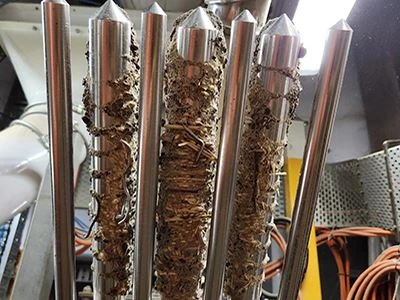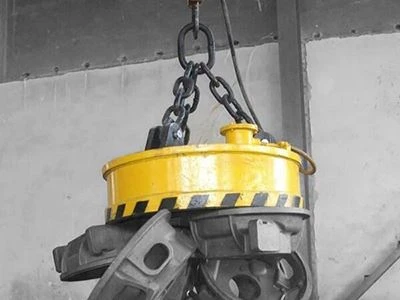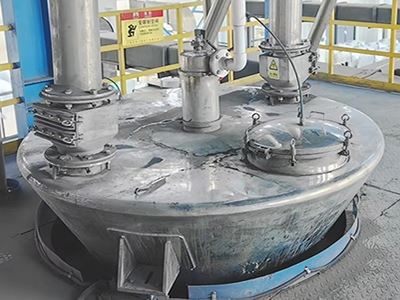
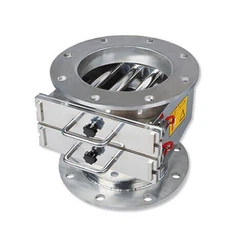
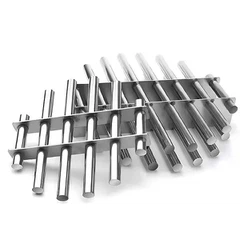
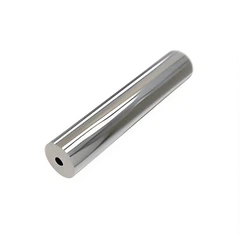
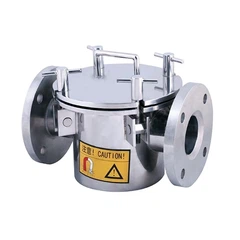
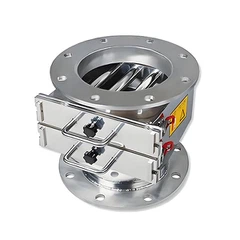
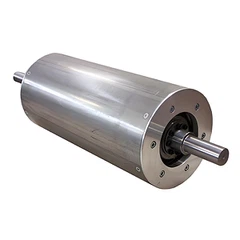
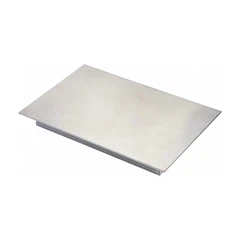
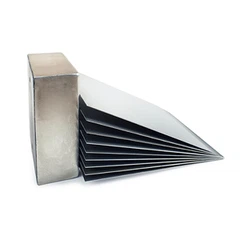
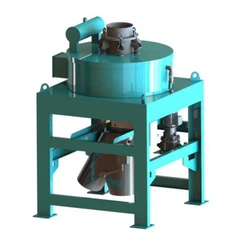

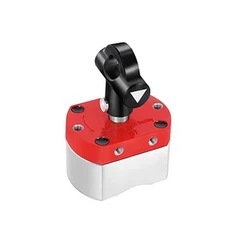

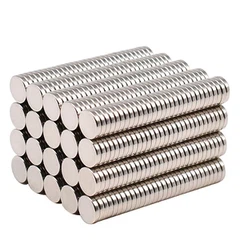
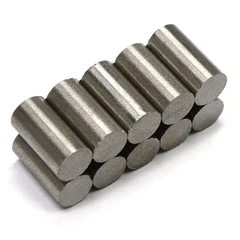
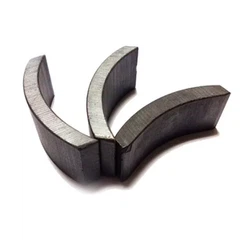



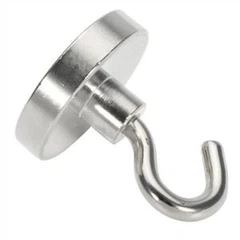
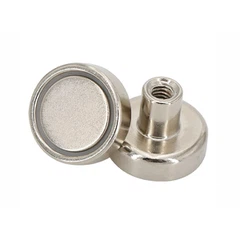
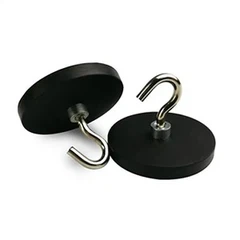
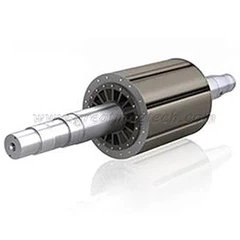


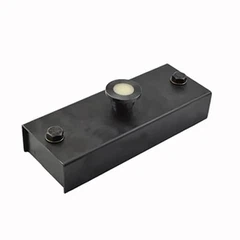
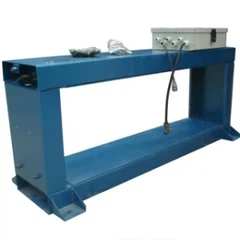
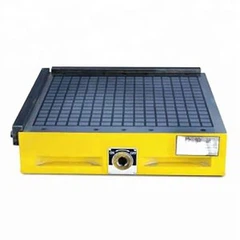
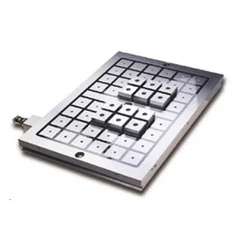


Suspended magnets are effective magnetic separators that use magnets to remove ferrous tramp from non-ferrous metals in manufacturing applications. They work well over conveyor belts or material flow systems to prevent metal debris from contaminating the final product and position them above the conveyor to capture and remove the debris. In many industries - mining, recycling, food processing, and construction - these magnets are important in preventing equipment damage and increasing product quality.
Suspended magnets are important machines that maintain operational efficiency for carrying out shiploads of materials for bulk material handling systems. Using high-quality suspended magnets can improve business productivity and minimize the cost of on-site maintenance to meet industry standards for material separation in the mining industry. In this guide, we look at the various uses, types, and benefits of these powerful machines.
What Is an Industrial Suspended Magnet
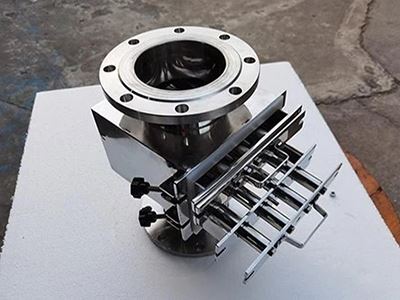
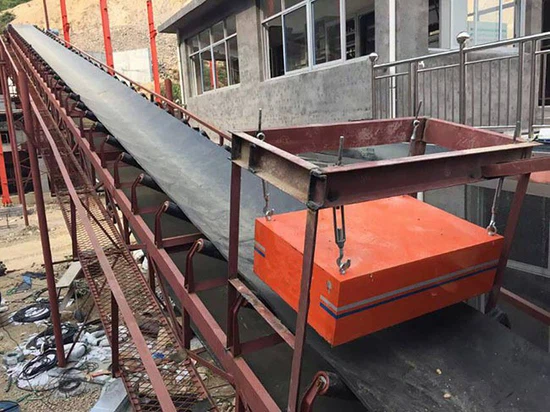
This suspended magnet is a successful example of a magnetic separator used to hang over conveyor belts or material flow systems to remove ferrous material, such as nails, bolts, and metal debris of other bulk materials. Powered by powerful magnets, whether permanent or electromagnetic, these machines create a magnetic field intended to attract and hold ferrous materials. A suspended magnet consists of a magnetic core, housing, and a suspension system that makes it easy to install above processing lines.

Industries where the purity of materials is essential, and where processing equipment must be protected; these types of industries rely on suspended magnets. These work without hindering the flow of materials and are thus a versatile solution to different industrial applications.
Common Applications Include:
Conveyor Belts: Removal of metal contaminants from coarse bulk materials such as grain, coal, or minerals.
Recycling Facilities: Removing metallic sort goods (ferrous scrap) from plastics or paper recyclable items.
Mining Operations: To simplify the process, separate ferrous impurities from ores.
It would be very difficult for both of these sectors to operate smoothly or become compliant with industry standards without suspended magnets.
Types of Suspended Magnets
Permanent Suspended Magnets
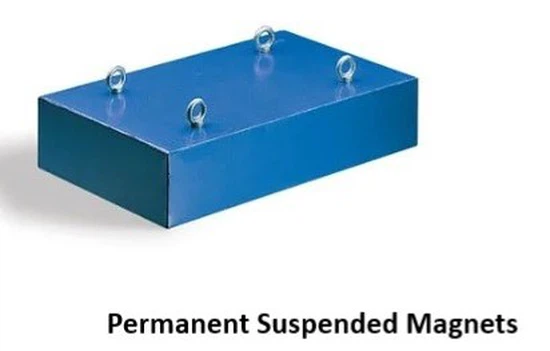
Permanent suspended magnets are based on the continuous magnetic field of rare-earth or ceramic magnets. The products are highly reliable and warrant an external power source, which makes the products both cost-effective and energy-efficient. For applications that require long-term performance, such as removing ferrous contamination from conveyor belts in recycling or aggregate processing, these magnets are good to have.
A big plus of permanent suspended magnets is their relative lack of maintenance needs. Since they lack electrical components to manage, they are simple to install and operate and run consistently over time. But they're not ideal for large-run applications or where restrictions are placed on magnetic field strength.
Magnet Electromagnetic Suspended
In contrast, electromagnetically suspended magnets also require an external power source to create a magnetic field. These magnets are perfect since the magnetic strength can be adjusted according to the requirements of the application. Their flexibility also makes them suitable for large-scale industrial operations or for separations that require high power, such as in heavy-duty recycling or mining.
Electromagnetic magnets, while providing more power and flexibility, require more maintenance because their parts are electric, and also involve their cooling systems. Additionally, they have higher costs in terms of operation, such as energy consumption and maintenance.

Cleaning Options: Self-Cleaning vs Manual
| What You're Deciding | Self-cleaning Suspended Magnet | Manual Cleaning Suspended Magnet |
|---|---|---|
| Best For | Lines with frequent tramp iron and continuous operation | Lines with occasional tramp iron and planned stops |
| How Metal Is Removed | A belt (or chain) carries captured metal away automatically | The operator stops the line and removes the metal by hand |
| Downtime | Lower. You keep production moving most of the time | Higher. Cleaning usually requires a stop or slowdown |
| Labor Need | Less hands-on time during normal operation | More hands-on time, depending on how often you clean |
| Upfront Cost | Usually higher because of the discharge system | Usually, lower and simpler hardware |
| Maintenance Focus | Discharge belt/rollers, alignment, wear parts | Basic inspections, cleaning access, mounting hardware |
| Good Fit When | Your belt runs many hours per day, and you can't afford stoppages | You can schedule short stops, and tramp metal isn't constant |
| A Simple Way to Choose | Choose self-cleaning if metal shows up often and downtime is expensive | Choose manual if metal is rare and you want the simplest setup |
How to Choose an Industrial Suspended Magnet
Start by looking at your conveyor, not the magnet. The right suspended magnet depends on how the material moves and how far the metal has to be pulled.
First, confirm what you need to remove. Is it large tramp iron-like bolts and rebar, or fine iron pieces mixed into the burden? Larger metal is easier to catch. Small fragments need a stronger field and better placement.
Next, gather the basics from your line. Belt width, belt speed, and burden depth tell you how much "work" the magnet must do. The higher the magnet sits above the material, the harder it is to pull metal out of the stream. If your belt runs fast or the burden is thick, you usually need more magnetic power.
Then choose your magnet type and cleaning style. Permanent suspended magnets are simple and low-maintenance. Electromagnets can be stronger and adjustable, but they need power and more checks. If tramp metal is frequent, a self-cleaning model can reduce downtime. If it's occasional, manual cleaning may be enough.
Installation & Positioning Guide
Where you mount a suspended magnet matters as much as the magnet you choose. A strong unit installed in the wrong spot can still miss tramp iron.
Choose the Best Capture Point
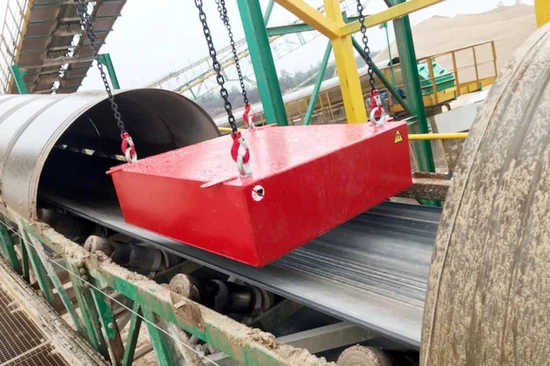
In many conveyor lines, the best location is near the head pulley, where material starts to separate and "fan out." When the burden is less packed, metal is easier to pull out than when it's buried under a thick layer.
Control the Gap Above the Burden
Keep the magnet as close as you safely can to the material flow. More distance means a weaker pull on the product. If you raise the magnet to clear a thicker burden, you often need a stronger model to get the same capture.
Align It With the Belt and Material Stream
Center the magnet over the belt and aim it at the main flow path. If material drifts to one side, metal can slip past on the low-coverage edge. Simple skirting or tracking fixes can help.
Make Cleaning and Safety Easy
Plan access for cleaning, inspection, and belt tracking. You don't want a design that forces unsafe reach-in work. Add guards where needed, and leave space to remove trapped metal without stopping the whole line longer than necessary.
Applications by Industry
Across a wide spectrum of industries, suspended magnets have become an indispensable tool for ensuring the safety, productivity, and quality of products by efficient conduction of ferrous contaminants.
1 Mining Industry
In the mining and quarrying sector, suspended magnets are essential to remove ferrous impurities, i.e., iron and steel, from raw materials, such as coal, ore, and limestone. They are positioned above conveyor belts to prevent damage to downstream pipeline equipment, to reduce maintenance costs, and to maintain the purity of processed materials. Operational productivity is enhanced by minimizing the disruptions that are caused by contaminants with these magnets.
2. Recycling and Waste Management
Suspended magnets are used by recycling plants to separate ferrous elements of mixed waste streams comprising plastics, glass, and electronic waste. These magnets produce cleaner, higher-grade recyclable materials that improve the value of recycled goods, conserve natural resources, and reduce landfill dependency. They contribute to waste management by removing ferrous debris from solid waste and facilitating the recycling process.
3. Food and Pharmaceutical
In food and pharmaceutical manufacturing, product purity is of critical importance. These suspended magnets remove ferrous impurities, like metal pieces put in the product, to avoid compromising the product in terms of safety and also meeting strict regulations. Their use boosts consumer trust and protects brand reputation from contamination.
4. Construction
Suspended magnets remove ferrous debris from rubble, such as nails and screws, at construction and demolition sites. It protects crushers and conveyors from damage, which can result in injury, keeps them operating efficiently, and helps material recycling to function properly.
5. Cement Industry
In cement production, suspended magnets protect machinery from tramp metal in raw materials by taking such tramp metal out of the raw materials, to avoid drops of tramp metal into the charging funnel and interruption of machine operation, and to maintain the quality of the raw products.
6. Power Industry
Suspended magnets extract metal contaminants from coal and biomass fuels, preventing equipment wear and allowing for efficient combustion processes in power plants.
7. Ceramic, Ore, and Non-Metallic Ore Industries
Suspended magnets are used by these industries to clean raw materials of unwanted metal impurities, which improves the quality of end products.
8. Metal and Chemical Industries
Processing metals and chemicals requires suspended magnets that are increasingly important in the separation of ferrous contaminants and to protect sensitive equipment from damage.
Advantages of Using Suspended Magnets
You now know that suspended magnets provide a variety of benefits, which make them indispensable in numerous industries – benefits including efficiency, safety, and compliance.
1. High-intensity Magnetic Field
The capability of suspended magnets to produce an extremely strong and consistent magnetic field is perhaps one of their primary advantages. The high-intensity field dramatically increases the efficiency of capture for even the smallest and weakest magnets in the particle population.
2. Reduced Contamination and Improved Product Quality
Because suspended magnets remove ferrous contaminants efficiently from bulk materials, businesses can remove ferrous contaminants efficiently from bulk materials, removing ferrous contaminants and resulting in cleaner, higher quality products. In food, pharmaceuticals, and ceramics, for example, even small impurities can have an impact on product safety and performance, and this is particularly important.
3. Deep Penetration
Unlike some other magnetic separation technologies, suspended magnets can effectively penetrate a material flow stream through to the bottom. By its deep penetration capability, this forms the ability for the removal of ferrous contaminants that are invisible to the naked eye or embedded in the material itself. It guarantees thorough deagglomeration and reduced probability of the presence of residual metal contamination.
4. Self-cleaning Design
Self-cleaning mechanisms are found in suspended magnet systems. Automated cleaning devices, or vibrating systems, are used to remove ferrous particles that are captured by these surfaces. This continuous self-cleaning minimizes downtime for manual cleaning, thus increasing the possibility of unbroken operation and productivity.
5. Industry Standards compliance
Many industries, especially food processing, pharmaceuticals, and recycling, have to be performed to strict quality and safety standards. The use of suspended magnets allows companies to meet these regulations, as hazardous contaminants will not be present in their product,s creating a level of trust and reliability with their customers.
6. Versatility
Magnetically suspended magnets are very versatile and can be applied to an array of industrial applications. Recycling facilities use them extensively to sort ferrous metals from non-ferrous metals, food processing plants for the removal of metal from food products, and mineral extraction from ferrous minerals. They are very adaptable and are valuable in many other industries.
Sizing & Performance Factors
Getting good separation is mostly about matching the magnet to your conveyor conditions. If the match is off, even a strong unit can look "weak" on the belt.
Burden Depth and Material Density
The thicker the burden layer, the deeper the tramp iron gets buried. That makes it harder to pull out. Dense, heavy material can also shield metal pieces. If your burden is deep, you usually need either a stronger magnet or a better capture position.
Belt Speed and Throughput
Fast belts give the magnet less time to grab metal. High throughput also means more material between the magnet and the tramp iron. If your line runs fast, you may need more magnetic power or a longer magnet zone.
Suspension Height and Clearance
Distance is the enemy. The higher the magnet sits above the burden, the weaker the pull on the product. Keep the gap as small as your safety and belt tracking allow. If you must mount large, size up.
Belt Width and Coverage
Your magnet has to cover the full belt stream. If material rides off-center or spills to one side, metal can pass outside the effective field. Make sure the magnet width and mounting position match the real flow path, not just the belt spec.
Tramp Metal Size and Shape
Large bolts and bars are easier to catch than thin wire or fine shards. Small, flat, or mixed-in pieces need stronger field strength and better placement-often closer to the head pulley where material loosens.
FAQs
Q: Where should you install a suspended magnet for the best results?
A: Most lines work best near the head pulley, where material starts to separate and tramp iron is easier to pull out than when it's buried in a thick burden.
Q: Why is the magnet not picking up metal?
A: Common causes are too much distance, a burden layer that's too thick, belt speed that's too high, or the magnet being installed in the wrong position.
Q: Can suspended magnets remove non-ferrous metals like aluminum or copper?
A: No. Suspended magnets are designed for ferrous tramp metal (iron and steel). For non-ferrous separation, you'll need a different solution.
Q: What information should you send for a quick selection?
A: Belt width, belt speed, burden depth, material type, tramp metal size, available mounting height, and whether you want self-cleaning or manual cleaning.
Q: Does a stronger magnet always solve the problem?
A: Not always. Placement and distance often matter just as much. A well-placed magnet can outperform an oversized unit mounted too high.
Conclusion
Industrial applications require suspended magnets as the pivotal machine for the removal of ferrous contaminants, product quality, equipment protection, and the meeting of safety standards. These magnets are used in all kinds of industries, such as mining, recycling, food processing, etc., and greatly contribute toward improving operational efficiency and cost reduction.
Investing in high-quality suspended magnets specific to your needs can significantly improve the benefits of your business in the long term. Learn more about premium magnetic solutions and receive expert guidance from Great Magtech today, helping your operation to continue running efficiently and free of contamination.