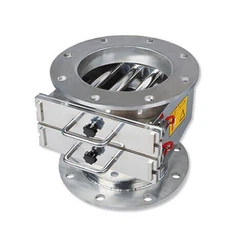
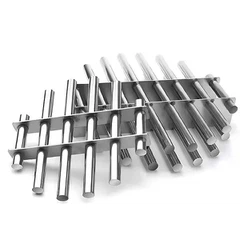
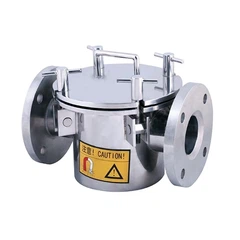
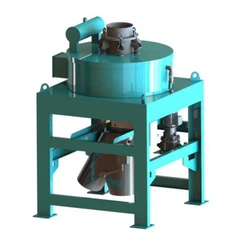


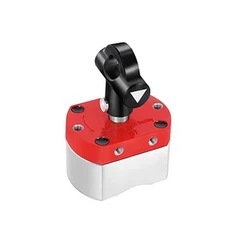

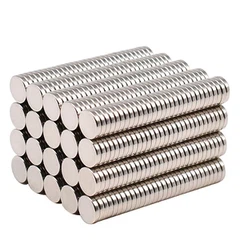
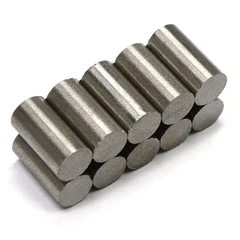
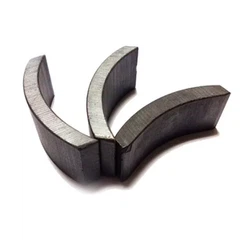
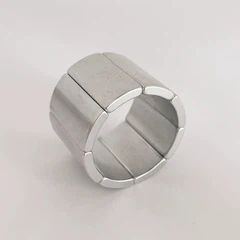




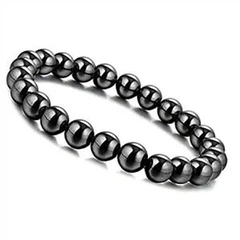


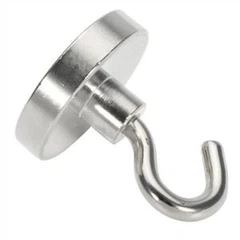
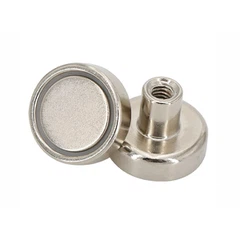

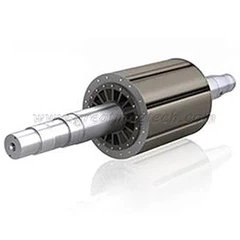








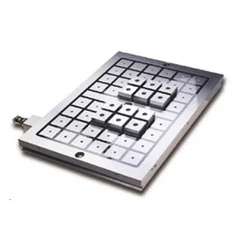


Magnets do not only attract iron, magnets can cause magnetic fields and have the characteristics of attracting ferromagnetic material compounds such as iron, nickel, cobalt, and other metals. Magnets usually attract iron because, under the expected effect of the external magnetic field, the micro-magnetic fields of the iron itself will change along the direction of the magnetic field lines, resulting in a magnetic field that is consistent with the direction of the external magnetic field lines of the magnet. The whole process of the metal raw material being sucked in the whole process of forcibly changing the rotational orientation of the internal electronic components. The active ingredients of magnets are iron, cobalt, nickel, and other atoms. The internal structure of their atoms is quite different, and they have magnetic moments themselves. So what metals are not attracted by magnets?
1. The metals that can be attracted by magnets are actually very few, only limited to a few types of magnet metals such as iron, nickel, cobalt, etc., and most other metals such as gold, silver, copper, aluminum, tin, lead, Titanium, etc. are all not easily attracted by magnets.
2. A magnet is an object that can create a magnetic field. It is a magnetic dipole, which can attract ferromagnetic materials and chemicals such as iron, nickel, cobalt, and other metals. The identification of the magnetic field is based on a filament suspended in a magnet, the magnetic field in the north is called the north pole or the N pole, and the magnetic field in the south is the guide pole or the S pole. Magnets with opposite poles attract each other, and magnets with the same pole collide. The compass pole and the north pole attract opposites, the pole and the pole repel each other, and the pole and the pole repel each other.