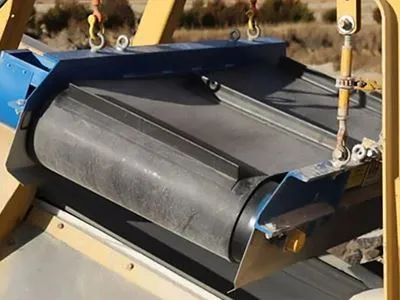
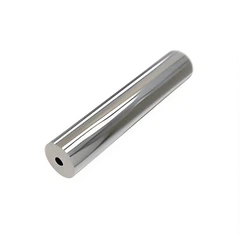
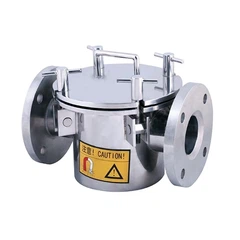
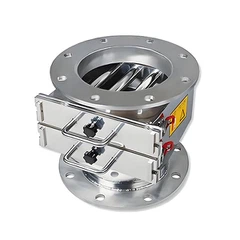
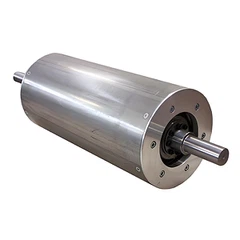









The magnetic wheel, also called the magnetic transmission wheel, is a device that uses the interaction force between the magnetic poles as a driving force to realize non-contact power transmission.
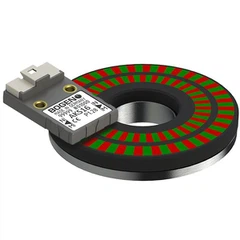
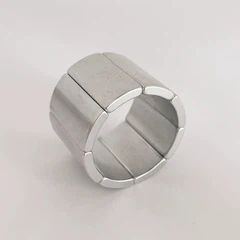
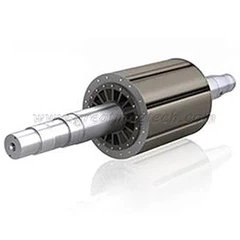
Magnetic wheel composition: It is composed of NdFeB annular multi-pole magnetic ring, inner shirt aluminum, iron or plastic bracket, and special metal glue for interlayer communication, which is graded into a finished magnetic wheel.
The principle of the magnetic wheel: use the magnets of the same sex to attract, and the opposite sex to dismantle, and convert the repulsion into a driving force. The magnetic ring, an important part of the magnetic wheel, is filled with enough magnetic poles. In the static state, the S and N poles of the two magnetic wheels correspond to each other. When the driving magnetic wheel rotates, the position of the magnetic pole changes and the driven magnetic wheel is driven to rotate by using the adjacent opposite magnetic poles, thereby realizing the non-contact transmission of power.
Magnetic wheel transmission mode: orthogonal transmission, parallel transmission, taper transmission, end surface transmission, and inner and outer transmission of the inner shaft. Orthogonal transmission means that the axes of the two magnetic wheels are vertical, but the two axes are not in the same plane. It can be used to carry goods, change the direction of power, etc. The orthogonal transmission structure is similar to the helical gear of the mechanical gear. Parallel transmission refers to the transmission of power in which the shafts of the two magnetic wheels are in parallel. Taper transmission means that the axes of the two magnetic wheels are in a vertical shape, and the two axes are in the same plane. Its structure is similar to a mechanical bevel gear.
End face transmission and coaxial inner and outer transmission mean that the two shafts of the active and driven are in a coincident state, and their structure is similar to an ordinary coupling, so these two transmission methods are also called magnetic couplings.
Magnetic wheel material classification: The magnetic ring of the magnetic wheel can be divided into the sintered magnetic wheel and bonded magnetic wheel according to different production processes
The magnetic ring of the sintered magnetic wheel is made of NdFeB raw material, thorough vacuuming, high-temperature heating, die casting, and then through some complex processing procedures, it is processed into the specifications we need.
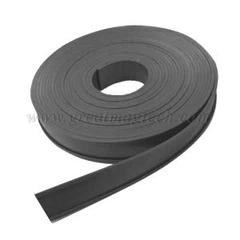
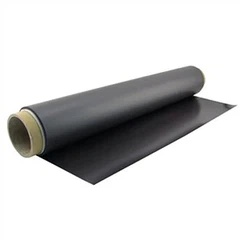
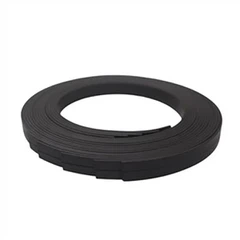
The magnetic ring for bonding the magnetic wheel is directly injection molded, and then surface treated, without post-processing.
Compared with the bonded magnetic wheel, the sintered magnetic wheel has a stronger magnetic force, but the cost is also higher. The bonding is not only relatively cheap but also has a relatively fast production cycle.