












Magnets are everywhere, from motors and sensors to separators and industrial fixtures. But what really matters is what the magnet is made of, because the material decides the strength, temperature limit, corrosion resistance, and long-term stability.
In this guide, you'll learn the most common magnet materials, how they compare, and how to choose the right option for your application.
Short Answer: What Are Most Magnets Made Of?
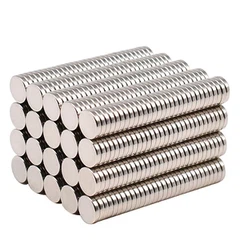
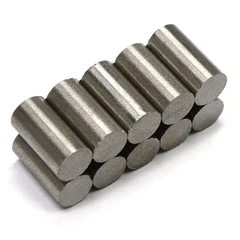
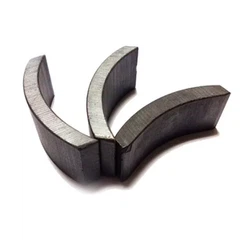
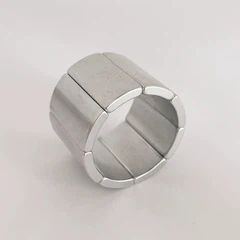
Most industrial permanent magnets are made from NdFeB (neodymium-iron-boron), ferrite (ceramic magnet), SmCo (samarium-cobalt), or AlNiCo (aluminum-nickel-cobalt). The "best" one depends on four things: required force, operating temperature, environment (humidity/salt/chemicals), and available space.

NdFeB: strongest in small size (often needs coating in humid environments)
Ferrite: low cost + good corrosion resistance (usually larger size for the same force)
SmCo: excellent high-temperature stability + strong resistance to demagnetization
AlNiCo: very high temperature capability and stable magnetism (but easier to demagnetize than SmCo in some designs)
Fast Enquiry: Tell Us These 6 Items
To recommend the right material (and quote faster), please send:
Magnet shape (disc / block / ring / countersunk / arc / pot)
Size (mm)
Quantity
Operating temperature range
Environment (dry/humid / salt fog/chemicals)
Target requirement: pull force (N/kgf) or surface Gauss at a distance
How Magnets Work
Magnetism comes from tiny magnetic effects inside atoms. In most materials, those effects cancel out. In magnetic materials, many atomic "mini magnets" can line up, creating a strong magnetic field.
Atomic-level magnetism
Electrons create tiny magnetic moments through their spin and motion. In materials like iron, nickel, and cobalt, these moments can align more easily, which is why those materials are strongly magnetic.
Magnetic domains and magnetization
Magnetic materials contain many small regions called domains. Before magnetizing, these domains point in different directions. After magnetizing, more domains align, and the magnet becomes strong.
Magnetic fields and interaction
A magnet's field has direction and strength. Like poles repel and unlike poles attract. This is also why magnets interact with electric currents in motors and many industrial devices.

Types of Magnets
Permanent magnets

Permanent magnets refer to materials that can maintain their magnetism for a long time after being magnetized and can continuously provide a magnetic field without external energy. Common materials include: Neodymium iron boron (NdFeB, the highest magnetic energy product, used in electronic devices and electric vehicles), ferrite (low cost, suitable for speakers and microwave ovens), and aluminum nickel cobalt (high temperature resistance and anti-demagnetization, suitable for high temperature environments). Its characteristics are that its magnetism is long-lasting but may decay due to high temperature or external force, and it is difficult to completely demagnetize. It is widely used in motors, generators, sensors, maglev trains, and magnetic storage.
Electromagnet

The electromagnet is a combination of a coil and an iron core. Its working principle is that when the power is on, the magnetic field generated by the coil follows the Ampere loop law. After the iron core is magnetized, the magnetic field is significantly enhanced, and the magnetism disappears immediately after the power is turned off (except for the residual magnetism of the iron core). Its magnetism can be controlled by the size and direction of the current, and the magnetic field strength is positively correlated with the current and the number of coil turns. Electromagnets are widely used in electromagnetic cranes, relays, locks, shielding, and induction heating equipment.
Temporary magnets
Temporary magnets are objects made of soft magnetic materials (such as pure iron, silicon steel sheets, and soft magnetic composite materials). Their magnetism is easily magnetized under the action of an external magnetic field, but the magnetism will quickly weaken or disappear after the magnetic field is removed. This type of material has the characteristic of low hysteresis loss and is particularly suitable for high-frequency electromagnetic equipment applications. It is commonly used in transformer cores (efficiently transmitting electromagnetic energy), electromagnetic shielding (blocking external magnetic field interference), and magnetic sensors.
What Core Material Does the Magnet Consist Of?
|
Type |
Main Ingredients |
Features |
Best for (typical use) |
|
NdFeB Magnets |
Neodymium (Nd), Iron (Fe), Boron (B) |
Currently, it has the strongest magnetism and high magnetic energy product, but its temperature resistance is average (80-200℃), it is easy to corrode, and needs surface treatment. |
Compact high-force designs, motors, sensors |
|
Ferrite Magnets |
Iron oxide (Fe₂O₃) + barium/strontium carbonate (BaCO₃/SrCO₃) |
Low price, strong corrosion resistance, High temperature resistance (up to 250℃), but weak magnetic force |
Speakers, general industrial use, cost-sensitive applications |
|
AlNiCo Magnets |
Aluminum (Al), Nickel (Ni), Cobalt (Co), Iron (Fe) |
High temperature resistance (450-550℃), good magnetic stability, but medium magnetic force, and easy to demagnetize |
High-temp instruments, sensors, specialized assemblies |
|
Samarium Cobalt Magnets |
Samarium (Sm), Cobalt (Co) |
Excellent high temperature performance (250-350℃), corrosion resistance, good magnetic stability, but expensive and brittle |
High-temp motors, aerospace, harsh environments |
Which Magnet Material Should You Choose?
| Your Requirement | Best First Choice | Notes |
| Strongest force in a limited space | NdFeB | Consider coating for humid/salt environments |
| Lowest cost, corrosion resistance matters | Ferrite | Often needs a larger size to reach the same force |
| High temperature + stable performance | SmCo | Higher cost; handle carefully (brittle) |
| Very high temperature capability | AlNiCo | Good stability, but the design must prevent demagnetization |
Magnet Manufacturing Process
There are various manufacturing processes for magnets, mainly including powder metallurgy, casting, etc. Although the magnetic field orientation does not directly belong to the manufacturing process, it plays a key role in magnet performance optimization and quality control.
The following is a detailed introduction to these processes:
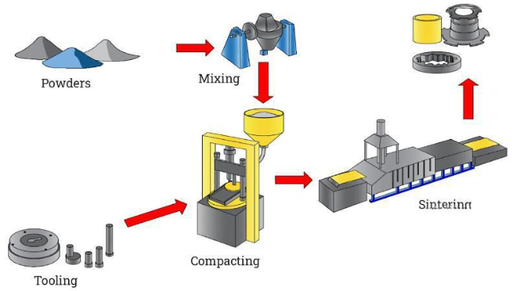
Powder metallurgy is one of the common methods for manufacturing magnets, and is particularly suitable for producing high-performance permanent magnetic materials such as neodymium iron boron (NdFeB) and samarium cobalt magnets.
Powder Metallurgy
Process
Raw material preparation: Select high-purity metal powders, such as neodymium, iron, boron (or samarium, cobalt), etc., and mix them in a certain proportion.
Pressing molding: The mixed powder is pressed into shape in a magnetic field so that the powder particles are arranged along the direction of the magnetic field to form a green body with a certain shape and density.
Sintering: The green body is sintered at a high temperature to combine the particles and form a dense magnet.
Post-processing: Including machining, surface treatment, electroplating, coating, magnetization, etc.
Applications: Widely used in motors, sensors, speakers, magnetic resonance imaging (MRI) equipment, and other fields.
Casting Method

Process
Melting: Melt the metal raw materials, such as aluminum, nickel, cobalt, iron, etc., into an alloy liquid in proportion.
Casting: Pour the molten alloy into the mold and cool,l and solidify it into a blank.
Heat treatment: Through solution treatment and aging treatment, the microstructure and magnetic properties of the magnet are optimized.
Machining: Processing the blank into the required shape and size.
Magnetization: Charging a magnet in a strong magnetic field.
Application: Mainly used to manufacture magnets in instruments, motors, speakers, magnetic separators, and other equipment.
Magnetic Field Orientation
Process
Powder filling: Place magnetic powder (such as NdFeB powder) into the mold, ensuring that the powder is evenly distributed.
Applying a magnetic field: After the powder filling is completed, a strong magnetic field consistent with the final magnetization direction of the magnet is applied to the mold, and its intensity usually reaches more than tens of thousands of gauss to ensure that the grains in the magnetic powder can be fully arranged.
Magnetic field retention and pressing molding: The powder is pressed under the action of a magnetic field so that the particles are closely arranged, and the magnetic field orientation direction is maintained. During this process, the magnetic field needs to remain stable to prevent the grain orientation from being disrupted.
Sintering and cooling: The pressed blank is sintered at high temperature to combine the powder particles. During this process, a magnetic field can be maintained to optimize the orientation. After sintering, it needs to be cooled slowly to avoid thermal stress.
Application: Magnetic field orientation technology is widely used in the manufacture of high-performance permanent magnets, such as NdFeB magnets, SmCo magnets, etc. These magnets are widely used in high-precision, high-performance motors, generators, and sensors.
How to Choose Magnet Materials
Identify Application Scenarios and Requirements
Under different working environments and functional requirements, the selection of magnets needs to be considered comprehensively; in high-temperature environments, Alnico or samarium cobalt magnets are suitable for aerospace and automotive engine sensors; ferrite magnets can be used in corrosive, humid, and chemical environments. In terms of function, NdFeB magnets with strong magnetic force are suitable for magnetic suction cups that adsorb metal objects; NdFeB, Alnico, or ferrite can be selected for motors and generators of energy conversion equipment according to power, size, and cost; Alnico magnets are preferred for MRI equipment that requires a long-term stable magnetic field.
Considering Magnetic Performance Parameters
NdFeB magnets have the best magnetic properties and the highest magnetic field strength, but samarium cobalt magnets have the same high coercivity and are suitable for scenarios with demagnetization risk; ferrite magnets have low cost and weaker magnetic properties, and are suitable for areas that do not require high magnetic field strength and are cost-sensitive; Alnico magnets and samarium cobalt magnets have low temperature coefficients, and their magnetic properties are less affected by temperature changes, making them suitable for environments with large temperature fluctuations.
Cost and Availability
There are significant differences in cost and availability between different magnet materials: Ferrite magnets are the most widely used permanent magnets due to their affordable prices; although neodymium iron boron magnets have excellent performance, the high cost of raw materials makes their prices high, and it is necessary to balance performance requirements and cost control when choosing; common materials include ferrite and neodymium iron boron, which have a stable supply and are easy to purchase, while special materials such as samarium cobalt magnets are in limited supply, and procurement matters need to be planned.
What Determines the Strength of a Magnet?
1. Material and Grade
NdFeB can deliver very high magnetic performance in small sizes, while ferrite is weaker but stable and cost-effective. SmCo and AlNiCo perform well in higher temperatures. The exact result depends on grade and working conditions.
2. Shape, Size, and Air Gap
A small air gap can dramatically increase holding force. Shape also matters-different geometries concentrate flux differently.

3. Temperature and External Magnetic Fields
Heat can reduce magnet strength, and a strong reverse field can cause demagnetization. Choosing the right material and grade is the best protection.
FAQ
Q: Do magnets lose magnetism?
A: Yes. High heat, strong impacts, or reverse magnetic fields can weaken magnets. Choosing the right material and grade for your temperature range helps prevent early demagnetization.
Q: What metals can magnets attract?
A: Magnets strongly attract ferromagnetic metals like iron, nickel, and cobalt, and many of their alloys.
Q: How should magnets be stored?
A: Store magnets in a dry place, avoid heat and impacts, and keep strong magnets away from sensitive electronics. Use spacers or keepers when needed to reduce accidental snapping.
Q: Why do NdFeB magnets rust more easily?
A: NdFeB can corrode in humid or salty environments. A protective coating is commonly used for outdoor, wet, or high-humidity applications.
Q: Are magnets dangerous?
A: In normal use, magnets are generally safe. The main risks are pinch injuries, strong magnets near pacemakers/implants, and swallowing multiple magnets (especially for children). In MRI or medical environments, follow facility safety rules.
Summarize
Magnets are made from different materials, and each one fits a different job. NdFeB is ideal for maximum force in small space, ferrite is a cost-effective option with good corrosion resistance, SmCo is excellent for high-temperature stability, and AlNiCo works well in very high-temperature designs.
If you want a faster recommendation and accurate pricing, send Great Magtech your magnet shape, size, temperature range, environment, and target pull force. We'll suggest the right material + grade, + coating for your application.