


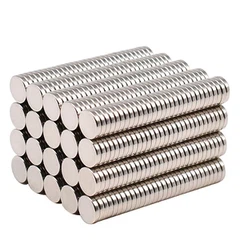
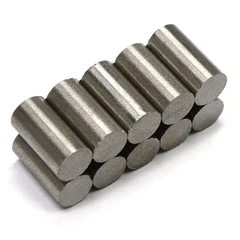
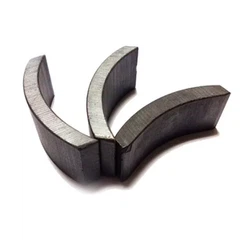
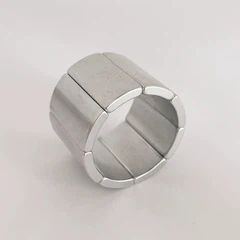







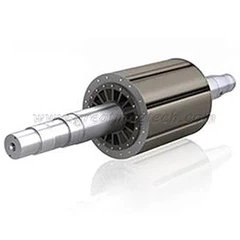



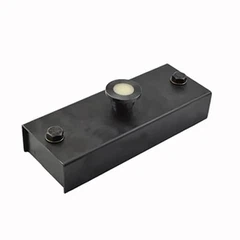

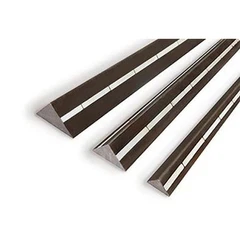






Magnets are omnipresent, from the small ones found in smartphones to the large ones used in MRI machines. People, however, tend to group all rare earth magnets once hearing the term without discernment. That's not accurate. Every neodymium magnet qualifies as a rare earth magnet, however, not every rare earth magnet qualifies as a neodymium magnet.
Do all rare earth magnets, for instance, come under a certain definition? Let's end this discussion.
In our daily lives, technology employs the use of magnets from the flashy features on our phones to the giant MRI machine's magnets, and we don't even realize it. This still unscrambles to a neodymium magnet a question: Are neodymium magnets considered rare earth magnets? In other words, this question still unveils even after trying to procure all strikingly puzzling information.
To clarify, neodymium magnets are a subset of rare earth magnets, which also include samarium cobalt magnets.
There is an underlying confusion with other types of magnets like ferrite and alnico, leading to this common assumption.
Everything in this article will be untangled from the myths, and the facts surrounding neodymium or rare earth magnets will be presented.
If you are a business owner, a diy enthusiast, or someone interested in understanding the topic of Neodymium magnets vs rare earth, this blog is for you.
Rare Earth Magnets – Breaking Down the Basics
Rare earth magnets get their name from the rare earth elements used in their manufacturing process. These elements were originally found in rare minerals such as gadolinium, mainly lanthanides. Although they are called "rare earths", elements like neodymium are quite abundant in the earth's crust. Their "rarity" is mainly reflected in the difficulty of mining and processing - these elements require special extraction and refining technology, resulting in higher production costs, which is why rare earth magnets are more expensive than other types of magnets.
What Are the Other Sub-Types of Rare Earth Magnets?
Two main types of rare earth magnets exist.
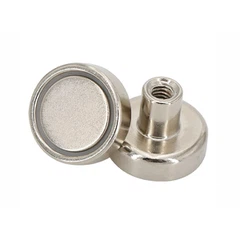
●NdFeB magnets: Neodymium magnets are the most commonly used high-performance rare earth magnets with excellent magnetic strength, but their high temperature performance is poor (usually operating temperature ≤150°C), which can be improved by adding dysprosium (Dy) or terbium (Tb). Due to their susceptibility to corrosion, they are usually protected by plating (such as nickel, zinc, epoxy resin, etc.). Typical applications include hard disk drives, MRI equipment, and wind turbines.
●SmCo magnets: Although not as strong as neodymium magnets, they have excellent high-temperature stability and corrosion resistance. They are divided into two types: first-generation SmCo5 and second-generation Sm2Co17 (more common). These magnets are highly resistant to demagnetization and are particularly suitable for high temperature applications such as aerospace or military, and can operate at temperatures up to 250-350°C.

What Are the Other Types of Comparisons Between Magnets and Rare Earth?
●Alnico magnets: Among the magnet types we studied, Alnico magnets are at the lower end of the spectrum (but not the weakest; ferrite magnets are weaker). This iron-aluminum alloy containing nickel and cobalt has high remanence and is known for its high temperature resistance (up to 500°C) and resistance to demagnetization, but is also relatively brittle and has low mechanical strength.

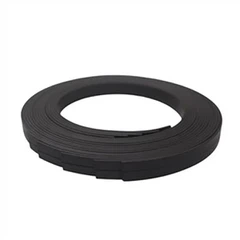
●Flexible magnets: It is the weakest of all magnets, but are often used in products such as advertising stickers and toys because they are easy to handle. It is actually made of ferrite powder mixed with rubber or plastic.
Rare magnets are more potent than the other types because their small size makes them light and easier to handle. This is a beneficial factor in high-performance scenarios where space is limited.
While alnico and flexible magnets have niche uses, rare earth magnets dominate applications requiring high strength-to-size ratios.
Neodymium Magnet Phenomenon: Why It's the Star
These magnets are very popular because they are small but powerful. Neodymium has unmatched strength, and it is used in almost everything to enable miniaturization – from electric cars to tiny earbuds, for example. Tiny magnets in earbuds produce powerful sound, while electric car motors use them to produce high torque in compact designs. This helps both consumers and businesses. Industries love them because they are effortless to use, and consumers benefit from their compact power.
How Are Neodymium Magnets Made?

The production of neodymium magnets involves a precise combination of metallurgy and engineering:
●Mining & refinement: Raw materials (neodymium, iron, and boron) are mined and chemically purified.
●Alloy formation: The elements are melted together in a vacuum or inert gas environment to form an alloy, which is cooled into ingots.
●Powdering & pressing: The ingots are pulverized into fine powder and then compacted under high pressure in a nitrogen atmosphere.
●Sintering: The compressed powder is heated near the melting point in a vacuum furnace, fusing particles into a solid block.
●Machining & coating: The sintered block is cut/shaped into final dimensions and polished. A protective coating (e.g., nickel) is applied to prevent corrosion.
●Magnetization: The finished block is exposed to a powerful magnetic field to align its domains, activating its magnetic properties.
The Strongest Magnet, But at What Cost?
While the most powerful and quite possibly the best magnetic materials, neodymium magnets have a few downsides:
●Fragility: Although powerful, they are very brittle and can shatter if dropped.
●Temperature sensitivity: The reasons are the same as for the case of rare earth magnets- unlike samarium cobalt magnets, they lose their magnetism at high temperatures.
●Corrosion issues: Without proper coating, they will rust, corrode, and blight over time.
Rare Earth Magnets vs Neodymium: Are They the Same?
Here, we will explain the main difference between rare earth and neodymium:
Common Misconception
It is common practice to use neodymium and rare-earth magnets interchangeably, which is not true. Of course, rare neodymium magnets are one kind of earth magnet, but that does not imply that all earth magnets are neodymium. I recognize that this might be difficult to understand, but sometimes things are how they are.
Warning: Large neodymium magnets can cause severe injuries (e.g., pinched skin or bone fractures) if mishandled. Keep them away from pacemakers and electronic devices.
Here's a way to make it easier for you to understand:
Key Differences
|
Feature |
Neodymium magnets |
Samarium cobalt magnets |
|
Strength |
Strongest |
Sturdy, but less than neodymium |
|
Durability |
Brittle |
More resistant to cracking |
|
Temperature resistance |
Weakens at high heat |
Works well in high temperatures |
|
Cost |
More affordable |
Expensive |
When One Should Consider Samarium Cobalt
●When facing harsh temperatures, like those in jet engines or aerospace applications.
●When assessing corrosion-related damage, but cannot use surface coatings.
●When an object's overall resilience or lifespan is more significant than the extreme force.
Debunking Common Myths About Rare Earth Magnets
Let's unveil some misunderstandings:
Myth #1: "Rare earth magnets are rare."
Reality: While challenging to mine, they are not precisely scarce.
Myth #2: "All rare earth magnets are equally strong."
Reality: Neodymium is much stronger than samarium cobalt.
Myth #3: "They are dangerous to use."
Reality: The magnets are safe when properly handled, but can pinch fingers or damage electronics.
Myth #4: "They last forever."
Reality: Damage may occur over time from heat, physical impacts, chemical erosion, and corrosion.
What Are Rare Earth Magnets Used For?
Here's a quick look at what rare magnets are used for:
Everyday Applications

●Consumer electronics: Headphones, speakers, hard drives, and other electronic devices.
●Medical devices: MRI devices and prosthetic devices. In compact medical equipment designs, medical wire harnesses are often integrated alongside neodymium magnets within housings or mounting structures to support organized cable routing, positioning, and long-term stability.
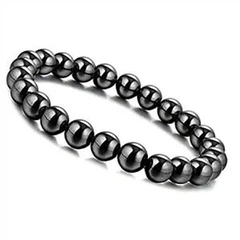
●Consumer products: Toys, jewelry clasps, and magnetic phone mounts.
Industrial and Military Applications
●Aerospace and military applications: Jet propulsion and missile-guided systems, as well as radar technology.
●Renewable sources of energy: Electric vehicles and wind turbines.
Choosing the Correct Magnet for the Job
Points to Note
●Strength: Requires bare force? Go for neodymium.
●Temperature resistance: Operating in very high temperatures? Samarium cobalt will be the solution.
●Cost: Neodymium is less expensive but requires additional coatings.
Conclusion
Not all rare earth magnet-related terms are synonymous, as there are significant differences between neodymium and samarium cobalt magnets. In high temperature or corrosive environments, samarium cobalt magnets often outperform neodymium magnets- not only are they one of the strongest rare earth magnets, they are also more stable. Understanding these differences is critical for personal projects, corporate needs, and business plans. For example, when designing a high-temperature turbine, samarium cobalt's heat resistance may be the deciding factor, while consumer electronics may prefer the lower-cost neodymium magnet.
The next time someone generalizes "rare earth magnets," you can point out that strength, stability, and cost vary from material to material, and the right choice depends on the specific application. Their misunderstanding misses this key logic.