




















When it comes to the grades of your magnets, understanding the details behind them can be overwhelming. After all, with so many different measures and metrics determining a magnet's grade, it can be hard to know where to begin. But have no fear!
In this blog post, you'll learn everything you need to know about magnet grades - from what kind of information is included in those ratings, right down to how they're typically determined and how they affect the overall performance of your device.
By the time you finish reading, you'll understand why having magnets that are graded accurately matters more than ever before - and why you should always make sure yours are up to par!
What Are Magnet Grades
Magnet grades classify magnets according to their strength and performance characteristics, primarily measured by Maximum Energy Product (MGOe).
Higher-grade magnets indicate a stronger magnetic force and better suitability for demanding industrial or electronic applications, while lower-grade magnets are sufficient for general or light-duty use.
In addition to grade, other factors such as size, shape, and operating temperature affect magnetic performance and longevity.
It's important to note that magnetic fields are not uniform; the pull force varies depending on distance, angle, and material type.
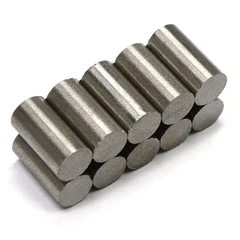
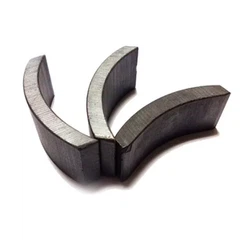
Common permanent magnet types include Neodymium, Ceramic (Ferrite), and AlNiCo magnets, each offering distinct combinations of strength, durability, and resistance to demagnetization, which should be considered when selecting magnets for specific applications.

What Are the Different Grades of a Magnet
Magnet grades are critical for selecting the right magnetic material for industrial, electronic, and commercial applications such as electric motors, generators, and magnetic storage devices.
These grades are determined by three key parameters: Maximum Energy Product (BHmax), Coercivity, and Remanence, which together define a magnet's strength, stability, and suitability for specific tasks.
Maximum Energy Product (BHmax)
BHmax represents the maximum energy a magnet can store. Higher BHmax values indicate stronger magnets capable of providing greater holding power in demanding applications, such as high-performance motors and generators.
Coercivity
Coercivity measures a magnet's resistance to demagnetization. Magnets with high coercivity maintain their magnetic properties under external influences, making them ideal for applications requiring long-term stability or exposure to strong opposing magnetic fields.
Remanence
Remanence refers to the residual magnetism remaining after the external magnetic field is removed. High remanence ensures consistent magnetic performance, which is critical for devices that rely on stable magnetic fields over time, such as sensors or precision instruments.
For instance, Neodymium magnets feature high BHmax and remanence, providing strong magnetic force in compact sizes, whereas Alnico magnets offer high coercivity, making them suitable for sensors, relays, and other precision devices.
Types of Magnets
Magnets generate a magnetic field, attracting or repelling ferromagnetic materials. Understanding the different types of magnets is essential for selecting the right solution for industrial, electronic, and consumer applications.
Permanent Magnets
Permanent magnets maintain their magnetic properties without an external power source. Neodymium magnets, known for their exceptional strength, are among the most powerful permanent magnets, with common grades such as N35, N42, and N52 (N52 being the strongest). Other permanent magnet types include Ceramic (Ferrite) and Alnico, each offering unique combinations of strength, temperature tolerance, and resistance to demagnetization.

Electromagnets
Electromagnets rely on electric current to generate a magnetic field. They can be magnetized or demagnetized as required, making them ideal for applications like magnetic lifting, separation, and electric motors.
Temporary Magnets
Temporary magnets exhibit magnetism only when exposed to an external magnetic field and quickly lose it once the field is removed. Common materials include iron, nickel, and cobalt. These magnets are typically used in educational demonstrations and simple mechanical devices where temporary magnetic force is sufficient.
Neodymium Magnets
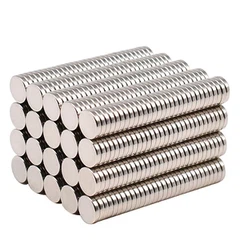
Neodymium magnets are currently the strongest type of permanent magnet commercially available, offering superior magnetic strength in a compact form factor.
Composed primarily of neodymium, iron, and boron (NdFeB), these magnets deliver high energy density, making them ideal for applications where space is limited but a strong magnetic force is required.
They are widely used across various industries, including electric motors, wind turbines, generators, magnetic separators, electronics, medical devices, and precision instruments.
Due to their exceptional BHmax and remanence, Neodymium magnets are particularly effective in high-performance applications such as brushless motors, compact actuators, and high-efficiency magnetic assemblies.
When selecting Neodymium magnets, engineers should also consider operating temperature limits, corrosion resistance (often requiring coating), and mechanical durability to ensure optimal long-term performance.
Magnet Grades Neodymium
N35, N52, and N42 are different neodymium magnet grades, with each grade having a different maximum energy product.
N35 magnets have a maximum energy product of up to 35 MGOe (Mega Gauss Oersteds), while N52 magnets have a maximum energy product of up to 52 MGOe. N42 magnets fall in between, with a maximum energy product of up to 42 MGOe.

These different grades of magnets are used in a wide range of applications, from computer hard drives and wind turbines to medical equipment and jewelry clasps. The choice of which grade to use depends on the specific application and the required strength of the magnet.
In general, higher grades are used in applications that require more strength, while lower grades are used in applications that require less strength.
Comparison to Other Magnets
Neodymium magnets are remarkable scientific advancements in the realm of magnetism, and they are considered the strongest type of permanent magnet available today.
These magnets are well-known for their incredible strength, demonstrated through their superior magnetic pull compared to other magnet types.
This strength is measured by the property of "Max Energy Product," which determines how much magnetic energy can be stored in a magnet.
Compared to other magnet types, neodymium magnets have a significantly higher Max Energy Product, ranging from 35 to 52 MGOe. This is in stark contrast to other magnets like Alnico 5/8, which only has a Max Energy Product of 5.4 MGOe, or Ceramic magnets with a Max Energy Product of 3.4 MGOe.
The difference is truly staggering, with neodymium magnets proving themselves to be much stronger than any other magnet type in existence.
In addition to their incredible strength, neodymium magnets are also known for their resistance to demagnetization.
This property is particularly important for magnetic applications requiring a high level of stability and reliability over time.
Compared to SmCo 26 magnets with a Max Energy Product of 26 MGOe, neodymium magnets excel in resisting demagnetization, making them even more valuable and secure for long-term applications.
Neodymium magnet grades are further divided into categories based on their strength-to-weight ratio, magnetic field, and other properties that make them suitable for specific applications.
These grades are labeled with a series of numbers and letters, such as N35 or N52, with the higher number indicating a stronger magnet.
Overall, neodymium magnets are the strongest permanent magnet type available today, with vastly superior magnetic properties compared to other magnet types. This makes them a valuable and indispensable material in many applications, including in the manufacturing of electric motors, wind turbines, and hard disk drives, among others.
How to Choose a Magnet Grade
When selecting a magnet grade, it is critical to consider the intended application's specifications and requirements. The right material grade can dictate the overall performance of your product and can impact its longevity, reliability, and effectiveness.
Here are some key factors to keep in mind when selecting the appropriate magnet grade for your application.
Maximum Operating Temperature
The maximum operating temperature is a crucial consideration when selecting a magnet grade. The operating temperature range is the temperature at which the magnet can work effectively without losing its magnetic properties.

Different magnet grades have different temperature thresholds, and exceeding these thresholds can lead to thermal demagnetization and a loss in magnetic strength.
Therefore, it is important to select a magnet grade that can endure the maximum temperature that your application requires without losing its magnetic properties.
Required Magnetic Field Density or Holding Force
The level of magnetic field density or holding force you need for your application will also determine the magnet grade that is appropriate for your project.
Various magnet grades offer different levels of magnetic strength depending on their composition and manufacturing process.
The stronger the magnet, the higher the cost typically is. It's crucial to factor in the required level of holding force or magnetic field density needed for your application to ensure that you select a magnet grade that delivers optimal performance and cost-effectiveness for your application.
Demagnetizing Resistance
Demagnetizing resistance is another critical factor to consider when selecting a magnet grade. In some applications, magnets are subjected to external fields or other forms of interference that can reduce their magnetic strength or demagnetize them entirely.
The demagnetizing resistance of a magnet refers to its ability to withstand these external factors and maintain its magnetic strength.
Selecting a magnet grade with appropriate levels of demagnetizing resistance will reduce the likelihood of a loss in magnetic efficiency, leading to improved product reliability and lifespan.
Selecting the appropriate magnet grade for your application involves a sophisticated assessment of several factors. Each of these factors could significantly impact the magnet's performance, and it is critical to understand their interplay when making a choice.
By being diligent and following these recommendations, you can select a magnet grade that provides long-lasting performance and meets your specific application's requirements.
Magnet Grades Chart
|
Grade |
Maximum Energy Product (BHmax) |
Maximum Operating Temperature |
Coercivity (Hci) |
Intrinsic Coercivity (Hcj) |
Remanence (Br) |
Maximum Energy Product Density (BHmax Density) |
|
N35 |
33-36 MGOe |
80°C (176°F) |
11,000-12,000 Oe |
12,000-13,000 Oe |
11.7-12.1 kG |
10.8-11.3 MGOe/cm3 |
|
N38 |
36-38 MGOe |
80°C (176°F) |
11,000-12,000 Oe |
12,000-13,000 Oe |
12.1-12.5 kG |
11.3-11.7 MGOe/cm3 |
|
N40 |
38-41 MGOe |
80°C (176°F) |
11,000-12,000 Oe |
12,000-13,000 Oe |
12.5-12.8 kG |
11.7-12.1 MGOe/cm3 |
|
N42 |
40-43 MGOe |
80°C (176°F) |
11,000-12,000 Oe |
12,000-13,000 Oe |
12.8-13.2 kG |
12.1-12.5 MGOe/cm3 |
|
N45 |
43-46 MGOe |
80°C (176°F) |
11,000-12,000 Oe |
12,000-13,000 Oe |
13.2-13.7 kG |
12.5-12.9 MGOe/cm3 |
|
N48 |
46-49 MGOe |
80°C (176°F) |
11,000-12,000 Oe |
12,000-13,000 Oe |
13.7-14.2 kG |
12.9-13.3 MGOe/cm3 |
|
N50 |
49-52 MGOe |
80°C (176°F) |
11,000-12,000 Oe |
12,000-13,000 Oe |
14.2-14.8 kG |
13.3-13.7 MGOe/cm3 |
|
N52 |
52-55 MGOe |
80°C (176°F) |
11,000-12,000 Oe |
12,000-13,000 Oe |
14.8-15.3 kG |
13.7-14.1 MGOe/cm3 |
|
N35M |
33-36 MGOe |
100°C (212°F) |
10,000-11,000 Oe |
14,000-15,000 Oe |
11.7-12.1 kG |
10.8-11.3 MGOe/cm3 |
|
N40M |
38-41 MGOe |
100°C (212°F) |
10,000-11,000 Oe |
14,000-15,000 Oe |
12.5-12.8 kG |
11.7-12.1 MGOe/cm3 |
|
N42M |
40-43 MGOe |
100°C (212°F) |
10,000-11,000 Oe |
14,000-15,000 Oe |
12.8-13.2 kG |
12.1-12.5 MGOe/cm3 |
|
N45M |
43-46 MGOe |
100°C (212°F) |
10,000-11,000 Oe |
14,000-15,000 Oe |
13.2-13.7 kG |
12.5-12.9 MGOe/cm3 |
|
N48M |
46-49 MGOe |
100°C (212°F) |
10,000-11,000 Oe |
14,000-15,000 Oe |
13.7-14.2 kG |
12.9-13.3 MGOe/cm3 |
|
N50M |
49-52 MGOe |
100°C (212°F) |
10,000-11,000 Oe |
14,000-15,000 Oe |
14.2-14.8 kG |
13.3-13.7 MGOe/cm3 |
|
N35H |
33-36 MGOe |
120°C (248°F) |
11,000-12,000 Oe |
17,000-18,000 Oe |
11.7-12.1 kG |
10.8-11.3 MGOe/cm3 |
|
N38H |
36-38 MGOe |
120°C (248°F) |
11,000-12,000 Oe |
17,000-18,000 Oe |
12.1-12.5 kG |
11.3-11.7 MGOe/cm3 |
|
N40H |
38-41 MGOe |
120°C (248°F) |
11,000-12,000 Oe |
17,000-18,000 Oe |
12.5-12.8 kG |
11.7-12.1 MGOe/cm3 |
|
N42H |
40-43 MGOe |
120°C (248°F) |
11,000-12,000 Oe |
17,000-18,000 Oe |
12.8-13.2 kG |
12.1-12.5 MGOe/cm3 |
|
N45H |
43-46 MGOe |
120°C (248°F) |
11,000-12,000 Oe |
17,000-18,000 Oe |
13.2-13.7 kG |
12.5-12.9 MGOe/cm3 |
|
N48H |
46-49 MGOe |
120°C (248°F) |
11,000-12,000 Oe |
17,000-18,000 Oe |
13.7-14.2 kG |
12.9-13.3 MGOe/cm3 |
|
N50H |
49-52 MGOe |
120°C (248°F) |
11,000-12,000 Oe |
17,000-18,000 Oe |
14.2-14.8 kG |
13.3-13.7 MGOe/cm3 |
|
N33SH |
31-34 MGOe |
150°C (302°F) |
12,000-13,000 Oe |
20,000-21,000 Oe |
10.8-11.2 kG |
10.2-10.6 MGOe/cm3 |
|
N35SH |
33-36 MGOe |
150°C (302°F) |
12,000-13,000 Oe |
20,000-21,000 Oe |
11.2-11.7 kG |
10.6-11.0 MGOe/cm3 |
|
N38SH |
36-38 MGOe |
150°C (302°F) |
12,000-13,000 Oe |
20,000-21,000 Oe |
11.7-12.1 kG |
11.0-11.3 MGOe/cm3 |
|
N40SH |
38-41 MGOe |
150°C (302°F) |
12,000-13,000 Oe |
20,000-21,000 Oe |
12.1-12.5 kG |
11.3-11.7 MGOe/cm3 |
|
N42SH |
40-43 MGOe |
150°C (302°F) |
12,000-13,000 Oe |
20,000-21,000 Oe |
12.5-12.8 kG |
11.7-12.1 MGOe/cm3 |
|
N45SH |
43-46 MGOe |
150°C (302°F) |
12,000-13,000 Oe |
20,000-21,000 Oe |
12.8-13.2 kG |
12.1-12.5 MGOe/cm3 |
|
N28UH |
26-30 MGOe |
180°C (356°F) |
10,800-12,300 Oe |
25,000-27,000 Oe |
10.2-10.9 kG |
8.2-8.8 MGOe/cm3 |
|
N30UH |
28-31 MGOe |
180°C (356°F) |
10,800-12,300 Oe |
25,000-27,000 Oe |
10.9-11.2 kG |
8.8-9.1 MGOe/cm3 |
|
N33UH |
31-34 MGOe |
180°C (356°F) |
10,800-12,300 Oe |
25,000-27,000 Oe |
11.2-11.7 kG |
9.1-9.5 MGOe/cm3 |
Conclusion
Magnets come in all shapes, sizes, and grades, which makes them quite versatile. The grade of a magnet determines how strong its magnetic field is, so knowing the grade is very important when figuring out its uses.
Neodymium magnets are the strongest type of rare-earth magnet available, and they can be used in a wide range of applications, ranging from data storage to medical equipment. Be sure to use a magnet grade chart when you are determining what type of magnet you should use for your project.
If you're looking for powerful magnets that won't break the bank, neodymium magnets may be your best bet. In the end, choosing a magnet grade comes down to considering your specific needs and applications.
With a little research and guidance from professionals such as Great Magtech, you can find the perfect magnet for whatever project or task you have in mind!