












The lifting scenarios of precast concrete components include demoulding and transportation during the component production stage, and flipping and installation during the on-site construction stage. The lifting method using embedded nails and special lifting equipment is the most commonly used precast concrete lifting technology in actual engineering applications because of its fast lifting speed, safety, and reliability, and is widely used in Europe, the United States, and other countries. As the most critical component, the reliable performance and correct operation of the lifting embedded parts are the primary conditions to ensure the safety of the lifting operation. At present, there are many types of lifting embedded parts at home and abroad, each with its characteristics, which can be applied to the lifting of precast concrete components in residential, public buildings, industry, municipal, and other fields. This article focuses on the main precast component lifting systems, including product features, application conditions, design details, and practical operation points. These systems can not only ensure the safety of lifting operations but also improve lifting efficiency.

Lifting System Introduction
Precast concrete component lifting scenarios include demoulding and transportation during the component production stage, and flipping and installation during the on-site construction stage. The lifting method using pre-embedded lifting nails and special lifting equipment is the most commonly used precast concrete lifting technology in actual engineering applications due to its fast lifting, safety, and reliability. It is widely used in Europe and the United States. As the most critical component, the reliable performance and correct operation of the lifting pre-embedded product are the primary conditions to ensure the safety of the lifting operation. At present, there are many types of lifting pre-embedded products at home and abroad, each with its own characteristics, which can be applied to the lifting of precast concrete components in residential, public construction, industry, municipal, and other fields. This article focuses on the main precast component lifting systems of the Finnish Peikko Group, including product features, application conditions, design details, and actual operation points, which can not only ensure the safety of the lifting operation but also improve the lifting efficiency.
Round Head Nail System
The round forging head at the end of the round head embedded hanging nail is used for hooking, and it is matched with a special duckbill hook sling to achieve quick hooking. The lifting load is transmitted to the concrete through the round end anchor at the other end of the hanging nail. During installation, a hemispherical rubber is used to fix the hanging nail, and a hemispherical groove is formed on the concrete surface so that the sling can be hooked and lifted, as shown in the figure below.

Precast concrete component lifting scenarios include demoulding and transportation during the component production phase, and flipping and installation during the on-site construction phase. The lifting method using pre-embedded nails and special lifting equipment is the most commonly used precast concrete lifting technology in actual engineering applications due to its fast lifting, safety, and reliability. It is widely used in Europe and the United States. As the most critical component, the reliable performance and correct operation of lifting pre-embedded products are the primary conditions for ensuring the safety of lifting operations. At present, there are many types of lifting pre-embedded products at home and abroad, each with its own characteristics, which can be applied to the lifting of precast concrete components in residential, public construction, industry, municipal, and other fields.
Threaded Nail System
The ends of the threaded embedded nails are all tapped by steel pipes, and their special lifting tools are all with external threads, which need to be screwed into the nail sleeve during lifting. The steel bars squeezed at the other end of the sleeve will lift the load to the concrete. Commonly used methods include steel bar straight anchors, bent anchors, and steel plate end anchors.

In addition to being used in conventional prefabricated components, the threaded embedded nail system can also be used for some thin-walled components, such as thin prefabricated wall panels and floor slabs. When installing the nails, no special grooves need to be formed on the concrete surface, and installation and fixing are very simple. The matching lifting tools include wire rope, soft cable lifting tools and universal lifting tools. It should be noted that soft cable lifting tools cannot be used for flip lifting of components.
Flat Plate Hanging Nail System
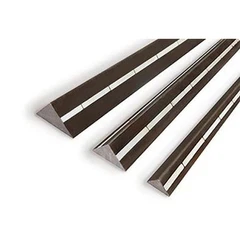
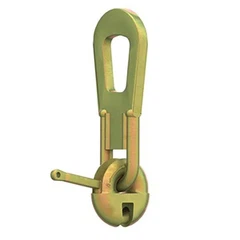
The flat plate type embedded nails are all made of steel plates. They are hooked by opening holes at the ends. The special hanger has a rotating pin. When hooking, the pin needs to be rotated to prevent it from falling off. When installing the flat plate nails, a flat spherical former is required to fix it and form a groove in the concrete for the hanger to hook.
The bearing capacity of the flat plate nails inside and outside the plane is different, so the direction needs to be considered when arranging them. In addition to being widely used in ordinary prefabricated components, flat plate nails are very suitable for lifting wall panels of the lifting system. The end of the rotating pin of the supporting lifting device can pass through the thin rope. After the component is lifted into place, the lifting personnel only need to pull the thin rope on the ground to unhook it, without the need for high-altitude operations, which greatly reduces safety hazards. In my country's first logistics warehouse built with a lifting system, all prefabricated wall panels are lifted using a flat plate nail system. The average weight of the prefabricated wall panels is 40 tons, and the 12-meter-high self-decoupling lifting system ensures the safe and rapid lifting of the components.

Lifting Application Environment
The application environment of prefabricated component lifting is highly uncertain, and the stress conditions of embedded nails at various stages of construction are also different. Therefore, it is necessary to fully understand the application environment before selecting and designing the nails, and set corresponding operating restrictions to ensure safety during the final implementation of the operation.
First of all, the concrete strength of the component during lifting. To improve the turnover rate of the prefabricated component mold, the concrete strength of the element during the first lifting should usually reach 15MPa. When the lifting process involves operations such as using nails to flip the component, the concrete compressive strength should be greater than 25MPa. Many experiments and studies have been conducted on the bearing capacity of nails under different concrete strengths to form a complete set of data references, which can be quickly referenced and used, which it very convenient.
Secondly, to avoid the damage of embedded hanging nails to concrete during the lifting process, prefabricated components need to be reinforced with steel bars, which is mainly reflected in three aspects. First, the reinforcement ratio of the component itself should meet the corresponding requirements. Hanging nails of different load levels have different requirements for the reinforcement ratio of the steel mesh on the surface of the component; second, there is a corresponding angle between the wire rope and the axial direction of the hanging nail during the lifting process. To avoid the damage of the tensile shear load to the concrete, additional reinforcement steel bars need to be configured, usually U-shaped steel bars, and the opening direction is opposite to the inclination direction of the wire rope. When the hanging nail is used to flip the component or lift at 90°, additional reinforcement steel bars need to be reinforced above the hanging nail; third, due to the special anchoring shape of the hanging nail itself in the concrete, special additional steel bars are required to ensure that the lifting load is transferred to the component itself, and hanging nails with end anchors usually need to be configured.

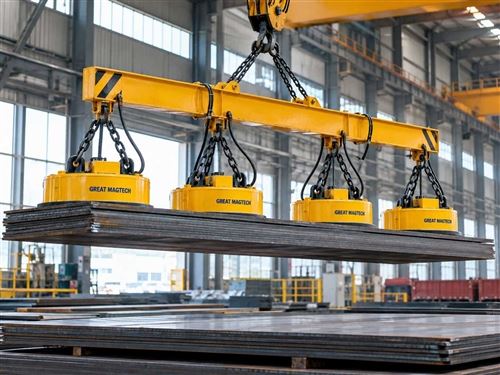
Once again, choose the appropriate lifting tooling, commonly used are lifting balance beams or
lifting frames, to ensure that each lifting nail is evenly stressed. When there are many lifting points for large components, pulley blocks can be used to assist in the distribution of lifting points. When lifting heterogeneous prefabricated components, the length of the sling can be adjusted by using a fall chain, and then the plane angle of the component during the lifting process can be adjusted, which is conducive to the installation and fixation of the final component.
Finally, the on-site environment and storage environment for component lifting. First of all, in the lifting of prefabricated components in some severely cold areas, the material properties of the embedded hanging nails should meet the requirements of impact performance at low temperatures. For example, Peik Company provides a round head hanging nail system in the Changchun Metro pipe segment project. The raw materials of all round head hanging nails meet the requirements of the 20° Xiabi impact performance, ensuring the safety of the lifting of prefabricated pipe segments in severely cold areas. Secondly, prefabricated components are stored outdoors for a long time, and the exposed hanging nails need to be protected accordingly to avoid rust and thread wear.