

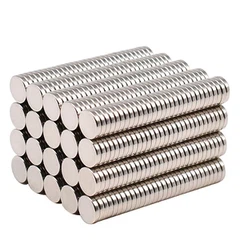
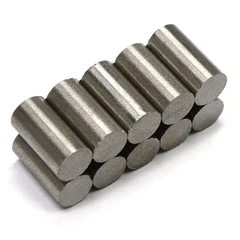
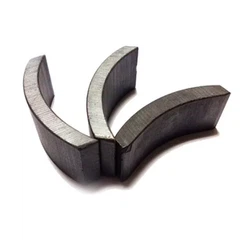
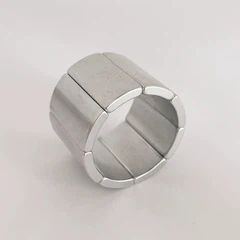








NdFeB Magnet Production Process
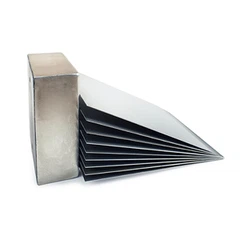
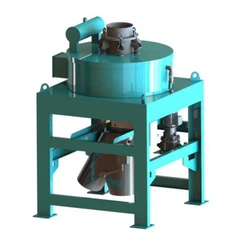
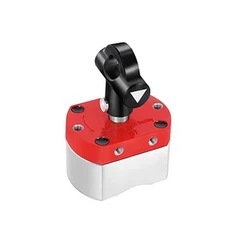
NdFeB permanent magnets are produced using the powder metallurgy method. From material preparation to finished product shipment, there are generally more than a dozen process steps, including several inspections and analyzes at different stages.
The entire production process is a systematic project with interlocking links. Generally, we call the process of producing magnet blanks the front-end production link, and the process of processing the blanks into final products is called the back-end processing link.

Pre-production Preparation
Good raw materials are the basis for producing high-quality magnetic materials. When manufacturers select raw materials, they generally choose them according to the magnet performance requirements and the corresponding national standards. Generally, manufacturers will cut and surface treat raw materials before smelting.
Raw Material Smelting
Smelting is the first step in the production process of sintered NdFeB permanent magnets. The raw materials are hot melted in the smelting furnace and cooled to form alloy strips. This process requires the furnace temperature to reach about 1,300 degrees and lasts more than four hours to complete. And after smelting, it is cast and turned into fine sheets by rotating copper rollers.


Hydrogen Breaking and Jet Milling
The two process steps of hydrogen breaking and jet milling are collectively called powder making, which is the process of crushing the smelted alloy strips and making magnetic powder. In order to obtain a well-oriented magnet, the powder particles are required to be small in size and have a concentrated size distribution, and the powder particles are spherical or approximately spherical.


Powder Pressing
The crushed magnetic powder is loaded into a mold, an external magnetic field is applied for orientation, and the powder is pressed after orientation. Powder magnetic field orientation is one of the key process technologies for producing high-performance sintered NdFeB. In the molding process, there are currently three methods commonly used in the industry: molding, molding plus cold isostatic pressing, and rubber mold isostatic pressing. Under the same neodymium content, rubber mold isostatic pressing can obtain greater magnetic energy. product.

Blank Sintering
After pressing, the relative density of the magnet compact is relatively high. In order to make the magnet have high permanent magnetic properties, the compact needs to be heated to a temperature below the melting point of the basic phase of the powder and heat treated for a period of time. This process is also called sintering. After high-temperature quenching, the sintered magnetic powder blank needs to be cooled to a certain temperature and then heated again to optimize the structure and obtain the best magnetic properties.

Machining of Sintered Blanks
Due to the characteristics and technical limitations of the magnetic field orientation forming process, it is difficult for sintered magnets to directly achieve the shape and size accuracy for practical applications at one time. Many finished magnets are small in size and complex in shape, and can only be processed from blank magnets of a certain shape. Sintered NdFeB material is hard and brittle, and general machining can only carry out cutting, drilling, grinding and rolling.

Product Plating
Sintered NdFeB is a powder material with very strong chemical activity. There are tiny pores and cavities inside, which are easily corroded and oxidized in the air. Over time, the magnetic properties will be attenuated or even lost, so strict surface inspection must be carried out before use. Anti-corrosion treatment. At present, the anti-corrosion treatment of NdFeB generally adopts electroplating, chemical plating, electrophoresis, phosphating and other methods. Electroplating, as a mature metal surface treatment method, is widely used.

Quality Inspection
Quality monitoring during the production process of sintered NdFeB permanent magnets and quality testing of final products should include the items listed in the table below, but not every item must be tested. Purchasing personnel can negotiate with the manufacturer for the required testing based on the actual needs project.
Magnetizing
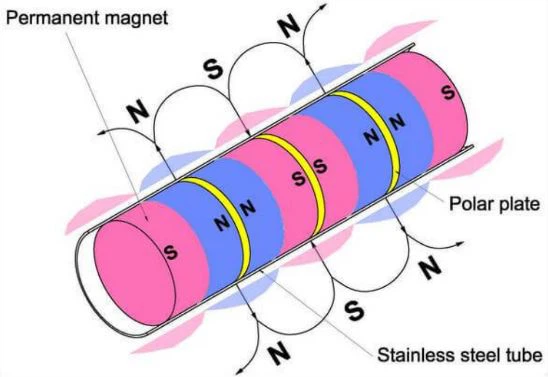
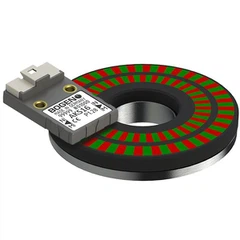
Magnetization is a key step for sintered NdFeB permanent magnets to obtain magnetism. The magnetizer is a tool for magnetizing magnetic materials or magnetic devices. It applies a magnetic field to the magnetized NdFeB magnets. If the magnetized magnetic field cannot reach the technical saturation magnetic field, the remanence (Br) and coercive force (Hcj) of the permanent magnet will not reach the expected values. In addition to ordinary single-pole magnetization, sintered NdFeB can also be multi-pole magnetized according to actual needs, that is, after magnetization, multiple N and S poles can appear on a plane.
Packing and Shipping
Packaging and shipping is the last step before the magnet leaves the factory. The magnet manufacturer can package according to the purchaser's requirements. If the purchaser has special packaging requirements, he or she can inform the supplier in advance. Sintered NdFeB permanent magnets have strong magnetism, so domestic transportation generally uses land transportation. For exports overseas, they can be transported by air after undergoing special magnetic isolation packaging and inspection and appraisal by professional institutions.
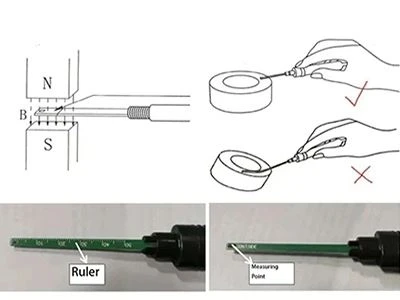
Magnetic isolation for air transport: The magnets need to be separated by gaskets, and then packed in OPP bags and placed in cartons. The cartons are then placed in foam boxes. A layer of iron sheet should be added around the foam box, and finally placed in double-layer corrugated boxes. Transport to airline. Air transportation requires a Gauss meter to test 6 surfaces, and the Gauss must not exceed 6 Gauss.
Sea transportation: The final packing carton in sea transportation can be added with wooden pallets or wooden boxes. The wooden boxes must not be made of logs. If logs are used, each wooden strip must have a fumigation stamp. There is no need to detect Gauss for sea transportation, but it is necessary to ensure that the goods cannot attract pins.


Contact Us
GME has rich product experience, and our company can provide free consultation and samples. We accept various design customization and technical support. Please come and consult us immediately!