









Moving things from one place to another is integral to many jobs. Factories need to move parts and products around. Post offices need to sort mail. There are many ways to move things, like using belts or rollers. But some objects are delicate or slippery and hard to move without damage. One helpful technology is the magnetic conveyor.
Magnetic conveyors use magnets to transport objects safely. They can lift and carry everything from small mechanical parts to large metal sheets. Magnetic conveyors have many uses in industry and manufacturing. They are modern solutions for moving all kinds of objects efficiently. This article will describe how magnetic conveyors work.
How Does Magnetic Conveyors Work?
Here are the key components of magnetic conveyors and how they operate:
1. Conveyor Belt
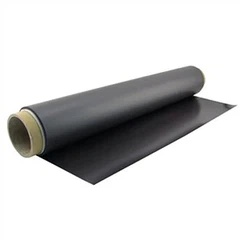
The conveyor belt is like a magic sidewalk that moves objects. It is made of fabric or plastic. There are special magnets inside the belt. Magnets are rocks that pull some things towards them. The belt has magnets put inside in regular spaces. This makes the top of the belt like a dotted line of magnet spots.
When the belt starts moving, the magnets stick metal objects to the belt. The objects ride the moving belt like kids on a sidewalk. The belt carries them up and around until they reach the end. Then, the objects slide off and fall into a basket.
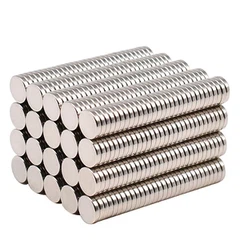
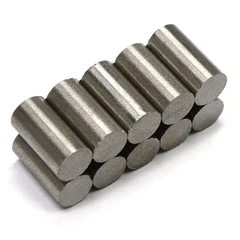
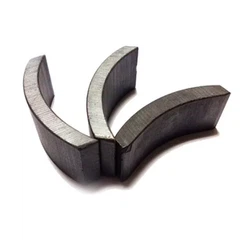
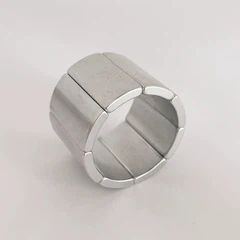
Powerful neodymium rare earth magnets are commonly used in magnetic conveyors due to their high strength for their size. Ceramic and samarium cobalt magnets may also be used depending on the application.

2. Drive Mechanism
The conveyor belt is moved by an electric motor connected to rollers at the end of the conveyor. The motion of the belt allows parts to be transported along its length. The speed and travel direction can be precisely controlled to suit the application requirements.
3. Magnetic Bed
Below the conveyor belt is a magnetic bed of ferromagnetic (magnetically permeable) steel bars, plates, or metal sheets. They run parallel to the direction of belt travel. The magnetic bed provides a low reluctance path for the magnetic flux created by the magnets in the conveyor belt.
This closed magnetic circuit intensifies the magnetic field at the belt surface. It also prevents magnetic field losses, allowing the magnets to operate efficiently.
4. Parts Feeder
A parts feeder delivers components or materials to the inlet of the magnetic conveyor belt. Vibratory bowl feeders, hoppers, or pick-and-place robots are commonly used. The feed rate and position are adjustable to control the spacing between parts on the belt.
5. Separator
A magnetic separator is used at the outlet end to detach parts from the conveyor belt and transfer them to other materials handling systems or containers. Common types include transverse rollers, brushes, striker pins, or ramps to displace parts of the downstream end of the belt.
6. Sensor
Proximity or photoelectric sensors detect the presence and position of parts along the conveyor line. This provides feedback for monitoring and controlling the conveying process.
7. Controller
An electronic controller coordinates the operation of the conveyor, feeder, and separator. It adjusts the speed, magnetization, and other parameters for optimal performance. Programmable logic controllers (PLC) are commonly used.

How Do Parts Get Conveyed?
When ferromagnetic materials are placed on a magnetic conveyor, they experience strong magnetic forces attracting them to the energized magnets beneath the belt surface. The attraction is maximized when proper magnetic pole alignment exists between the magnets and the conveyed parts.
As the belt moves forward continuously, the parts remain attached and are transported along. The magnetic attraction holds the parts firmly against the belt without requiring guides, rails, or walls along the edges. This allows parts to be conveyed even up vertical inclines and inverted sections.
Steps in the Conveying Process
The key steps in the conveying process are:
1. A feeder mechanism loads Parts onto the magnetic conveyor belt's inlet end.
2. The magnetic field from the conveyor magnets magnetizes the parts by inducing the alignment of their magnetic domains.
3. The parts experience strong attraction forces and get pulled down firmly against the belt surface.
4. As the belt moves forward, the attached parts move along with it through the conveyor length.
5. At the outlet end, a separator disengages the parts from the belt to unload them.
6. The demagnetized parts release quickly from the belt as they move out of the influence of the magnetic field.
7. The belt continues moving to transport the next batch of parts.
Factors Affecting Conveying Performance
The magnetic conveyor belt works by having strong magnets embedded inside it. When metal pieces are put on top of the belt, the magnets pull them along as the belt moves. However, how well the magnets can grab and hold the metal pieces depends on some crucial factors.
One is how powerful the magnets are. Really strong magnets create very powerful forces to keep pieces stuck tight to the belt. However, too much magnet strength can make the pieces stuck too hard and not come off at the end.
Another factor is how close the magnetic poles are together inside the belt. When they are nearer each other, the magnetic field gets stronger and stays even the whole way along. But putting them too near means less space on the belt between each metal piece.
The speed at the belt spins matters, too. A faster-moving belt can carry more pieces in a given time. But fast speed also tries to fling the pieces outward, so stronger magnets must hang on at high speeds.
Bigger or heavy metal pieces need more magnetic pull to stay on the belt. Tiny pieces can crowd together and be trickier for the magnets to grab.
What the pieces are made of makes a difference, too. Steel is magnetic, so it sticks tight. But other materials like plastic, glass, or wood won't stick, no matter how strong the magnets are.
Heat makes magnets lose power, so they get weaker at high temperatures. Cold improves how well they work.

Keeping the belt snug over the metal bed below helps the magnets work the strongest. More space between them makes the magnetic field get weaker.
By picking all these factors carefully, the conveyor can reliably transport many kinds of objects without even touching them! The magnets do all the moving just by their invisible magnetic forces.
Advantages of Magnetic Conveyors
Magnetic conveyors offer several benefits that make them well-suited for industrial material handling applications:
1. Contactless Operation
Parts are conveyed without mechanical pushing, sliding, or rubbing contact. It eliminates component damage, scratching, or marking. It results in gentler part handling.
2. Quiet Operation
The smooth, non-contact motion reduces noise from mechanical impacts, allowing quiet operation. It improves the work environment.
3. No Lubrication Needed
Without direct part contact or bearings, magnetic conveyors require no oils or lubricants. It makes them clean and suitable for food processing and medical device manufacturing.
4. Simpler Design
The lack of rails, chutes, and plows makes magnetic conveyors mechanically simple with fewer wearing parts. It increases uptime and reduces maintenance.
5. Flexibility
Magnetic conveyors can handle various ferromagnetic parts of varying shapes, sizes, and weights. Changeover between products is fast and simple.
6. Integration
The compact design allows magnetic conveyors to be readily integrated into automated production lines with simple controls.
7. Scalability
Conveyors can be constructed in different lengths and widths to suit the required throughput capacity. Short belt sections can also be stacked or combined in line.
8. Versatility
Magnetic conveyors can be implemented horizontally, at inclines or declines, and even vertically for transporting parts up and down. The non-contact motion prevents parts from slipping or falling off.
Applications of Magnetic Conveyors
Magnetic conveyors help move metal pieces and parts in many industries and factories. Their special features allow them to smoothly transport all kinds of metal objects without even touching them.
One place they work well is in metalworking shops. The conveyors can carry metal machine parts and tools between machines doing cutting, grinding, drilling, and other tasks.
They are great in foundries and forges. Here, they gently feed metal castings and pressed parts to stations that polish, coat, or finish them.

Food and drink plants use magnetic conveyors to move cans and bottles from filling to labeling to packing without bumping or rattling.
The conveyors safely pass tiny electronic pieces down the assembly line in electronics factories. These include small metal screws, bolts, clips, and pins.
Pharmaceutical companies use them to handle delicate metal capsules and tablets when making medicines and drugs.
Warehouses and distribution centers use magnetic conveyors to pick, pack, and sort metal hardware tools, fasteners, and machinery parts.
They also help efficiently load up and empty bins of loose nails, pins, coins, and other messy metal pieces.
Magnetic conveyors separate and organize metal scrap and junk mixtures in scrap and recycling plants.
Automotive and appliance factories position camera systems over these conveyors to instantly scan metal parts rolling underneath.
Heat treating and coating facilities use them as gentle cooling tracks for hot metal parts leaving ovens before going to the next station.
With their unique touchless carrying ability, magnetic conveyors have become important for moving metal items smoothly and safely in many different industries and processes!
The Bottom Line
Magnetic conveyors move metal things without touching them. They use magnets inside the belt to pick up and carry metal pieces. The belt keeps moving and takes the metal pieces with it. It is a neat way to move metal stuff gently in factories. It doesn't make noise or scratch the metal.
Magnetic conveyors can carry many kinds of metal pieces of different sizes and shapes. They work in many industries, like machine shops, electronics plants, and food factories. Magnetic conveyors are a clever technology. Their unique magnets let them move metal things smoothly without even touching them. It helps factories handle metal pieces carefully.