









Sorting metals efficiently from waste streams is challenging for industries like recycling, waste management, and manufacturing. It requires maximum precision, especially for non-ferrous metals like aluminum, copper, and brass for industrial purposes.
Unfortunately, traditional sorting methods often fall short when it comes to conserving resources, protecting against contamination, and labor expenses, and running other operations smoothly. This can mean more lost revenue, higher amounts of waste ending up in landfills, and missed sustainability targets.
In today's world, the Eddy Current Separator stands at the forefront of innovation for the most efficient metal sorting. This high-tech machine operates on magnetic induction to automatically separate valuable non-ferrous metals from non-metallic metals. The result? Higher recycling rates, increased efficiency, and a reduced environmental impact!
No doubt, this innovative machine is transforming the field of metal sorting and revolutionizing the entire metallurgical industry. But the real icing on the cake is that ECS machines are now available at an affordable price - just one click away!
In this article, we'll explore more about ECS, their working principle, their role in metal sorting, and the impressive benefits they bring to diverse sectors. Stay tuned!
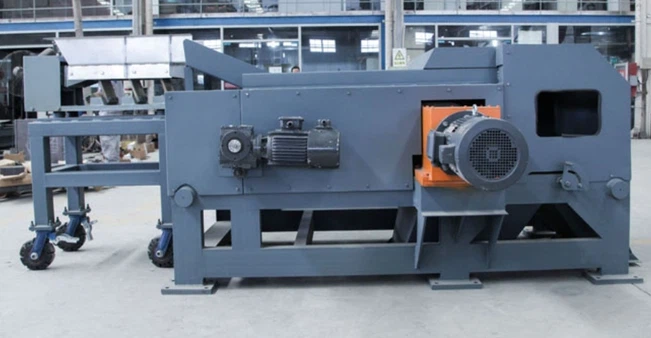
What is an Eddy Current Separator (ECS)?
Being one of the latest high-tech and high-accurate machines, ECS is the most suitable equipment for metal sorting. It utilizes magnetic forces to physically repel non-ferrous metals and enables separation from non-conductive materials.
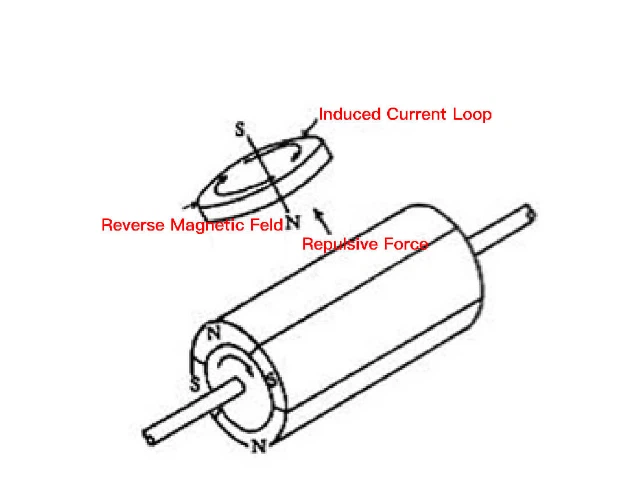
The working principle behind ECS is surprisingly simple-it relies on electromagnetic induction. It produces a high-gradient magnetic field to generate eddy currents on non-ferrous metals like copper, zinc, and lead.
The Eddy current, in turn, produces repulsive forces between metals resulting in separation from non-metallic metals. This process sorts metals while consuming somehow low power and energy.
ECS machine has introduced a new era in the world of metallurgy and metal recycling! Not only does it extract useful metals from waste but also helps reduce our ecological footprint while maximizing the recovery of valuable resources. It's exciting to think about the positive impact this technology can have!
Key Components of ECS Machines
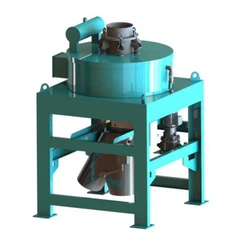
A typical Eddy current separator has the following parts.
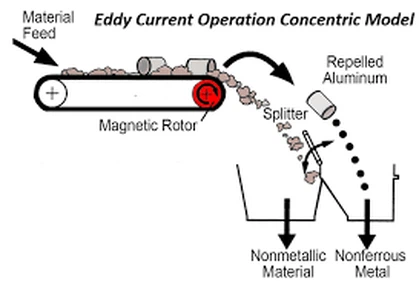
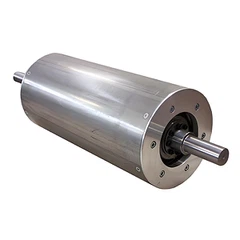
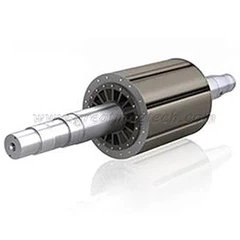
Magnetic Rotor
The heart of the machine, it spins at high speeds (often 3,000 RPM or more) to create a strong, alternating magnetic field.
Conveyor Belt System
Moves materials across the magnetic field. Its speed and angle are adjustable based on the metal composition and desired separation intensity.
Splitter Mechanism
Precisely separates deflected metals from other materials.
The Working Mechanism of Eddy Current Separators
Eddy Current Separators work in a series of steps following the principles of electromagnetism and Biot-Savart law. The rotating drum of Eddy current separators helps in the production of alternating magnetic fields.
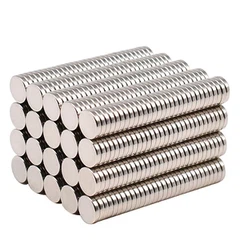
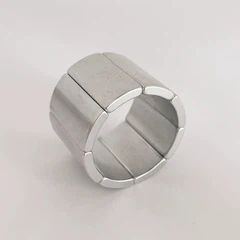
This drum is wrapped in high-performance NdFeB magnets which aids in producing a high gradient magnetic field. The alternating magnetic field gives rise to eddy currents in non-ferrous metals and produces repulsive forces between non-ferrous and non-metallic materials. This separates non-ferrous metals (such as aluminum, zinc, copper, and lead) from non-metallic materials (such as glass, paper, and plastics).
What's even better is that the Eddy Current Separator Machine sorts metals without the need for labor and does it in no time at all. You can simply stand by and watch as the machine takes care of everything for you.
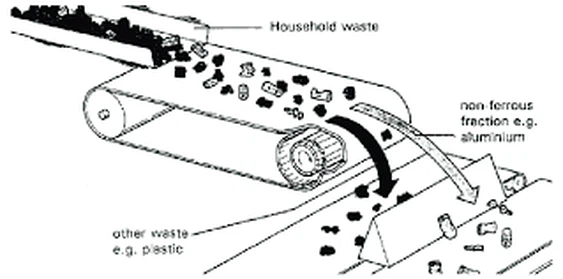
With its highly efficient outcomes, the separated materials can be easily recycled. Here's how the Eddy Current Separator works in clear steps:
Material Feeding
Firstly, the crushed metal mixture is poured through the conveyor belt. It carries and feeds this mixture to the machine.
Generation of Current by Magnetic Induction
Secondly, the eddy currents are produced in the machine. Inside the machine a magnetic roller is fixed, which plays the most important part in the whole process. This permanent magnetic roller creates a high gradient magnetic field, inducing an eddy current in the non-ferrous metal.
This eddy current generates forces among the metals in the mixture. Therefore, as the materials pass through the magnetic field generated by the machine, it induces eddy currents in the non-ferrous metals.
Separation by Repulsion
The eddy currents generate repulsive forces, known as Lorentz Forces. Lorentz forces are exerted on metals separating them from the material flow, resultantly, the desired separation is achieved.
These repulsive forces depend upon the strength of the changing magnetic field, conductivity and density of the material, its area, and its shape. Altering these factors the strength of forces can also be varied.
Collection
Lastly, the separated non-ferrous metals are collected on one side, while the non-metallic materials fall into a different area for further processing or disposal.
Compositional Force Calculation
For different non-ferrous metals, the repulsive force can be influenced by the material's compositional characteristics, which can be expressed by the following formula:
F=ρ⋅sm⋅σ
Where:
FFF is the compositional force (repulsive force) in newtons (N),
mmm is the mass of the material in kilograms (kg),
σ\sigmaσ is the conductivity of the material in Siemens per meter (S/m),
ρ\rhoρ is the density of the material in kilograms per cubic meter (kg/m³),
sss is the material shape factor (dimensionless).
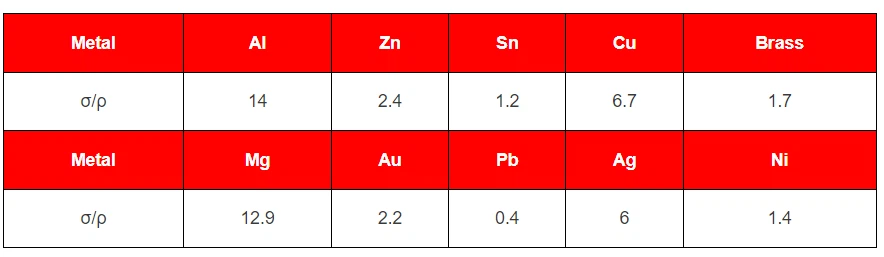
The following table outlines the specific conductance (σ/ρ)(\sigma/\rho)(σ/ρ) factor values for various metals. This ratio helps determine the magnitude of the repulsive force and the difficulty of sorting the materials.
Table: 2 Lists the specific conductance (σ/ρ) factor values for metals.
The Top 5 Key Features of Eddy Current Separator
The traditional method of metal sorting comes with numerous challenges related to recycling, waste management, and pollution control. On the contrary, the Eddy Current Separator is an advanced and cutting-edge option to be utilized for separating materials. Here are some of the profound key features of an Eddy Current Separator in the metallurgy industry.
1. High Precision Separation
One of the features that make Eddy Current Separators stand out from other technology is its exceptional precision in separating non-ferrous metals.
This means you can expect a cleaner end product, with precious metals efficiently recovered, minimizing losses. According to a study, ECS can even achieve separation efficiencies of up to 99% for materials like aluminum and copper.
2. High Throughput Capacity
Most of the time ECS machines are engineered to handle high volumes. They can process up to 10 tons per hour in recycling facilities - but it highly depends on the manufacturer.
This high capacity allows businesses to scale their operations without sacrificing efficiency. For example, a recycling plant utilizing an ECS could potentially increase its processing capabilities by 30% compared to traditional manual sorting methods.
3. Wide Separation Range
Unlike traditional machines, an Eddy Current Separator can effectively sort fine metal particles ranging from 3mm to 100mm. However, in practice, the Eddy Current Separator is ideally suited for recovering or separating non-ferrous metals above 3mm.
4. Energy Efficiency:
Of course, you want a machine that reduces your cost and provides the best results. Eddy Current Separator is not just a smartly designed piece of technology, it also reduces your operational costs considerably, while giving you the most precise output.
With driving power ranging from 3.7 to 7.5 kW, this machine offers impressive processing capabilities of 1 to 12 m³/h.
5. Adaptability to Various Sizes and Materials
Another important feature of Eddy Current Separators is that they can be adjusted to separate metals from mixtures of plastics, glass, and other non-ferrous materials. For example, ECS has been effectively used to process electronic waste, achieving impressive recovery rates for non-ferrous metals.
Table: 2 Common non-ferrous metals sorted by Eddy Current Separator (ECS) machines and their industry uses.
| Non-Ferrous Metal | Common Applications | Recycling Benefits |
|
Aluminum |
Packaging, automotive parts, construction | Saves 90% of energy compared to new production. |
| Copper | Electrical wiring, plumbing, electronics | Uses 80% less energy than mining new copper. |
| Zinc | Galvanizing steel, batteries | Can save up to 95% of energy in recycling. |
| Lead | Batteries, radiation shielding | Reduces toxic waste and recovers materials. |
| Nickel | Stainless steel, batteries | Reduces energy consumption by about 40%. |
Plus, you're not limited to sorting just one specific particle size. You have the flexibility to sort particles of various sizes based on your needs.
With adjustable rotor directions, you can easily accommodate different particle sizes and sort them accordingly. This adaptability makes the ECS an invaluable asset for recycling facilities that deal with diverse types of waste!
The Impact of Eddy Current Separators on Product Quality and Efficiency
After implementing an Eddy Current Separator (ECS), you can expect several significant improvements in product quality and sorting efficiency. Here are four key benefits you'll notice:
Enhanced Purity
The ECS does an excellent job of removing non-ferrous metals like aluminum and copper from mixed material streams. This accuracy of the machine enhances the quality of the products. It extracts the valuable metals from waste rock and removes possible impurities.
Increased Recovery Rates
ECS being a high-tech device, automates sorting processes - saving time, money, and labor. Meanwhile, it increases the yield of valuable non-ferrous metal and, leads to higher profitability and a more sustainable recycling operation.
Reduced Downtime
By cutting down on the need for manual sorting and minimizing metal contamination in other materials, the ECS helps decrease operational downtime. This streamlining of the process ultimately improves your overall productivity.
Improved Material Quality
Using an ECS leads to higher-quality end products, whether it's recycled aluminum, copper, or plastic. This enhanced material quality not only meets industry standards but also attracts better pricing in the market, creating a win-win situation for recyclers.
The Scope of Eddy Current Separators in the Metal Sorting Industry
Eddy Current Separator machine is an indispensable asset across various industries. Having the unique feature of a wide separation range and flexible sorting, it is super beneficial, particularly in the Metal Sorting industry and waste management.
Recycling and Waste Management
In the recycling and waste management industry, traditional methods often lead to increased waste volumes, lower material quality, higher labor costs, and rising operational expenses. Unfortunately, these challenges remain unresolved for waste management staff.
However, Eddy Current Separators (ECS) significantly enhance the efficiency and recovery rates of metals like aluminum, copper, zinc, and lead. They help minimize the waste sent to landfills and reduce your operating costs while decreasing overall waste production.
ECS machines play a crucial role in processing municipal solid waste (MSW), effectively separating aluminum cans, brass fixtures, and copper wires from other waste materials.
In Europe, particularly in Germany, ECS machines are commonly found in recycling facilities, contributing to Germany's impressive recycling rate of over 67%, according to recent data.
Mining Industry:
Eddy Current Separator holds a big scope in the mining industry. It contributes to mining and extracting high-quality metal and other valuable products. As it offers improved mineral recovery, the separation of metals from rocks and impurities becomes more effective.
This not only reduces waste but also boosts the overall quality of the ore. Plus, by automating the mineral processing, ECS machines work quickly, which means you can expect a higher metal yield from your operations.
Automotive Recycling:
In the automotive industry, ECS machines separate valuable metals from scrap, specifically targeting aluminum, which makes up roughly 10% of most vehicles by weight. High-purity aluminum recovery reduces the need for new materials, cutting production costs and conserving energy.
Electronic Waste (E-Waste) Management
E-waste, composed of numerous small electronic devices, contains precious non-ferrous metals like copper and rare earth elements.
ECS machines play a critical role in efficiently sorting these valuable metals, enabling recycling companies to retrieve components like copper wires, connectors, and aluminum casings.
Conclusion
The Eddy Current Separator Machine introduces a groundbreaking change in metal sorting technology. Representing a significant leap forward, it boasts a robust design, efficient operation, and customizable features. This innovative invention is revolutionizing metal recycling, waste management, and related industries.
What truly sets the ECS apart is its precision, efficiency, and versatility. By optimizing non-ferrous metal sorting across various sectors-whether in recycling, automotive, or e-waste-ECS machines play a critical role in helping companies achieve both economic and environmental goals.
Moreover, with exciting innovations on the horizon, ECS technology is poised to continue driving the recycling industry forward, making metal sorting not only more effective but also more environmentally responsible.