












The usage scenarios of NdFeB permanent magnets are roughly divided into adsorption, repulsion, induction, electromagnetic conversion, etc. In different applications, the requirements for magnetic fields are also different.
The spatial structure of 3C products is minimal and requires high adsorption strength. The spatial structure does not allow the magnet size to increase, so the magnetic field strength needs to be increased through magnetic circuit design;
In situations where magnetic field induction is required, excessively divergent magnetic lines of force will cause the Hall element to accidentally touch, and the magnetic field range needs to be controlled through magnetic circuit design;
When one side of the magnet requires high adsorption strength and the other side needs to be shielded from the magnetic field, too high a magnetic field intensity on the shielding side will affect the use of electronic components. This problem also needs to be solved through magnetic circuit design.
Where a precise positioning effect is required, where a uniform magnetic field is required, etc.
In all the above situations, it is difficult to achieve the usage requirements using a single magnet, and when the price of rare earth is high, the volume and dosage of the magnet will seriously affect the cost and price of the product. Therefore, we can meet the adsorption conditions or normal use. , Modify the magnetic circuit structure of the magnet to meet different usage scenarios, and at the same time reduce the number of magnets to reduce costs.
Common Magnetic Circuit Structures
Common magnetic circuits are roughly divided into HALBACH ARRAY, multi-pole magnetic circuits, focused magnetic circuits, added magnetic conductive materials, flexible transmission, single-sided magnets, magnetic condensation structures, etc. Let me introduce them one by one for you:
Halbach Arra
This is an approximately ideal engineering structure, aiming to produce the strongest magnetic field using the smallest number of magnets. Due to the special magnetic circuit structure of the Halbach array, most of the magnetic field loop can circulate inside the magnetic device, thereby reducing magnetic flux leakage, achieving magnetic concentration, and achieving a self-shielding effect in non-working areas. The optimized annular Halbach magnetic circuit design ensures that the Halbach array is the minimum area that can achieve 100% shielding. As shown in the figure, the magnetic field lines of the conventional magnetic circuit are symmetrically divergent, while most of the magnetic field lines of the Halbach array are concentrated in the working area, so the magnetic attraction force can be improved.

Multi-pole Magnetic Circuit
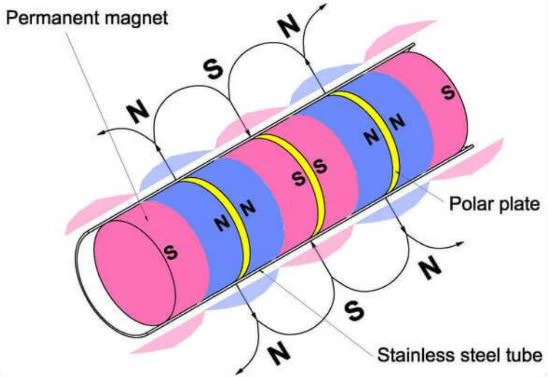
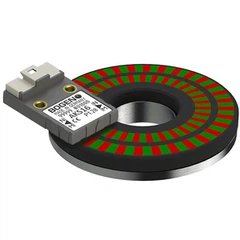
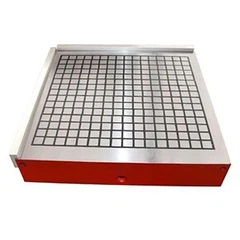
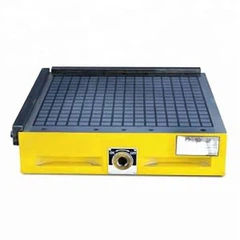
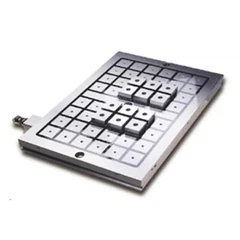
Multi-pole magnetic circuits mainly utilize the characteristics of magnetic field lines to preferentially select the nearest different poles to form a magnetic circuit. Compared with ordinary single-pole magnets, the magnetic field lines (magnetic field) of multi-pole magnetic circuits are more concentrated on the surface, especially the more poles the more obvious it is. There are two types of multi-pole magnetic circuits, one is the multi-pole magnetization method of one magnet, and the other is the adsorption method of multiple unipolar magnets. The difference between these two methods is the cost, but the actual functions are the same. The advantages of multi-pole magnetic circuits in adsorption at small intervals are very obvious.

Focus on the Magnetic Circuit
The focusing magnetic circuit uses a special magnetic circuit direction to concentrate the magnetic field in a small area, making the magnetic field in this area very strong, even reaching 1T, which is very helpful for accurate positioning and local induction.

Magnetic Materia
Magnetic permeable materials use magnetic field loops to prioritize the path with the smallest magnetic resistance. Using highly permeable materials (SUS430, SPCC, DT4, etc.) in the magnetic circuit can well guide the direction of the magnetic field, thereby achieving local magnetization and isolation. Effect.
Flexible Transmission
The characteristics of flexible transmission are that the attraction and repulsion formed by magnets achieve non-contact flexible transmission, small size, simple structure, torque can be changed according to the magnet volume and air gap size, and the adjustable space is large.

Single-Sided Magnet
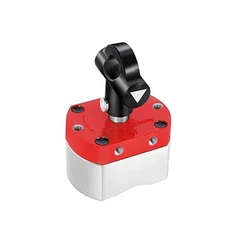
The characteristic of single-sided magnets is that the polarity of one side of the magnet is shielded and the polarity of the other side is retained. The direct adsorption force is greater, but the magnetic force attenuates greatly as the distance increases.

Magnetic Structure
The form feature is that the magnet and the iron yoke are arranged relative to each other according to polarity. As the ratio between the thickness of the magnet and the thickness of the iron yoke increases, the thicker the thickness of the iron yoke, the smaller the divergence of the magnetic field lines. The magnetization structure can be flexibly designed according to the size of the air gap to achieve the optimal effect, which can effectively save magnets. The magnetic field is evenly distributed along the iron yoke, but the disadvantage is that the assembly cost is high.
Conclusion
Magnetic circuit structure affects how a magnet works in a real product. By changing the magnet layout, adding iron yokes, or using structures such as Halbach arrays and multi-pole circuits, the magnetic field can be guided closer to the area where it is needed.
In many applications, simply using a larger magnet is not the best choice. The product may have limited space, a short sensing distance, or electronic parts nearby that should not be affected by leakage flux. A suitable magnetic circuit can help improve adsorption, control the magnetic field range, and reduce unnecessary magnet use.
When designing a magnetic structure, working distance, force direction, available space, shielding needs, and assembly cost should all be checked before making a final design.
FAQ
Q: What is the purpose of magnetic circuit design?
A: Magnetic circuit design is used to control the direction, strength, and range of a magnetic field. It helps the magnet work better in a specific product structure.
Q: Does a Halbach array completely block magnetic leakage?
A: Not completely. It can reduce leakage on one side, but the result depends on magnet size, arrangement, material, and working distance.
Q: Is a single-sided magnet stronger than a normal magnet?
A: It can provide stronger direct adsorption on the working side. However, the force decreases quickly when the gap becomes larger.
Q: Are magnetic circuit structures suitable for small electronic products?
A: Yes. Compact products often need controlled magnetic fields because the space is limited and nearby electronic parts may be affected by magnetic leakage.
Q: Can Great Magtech provide custom magnetic circuit designs?
A: Yes. Great Magtech can design magnet assemblies based on magnetic force requirements, working distance, product space, shielding needs, and installation structure.
Q: Can the same magnet have different effects in different structures?
A: Yes. The magnet grade and size may be the same, but the final magnetic force can change after adding an iron yoke or changing the pole direction.
Q: Can magnetic circuit design improve positioning accuracy?
A: Yes. A controlled magnetic field can make the magnetic response more stable in a fixed area, which helps with positioning and sensing applications.