



























Any substance can be magnetized to a greater or lesser extent in an external magnetic field, but the degree of magnetization is different. According to the characteristics of the substance in the external magnetic field, the substance can be divided into five categories: paramagnetic substance, diamagnetic substance, ferromagnetic substance, ferrimagnetic substance, and antiferromagnetic substance.
Paramagnetic substance: a substance that can be magnetized according to the direction of the magnetic field when it is moved close to the magnetic field, but it is fragile and can only be measured with precision instruments; if the external magnetic field is removed, the internal magnetic field will also return to zero, resulting in no magnetism. Such as aluminum, oxygen, etc.
Diamagnetic substance: a substance with a negative magnetic susceptibility. When subjected to an external magnetic field, an induced electron circulation is generated in the molecule, and the magnetic moment it generates is opposite to the direction of the external magnetic field, that is, the direction of the magnetic field after magnetization is opposite to the direction of the external magnetic field. All organic compounds have diamagnetic properties. Graphite, lead, water, etc. are all diamagnetic substances.
Ferromagnetic substance: a substance that can maintain its magnetized state and has magnetism even if the external magnetic field disappears after being magnetized under the action of an external magnetic field. Iron, cobalt, and nickel are all ferromagnetic substances.
Ferrimagnetic materials: The macroscopic magnetism is the same as ferromagnetism, but the magnetic susceptibility is lower. The typical ferrimagnetic material is ferrite. The most significant difference between them and ferromagnetic materials is the difference in internal magnetic structure.
Antiferromagnetic materials: Inside antiferromagnetic materials, the spins of adjacent valence electrons tend to be in opposite directions. The net magnetic moment of this material is zero and no magnetic field is generated. This material is relatively uncommon, and most antiferromagnetic materials only exist at low temperatures. Assuming that the temperature exceeds a certain value, it usually becomes paramagnetic. For example, chromium, manganese, etc. are antiferromagnetic.
We call paramagnetic and diamagnetic materials weak magnetic materials, and ferromagnetic and ferrimagnetic materials strong magnetic materials. The magnetic materials are generally referred to as strong magnetic materials. Magnetic materials can be divided into
Soft magnetic materials can achieve maximum magnetization intensity with the smallest external magnetic field. They are magnetic materials with low coercivity and high magnetic permeability. Soft magnetic materials are easy to magnetize and easy to demagnetize. For example: soft ferrites, and amorphous nanocrystalline alloys.
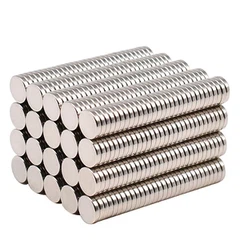
Hard magnetic materials: also called permanent magnetic materials, refer to materials that are difficult to magnetize and difficult to demagnetize once magnetized. Their main feature is high coercivity, including rare earth permanent magnetic materials, metal permanent magnetic materials, and permanent magnetic ferrites.
Functional magnetic materials: mainly magnetostrictive materials, magnetic recording materials, magnetoresistance materials, magnetic bubble materials, magneto-optical materials, and magnetic film materials.