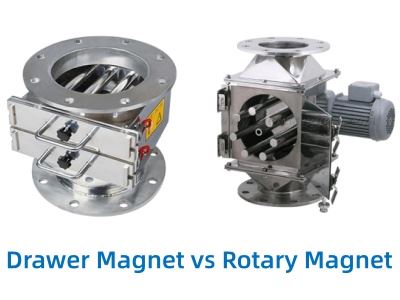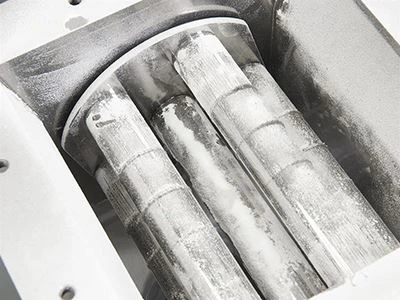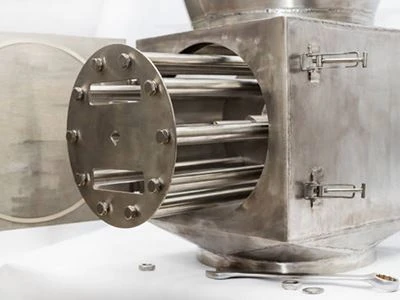
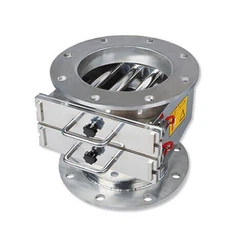
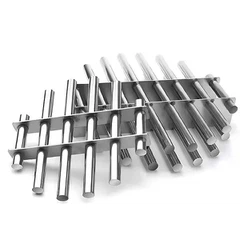






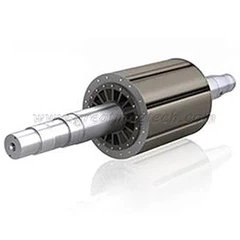




Wet drum separators and dry drum separators may look similar, but they are designed for different material conditions. A wet drum separator works with slurry, while a dry drum separator handles dry powders, granules, or bulk materials.
This difference affects the drum structure, magnetic system, feeding method, discharge design, maintenance work, and total installation cost. For equipment manufacturers and system integrators, choosing the right type is not only a product decision. It is part of the whole process design.
What is a Wet Drum Separator?
A wet magnetic separator is a piece of equipment used in mining and mineral processing. It utilizes a rotating drum containing powerful magnets to separate magnetic minerals (such as magnetite) from non-magnetic materials in a liquid slurry. As the drum rotates within the tank, magnetic particles are attracted to the drum's surface. These magnetic particles are then released in a controlled discharge area, while the non-magnetic materials flow away with the slurry.

Common Types of Wet Drum Separators
Most wet drum units fall into three flow styles:
Concurrent (co-current): Feed and drum movement go in the same general direction. Great for high recovery rates when you need to grab almost all the magnetic material.
Counter-Current: Slurry flows against the drum's rotation. This gives you a cleaner, higher-grade concentrate but might handle less material.
Semi-counter-current: A balanced option. It balances decent recovery with good concentrate quality, making it a popular, versatile choice.
Key Structure & Design Features (Wet)
You'll usually see these parts:
Tank/bath: sets slurry level and flow path.
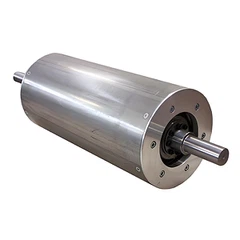
Rotating drum shell: the surface where magnetic material is held.
Magnetic system inside the drum: controls capture and release.
Discharge setup: scraper, splitter, or rinse zone to drop the magnetic fraction.
What is a Dry Drum Separator?
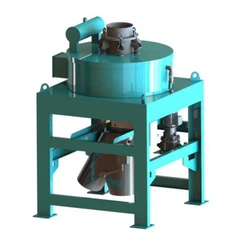
A dry drum magnetic separator is a device that uses a rotating drum to separate magnetic particles from dry powders or granules. You'll immediately notice its core difference from wet separators: it uses no water at all, but instead uses air as the separation medium. Its working principle is intuitive and efficient. The material is fed evenly onto or near the rotating drum via a feeding system. Powerful fixed magnets inside the drum quickly attract magnetic particles (such as iron impurities) to its surface. Meanwhile, non-magnetic materials fall naturally due to gravity or are guided to another channel by cleverly positioned deflectors, thus achieving automatic and continuous separation.

Common Types of Dry Drum Separators
You'll usually see:
Single-Drum: The standard workhorse for straightforward separation jobs.
Double-Drum / Multi-Stage: Uses two drums in series for a cleaner split, ideal for tricky materials or higher purity needs.
Rare-Earth Dry Drum: Employs powerful magnets to pull out weakly magnetic particles that standard drums might miss.
Key Structure & Design Features (Dry)
A good dry drum separator is built around control.
Feeding system: vibratory feeder or belt feeder to keep an even layer
Drum shell finish: helps reduce sticking and buildup for certain powders.
Magnetic system: set to hold magnetic material long enough for clean discharge.
Splitter and chutes: adjust the cut between magnetic and non-magnetic streams.
Dust management (optional): enclosure or dust collector connection.
Wet Drum vs Dry Drum - Main Design Differences
|
Dimension |
Wet Drum Separator |
Dry Drum Separator |
|
Structure & Magnetic Circuit |
A watertight, sealed magnetic assembly working submerged in a slurry tank. |
An open or dust-protected magnetic assembly operating in an air medium. |
|
Compatibility (Material & Process) |
Requires slurry. Ideal for wet processes like mineral processing or recycling with wash lines. |
Requires dry powders/granules. Ideal for dry processes like cement, chemicals, or grain handling. |
|
Price & Total Cost of Ownership |
Higher initial equipment cost is common, and you must factor in pumps, piping, dewatering, and water treatment systems. |
Lower initial equipment cost is typical, but you must factor in the cost of dust collection systems and blowers. |
|
Installation & Assembly |
Like installing a small pump station: requires piping connections and tuning of slurry level and flow to prevent leaks. |
Like installing a conveyor component: requires feeder adjustment, splitter positioning, and connecting ductwork. |
|
Maintenance & Reliability |
Mainly battles abrasion & corrosion. Requires regular checks of wear liners, seals, and the prevention of clogs. |
Mainly battles dust & buildup. Requires regular internal cleaning, dust filter checks, and keeping splitters clean. |
Application Differences Between Wet and Dry Drum Separators
The main difference is not only whether water is used. It also affects how the separator connects with the whole production line.
When You Use a Wet Drum Separator
You usually use a wet drum separator in a process where water is already part of the material flow. This is common in mineral processing, coal washing, iron ore recovery, and some recycling wash lines.
In these systems, the separator works with slurry movement, tank level, water flow, and discharge control. You also need to plan for drainage, pumps, and later dewatering. For this reason, a wet drum separator is usually treated as part of a wet processing system, not just a single magnetic machine.

When You Use a Dry Drum Separator
You use a dry drum separator when the material is dry and can move evenly through a feeder or chute. It is often used for dry powders, granules, crushed minerals, plastic flakes, sand, and other bulk solids.
In dry processing, feeding stability is very important. If the material layer is uneven, too thick, or slightly sticky, the separation result may change. Dust control and discharge adjustment also need to be considered in the line design.
How This Affects Your Line Design
Which Separator Is Better for Your Material?
This table gives a quick reference for common material conditions. It should be used as a starting point, not as the final selection standard.
| Material Condition | Better Option | Why |
|---|---|---|
| Mineral slurry | Wet Drum Separator | The material already moves with water. |
| Iron ore or magnetite slurry | Wet Drum Separator | It is commonly used for recovery and concentration. |
| Coal washing material | Wet Drum Separator | It can work with slurry flow and water discharge. |
| Dry powder | Dry Drum Separator | It is suitable when the powder flows evenly. |
| Crushed dry minerals | Dry Drum Separator | It can separate magnetic particles during dry feeding. |
| Plastic flakes after drying | Dry Drum Separator | Dry flakes are easier to feed and discharge. |
| Plastic flakes after washing | Wet or Dry Drum Separator | It depends on whether separation happens before or after drying. |
| Sand, granules, or bulk solids | Dry Drum Separator | These materials usually fit dry conveying systems. |
| Sticky or damp material | Test Before Choosing | Buildup may affect feeding and separation. |
The final choice should still be checked against moisture level, magnetic content, the required separation result, and the actual line layout.
What Information Should Equipment Manufacturers Provide Before Selection?
For equipment manufacturers, a drum separator often needs to be built into a larger machine or production system. Please also provide interface and installation details.
Useful information includes:
Material name and application industry
Wet or dry process condition
Target result: recovery, cleaning, or equipment protection
Existing equipment layout drawing
Inlet and outlet size
Conveyor width, chute size, or tank space
Required discharge direction
Mounting position and available maintenance space
Water, drainage, or dust control conditions
Power supply or control requirements
Surface treatment or material requirement
Sample order or batch production quantity
Expected delivery schedule
If the separator will be installed in equipment supplied to your customers, drawings and photos are especially helpful. They allow the supplier to check the drum size, mounting method, discharge design, and connection points before production. This can reduce later modification work.
How to Choose the Right Drum Separator for Your Line
Choosing a drum separator should start from the whole process, not just the model. Check how material feeds in, discharges, and how maintenance will be done.
Application and Material Behavior
Free-flowing material is easier to separate. Sticky or uneven material may need testing. Dry systems need stable feeding; wet systems depend on slurry flow.

Magnetic Requirements
If you recover minerals, focus on recovery rate. If you clean product, focus on purity. Weak magnetic materials need stronger field and better pole design.
Space and Compatibility
Wet systems need tanks, water, and drainage space. Dry systems need feeders, chutes, and dust control. OEM designs must confirm interface size early.
Cost and Maintenance
Conclusion
Wet drum separation and dry drum separation may look similar, but they work in different ways. A wet drum separator handles slurry in a tank, while a dry drum separator works with dry material, where feed control and splitter settings matter more.
There is no absolute better choice. The right option depends on your material condition, recovery or purity goal, available space, and maintenance plan.
Great MagTech can help you match the drum separator type to your process. Send your material state, capacity, particle size range, and site limits, and we can recommend the suitable structure and key options.
FAQ
Q: Can one drum separator be used for both wet and dry materials?
A: Usually not. Wet and dry drum separators have different structures, sealing methods, and discharge designs. It is better to choose the type based on the actual process.
Q: Do I need to test my material before choosing a drum separator?
A: Testing is recommended when the material is sticky, uneven, weakly magnetic, or difficult to separate. A sample test can reduce mistakes before production.
Q: Can the drum size be customized for OEM equipment?
A: Yes. Drum diameter, width, mounting structure, inlet and outlet position, and discharge layout can be adjusted according to your equipment design.
Q: What causes poor separation performance during operation?
A: Common reasons include unstable feeding, incorrect splitter position, material buildup, worn parts, or a magnetic system that does not match the material.
Q: Can a drum separator be added to an existing production line?
A: Yes, but the layout should be checked first. The supplier needs to confirm feeding height, discharge direction, space limits, and maintenance access.
Q: How do I know if the magnetic strength is enough?
A: It depends on the material type, magnetic content, particle size, and separation goal. For difficult materials, testing or technical evaluation is usually needed.
Q: Can Great MagTech provide drawings before production?
A: Yes. For OEM or system integration projects, Great MagTech can provide drawings or technical confirmation based on your layout and installation requirements.
Q: What information helps Great MagTech recommend faster?
A: Material sample photos, process layout, capacity, particle size, separation target, and available installation space can help speed up model selection.