









In many processing lines, keeping metal contamination out of your product is critical. Even small metal particles can affect quality, damage equipment, or create safety risks. That's why magnetic separation is used in industries like food, chemicals, and powder handling.
But manual cleaning methods can slow things down. And they depend too much on operator consistency.
If your process runs continuously, you need a more reliable way to remove metal without stopping production. This is where a pneumatic drawer magnet comes in. It offers a more controlled and repeatable cleaning process, helping you manage contamination while keeping your operation running smoothly. Please continue reading below.
What Is a Pneumatic Drawer Magnet?
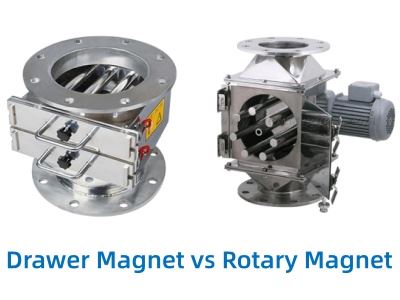
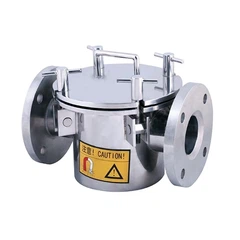
A pneumatic drawer magnet is an industrial magnetic separator used to remove ferrous metal contamination from powders, granules, and even some liquids. You will usually find it installed in gravity-flow systems or pressurized pneumatic conveying lines where material moves through a closed housing.
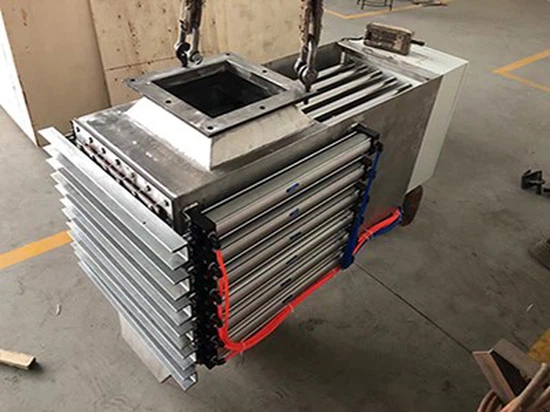
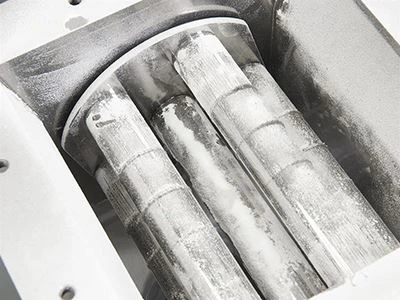
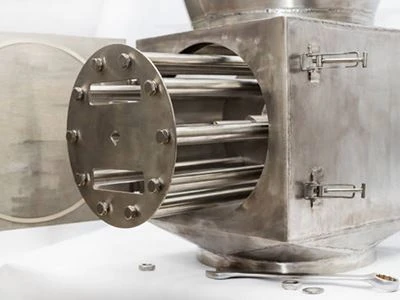
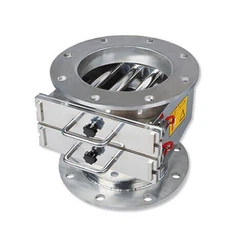
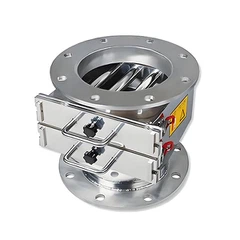
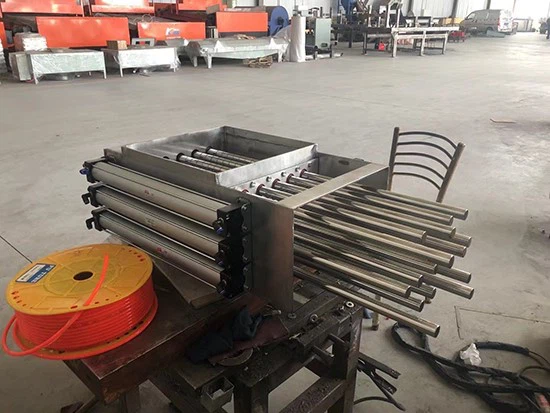
Inside the unit, rows of magnetized tubes are arranged in drawer-style sections. As material passes through, these tubes capture metal particles. The key difference is how cleaning is handled. A pneumatic system uses air cylinders to move the magnetic tubes and strip off the collected metal.
This allows you to remove contamination more consistently without manual handling, especially in continuous processing environments.
How Does a Pneumatic Drawer Magnet Work?
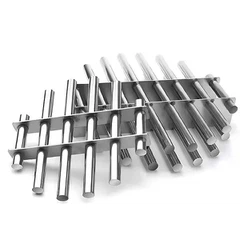
A pneumatic drawer magnet works by combining magnetic separation with an air-driven cleaning system. As material flows through the housing, it passes around rows of high-intensity magnetic tubes arranged in staggered positions. This layout increases contact, helping capture ferrous contaminants from powders or granular materials more effectively.
The process is continuous. Material flows, metal is captured.
When it is time to clean, pneumatic cylinders move the magnetic tubes through wiper seals. As the tubes pass through, the seals strip away the collected metal, allowing it to fall away from the magnetic field.
You do not need to stop production or remove the magnets by hand. After cleaning, the tubes return to their working position, ready to continue separating contaminants with minimal interruption.
Key Components of a Pneumatic Drawer Magnet
A pneumatic drawer magnet is made up of several key parts that work together to separate and remove metal contamination. Each component has a clear role in keeping the system stable and easy to operate.
Magnetic Tubes
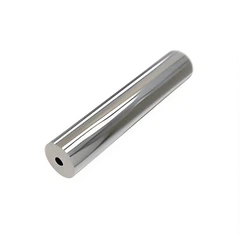
These are the core of the system. The tubes generate a strong magnetic field that attracts and holds ferrous particles as material flows through. Their arrangement affects how well contaminants are captured.
Drawer Housing
The housing holds the magnetic tubes in place and guides the material flow. It is usually designed to handle powders or granules without blocking or slowing down the process. A good housing design helps maintain smooth operation.
Pneumatic Cylinders
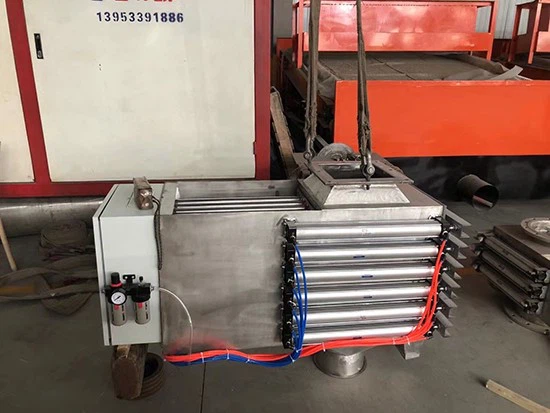
Pneumatic cylinders provide the movement needed for cleaning. They push and pull the magnetic tubes during the cleaning cycle. This replaces manual handling.
Wiper Seals
Wiper seals are used during cleaning. As the magnetic tubes move through them, they strip away the collected metal from the surface.
This allows contaminants to fall away easily.
Control System
The control system manages the timing and sequence of the pneumatic movement. It ensures the cleaning cycle runs in a consistent and repeatable way.
You get more predictable performance with less manual effort.
Advantages of Pneumatic Drawer Magnets
A pneumatic drawer magnet is designed to improve both efficiency and consistency in your process. Instead of relying on manual cleaning, you get a system that works in a more controlled way.
Reduced Manual Work
You do not need to remove magnetic tubes by hand. The pneumatic system handles the cleaning cycle, which reduces physical effort and operator involvement.
This also lowers the chance of human error.
Continuous Operation
Cleaning can be done without stopping the entire process. This is important if your line runs continuously or handles large volumes of material. Less downtime means better productivity.
More Consistent Cleaning
Because the cleaning cycle follows a set sequence, the results are more consistent. You avoid the variation that often comes with manual handling.
Consistency helps maintain product quality.
Better Hygiene and Safety
In industries like food or pharmaceuticals, reducing direct contact is important. A pneumatic system helps keep the process cleaner and more controlled.
It also reduces exposure to dust or contamination.
Suitable for High-Volume Applications
If your process involves large flow rates or frequent cleaning, a pneumatic drawer magnet can handle it more efficiently. It is built to support repeatable operation over long periods.
Pneumatic vs Manual Drawer Magnets
|
Factor |
Pneumatic Drawer Magnet |
Manual Drawer Magnet |
|
Cleaning Method |
Automatic cleaning using pneumatic cylinders and wiper seals |
Manual removal and cleaning of magnetic tubes |
|
Labor Requirement |
Low, minimal operator involvement |
High, depending on manual handling |
|
Production Downtime |
Minimal or no stoppage required |
Requires stopping the process for cleaning |
|
Cleaning Consistency |
Stable and repeatable |
Varies depending on the operator |
|
Efficiency |
Higher, suitable for continuous operation |
Lower, better for small or batch processes |
|
Safety |
Reduced contact with material and contaminants |
Direct handling increases exposure risk |
|
Hygiene Level |
Better control, suitable for food and pharma |
More risk of contamination during cleaning |
|
Maintenance |
Requires pneumatic system upkeep |
Simpler structure, less technical maintenance |
|
Initial Cost |
Higher upfront investment |
Lower initial cost |
Applications of Pneumatic Drawer Magnets in Different Industries
Pneumatic drawer magnets are used in industries where metal contamination must be controlled without slowing down production.
Food Processing
In food production, even small metal particles can cause serious issues. You can install pneumatic drawer magnets in flour, sugar, or spice lines to remove contamination before packaging.
Clean separation matters here. So does hygiene.
Pharmaceutical Industry
Pharmaceutical production requires strict control of contamination. Pneumatic systems help reduce manual contact and keep the process more consistent.
This is important when working with powders or fine ingredients.
Chemical Processing
In chemical plants, materials often move in bulk and at high flow rates. A pneumatic drawer magnet can handle this without frequent shutdowns. It helps protect both the product and downstream equipment.
Plastics and Recycling
Plastic pellets and recycled materials may carry metal fragments from upstream processes. You can use pneumatic drawer magnets to remove these particles before further processing.
This helps prevent damage to machines like extruders.
Grain and Milling
In grain handling and milling, metal contamination can come from transport or storage. Installing a pneumatic drawer magnet helps catch these particles early. It adds another layer of protection before final processing.
How to Choose the Right Pneumatic Drawer Magnet for Your Application
Choosing the right pneumatic drawer magnet is about understanding your process. Not just the equipment.
Material Type
Start with what you are processing. Powders, granules, and pellets behave differently when they flow. Fine powders may need stronger magnetic capture and tighter sealing to prevent leakage. Your material decides how the system should be designed.
Flow Rate
Flow rate affects how much material passes through the unit at a given time. If the flow is too fast, metal particles may not be captured effectively. You need a design that matches your production speed.
Particle Size and Moisture
Small particles and high moisture levels can change how material moves through the system. Sticky or damp materials may build up around magnetic tubes.
This can affect separation efficiency if not considered early.
Installation Position
Where you install the magnet matters. It can be placed in vertical gravity flow or within a pneumatic conveying line. The position should allow smooth flow and easy cleaning access. Good placement improves performance.
Cleaning Frequency
Think about how often cleaning is required. If contamination levels are high, you may need more frequent cleaning cycles. A pneumatic system helps, but the design still needs to match your workload. A well-matched system reduces interruptions.
Magnetic Strength Requirements
Different applications need different magnetic strengths. High-intensity magnets are often used for fine or critical materials. Choosing the right level helps you capture contaminants without affecting flow.
Maintenance and Cleaning Considerations
Keeping a pneumatic drawer magnet in good condition helps maintain stable separation over time. A simple routine can prevent most performance issues.
Regular Cleaning Checks
Even with automatic cleaning, you should still check how well the system is removing collected metal. If buildup starts to appear on the tubes, cleaning frequency may need adjustment.
Do not assume the system always runs perfectly.
Pneumatic System Inspection
The air system controls the movement of the magnetic tubes. You should check the cylinders, air supply, and connections regularly. Any delay or uneven movement can affect the cleaning cycle.
Seal and Wiper Condition
Wiper seals play a key role during cleaning. If they wear out or lose contact, metal may not be removed completely from the tubes.
Replacing worn seals on time helps keep the system effective.
Monitoring Performance
Watch for changes in separation efficiency. If you notice more metal in the final product, it may be a sign that maintenance is needed. Small changes can indicate bigger issues.
Keeping the System Clean
Dust and residue can affect both airflow and mechanical movement. Keeping the housing and surrounding area clean supports stable operation over the long term.
Common Mistakes When Using Drawer Magnets
Even a well-designed drawer magnet can underperform if it is not used correctly. Most issues come from setup or operation, not the equipment itself.
Incorrect Installation Position
Placement matters more than many people expect. If the magnet is installed where material flow is uneven or too fast, metal particles may pass through without being captured. A poor position reduces efficiency from the start.
Not Cleaning Often Enough
If cleaning intervals are too long, metal buildup can block the magnetic field. This reduces the ability to capture new contaminants. Regular cleaning keeps performance stable.
Overloading the Material Flow
When too much material passes through at once, contact time with the magnetic tubes decreases. This makes it harder for the system to capture fine particles. Flow rate should match the design of the unit.
Ignoring Seal and Wiper Wear
Worn seals or damaged wipers can affect the cleaning process. If metal is not properly removed during cleaning, it can remain on the tubes and reduce effectiveness.
Using the Wrong Magnetic Strength
Not all applications need the same magnetic intensity. If the strength is too low, small particles may not be captured. If it is too high, material flow can be affected.
Matching strength to your material is key.
FAQs
Q: How do you know if your system needs automation instead of manual cleaning?
A: If your process runs continuously or requires frequent cleaning, a pneumatic system is usually more efficient. It reduces downtime and keeps performance more consistent.
Q: Can pneumatic drawer magnets be integrated into existing production lines?
A: In most cases, yes. They can be installed into existing pipelines or gravity systems, but you need to confirm space, connection size, and airflow conditions.
Q: What is the typical lifespan of a pneumatic drawer magnet?
A: The main structure can last for many years. However, parts like seals, cylinders, and moving components may need regular replacement depending on usage.
Q: Do pneumatic drawer magnets require a constant air supply?
A: Yes. The system relies on compressed air to operate the cleaning mechanism. A stable air supply is important for consistent performance.
Q: What happens if the airflow or pressure is unstable?
A: If the air supply is not stable, the cleaning cycle may not work as expected. This can lead to incomplete cleaning or inconsistent performance. A steady air source is important for reliable operation.
Q: Can pneumatic drawer magnets be customized for specific applications?
A: Yes. Pneumatic drawer magnets are often customized to match different process conditions. This can include size, number of magnetic tubes, housing design, and cleaning configuration. A standard model does not always fit every system.
Q: Can the magnetic strength be customized?
A: Yes. Different applications require different magnetic intensities. For fine powders or strict contamination control, higher Gauss levels may be used. The goal is to match strength with material behavior.
Conclusion
A pneumatic drawer magnet is not just about removing metal. It is about keeping your process stable, clean, and consistent over time. When your system runs continuously, small details like cleaning method and material flow start to matter more.
If you match the magnet to your actual conditions-material type, flow rate, and installation setup-you can avoid many common problems before they appear.
There is no one-size-fits-all solution. And that is often where mistakes happen.
At Great Magtech, different pneumatic drawer magnet designs are available to suit a range of industrial processes. If your application has specific requirements, such as limited space, fine powders, or higher hygiene standards, custom options can be developed to better fit your system.
A well-matched solution is usually simpler to run and easier to maintain in the long term.