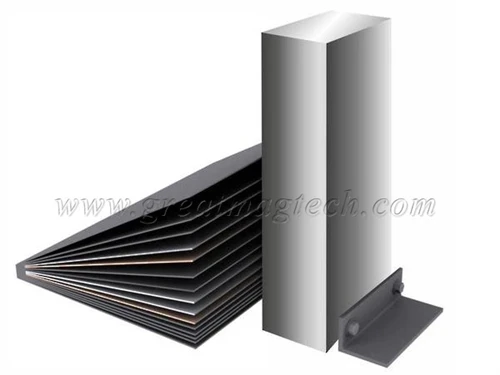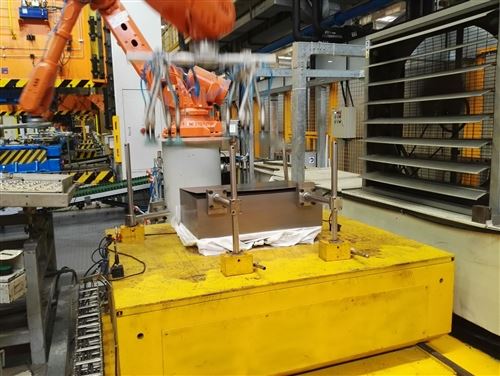


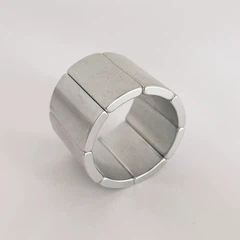

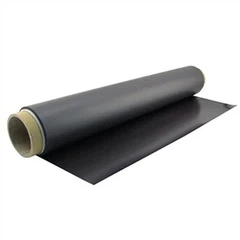
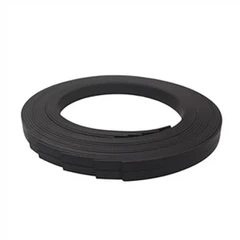



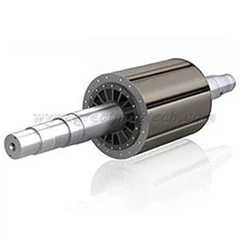



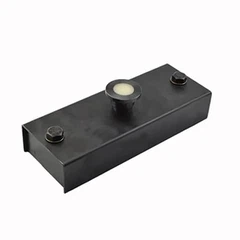
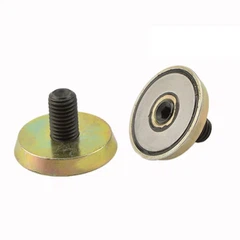
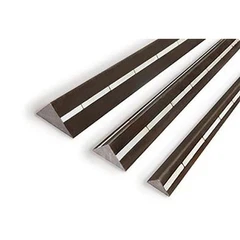


Injection magnet is a new type of composite permanent magnet material, which has the characteristics of large shape freedom, high dimensional accuracy, magnetic properties that can be adjusted on demand, good product consistency, compound molding, large orientation freedom, and high mechanical strength.
Bonded permanent magnet refers to a kind of magnet made by mixing permanent magnet powder with a certain proportion of binder according to a certain process. According to their final form, they can be divided into flexible magnets and rigid magnets.
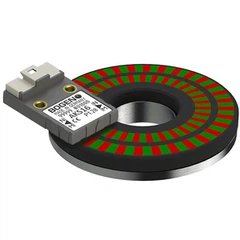
The magnetic force of injection molding is weaker than that of heterosexual ferrite and stronger than that of homosexual ferrite. The process of bonding permanent magnets is basically the same as that of injection molding. The only difference is that this process is to extrude heated pellets through a hole. Molded in the mold, the obtained product is also rigid, the binder used is the same as that of injection molding, and the addition amount is about 20% (volume). This process is generally used to produce sheet-like or thin-walled ring magnets that are difficult to achieve with other bonding processes. It evolved from the manufacture of injected plastic products. Firstly, the magnetic powder and the binder are mixed evenly. After kneading and granulation, dry granules are made. Then the granules are sent to the heating chamber with a spiral guide rod for heating, injected into the mold for molding, and the product is obtained after cooling. . The magnetic powder used is generally ferrite, ammonium iron boron, and banknote cobalt magnetic powder. The latter two kinds of magnetic powders have high hardness and serious wear on the guide rod and mold cavity, which is one of the more concerning problems at present.
The magnetic properties of the bonded magnets made by the process of injection molding magnets and bonded permanent magnets are the best. Almost all bonded ammonium iron boron permanent magnets adopt this process and have gradually formed industrialization. The surface of the bonded magnets needs to be coated Protection, generally using cathodic electrophoresis, spraying or other surface protection methods.