

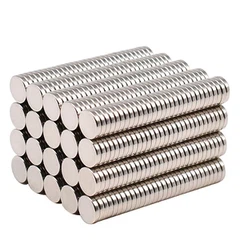




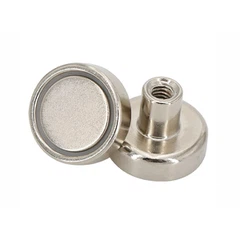
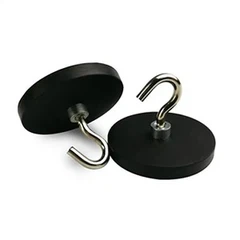
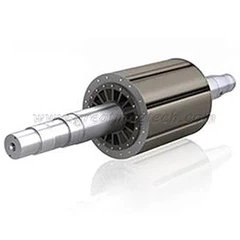



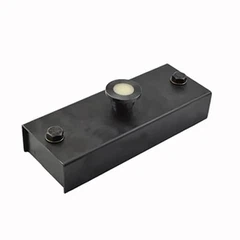

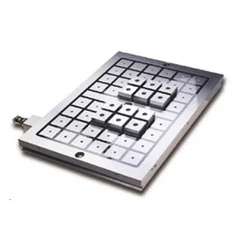


Neodymium magnets are a type of permanent magnet made from alloys of neodymium, iron, and boron. They have an exceptionally strong magnetic field that is much stronger than other materials commonly used in the manufacturing of permanent magnets. Because of this strength, they can be used for a wide variety of applications including motors, generators, speakers, MRI machines, and more.
The manufacturing process of neodymium magnets involves several steps. First, the raw materials are heated to a high temperature in order to form an alloy with the desired magnetic properties. This alloy is then cooled quickly in order to give it shape-holding properties. Next, this material is shaped into magnet shapes using either stamping or machining. Finally, the finished magnets are magnetized by exposing them to a strong magnetic field.
Once the manufacturing process is complete, neodymium magnets can be used in a variety of ways including as an alternative to more expensive and energy-intensive electromagnets. Additionally, they can also be used to create powerful stators for motors, generators, and other applications requiring strong, reliable magnetic fields. Neodymium magnets are also increasingly being used in consumer electronics and devices due to their strength and durability.
How Are Neodymium Magnets Made?
Neodymium magnets are the best known rare earth permanent magnet material of our era today. Neodymium magnets are classified according to production processes as: sintered Neodymium magnets, bond Neodymium magnets and cold pressed Neodymium magnets. All forms are different from one to another magnetically so the overlapped application scope is minimal and in the context of complementary relationships. Many magnetists have been asking about the origin and manufacturing of neodymium magnets. Sintered neodymium magnet is a traditional magnetic powder/metallurgical production method and occupies monopolistic market shares.
History of Permanent Magnet Development

A variety of detailed reviews are available which detail the development of rare earth (RE) magnets and the parameters that determine their coercion. Figure 3 demonstrates the history of rare earth permanent magnets, based on their (BHmax.10),7,8 and. The most important developments in commercial hard-magnetism materials and advances in BHmax are only occurring during the 20th Century. Since Nd-Fe-B was launched in the early 80's, it's been nearly 38 years since Nd-Fe-B magnets became a reality.
Developments in the use of strong magnets, known as permanent magnet materials, date back centuries. It is believed that the first practical application of a permanent magnet was in 1823 when William Sturgeon developed an electromagnet with a core made out of iron and cobalt. This invention made it possible to produce larger and more powerful magnets than what had been achievable previously. In the late 1800s, scientists began to experiment with permanent magnet materials made out of various metals and alloys.
The development of alnico (an alloy made up of aluminum, nickel, cobalt and iron) in 1931 was a major step forward in creating stronger permanent magnets. These powerful magnets revolutionized many industries including automotive manufacturing and electronics. Today, there are a wide variety of permanent magnets available, made out of materials such as ferrite, neodymium and samarium-cobalt. These new developments have allowed for greater precision and accuracy in applications that require extremely strong magnetic fields. Permanent magnets continue to be a driving force behind many technological advancements today.
Neodymium Magnet Processing Steps
Neodymium magnets are made by vacuum heating the various rare earth metals and metal particles used as raw materials in a furnace. The production process of Neodymium magnet has several important production stages. All steps are highly important and all steps are necessary parts of a very finer operation. This is a major step. Rare Earth elements are frequently found alongside other useful metals, including precious metals and substantial quantities of base metals such as copper and nickel, which require a number of actions in the process. It is difficult to extract rare earths since they often have identical properties and refine them to the point where refinements are challenging.

1. Raw Material Preparation
The first step in neodymium magnet processing is the preparation of raw materials. Neodymium, iron, and boron are obtained in the form of high-purity alloyed powders. Neodymium Magnets (also known as neo magnets, neodymium iron boron magnets, neo, or rare earth magnets ) are usually manufactured by a powdered metallurgical process. Additional elements, known as dopants, may be included to enhance specific magnetic properties. Since the magnet material is prepared by a powder metallurgy process and may other processes, a substantial amount of value has been added to the parts by the time they get to machining and grinding processes. Purity or raw material and stability of chemical composition is the foundation of product quality.
2. Mixing and Blending
The next stage involves the thorough mixing and blending of the raw powders. This process ensures a homogenous distribution of the constituent elements and the achievement of precise chemical composition ratios. Advanced mixing techniques, such as ball milling or attrition milling, are employed to facilitate a uniform blend.
The mixing and blending step involves the following processes:
a. Powder Selection:
High-purity neodymium, iron, and boron powders are carefully selected to meet the required composition and quality standards. These powders are typically in the form of fine powder particles, ensuring a large surface area for effective mixing.
b. Weighing and Measuring:
The precise weighing and measuring of the raw powders are crucial to achieve the desired chemical composition ferrite magnets. Accurate ratios of neodymium, iron, and boron are determined based on the desired magnetic properties of the final magnet.
c. Mixing Techniques:
Various mixing techniques are employed to ensure a uniform blend of the powders. The most common methods include:
3. Compaction
Once the powders are thoroughly mixed, compaction takes place. High-pressure compaction techniques, such as cold isostatic pressing or die pressing, are used to form green compacts. These compacts possess the initial shape and density required for subsequent processing.
There are two common techniques used for compaction in neodymium magnet manufacturing:
a. Cold Isostatic Pressing (CIP):
In cold isostatic pressing, also known as isostatic pressing or cold pressing, the mixed powders are placed inside a flexible mold, typically made of rubber or elastomeric material. The mold is then immersed in a pressurized liquid, usually water or oil. The uniform pressure is applied from all directions, ensuring that the powder particles are compacted uniformly and in all dimensions. This results in green compacts with high density and minimal porosity.
b. Die Pressing:
Die pressing, also referred to as uniaxial pressing, involves placing the mixed powders into a rigid die cavity. The powders are then compacted using a punch or ram that applies high pressure unidirectionally. The applied pressure consolidates the powders, resulting in green compacts that match the shape of the die cavity. Die pressing allows for the formation of magnets with complex geometries and precise dimensions.
4. Sintering
Sintering is a critical step in neodymium magnet processing. Any coating or plating must be applied to a sintered magnet before the it is saturated (charged). High heat can demagnetize the magnet, and the magnetic field can disrupt the electroplating process. The green compacts are subjected to elevated temperatures in a controlled atmosphere furnace. During sintering, the powders bond together, resulting in a dense and mechanically strong magnet structure. The process allows for particle growth and the formation of magnetic domains, crucial for achieving the desired magnetic properties.
There are three distinct methods used to press sintered NdFeB magnets, each yielding a slightly different end product. The common methods are axial, transverse, and isostatic pressing. For sintered NdFeB magnets, there is a widely recognized international classification. Their values range from N28 up to N55. Sintering temperature of Neodymium magnet is commonly ranging from 1050 to 1180 degrees Celsius. The first letter N before the values is short for neodymium, meaning sintered NdFeB magnets.
5. Machining and Shaping

After sintering, the neodymium magnet blocks undergo precision machining and shaping. Techniques such as grinding, cutting, and wire cutting are employed to achieve the desired dimensions and geometries. Careful attention is paid to maintaining the neodymium magnet alloy's magnetic alignment during the machining process.
The machining and shaping process typically involves the following techniques:
a. Grinding: Grinding is a common machining technique used to shape the neodymium magnets. Specialized grinding machines equipped with abrasive wheels or belts are employed to remove material from the magnet's surface and create precise dimensions and flatness. The grinding process may involve both rough grinding to remove excess material and fine grinding to achieve the desired surface finish.
b. Cutting: Cutting techniques, such as sawing or wire cutting, are employed to separate the neodymium magnet blocks into smaller pieces or to create specific shapes. Diamond-coated blades or wire are often used due to the hardness of the neodymium magnets. The cutting process requires precision to ensure accurate dimensions and minimize material loss.
c. CNC Machining: Computer Numerical Control (CNC) machining is a highly precise and automated machining technique commonly used for shaping neodymium magnets. CNC machines follow pre-programmed instructions to precisely remove material from the magnet, allowing for complex shapes and tight tolerances. CNC machining can be performed using milling, turning, or drilling operations, depending on the desired magnet geometry.
d. Wire EDM (Electrical Discharge Machining): Wire EDM is a specialized machining technique that uses a thin electrically conductive wire to shape the neodymium magnet. The wire is guided along a programmed path, and electrical discharges are used to erode the material, creating intricate shapes and features. Wire EDM is often used for cutting small or intricate parts with high precision.
e. Lapping and Polishing: Lapping and polishing techniques are employed to achieve smooth surfaces and precise dimensions on the neodymium magnets. Lapping involves using abrasive compounds and rotating plates to remove a thin layer of material, improving flatness and surface finish. Polishing is then performed using fine abrasives or diamond pastes to further refine the surface and create a mirror-like finish.
6. Surface Treatment
To protect neodymium magnets from corrosion and enhance their durability, surface treatment is performed. Common surface treatments include coating with nickel, zinc, or a protective epoxy resin. These coatings provide a barrier against environmental factors and ensure the long-term performance of the magnets. Spray coating is more suitable for smaller magnets and heat treatment is not recommended for corrosive environments.
Nickel (Ni): Nickel coating provides excellent corrosion resistance and is widely used in many applications. It forms a thin, smooth layer on the magnet's surface, protecting it from moisture and oxidation.
Zinc (Zn): Zinc coating, commonly known as galvanization, is another popular choice for surface treatment. It offers good corrosion resistance and can be applied by electroplating or hot-dip galvanization methods.
Epoxy Resin: Epoxy resin coatings are used to provide a protective barrier against moisture, chemicals, and mechanical stress. The resin is typically applied as a liquid or powder and then cured to form a durable and protective layer.
7. Magnetization
Magnetization is the final processing step and is crucial for activating the magnets' magnetic properties. Neodymium magnets are exposed to strong magnetic fields in magnetizing fixtures. This process aligns the magnetic domains within the magnets, resulting in their characteristic high magnetic strength.

The magnetization process typically involves the following techniques:
a. Magnetizing Fixtures:
Magnetizing fixtures are specialized equipment used to generate strong magnetic fields for magnetization. These fixtures consist of a coil or a set of coils that produce a controlled and concentrated magnetic field. The shape and configuration of the fixture are designed to accommodate the specific geometry of the neodymium magnets.
b. Magnetizing Techniques:
There are different techniques employed for magnetization, depending on the desired magnetization pattern and the magnet's shape and particle size distribution. Some common techniques include:
Pulse Magnetization: In pulse magnetization, a high-intensity magnetic field is applied to the magnet in short pulses. The magnet is placed within the magnetizing fixture, and a high current is passed through the coil, generating a strong magnetic field. This rapid pulse of magnetic energy aligns the magnetic domains within the magnet, resulting in its magnetization.
Multi-pole Magnetization: Multi-pole magnetization involves the use of multiple magnetizing fixtures with alternating poles. The magnet is sequentially exposed to different poles, which helps achieve a more uniform and controlled magnetization throughout its volume.
Radial Magnetization: Radial magnetization is employed for cylindrical or ring-shaped neodymium magnets. The magnetizing fixture is designed with a radial magnetic field pattern, ensuring that the magnetization is aligned along the circumference of the magnet.
c. Quality Control:
During the magnetization process, quality control measures are employed to ensure that the magnets meet the desired magnetic properties and performance specifications. Non-destructive testing techniques, such as magnetic flux density measurements or magnetic field mapping, may be used to verify the magnetization level and uniformity across the magnet's surface.
NdFeB Compositional and Processing Differences
NdFeB magnets have different compositional and processing differences that can affect their magnetic performance too. One of the main differences is in external magnetic field strength. Bonded magnets are usually made with weaker materials, but they still produce a strong external magnetic field when exposed to high temperatures or other external factors. This makes them ideal for applications that require high levels of resistance to magnetization.
Another difference between NdFeB magnets is their mechanical properties. Bonded magnets have higher corrosion resistance and are less susceptible to wear and tear compared to other magnet materials. This helps them maintain their performance even in harsh environments, making them ideal for use in industrial applications such as motors or generators.
Finally, NdFeB magnets also differ from magnetic materials in terms of their magnetic properties. Depending on the specific composition and processing techniques, NdFeB magnets can have higher coercivity and energy products than other magnet materials. This makes them particularly useful for applications that require high magnetic field intensities or where low-field loss is important.
Overall, these differences in compositional and processing mean that NdFeB magnets offer unique advantages compared to other magnet materials. They are incredibly versatile and can be used in a wide range of applications, making them a popular choice for manufacturers around the world.
In conclusion, neodymium magnets exemplify the incredible possibilities that can be achieved through the combination of advanced materials and precise manufacturing processes. Their magnetic strength and versatility make them indispensable in modern technology, shaping our world and propelling us towards a future of innovation and progress.