

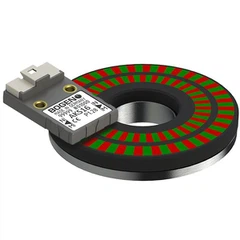
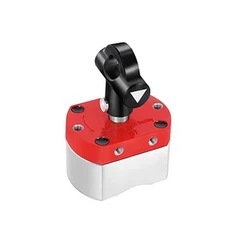


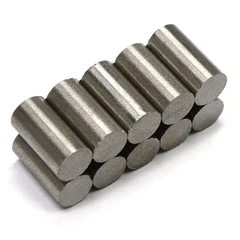
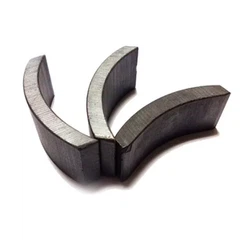














Magnetic encoders are devices that help machines know their exact position or movement. You've probably used systems that rely on them, like robots, conveyor belts, or CNC machines. Unlike other sensors, magnetic encoders work well in harsh environments with dust, oil, or vibration. In this guide, we'll explore how they work, the different types available, and why they're important for accurate and reliable motion control. By the end, you'll understand the basics and how to choose the right one for your needs.
What Are Magnetic Encoders?
Magnetic encoders are sensors that detect position, speed, or motion using magnetic fields. They are widely used in industrial machines, robotics, and automation systems because they can operate reliably even in dusty, oily, or vibrating environments. Unlike optical encoders, magnetic encoders don't rely on light, which makes them more resistant to harsh conditions.

Types of Magnetic Encoders
Magnetic encoders come in several types, each designed for specific applications. Understanding these types can help you choose the right one for your machine or project.
Absolute Magnetic Encoders
Absolute magnetic encoders provide a unique position value at every point of rotation or linear movement. This means that even after a power outage, they can instantly report the exact position. They are ideal for robotics, industrial machinery, and other applications where precise positioning is crucial.
Incremental Magnetic Encoders
Incremental magnetic encoders measure changes in position by generating pulses as the shaft or element moves. They are commonly used for speed control, motion tracking, and motor feedback. While they require a reference point after power loss, they are simple and cost-effective.
Rotary vs Linear Magnetic Encoders
Rotary encoders measure angular movement, while linear encoders track straight-line motion. Choosing between them depends on your application, such as a rotating motor shaft versus a sliding table in CNC machinery.

Hall-Effect vs Magneto-Resistive Encoders
Hall-effect encoders detect changes in magnetic fields using Hall sensors, while magneto-resistive encoders measure resistance changes in a magnetic material. Both provide accurate readings, but magneto-resistive types often offer higher resolution and sensitivity.

How Do Magnetic Encoders Work?
Magnetic encoders work by detecting changes in a magnetic field caused by movement. When a shaft, ring, or magnet rotates or moves, the encoder senses these changes and turns them into signals. This lets machines know the exact position or speed of a part.
Signal Processing and Magnetic Field Interaction
Inside the encoder, sensors pick up the strength and direction of the magnetic field. These signals are sent to a small circuit that interprets the information. The circuit then outputs clear data showing position or motion. Because the system relies on magnets instead of light, it operates reliably even in dusty or oily conditions, which is why magnetic encoders are widely used in robotics, motors, and industrial machinery.
How Accurate Is a Magnetic Encoder?
Magnetic encoders are designed to give precise information about position or movement, but their accuracy can vary depending on different factors. So what factors affect the encoder? Please continue reading.
Factors Affecting Encoder Accuracy
Several factors can affect the accuracy of a magnetic encoder. The strength and quality of the magnets play a big role. The sensor type, like Hall-effect or magneto-resistive, also matters. Environmental conditions, such as dust, vibration, or temperature changes, can affect the readings. Finally, how the encoder is installed and aligned can make a difference. By paying attention to these factors, you can ensure reliable and consistent measurements for your equipment.
Key Components
Magnetic encoders rely on a few main parts to work accurately. Knowing these components helps you understand how the encoder measures position and movement.

Encoder Magnets
The magnets create a magnetic field that the sensors can detect. The strength and quality of these magnets affect the encoder's precision. They are usually small but powerful, allowing the encoder to track even tiny movements.
Magnetic Rings
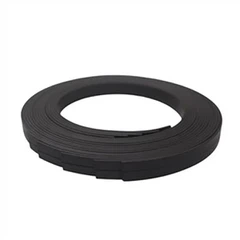
Magnetic rings are often attached to rotating parts. As they turn, the magnets create a pattern that the encoder reads. This pattern helps the encoder determine the position and speed of the part.
Magnetic Discs
Magnetic discs are similar to rings but can come in different shapes and sizes. They provide additional patterns for the sensors to detect, improving resolution and accuracy.
How to Calculate Encoder Resolution
Encoder resolution tells you how finely a magnetic encoder can measure position. A higher resolution means the encoder can detect smaller movements, which is important for precise control in machines.
PPR vs Bit Resolution
PPR, or pulses per revolution, measures how many signal pulses the encoder outputs in one full turn. Bit resolution counts the number of distinct positions the encoder can identify. Both describe precision but in different ways. PPR is often used for incremental encoders, while bit resolution is common for absolute encoders.
Choosing the Right Resolution for Your Application
The resolution you need depends on what you are controlling. For fast motors, a lower resolution may be enough. For robots or CNC machines that require exact positioning, a higher resolution is better. Always consider the movement type, speed, and level of accuracy needed when selecting an encoder.
What Are the Advantages and Disadvantages of Using Encoders?
Magnetic encoders bring many benefits to machines, but they also have some limitations. To make it easier to see both sides, here's a quick overview in a simple table:
|
Aspect |
Advantages |
Disadvantages |
|
General Performance |
Provide precise position, speed, and movement feedback |
High-resolution encoders may require more processing or special hardware |
|
Durability & Environment |
Reliable in harsh conditions like dust, oil, and vibration |
Some encoders can be sensitive to strong magnetic fields or interference |
|
Type of Encoder |
Absolute encoders keep position after power loss; incremental encoders are simple and cost-effective |
Absolute encoders can be more expensive; incremental encoders need a reference point after power loss |
|
Integration & Applications |
Easy to integrate with motors, robots, and automation systems |
Complex encoders may be harder to install and maintain correctly |
|
Motion Type |
Works for both rotary and linear motion applications |
Certain encoders require careful alignment to ensure accuracy |
|
Efficiency & Safety |
Help improve machine efficiency, reduce errors, and enhance safety |
Upgrading or replacing encoders can be costly in some systems |
Industrial Applications of Magnetic Encoders
Magnetic encoders are used in many industries because they provide accurate position and speed feedback in tough environments. Knowing where and how they are applied can help you understand their importance.

Robotics & Automation
In robots and automated systems, magnetic encoders track movement precisely. They help robotic arms pick, place, or move items without mistakes. Their reliability in dusty or oily conditions makes them perfect for factory floors and assembly lines.
CNC & Industrial Machinery
Magnetic encoders guide CNC machines and other industrial tools. They measure rotation and linear movement to ensure parts are cut or shaped correctly. Using encoders helps machines work faster and reduces errors, keeping production smooth.
Automotive & EV
In cars and electric vehicles, magnetic encoders monitor motor speed and wheel position. They improve safety, control, and efficiency. You can find them in steering systems, electric motors, and transmission controls.
Medical & Aerospace
Magnetic encoders are also used in medical devices and aircraft systems. They provide precise motion tracking in equipment like surgical robots, MRI machines, or airplane control systems. Their accuracy and durability are essential in these high-stakes environments.
Magnetic Encoders vs Optical Encoders
Both magnetic and optical encoders measure position and motion, but they work differently and suit different situations. Here's a clear comparison:
|
Feature |
Magnetic Encoders |
Optical Encoders |
|
Working Principle |
Detect changes in magnetic fields |
Use light and optical sensors to detect position |
|
Durability |
Very reliable in dust, oil, and vibration |
Can be affected by dust, dirt, or scratches on discs |
|
Environment |
Works well in harsh industrial conditions |
Best in clean, controlled environments |
|
Cost |
Usually lower cost for durable applications |
It can be more expensive due to precision optics |
|
Resolution & Accuracy |
Good accuracy, sufficient for most industrial needs |
Very high resolution and precise measurements |
|
Maintenance |
Low maintenance |
May require cleaning and careful handling |
|
Applications |
Robotics, motors, CNC, automotive |
Precision instruments, laboratory equipment, and some high-speed motors |
How to Choose the Right Magnetic Encoder
Choosing the right magnetic encoder ensures your machines run smoothly and accurately. There are a few key factors to consider before making a decision.
Absolute vs Incremental
Absolute encoders remember the exact position even after a power loss, making them ideal for precise positioning tasks. Incremental encoders track movement step by step and are simpler and often more cost-effective. Think about whether your application needs continuous position memory or just movement tracking.

Mounting Options & Interfaces
Encoders come with different mounting types and interfaces, like shaft, hollow, or flange mounts. Choosing the right mounting ensures proper alignment and reliable readings. Also, check the interface type, such as analog, digital, or SSI, to match your system.
Supplier & OEM Considerations
Select a trusted supplier who provides good support, quality, and customization options. If you are integrating encoders into your products, OEM compatibility and lead time are important factors to consider.
Troubleshooting and Maintenance Tips for Magnetic Encoders
Keeping your magnetic encoders in good shape ensures accurate readings and long-lasting performance. Here are some tips to help you maintain them.
Common Problems and Solutions
Sometimes encoders can give incorrect readings or stop working. Check for loose connections, misalignment, or damaged cables. Cleaning dust or debris around the sensor and magnets often solves minor issues.
Calibration Tips
Regular calibration helps maintain accuracy. Follow the manufacturer's instructions to reset the encoder or adjust reference points. Even small adjustments can make a big difference in performance.
Lifespan Optimization
Avoid extreme temperatures, strong magnetic interference, or excessive vibration to prolong the encoder's life. Installing protective covers and performing routine inspections can also help. With proper care, your magnetic encoder can provide reliable service for years.
Future Trends in Magnetic Encoder Technology
Magnetic encoder technology continues to evolve, bringing new possibilities for your machines. One key trend is miniaturization. Smaller encoders allow for more compact designs, which is useful in robotics, drones, and tight industrial spaces.
Another trend is smart integration with IoT systems. Modern encoders can send data directly to monitoring systems, helping you track performance, predict maintenance needs, and improve efficiency.
Hybrid encoder systems are also gaining attention. These combine magnetic and optical technologies to deliver higher accuracy and reliability, especially in demanding applications.
Finally, there is a growing focus on energy efficiency and sustainability. New materials and designs reduce power consumption while maintaining precision, making your equipment greener and more cost-effective.
By keeping an eye on these trends, you can choose encoders that are future-ready and improve the performance of your machines.
Conclusion
Magnetic encoders are essential tools for precise motion and position tracking in many machines. By understanding how they work, their key components, and the factors that affect accuracy, you can choose the right encoder for your needs. They are reliable, durable, and adaptable to a wide range of applications, from robotics and industrial machinery to automotive and medical devices. Keeping them well-maintained and considering future trends like miniaturization and smart integration will help you get the best performance. With the right magnetic encoder, your machines can operate efficiently, accurately, and reliably for years to come.
FAQs About Magnetic Encoders
Q: Can magnetic encoders operate in extreme temperatures?
A: Yes, many magnetic encoders are designed to function in a wide temperature range, often from -40°C to 125°C. This makes them suitable for outdoor machinery, automotive applications, and industrial equipment in harsh conditions.
Q: How resistant are magnetic encoders to vibration and shock?
A: Magnetic encoders are generally robust against vibration and mechanical shock because they rely on magnetic fields rather than optical components. This makes them ideal for mobile equipment and industrial machinery.
Q: Are magnetic encoders compatible with existing control systems?
A: Most magnetic encoders support standard interfaces like TTL, RS422, or SSI, making them compatible with many PLCs, motors, and automation controllers. Always verify the interface before integration.
Q: How do magnetic encoders compare in lifespan to other sensor types?
A: Because magnetic encoders are contactless and sealed against contaminants, they often have longer lifespans than optical or mechanical encoders, especially in harsh environments.
Q: Can magnetic encoders detect both rotary and linear motion?
A: Yes, certain magnetic encoders are designed for rotary applications, while others are optimized for linear motion. Choosing the right type ensures accurate tracking for your specific setup.