

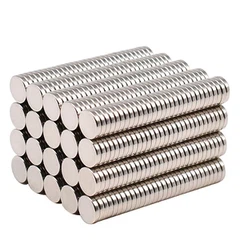
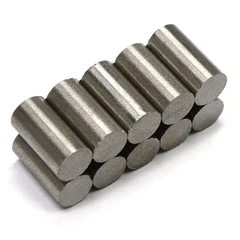
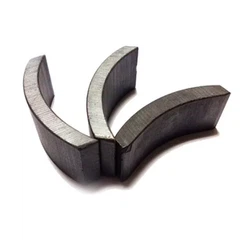
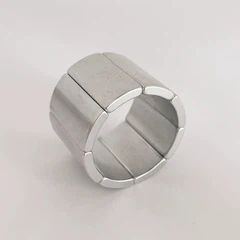









Innovations leading to changes in the types of magnetic materials have seen bonded magnets become competitive. These peculiar and very adjustable magnets have sneaked into numerous applications, giving impetus to multiple industries and coming through for innovative ideas in magnetic technology. In this beginner's advanced guide, you will learn all there is to know about bonded magnets, including their makeup, how they are made, the various types and their characteristic properties, and how bonded magnets will likely be used shortly.
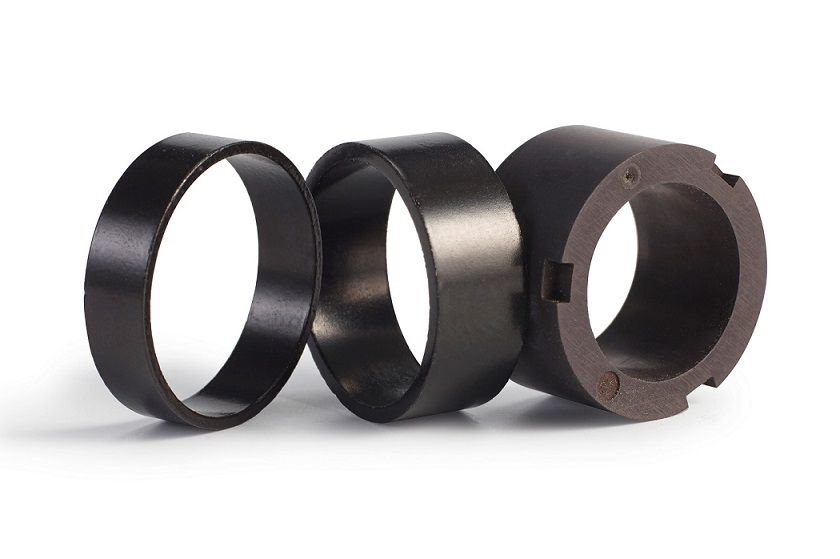
What Are Bonded Magnets?
Bonded magnets represent a unique class of magnetic materials that combine the best of both worlds: the attributes of conventional magnets and the versatility of polymers. Bonded magnets are multifarious materials created from magnetic particles and a non-magnetic adhesive. This invention also makes it possible to produce magnets of different shapes and sizes, which was not possible in the past, expanding the potential areas for techniques and designs.
Compared with sintered products made of compacting and sintering metal powders, bonded magnets have more design flexibility and lower cost. They can be formed, sintered, or laminated into it, and almost any structural design can be created without affecting the magnetic field strength of the material. This is where ferries come in handy most where traditional magnets can't.
The Composition of Bonded Magnets
To comprehend bonded magnets further, it is essential to look at their structure. These magnets are a marriage of two key components: magnetic powders and binding materials.
Magnetic Powders
The magnetic particles employed in making bonded magnets are critical to their operation. These powders can be made from various materials, each offering unique characteristics: These powders can be made from multiple materials, each offering unique characteristics:
Ferrite: Ferrite powders are also known as ceramic magnets, and they are comparatively cheaper while, at the same time, they have the advantage of not being easily demagnetized.
Neodymium-Iron-Boron (NdFeB): Some rare earth magnets have a magnetic solid force and are ideal for high-power uses.
Samarium-Cobalt (SmCo): There are more options for rare earth materials, and SmCo powders have temperature stability and corrosion resistance features.
Alnico: Alnico (aluminum-nickel-cobalt) powders are used in specific applications where high temperature is the common characteristic.
The selection of the type and composition of the magnetic powder depends on the requirement of the end product, which includes magnet strength, thermal stability, and cost, amongst others.
Binding Materials
The binder is the medium for connecting magnetic particles, enabling bonded magnets to possess their characteristics. Common binding materials include:
Thermoplastics: Some materials include nylon, polyamide, and polyphenylene sulfide (PPS), which provide better moldability besides the mechanical strengths.
Thermosets: Epoxy resins have good thermal stability and a degree of shrinkage or swelling, and this property makes them suitable for making automotive electrical connectors.
Elastomers: Materials with characteristics of rubber, like Nitrile Rubber, are used and are flexible with impact strength.
The manufacturing process of bonded magnets can be divided into the following:
Manufacturing Process of Bonded Magnets
The production of bonded magnets requires unique manufacturing methods, distinct by their functions in various applications and production scales.
Compression Molding
Compression molding is widely used to manufacture bonded magnets and is one of the most straightforward processes. Here's how it works:
The magnetic powder is added and incorporated into a thermoset binder, usually epoxy resin.
The molding of the two articles is done by placing the mixture in a mold cavity.
This results in curing and solidifying the binder and applying heat and pressure at this stage.
The end product is thus a high compound magnet with good dimensional stability.
Injection Molding
Injection molding is preferred for high-volume production of bonded magnets: Injection molding is preferred for high-volume production of bonded magnets:
Magnetic powder is incorporated with a thermoplastic base material.
The mixture's components are melted and heated until they attain a fluid-like consistency.
The molten material is then forced into a mold cavity through tremendous pressure.
After that, the mold is cooled down; this process also firms up the magnet.
Extrusion
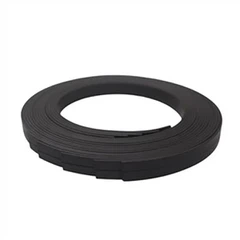
Extrusion is used to create long, continuous shapes: Extrusion is used to create long, continuous shapes:
The magnetic powder and thermoplastic binder are combined where they are heated together.
The prepared mixture is squeezed through a die with the required cross-sectional area on the part produced.
The extruded material is cooled and then cut to the required length.
Calendering
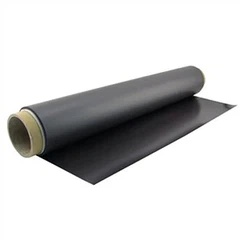
Calendering is used to produce thin, flexible magnetic sheets: Calendering is used to produce thin, flexible magnetic sheets:
Magnetic powder and an elastomeric binder are compounded.
It is then rolled between rollers to get a thin layer of the mixture to make chips.
The sheet must be taken and made to have a magnetic property before being cut to the required size.
Types of Bonded Magnets
The bonded magnets come in different categories with different properties and uses.
Ferrite Bonded Magnets
Ferrite bonded magnets are the workhorses of the bonded magnet world Ferrite bonded magnets are the workhorses of the bonded magnet world:
Composition: Strontium or barium ferrite powder which is incorporated in a polymer binder
Advantages: Cutting cost, good anti-corrosive, suitable for mass production
Limitations: It has less magnetic strength than rare earth options.
Applications: Car sensors, motor parts, toys

Rare Earth Bonded Magnets
Rare earth bonded magnets offer superior magnetic properties: Rare earth-bonded magnets offer superior magnetic properties:
NdFeB Bonded Magnets:
The bonded magnet has the highest magnetic strength among all the magnet grades.
Excellent for miniaturization
They are applied in computer hard disk drives, automobile sensors, home appliances, electronic communications, etc.
SmCo Bonded Magnets:
Outstanding temperature stability
Corrosion-resistant
Perfect for regular and aerospace uses at elevated temperatures.
Properties and Characteristics of Bonded Magnets
Bonded magnets possess exceptional properties that set them apart from traditional magnets. Bonded magnets possess a remarkable set of properties that set them apart from conventional magnets:
Magnetic Properties: Bonded magnets might be slightly less potent than their sintered equivalents, yet they are decent performers for size and weight.
Mechanical Strength: It is mentioned that the polymer binder is more brutal and impact-resistant than practically brittle sintered magnets.
Corrosion Resistance: It also provides a barrier against the adverse effects of the surrounding environment, thus prolonging the magnet's life span of the magnet.
Dimensional Accuracy: It is possible to achieve near-net shapes and significantly minimize the amount of subsequent work.
Density: Compared with sintered magnets, bonded magnets usually have a density less than the latter, thus making their use preferable in applications where weight is a significant consideration.
Thermal Properties: Thus, the binder selection determines the magnet's thermal stability, while some compositions can work at temperatures up to 180°C.
Customization: The magnetic powder-to-binder ratio can still be dictated to the desired functionality, depending on the type of application needed for the magnet.
Applications of Bonded Magnets
Due to this characteristic, bonded magnets are used in various sectors and numerous operations for diverse purposes.
Automotive Industry
Bonded magnets have found numerous uses in modern vehicles: Bonded magnets have found multiple uses in modern cars:
Sensors: ABS sensors, crank position sensors, and steering sensors
Motors: Power window motors, seat adjustment motors, and fuel pumps.
Actuators: Interlock-protected doors, heating ventilation, and air conditioning mechanisms.
Speakers: In-car audio systems
Electronics and Consumer Goods
The electronics sector has embraced bonded magnets for various applications: The electronics sector has embraced bonded magnets for multiple applications:
Computer Hard Drives: Positioning of the read/write head
Printers and Copiers: Paper feed mechanism assemblies and toner cartridge position detectors
Smartphones: Haptic feedback motors as parts of the outer casing and speaker assemblies.
Home Appliances: Engines and electric parts in washing machines, refrigerators, and vacuum cleaners.
Medical Devices
The medical field has also found valuable uses for bonded magnets: The medical field has also found valuable uses for bonded magnets:
MRI Machines: Gradient coils and the positioning system
Surgical Tools: Minimally invasive magnetic coupling
Implantable Devices: Cantilevers for micro robots and mobile micro-assembly
Dental Equipment: Motors for dental drills and dental polishers
Advantages and Limitations of Bonded Magnets
Using and applying bonded magnets has advantages and disadvantages, just like any other technology.
Advantages:
Design Flexibility: It opens design possibilities for actual geometric and dimensional variety.
Cost-Effective Production: It is perfect for mass production since it rarely requires cutting the material it involves.
Lightweight: Several disadvantages include the lower density of sintered magnets, which is advantageous for portable equipment.
Corrosion Resistance: Stored at room temperature, the polymer binder protects the material from some environmental conditions.
Shock and Vibration Resistance: Sintered magnets are more balanced for movement applications.
Limitations:
Lower Magnetic Strength: Tend to be less than the sintered magnets of equal sizes.
Temperature Sensitivity: Also, some of the binders offer a maximum limit on the operating temperature of the equipment in which they are used.
Potential for Demagnetization: The one sensitive to the external magnetic field.
Aging Effects: The adhesive or the binder may also show some deterioration over long periods and, therefore, compromise the reliability of the seal.
Conclusion
Bonded magnets are one of the most fascinating products created based on a marriage of magnetic properties and manufacturing opportunities. Both their structure and synthesis have enabled the creation of novel products with further opportunities in the design of magnets and their usage, which is appealing in numerous fields. Thus, bonded magnets are still at the vanguard of magnetic technology, from car sensors to state-of-the-art medical equipment.
The specific future trends in this field of study are expected to be even more remarkable because of the unceasing research and innovation. Advances in magnetic materials, binding and coating compounds, and the manufacturing processes render bonded magnet applications indispensable in futuristic technologies.
Engineers may find new design solutions in bonded magnets, manufacturers may increase productivity or find new products, and people interested in learning something new and exciting will stay open to the capacities open in the world of bonded magnets. As we continue to unlock the full potential of these versatile materials, one thing is sure: bonded magnets will continue their historic role as the leading arbiter of magnetic technology and organ of innovation, paving the way for future developments of magnetic-based products.