

















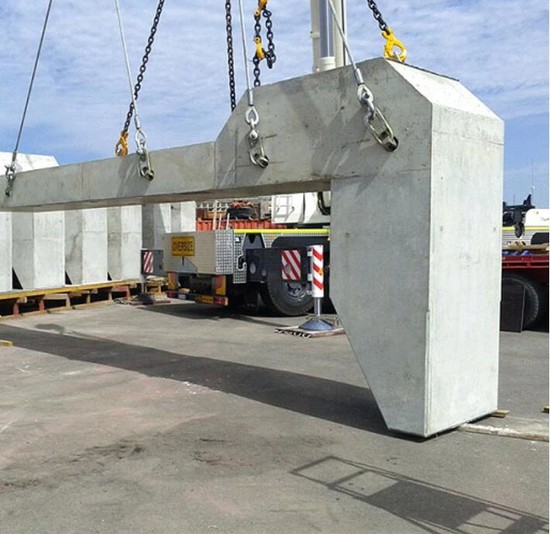
Lifting precast concrete may seem simple, but it is not. If you work on a construction site, in a factory, or are responsible for the logistics of precast components, you know that it is crucial to lift them correctly. Precast components are heavy, sometimes have odd shapes, and are often placed in narrow or hard-to-reach areas. One mistake can result in injury, damage to the product, or costly delays.
That's why knowing how to lift precast concrete the right way matters. Whether it's a wall panel, stair unit, beam, or column, every piece needs to be handled with care-and with the right tools, angles, and techniques.
This guide is here to walk you through the process, step by step.
Understanding Precast Concrete Elements
Before diving into lifting techniques and safety practices, it's essential to understand what precast concrete elements actually are. These are concrete components that are made in a controlled factory setting, then transported to construction sites for installation. Because they are pre-manufactured, they offer consistent quality, quicker installation, and reduced on-site labor.
Common Types of Precast Elements
You'll encounter a variety of precast elements depending on the project:
Wall panels – for both structural and architectural purposes.
Beams and columns – often used in commercial or industrial buildings.
Stairs and landings – prefabricated for faster installation.

Floor slabs – including hollow-core and solid precast floor panels.
Utility products – such as manholes, culverts, and vaults.
Each of these elements has unique dimensions, weight, and load-bearing requirements. This affects not only how they are transported but also how they must be lifted and installed.
Choosing the Right Lifting Anchor System
Not all lifting anchors are the same, and choosing the wrong one can cause delays, damage, or even injuries. If you're handling precast concrete elements, selecting the right lifting anchor system is one of the most important decisions you'll make on-site.
Understand What You're Lifting
Start by looking at the type and shape of your precast element. Is it a wall panel, a stair flight, or a heavy foundation block? Each shape places stress on the lifting points differently. Here are a few things to assess:
Weight and dimensions of the element.
Center of gravity.
Lifting orientation, vertical, horizontal, or tilted.
Number of lifting points required.
Once you've got this information, you can match it with a compatible anchor system.
Types of Lifting Anchors
There are many anchor types, but here are the most commonly used in precast construction:
Socket Anchors: Used for medium to heavy loads, often with recess formers
Pin Anchors: Ideal for flat panels or thin elements.
Loop or Wire Anchors: Flexible and simple, suited for lighter pieces
Recessed Anchors: Designed to stay invisible after installation
Each anchor type works best in certain conditions. Consider not only the load but also how the product will be transported and installed.
Choosing the Right Lifting Anchor System
Selecting the right lifting anchor system is one of the most important decisions you'll make when handling precast concrete elements. It directly affects safety, efficiency, and even the quality of your finished product. Using the wrong anchor can cause misalignment, cracking, or even catastrophic failure during lifting.
Types of Lifting Anchors
There's no one-size-fits-all anchor. Each type is designed for specific loads, concrete thicknesses, and use cases. Here are the most common types.

Threaded Lifting Anchors: Often used in panels or slabs; they're reliable and easy to connect to lifting hardware.
Loop or Eye Anchors: Good for lighter elements like stair treads or small beams.
Plate Anchors: Ideal for very heavy or awkward shapes, such as L-shaped walls or large box culverts.
Recessed Anchors: Used where a smooth surface is required, especially in architectural concrete.
Match Anchor to Element
Each lifting point must be strong enough to handle the load-and spaced to keep the concrete stable during lifting. For longer items, multiple anchors help distribute the weight. For short, heavy blocks, fewer but stronger anchors may be best.
Rigging Equipment and Sling Angle Considerations
Lifting precast concrete isn't just about the anchors; it's also about everything that connects to them. Rigging equipment, including slings, chains, and lifting loops, must be carefully selected and correctly used to keep the load stable and the crew safe.
Types of Rigging Equipment
You'll typically work with the following rigging components during a lift:
Wire rope slings – Strong and flexible, suitable for most heavy-duty lifting tasks.
Chain slings – Durable and resistant to heat or abrasion. Ideal for harsh site conditions.
Synthetic slings (nylon or polyester) – Lightweight and easy to handle, but can be damaged by sharp edges or chemicals.
Lifting eyes or loops – Often cast into the concrete or attached via the lifting anchor. These connect directly to your rigging hardware.
Each type has pros and cons depending on the site environment, load weight, and concrete surface finish. Make sure your equipment is certified and regularly inspected.
The Importance of Sling Angles
One of the most overlooked-and most critical- aspects of lifting is the angle between the sling and the horizontal surface of the load. This is called the sling angle.
Here's why it matters:
As the sling angle decreases, the force on each leg of the sling increases.
If the sling angle is too shallow, it puts excessive stress on the anchor and can even cause failure.
Ideally, the sling angle should be no less than 60 degrees. Anything under 45 degrees increases the risk significantly.
Step-by-Step Guide to Safe Lifting of Precast Concrete
Lifting precast concrete isn't something you should do without a clear, structured plan. When heavy components are involved, every action matters-especially when it comes to safety, alignment, and timing.
1. Inspect the Precast Element
Before anything is moved:
Check the precast unit for cracks, chips, or surface damage.
Make sure all embedded lifting anchors are visible and clean.
Confirm that the weight and center of gravity match the lifting plan.
Never lift a unit if its condition raises any red flags.
2. Review the Lifting Plan
Ensure the entire team understands:
Lifting points and rigging configuration.
Sequence of lifting.
Site layout and crane position.
Emergency procedures.
A quick toolbox talk before starting can prevent serious mistakes later.
3. Attach Rigging Gear Correctly
Use the right shackles, chains, and lifting eyes. Follow the manufacturer's instructions for all components. Make sure:
The rigging gear is certified and in good condition.
The slings are properly connected to the lifting anchors.
The sling angles do not exceed recommended limits (typically no more than 60°).
4. Perform a Test Lift
Raise the unit just a few inches to check for:
Balance and even load distribution.
Sling tension and stability.
Obstructions in the path.
Only continue if the test lift looks stable.
5. Begin the Main Lift
Slowly raise the precast element. Keep communication open between the crane operator and rigging crew. No sudden moves. Always lift vertically, don't drag or swing the load.
6. Set the Element in Place
Once lifted, guide the element into position:
Use tag lines to control swing.
Keep hands and feet clear of pinch points.
Lower the unit gradually and confirm alignment.
7. Detach and Inspect
Once the unit is secure:
Detach rigging only when the unit is fully supported.
Inspect rigging components after every lift.
Record any incidents or concerns for review.
Safety Guidelines and Site Preparation for Precast Lifting

Before lifting any precast concrete element, safety must come first. There are real risks on a jobsite, especially when handling heavy pieces like beams, slabs, or walls. That's why it's important to get the site ready and follow proper safety steps every time. It's not just about avoiding accidents; it's about making sure every lift goes smoothly, on time, and without damage to the structure or people.
Start with a clear site inspection. Walk the area and check for any uneven ground, loose debris, or low overhead wires. If there's any chance of rain or muddy conditions, put down mats or steel plates.
Everyone on site should know the lift plan. That includes riggers, crane operators, and spotters. Go over the steps together before the lift begins. Communication matters. Use hand signals or radios. And if something feels wrong during the lift, stop and reassess.
Common Mistakes in Precast Lifting-and How to Avoid Them
Precast lifting might look simple from a distance, but small mistakes can quickly turn into big problems. If you're not careful, things can go wrong-fast. That's why it's important to know what to avoid before you ever touch the rigging.
One of the most common mistakes is using the wrong lifting insert or anchor for the load. Not all anchors are made the same. If the insert isn't rated for the weight or angle of the lift, it can fail. That's a risk you don't want to take.
Another issue is poor communication. When the crane operator, rigger, and ground crew aren't on the same page, the chance of a sudden drop or shift goes way up. Always agree on hand signals or radio use before starting.
Other problems include:
Lifting before the concrete reaches full strength.
Ignoring edge distances or embed placement.
Using worn-out slings or chains.
Standing too close during the lift.
These are easy mistakes to make, but they're just as easy to avoid. If you slow down, double-check your setup, and stay aware of your surroundings, you can lift safely and get the job done right the first time.
Conclusion
Lifting precast concrete isn't just a task; it's a responsibility. From selecting the right anchors to checking sling angles and preparing the site, every step plays a part in keeping people safe and projects on track. Small mistakes can lead to big problems, but most of them are avoidable with clear planning and teamwork.
Take your time. Ask questions. Follow the plan.
When you lift with care, you protect not only the concrete but the crew around it. And that's what really matters.