











What Is Magnetic Separation?
The magnetic separation method is a technique of separating impurities from other substances such as from minerals of iron ores with the help of a magnetic field.
In this method, an impurity is first affixed onto a magnetic carrier material and thereafter the impurity-laden carrier is separated under a magnetic field.
The basic magnetic separator is a permanent magnet.
The magnetic separation method is a widely utilized beneficiation method. It is a technique that employs magnets with contrast in their magnetic capabilities when exposed to different minerals to single out other minerals.
The magnetism separation technique is easy and environmentally friendly. It does not give a push to pollution or other environmental hazards, which is primarily the reason why they are frequently used.
Magnetic Separation Principle:
The magnetic separation kit is made ready. Magnetic separation is conducted in an irregular magnetic field with the help of a magnetic separation kit.
After the ore joins the separation area of the magnetic apparatus, it shifts along various directions under the collective action of magnetic power and mechanical force, i.e. gravity, centrifugal force, fluid resistance, etc. Here we block the ore pulp individually to acquire different products.
Various consequences of magnetic power and mechanical force on distinct magnetic particles discover the significance of magnetic separation.
The more engaging the magnetic separator will be split into two or more products. In reality, the separation occurs randomly between the magnetic ores and non-magnetic ores instead of completely passing into magnetic products.
Hence, the impact of the magnetic separation technique can be described by the retrieval rate, grade, percentage of the magnetic substance in the feed, and the range of the magnetic element in the magnetic yield.
Magnetic Separators:
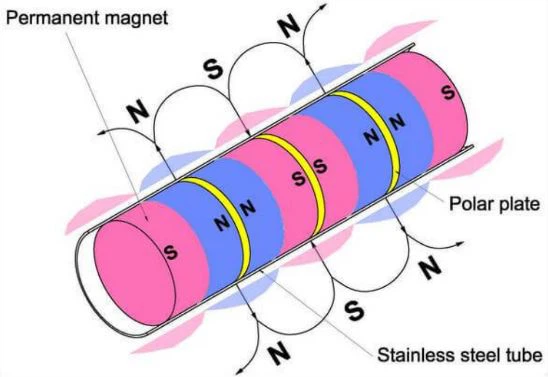
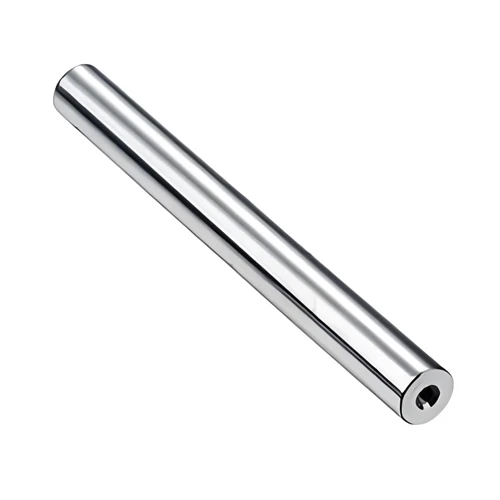
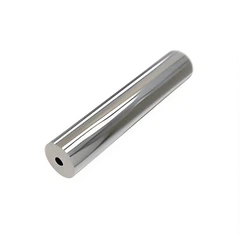
GME Magnetic Tube 12000 Gauss:
GME Magnetic Tube 12000 Gauss Mirror Finish are named because they are developed of strong neodymium magnets.

The ferrite magnet is in the stainless-steel tube by complete or incomplete welding. Due to the appearance of stainless-steel rods or polished rods, many consumers call them magnetic rods, magnetic filter rods or magnetic rods.
They are the most useful permanent magnet devices for capturing and extracting ferrous metals from different materials in different fields.
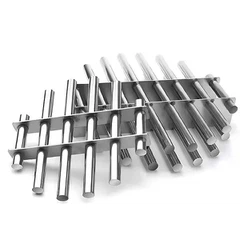
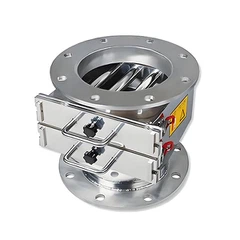
Grate Hopper Magnet:
The Great Hopper Magnet is primarily used to extract iron contaminants in hoppers and floor spaces and can actually extract free-flowing powders and iron pollutants in small particles.

Moreover, the great magnet is prepared with an aesthetic impression and practical allotment of magnetic bars, which can give a high-strength magnetic field to draw the iron powder, iron filings and other small pieces of magnetic metal in the flowing material.
Ceramic grate magnets are excellent at extracting ferrous particular, fragments and small metal objects
Apparatus Required For Magnetic Separation Methods:
The layout and form of the magnetic separator are diverse and come with a variety of techniques. They have been categorized on the basis of their characteristics, which are as follows:
According To Bearing Media:
The magnetic separator is divided into two types according to the various bearing media:
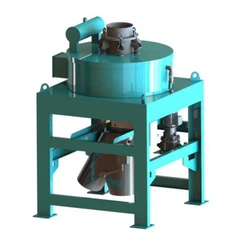
● Dry Magnetic separator:
It is performed in the air, largely employed to separate extensive and crude strong magnetic and fine weak magnetic ores.
● Wet Magnetic separator:
It is conducted in the water, also known as magnetic liquid, primarily utilized to separate fine-grained weak magnetic ores.
According To Magnetic Field Strength:
Magnetic separators are also divided on the basis of magnetic field strengths. It has two types: weak magnetic field magnetic separator and strong magnetic field magnetic separator.
● Weak magnetic field separator
The magnetic field force (HgradH)n is (3~6)×105 kA2/m3 magnetic field strength H0 on the exterior of the magnetic pole is 80~120 kA/m, utilized for the separation of strong magnetic minerals and gangue minerals.
● Strong magnetic field separator
The magnetic field strength H0 on the exterior of the magnetic pole is 800~1600 kA/m, and the magnetic field force (HgradII) n is (3~12)×107 kA2/m3, which is utilized for the separation of soft magnetic minerals and gangue minerals.
Applications of Those Types:
A variety of magnetic separators are present today, and they have been performing different functions in many various industries such as Recycling, Aggregate, Mining and Minerals; Grain and Milling, Food Production; Plastics; Non-Woven; and Powder and Bulk.
Selecting the right magnetic separator will be based on the kind of material that enters into processing and the procedure you are opting for when passing the material through.
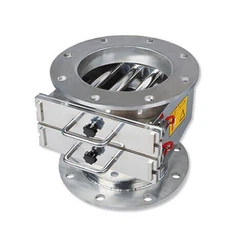
Drawer Magnets:
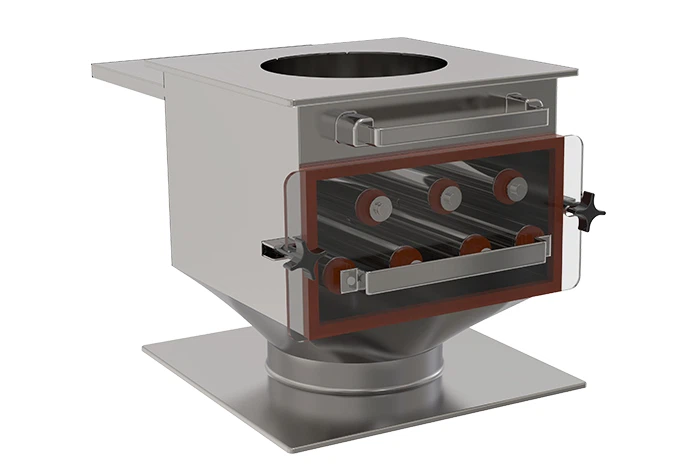
Drawer magnets are excellent for gravity flow applications and are employed for east-flowing dry material.
They are generally used in the recycling, food, powder, bulk, and plastics industries to extract fair tramp metal contaminants.
Notably, they are obtainable from stores in utility, food and sanitary construction grades with multiple cleaning options and stainless steel housings.
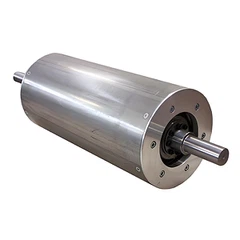
Drum Magnets:
Drum magnets are utilized for a vast range of applications like granulated materials and free-flowing bulk in high volume.
They have a strong tendency to remove ferrous presence and are often used for recycling purposes, Grain, Plastics, Powder, Bulk, Aggregate, Mining and Mineral industries.
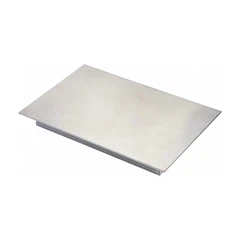
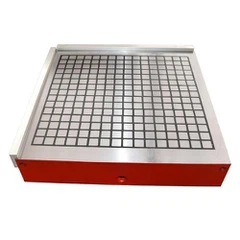
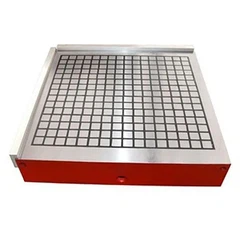
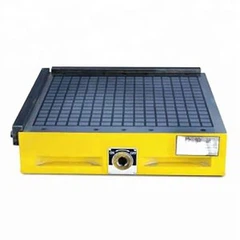
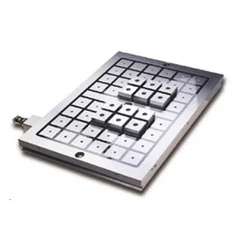
Plate Magnets:
Removal of toxic and harmful materials is performed by plate magnets that are powdery, moist, lumpy and abrasive.
The debris which is present in them causes tightening around the neck and bridge or causes wear and tear issues in cartridge-based separators.
These are best for gravity-free-fall applications and can be readily installed in tubes to extract ferrous granules and large pieces of tramp iron.
Plate magnets can also be established above or below conveyor drive pulleys to catch impurities as materials drop from open belts.
They are employed for managing more abrasive products and are used in the Plastics, Recycling, Food, Grain and Milling, and Powder and Bulk industries.
In-Line Magnets:
They are developed for free product flow and are more trained with rare earth magnets and are reasonably utilized for products with slightly less flow.
They are usually employed in the Plastics, Recycling, Food, Grain, Milling, Powder, and Bulk industries.
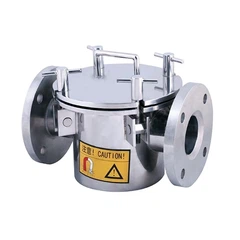
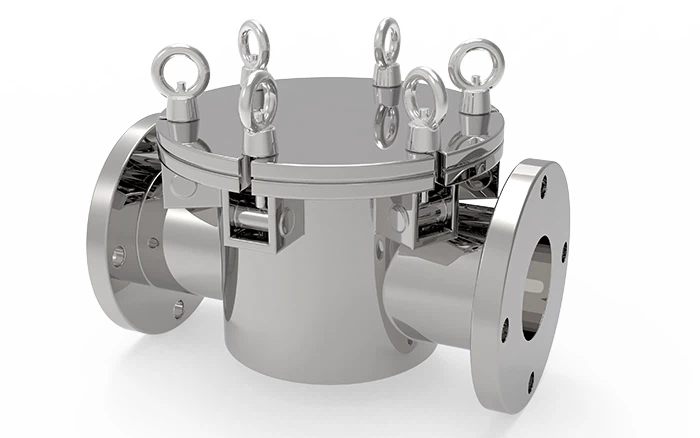
Magnetic Liquid Traps:
Magnetic Liquid Traps extract generous tramp metals from liquid processing and conveying lines.
They are usually used in the Food, Grain Milling Powder and Bulk industries and deliver safety against product contamination.
Magnetic liquid traps can manage acidic food products and extract the smallest ferrous particles from liquids with increased consistency.
Hump Magnets:
They are utilized for high-volume product flow in the Food, Grain and Milling, Powder and Bulk, and Non-Woven industries.
They boost security against hidden ferrous materials while avoiding build-up and bridging extensive products.
Grate Magnets:
Grate magnets are employed in applications for the Plastics and Bulk industries. They can be established in hoppers, pits, chutes, housings and bins to extract tramp metals from bigger flowing materials.
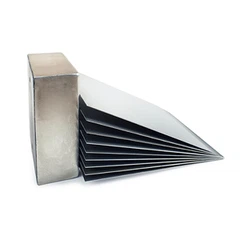
Wedge Magnets:
In gravity flow applications, wedge magnets are installed in thin, vertical or steeply inclined tubes.
They safeguard pellet mills and other supplies from harm provoked by tramp metals. Wedge magnets are operated in the Grain and Milling industry to process particulate or semi-solid materials.
Benefits:
1. Customer Safety:
A magnetic separator is a binding instrument that corporations utilize to ensure their end products are secure to consume.
Several manufacturing procedures can leave behind metal powders and particles, which makes magnetic separation important to the fitness of the customers and the product's credibility.
2. Easy and Efficient:
Magnetic separators are easy and convenient, and someone can operate them without their knowledge.
High-quality magnetic separators are created to survive and need minimal maintenance, so if you put your money into a quality machine, your ROI should be at an elevated level.
3. Versatility:
Magnetic separators are mainly versatile when you look at their abilities, and it is only enhanced when it comes to their industries.
These magnetic separators are utilized across several industries which have the threat of ferrous particle impurity.
Procedures such as food, chemicals, and pharmaceuticals in which security is crucial will employ both primary and secondary separators to safeguard any liquids, powders or granules.
The Final Words:
Magnetic separation is a widely utilized beneficiation method. It is a beneficiation technique that employs magnets with contrast in their magnetic capabilities when exposed to different minerals to single out different minerals.
The magnetic separation kit is made ready. Magnetic separation is conducted in an irregular magnetic field with the help of a magnetic separation kit.
Various consequences of magnetic power and mechanical force on distinct magnetic particles discover the significance of magnetic separation.
A Magnetic dry separator is performed in the air, largely employed to separate extensive and crude strong magnetic and fine weak magnetic ores.
Whereas, a Magnetic wet separator is conducted in the water, also known as magnetic liquid, primarily utilized to separate fine-grained weak magnetic ores. Do check out more about Magnetic Separators here.