


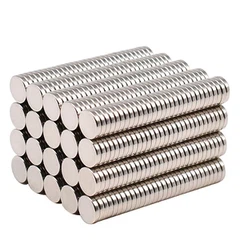
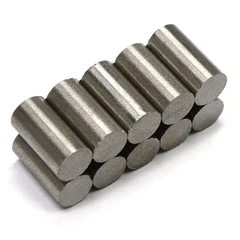
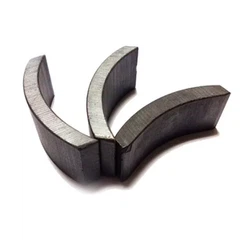

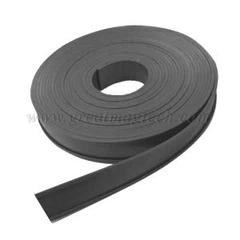




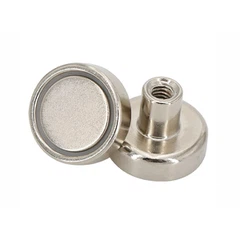

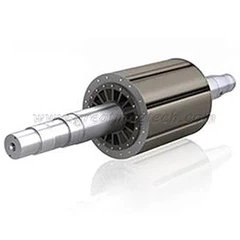



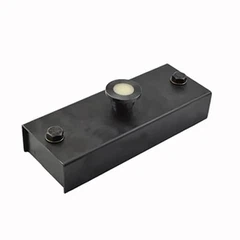
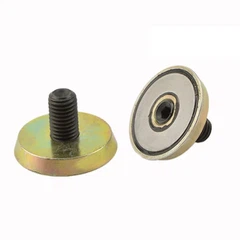



In the manufacture of high-quality, high-tech neodymium magnets, there are many major production steps, plus many sub-steps. Every step is very important, and every step is an important part of a highly refined operation.
1. Mining rare earth ore
First, rare earth mines are discovered and then mined. Since rare earth mines are mostly open-pit mining, large-scale equipment is required to remove the ore after removing the soil cover.
2. Ore Processing and Refining
Next, the rare earth ore is crushed and milled. The ore is then mixed with water and special chemicals to separate the rare earth elements from the tailings. Depending on the source of the ore, concentrates can also be electrorefining. Rare earth metals can be refined and extracted by electrochemistry, distillation, ion exchange, or other techniques. Concentrates (refined ore) are then smelted. This means that it is heated to very high temperatures (~1500°C) so that valuable metals can be separated from useless materials in the ore.
3. Alloying
During the alloying process, small amounts of other metals are added to the NdFeB alloy to refine and modify the microstructure of the final product, improve its magnetic properties, and enhance the effect of other processes.
4. Cast Strip
The alloy NdFeB is now ready for melting and strip casting. It's heated in a vacuum furnace, where a stream of molten metal is forced under pressure onto a cooling drum, where it cools rapidly at about 100,000 degrees per second. High cooling rates produce very small metal particles, which help simplify and enhance downstream processing. In addition, small particles are an important part of producing high-quality magnets.
5. Hydrogen Fragmentation
Although the grains of tape casting is very small, the material from tape casting comes out of the casting machine in flake form, which must be reduced to powder to make magnets. The next step after this is hydrogen cracking - a process in which hydrogen is introduced to purposefully break down the magnet material. The metal is now brittle and can easily be broken into smaller pieces, which is why it is called hydrogen cracking. When machining most metals, processors avoid introducing hydrogen into the metal.
6. Jet Mill
A jet mill uses a high-speed flow of inert gas to grind NdFeB metal blocks into powder. The metal hits other metal powders inside the cyclone. Cyclone automatically classifies the particle size as they pass through the system, so a narrow and very favorable particle size distribution is maintained.
7. Forming Orientation
The powder is kept in an inert gas atmosphere and handled in a glove box before entering the automatic printing press. The powder enters the mold and is pressed between the plates under the action of a strong magnetic field, forming a block of material. The magnetic field orients the grain, keeping the magnetic domains in the designed orientation through all subsequent processing steps.
8. Isostatic Pressing
The bulk material is bagged and immersed in a Cold Isostatic Press (CIP) under enormous pressure. This eliminates any remaining voids in the stone, and the air coming out of this pressure is much smaller than when it went in.
9. Sintering
The compacts are removed from the bag and sintered. Sintering involves placing a metal block in a furnace at a very high temperature, just below the melting point of the metal. At temperatures >1000 °C, there is a large motion of individual atoms, which enables the bulk to have adequate magnetic and mechanical properties.
10. Temper
After sintering, there are pent-up stresses in the metal due to all the movement during sintering, so at lower temperatures, the block is heat-treated in stages to reduce the stress.
11. Cutting, Machining, and Grinding
Due to all the previous steps, NdFeB magnets already have a lot of added value. Cutting, machining, and grinding are carried out according to a strict control plan, designed to minimize waste.
12. Surface Treatment
Most neodymium magnets now have a final finish before leaving the factory. The baseline treatment is nickel-copper-nickel plating, which protects the magnets from corrosion in most typical usage environments.
13. Test
Magnet materials are tested and evaluated at nearly every process step, and records are kept for every data point. Faced with such intensive testing demands, BJMT maintains a large inventory of testing equipment internally to maintain and improve product quality, production efficiency, and cost.
Rigorous testing ensures that only high-quality products are delivered to customers
14. Magnetization
One of the final steps is magnetization. The material is placed inside an energized coil that generates a strong magnetic field for a short period of time. After the coil is de-energized, the magnetic field in the magnet remains.