









Certain kitchen utensils and equipment, such as knife racks or refrigerator doors, require magnets. For these uses, it is relevant to know whether stainless steel is magnetic. Knowing whether your stainless steel knives will stick to the magnetic knife holder is important if you are using this tool for storing your knives. Stainless steel is a preferred material due to its strength and resistance to rusting. However, its magnetic characteristics depend on the type and composition of the material.
This blog will answer the question, "Is stainless steel magnetic?" It also includes information on magnetism, various types of stainless steel, and how to determine magnetism in daily life.
Understanding Stainless Steel
Stainless steel is a robust material produced from iron and other components. It contains at least 10.5% chromium, which protects it from rust and stains. Other ingredients, such as carbon, silicon, and manganese, enhance its quality. Chromium forms a layer on top that makes it shiny and very strong. This process is called passivation.
However, as you know, nothing can be completely stain-proof, and still, stainless steel is more long-lived than regular steel. Due to its anti-corrosive nature and the appearance of its shiny surface, even after some time of use, it is mostly used in kitchens, industries, and buildings.

Types of Stainless Steel
Stainless steel is categorized into five main types. Each type has its composition physical and magnetic attributes, which make it ideal for certain uses.
1. Austenitic Stainless Steel
Austenitic stainless steel is the most frequently used type of stainless steel. It is non-magnetic because of its high austenite content, even though it contains iron. Most grades, such as 304 and 316 stainless steel, are usually non-magnetic. However, mechanical work, such as bending or drilling, can cause a slight magnetic field to develop in some areas. This category is used widely for its good corrosion resistance but not for applications where strong magnetism is needed.
2. Ferritic Stainless Steel
Since they have a ferrite crystal structure, they are magnetic. These steels have moderate chromium content and low carbon content; hence, they are resistant to corrosion. Some examples of grades include 430 stainless steel, which is highly magnetic and mostly used to make kitchen appliances. Nevertheless, ferritic stainless steels are less strong than austenitic grades and are preferred when moderate strength and high magnetic properties are needed.
3. Martensitic Stainless Steels
Martensitic stainless steels are readily magnetic due to the presence of a large amount of iron and a ferromagnetic crystal lattice. Standard austenitic steels, such as 410 and 420 stainless steel, have good strength that can be further increased through heat treatment. They are less corrosion-resistant than austenitic steels and are employed in applications such as tools and cutlery, where strength and magnetism are essential.
4. Duplex Stainless Steel
The duplex stainless steel structure consists of both ferritic and austenitic phases. They are only attracted by a magnetic field in their working condition and possess higher corrosion resistance than austenitic steels, such as 304 stainless steel and 316 stainless steel. Duplex grades are most suitable for applications where both magnetic properties and higher corrosion resistance are desired.
5. Precipitation-Hardened Steels
Hardened steels are magnetic; they are very strong, very hard, and therefore suitable for specific uses. These steels are typical for applications where high levels of toughness and reliability are required.
If you're wondering how magnetic is stainless steel, it depends on its type.
Common Questions about Stainless Steel Magnetic or Not
Why is Magnetism Important in Stainless Steel?
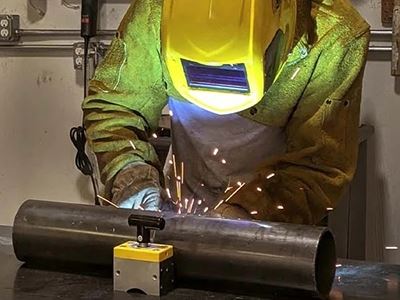
Stainless steel has magnetic properties that are essential in its function and use. Effects of the magnetic properties are felt in processes such as welding and machining among others. Magnetic materials tend to disrupt the stability of the arc during welding, thus the final result is not easily achievable.
In industry uses, magnetism can determine how stainless steel responds to electrical currents. For example, magnetic materials may change the direction of the flow of electric current hence the performance of equipment. This is particularly important in the context of electromagnetic fields or any electronic equipment.
At times, it is preferred, such as when the part is expected to have magnetic attraction, such as fasteners or latches. However, in other circumstances, non-magnetic materials are used to prevent interference in environments such as medical facilities.
Which Stainless Steel Types Show Magnetic Characteristics?
Stainless steel's magnetism depends on its chemical and microstructure. Depending on the type, stainless steel can be highly magnetic or not magnetic at all, with a level of magnetism somewhere in between.
1. Ferritic grades like grades 409, 430, and 439 are magnetic due to high ferrite content, an iron compound with other elements. Due to the presence of ferrite in the crystal structure, these steels are magnetic. However, the magnetic attraction of some ferritic steels may be comparatively lower than that of some other ferritic steels.
2. Is 410 stainless steel magnetic? Martensitic stainless steels, such as the 410, 420, and 440 series, have high magnetic properties. Iron is part of the crystal structure, meaning these steels are ferromagnetic-that is, they are strongly magnetic. Martensitic steels are extensively used in products that need strength and magnetic features, such as tools and cutlery.
3. Is 304 stainless steel magnetic? Stainless steels of the austenitic class, particularly 304 and 316, are not magnetic. They possess high amounts of austenite and, therefore, are not ferromagnetic. All these steels have iron content, but none of them is magnetic. However, only mechanical operations, such as bending or welding, take place. In that case, the effect is small and is found at the edges of the material, where, at times, even a layer of ferrite is only formed to a thin extent.
Thus, the assessment of the magnetic properties of stainless steel can contribute to the determination of proper materials for certain uses.
What Causes Stainless Steel to Be Magnetic?
If stainless steel contains iron as well as has a martensitic or ferritic crystal structure, it is magnetic. Iron is an essential ingredient of stainless steel, and martensitic and ferritic stainless steel have crystal structures that can respond to magnetic fields.
Martensitic stainless steel for example grade 410, has iron as its major component and is therefore ferromagnetic. Ferritic steel is another type of steel that contains iron and is magnetic because it has a ferrite crystal structure; the common ferritic stainless steel is grade 430. The austenitic grades for example the 304 and the 316 are non-magnetic due to the high percentage of austenite.

Practical Implications of Stainless Steel's Magnetism
The presence of magnetism in stainless steel can in a big way affect its usage in different operations.
1. Kitchen Appliances: Although SS grade 430 is ferritic it is used extensively to make refrigerators, stoves, and dishwashers – these magnetic characteristics help to fix some of the parts, like hinges and handles.
2. Magnetic Knife Holders: Items such as magnetic knife racks make good use of the magnetic nature of stainless steel by use of a magnetic strip to hold kitchen knives perpendicularly thanks to their steel surface. Ferritic stainless steels like the grade 430 are suitable for developing the magnet base that is useful in these easy-to-use and space-friendly kitchen utensils.
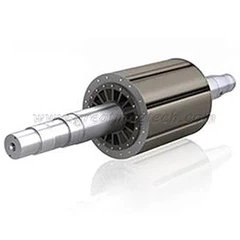
3. Industrial Equipment: Both ferritic and martensitic stainless steels are ferromagnetic and therefore used in machines and tools where attraction is vital such as pumps, motors, and screws.
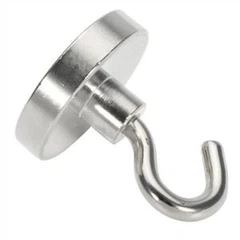
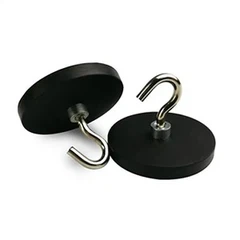
4. Magnetic Fasteners: Magnetic catches, claws, and other fittings are made from different grades of stainless steel.
What are the Benefits of Magnetic Stainless Steel?
1. Enhanced Durability
Martensitic and ferritic groups of stainless steel have improved magnetic properties and also better strength as compared to the other grades. These alloys are often stiffer and can be used in applications where they will be subjected to wear and tear than other materials; thus, these particular applications.
2. Versatility in Applications
This material is suitable to be used in different companies and factories including the kitchen appliances and the car industries. For this, it can be used to make tools, machines, and fasteners that are expected to be attracted to the magnetic field.
3. Optimization in Magnetic Systems
Electric motors and pumps demand magnetic stainless steel more than any other applications since its magnetic properties can enhance the efficiency of the overall system and sensor.
4. Cost-Effectiveness
In most applications where magnetism is needed, magnetic stainless steel is less expensive than nonmagnetic stainless steel and offers a cost-effective product with the properties needed.
5. Magnetic Attraction
It is very simple to install and can be joined efficiently with magnetism in a plethora of commercial and residential items. MagTech magnetic knife holders are specifically aligned with magnetic-grade stainless steel knives for a safe, attractive, and efficient kitchen accessory.
Conclusion
Last but not least, the magnetic characteristics of stainless steel are dependent on the type of steel. Ferritic and martensitic stainless steels are magnetic; for example, grades 430 and 410 are magnetic types of steel, while grades 304 and 316 are non-magnetic. These differences enable the identification of appropriate materials that can be adopted in applications with magnetic properties. Magnetic stainless steel is hard, flexible, affordable, and versatile to accommodate various forms of usage in the household and industries and the manufacturing of home appliances.