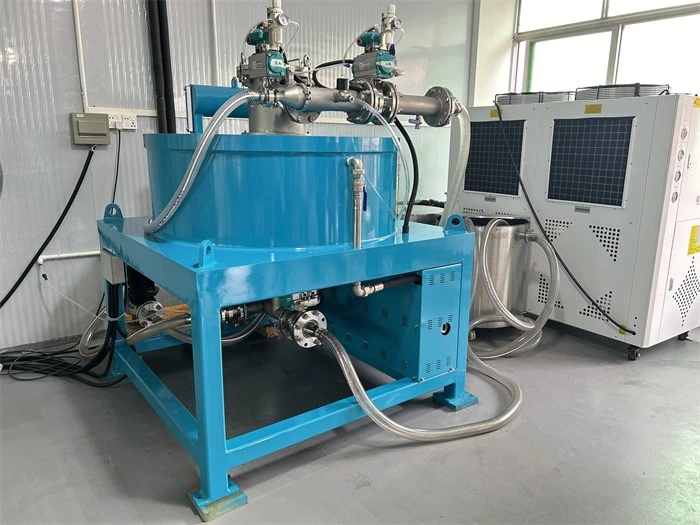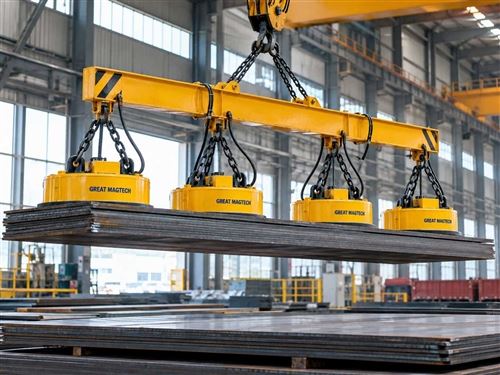
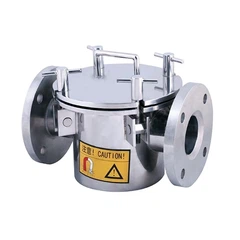
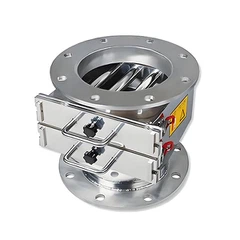
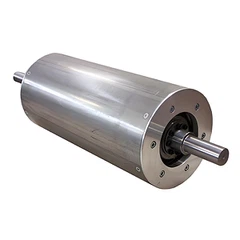
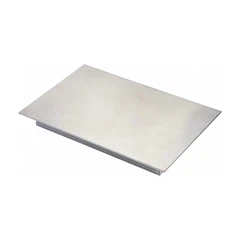












The working principle of an inline magnetic separator revolves around using the power of magnetism to effectively remove ferrous contaminants from various materials in a continuous flow.
In addition, operators in factories often observe that cleaning the separator at regular intervals (e.g., every 24 hours) can maintain its efficiency above 98%, especially when handling powders or granules.
In today's world, many industries such as mining, food processing, and recycling make use of inline magnetic separators, as the presence of unwanted metal particles can compromise product quality and machinery efficiency.
Using inline separators not only ensures the final product is free of ferrous contamination but also reduces wear and tear on downstream equipment, leading to lower maintenance costs.
The following guide covers more in detail about the working principles of inline magnetic separators, focusing on key components, magnetic systems, operational modes, and more!
It also includes practical tips for maintenance, troubleshooting, and real-world applications across different industries.
Magnetic Separation Fundamentals – Basics of Inline Magnetism
Magnetic separation is a powerful and versatile technique. This process is often employed in industries ranging from mining to food production and operates on the principles of magnetism to separate magnetic and non-magnetic materials.
At the heart of magnetic separation is the concept of magnetic fields. It's all about invisible forces that exert influence over certain materials. These fields are like invisible threads that weave through space, tugging at specific materials without any physical touch.
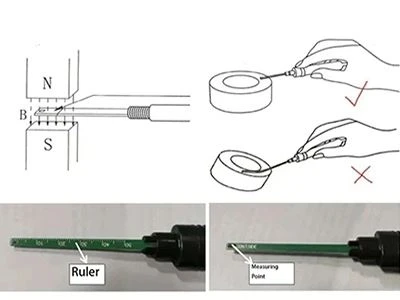
In industrial applications, the effectiveness of separation largely depends on magnetic field strength and how evenly it is distributed across the material flow.
Now, keep in mind that they possess two fundamental properties: attraction and repulsion. In other words, magnets can either pull certain materials closer or push them away.
There are various types of magnetic separation, like suspended magnets, plate magnets, or magnetic drums. One such type is an inline magnetic separator. These are positioned directly in the product stream and are used to swiftly remove ferrous contaminants.
Because they are installed directly in the flow path, inline magnetic separators allow continuous separation without interrupting production.
This mainly ensures product purity in industries like food processing. In these industries, even small metal fragments can pose safety and compliance risks.
Because of such functionality, inline magnetic separators are mostly effective in industries where hygiene and product quality are important. The most common example is the food and beverage industries, where even the tiniest metal fragment could risk customers' safety.
Inline magnetic separators offer a reliable safeguard by instantly attracting and eliminating unwanted, dangerous particles. Such a mechanism offers various benefits. First, this upholds the integrity of the final product, and second, it prevents any damage to downstream equipment.
This benefit is especially important for continuous production lines, where equipment damage can lead to unplanned downtime.
Now that we know about the basics of inline magnetic separators, let's take a look at their working principles and how they operate in industries.
Key Components of an Inline Magnetic Separator
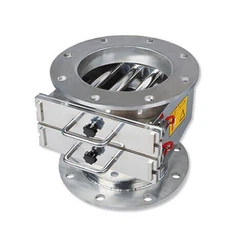
An inline magnetic separator is made of several key components as follows:
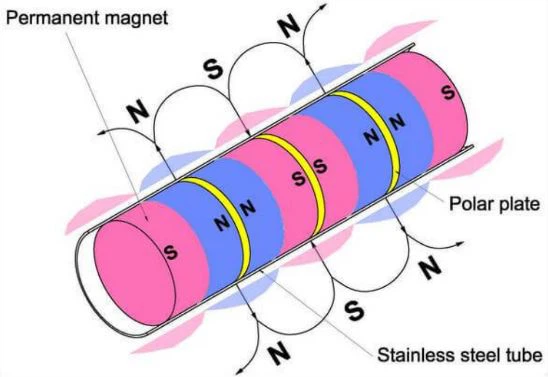
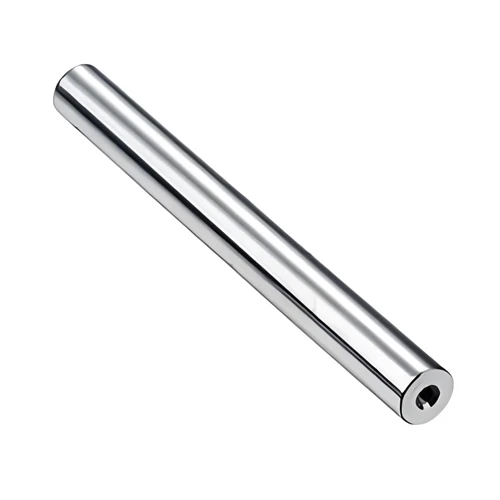
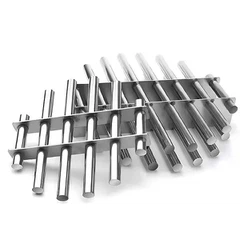
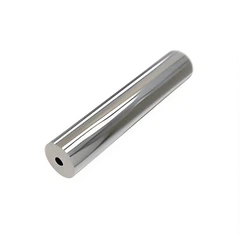
● Magnetic Cores (or Tubes): These are cylindrical structures carefully constructed from magnetic materials. When energized, they generate magnetic fields that attract and capture dangerous particles from the material stream.
● Housing (or Vessel): The magnetic cores are securely housed within a protective vessel. This housing shields the cores from external factors and makes sure that the magnetic fields remain concentrated within the specific region.
● Inlet and Outlet Ports: The material that needs to be processed enters through the inlet port. Then, it passes close to the magnetic cores. As the material flows along the path, any risky contaminants are drawn toward the magnetic cores due to their magnetic pull. This way, the cleaned material exits through the outlet port, leaving a safe final product.
● Particle Pathway: The design of the separator has a pathway for the material flow. This pathway exposes the material to the magnetic fields for successful separation.
Magnetic Circuit and Generation of Magnetic Field
The magnetic circuit and generation of the magnetic field are a crucial aspect of inline magnetic separators. It refers to the complex arrangement of magnetic components and magnetic fields within the separator.
Because the magnetic circuit directly influences the separation process, it's important to understand how its basic mechanism works. Here are a few reasons how the magnetic circuit and the generation ofthe magnetic field impact the working efficiency of inline magnetic separators:
● Firstly, the entire process of magnetic separation revolves around the attraction between magnetic materials, such as ferrous particles, and the magnetic fields generated within the separator. The magnetic circuit determines the path of the magnetic flux and makes it pass through the area where the material flows.
● Secondly, the magnetic circuit has a design that allows for the creation of specific zones within the separator where the magnetic fields are concentrated. This "concentration" establishes various separation zones, such as the "capture zone," where the magnetic forces are at their strongest levels. Thus, a proper design of the magnetic circuit is crucial to ensure that the capture zone aligns with the flow of the material stream, increasing the chances of successful separation.
● Lastly, a well-designed magnetic circuit with magnetic fields also enhances the overall separation. It reduces the chances of false positives (that is, capturing non-ferrous particles) and false negatives (missing ferrous particles). The process must be done with utmost precision, especially in industries where product purity and equipment protection are the top-most requirements.
Magnetic Systems: Electromagnetic vs. Permanent for Inline Separators
| Comparison Item | Electromagnetic Inline Separator | Permanent Magnetic Inline Separator |
| Magnetic Source | An electrically energized coil generates a magnetic field | Rare earth or ferrite permanent magnets |
| Power Requirement | Requires continuous electrical power | No external power required |
| Magnetic Strength Control | Adjustable magnetic intensity based on application | Fixed magnetic field strength |
| Suitability for High-Temperature Materials | Suitable with proper insulation and cooling | Limited by the magnet material's temperature tolerance |
| Separation Consistency | Stable performance as long as the power supply is constant | Performance remains stable over long-term use |
| Maintenance Requirements | Requires an electrical system inspection | Minimal maintenance required |
| Operating Cost | Higher due to energy consumption | Lower operating cost |
| Typical Applications | Heavy-duty industrial processes, mining, and large-scale material handling | Food processing, plastics, powders, hygiene-sensitive industries |
Particle Separation Process
The particle separation process within an inline magnetic separator is a core functional stage that directly determines separation efficiency and product purity. It can be better understood in three practical steps, discussed below:
● Step 1: First, the material flows through the separator, and the magnetic fields extend a certain distance from the magnetic cores. This region is known as the "capture zone". Risky particles within this zone are attracted and captured by the magnetic forces. The effective separation range depends primarily on magnetic field strength and particle characteristics, including particle size and magnetic permeability.
● Step 2: After entering the capture zone, dangerous particles are quickly attracted to the magnetic cores. Once successfully captured, these particles are retained until the cleaning process. Cleaning methods vary by separator design, such as manual removal or automatic cleaning systems, but all serve the same purpose: clearing accumulated ferrous contaminants so the separator can maintain stable operation.

● Step 3: In the last step, the flow velocity of the material stream impacts the time particles spend in the capture zone. Lower flow speeds increase retention time, improving magnetic attraction, while higher speeds may reduce capture efficiency. Particle size is also a key factor, as larger ferrous particles experience a stronger magnetic force and are more easily separated.
So, this is how particles are captured and separated in the particle separation process for inline magnetic separators.
Operation Modes: Continuous vs. Batch Operation
The operational mode of inline magnetic separators can be categorized into two main configurations: continuous operation and batch operation.
● In continuous operation, the material stream flows continuously through the separator, allowing for real-time and uninterrupted removal of ferrous contaminants. This mode minimizes downtime and supports stable process flow, making it suitable for automated systems.
● On the other hand, in batch operation, material is processed in individual batches. During this process, the separator is cleaned after each batch, allowing operators to inspect and remove accumulated contaminants before the next cycle begins.
In terms of usage, continuous operation ensures smooth, high-throughput processing, making it ideal for large-scale or high-volume production lines. Batch operation, by contrast, is better suited for low-volume or controlled processes, where thorough cleaning and visual inspection are required between batches.
Factors Affecting Inline Magnetic Separator Performance
Earlier, we mentioned that magnetic intensity and particle size are important factors influencing the performance of an inline magnetic separator. In practice, separation efficiency is determined by a combination of magnetic design, material characteristics, and process conditions. The key influencing factors are outlined below:
Magnetic Strength and Gradient
This refers to the strength of the magnetic field generated by the separator, along with the gradient, or rate of change, of this strength. A higher magnetic intensity combined with a properly engineered field gradient enhances the ability to attract and retain ferrous particles, particularly fine contaminants moving at higher flow rates.
Particle Characteristics
The size, shape, and magnetic susceptibility of particles significantly impact separator performance. Larger particles experience a stronger magnetic force due to greater mass and surface interaction, making them easier to capture. Additionally, particles with higher magnetic susceptibility respond more effectively to magnetic fields, increasing separation reliability.
Flow Rate and Velocity
The velocity at which material moves through the separator directly affects the time particles remain within the capture zone. Lower flow rates increase residence time, allowing magnetic forces to act more effectively, while excessively high velocities may reduce capture efficiency, especially for fine or weakly magnetic particles.
Conclusion
In a nutshell, an inline magnetic separator's primary function is to continuously remove ferrous contaminants from material streams through the use of magnetic force. Inline magnetic separators are widely used across industries to maintain product purity and protect downstream equipment. By integrating directly into the production line, these separators can reliably remove even fine ferrous particles that might otherwise compromise final product quality or lead to unnecessary equipment wear and unplanned downtime.