


















Ambient temperature: Because sintered NdFeB has a negative temperature coefficient(αBr<-0.13%/°C, αHcj<-0.6%/°C), the instantaneous maximum temperature and the continuous maximum temperature of the operating environment will have different effects on the magnet itself. demagnetization, including reversible and irreversible, recoverable and non-recoverable.
Environmental humidity: NdFeB itself is easy to corrode and oxidize. Generally, we take surface treatment to maintain permanent magnets, but we cannot fundamentally solve the impact of environmental humidity on magnets. The drier the environment, the longer the life of the magnet. How to measure the concave and convex magnetic function?
There are three main parameters: remanence Br (ResidualInduction), unit Gauss, which is a parameter that measures the strength of the magnetic field that the magnet can supply to the outside world; coercive force Hc (CoerciveForce), unit Oersteds, is a parameter to measure the ability to resist demagnetization; magnetic energy product BHmax, the unit Gauss-Oersteds, is a physical quantity that characterizes how much energy can be stored.
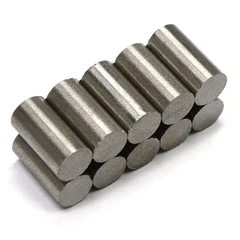
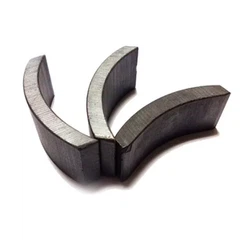
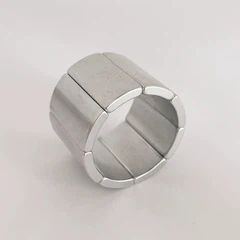
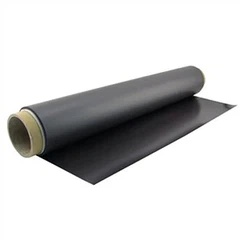
Different properties of high-temperature magnets have different composition characteristics, and the size of the magnetic force is also different. The usual high-temperature magnets can be divided into the following four types according to different types:
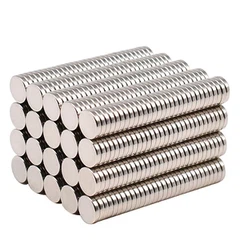
1. NdFeB high-temperature resistant magnet: It is the highest temperature resistant magnet found in commercialization. It is known as the magnetic king. It has an extremely high magnetic function and its maximum magnetic energy product (BHmax) is higher than that of ferrite (Ferrite) 10 times more. Its own machining function is also quite good. The operating temperature can reach up to 200 degrees Celsius. And its texture is hard, its function is stable, and it has a good price/performance ratio, but because of its strong chemical activity, it is necessary to treat its surface coating. (such as Zn, Ni, electrophoresis, passivation, etc.).
2. Ferrite high-temperature magnet: its main raw materials include BaFe12O19 and SrFe12O19. Made by the ceramic technology method, the texture is relatively hard and it is a brittle material. Because ferrite high-temperature resistant magnets have excellent temperature resistance, low price, and moderate performance, they have become the most widely used permanent magnets.
3. AlNiCo high-temperature magnet: It is an alloy composed of aluminum, nickel, cobalt, iron, and other trace metal elements. Forging technology can be processed into different sizes and shapes, with excellent machinability. Forged AlNiCo permanent magnets have the lowest reversible temperature coefficient, and the operating temperature can be as high as 600 degrees Celsius. AlNiCo permanent magnet products are widely used in various instrumentation and other fields of use.
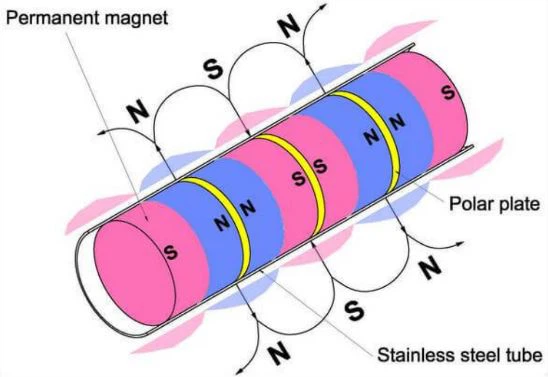
4. Samarium cobalt is divided into SmCo5 and Sm2Co17 according to the different components. Its development is limited due to the high cost of its materials. Samarium cobalt (SmCo), like rare earth permanent high-temperature magnet, not only has a high magnetic energy product (14-28MGOe), reliable coercivity, and excellent temperature characteristics. Compared with NdFeB high-temperature magnets, samarium cobalt high-temperature magnets are more suitable for working in high-temperature environments. Hang the midpoint of the bar-shaped high-temperature resistant magnet with a thin wire. When it stops, its two ends will point to the south and north of the earth. The end pointing to the north is called the north pole or N pole, and the end pointing to the south is the guide pole. or S pole.