















A new method of using cellulose to remove neodymium from e-waste has been developed, which could lead to more efficient recycling.
Neodymium is needed for clean technologies such as electric vehicles and wind turbines, and demand for it has increased by around 400% over the past 20 years. However, mining this rare-earth element has detrimental effects on the environment, requiring more Nd to be recovered from e-waste. Its recovery has also come with a number of challenges. The main method for commercial recovery is solvent extraction, but this method is low selective, expensive, and unsustainable due to the use of toxic organic solvents.
Researchers at Penn State University have developed a new method in which new nanotechnology is used to recover neodymium from plant cellulose. Cellulose is cheap, renewable, and abundant. Previous work has been done on cellulose-based adsorbents, but these have been inefficient.
A Penn State team has developed new biotechnology called anionic hair nano cellulose (AHNC), where "hair" refers to cellulose chains attached to the ends of nanoparticles. The hairy layer of the nanoparticle is negatively charged, thereby attracting positively charged Nd ions. This separates Nd from other ions in the aqueous medium, such as iron, calcium, and sodium ions, and aggregates enough Nd particles for efficient recovery.
Amir Sheikhi, assistant professor of chemical engineering and biomedical engineering at Penn State, said: "The process is efficient in terms of removal capacity, selectivity and speed. It can be achieved in seconds by selectively removing elements from some of the tested impurities. Separate the neodymium."
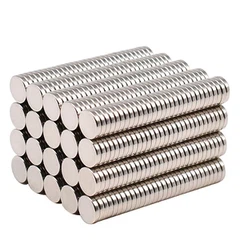
The process can also be used to extract neodymium from industrial wastewater, mining tailings, and permanent magnets that are no longer used.
"This contribution to rare earth recycling will have a strategic and economically viable impact on several industries," Sheikhi said. "The more neodymium we recycle, the more electric and hybrid cars and wind turbines we can make, reducing the pressure on the environment."
Sheikhi added that the team is currently exploring different avenues for developing continuous or semi-batch adsorption systems, which will pave the way for scaling up the process.