





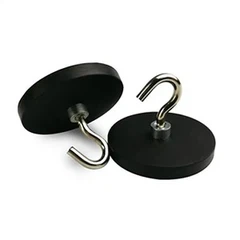
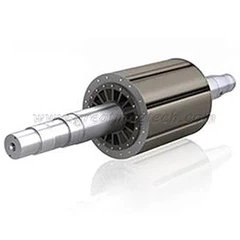


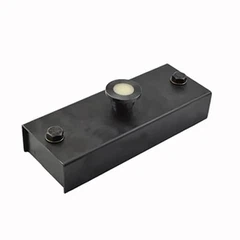




As an important material, magnets are widely used in life and industry. The performance of magnets directly affects the efficiency and function of equipment. When it comes to the performance of magnets, neodymium iron boron magnets (NdFeB) are one of the most commonly used high-performance permanent magnet materials. Among neodymium iron boron magnets, N35 and N52 are two common models, and their performance differences are also a concern for many people.

What Does N Mean?
The grade designation of neodymium magnets represents their magnetic energy product, which is a key indicator of magnet strength. The grade naming rules are simple and clear:
The letter "N" stands for neodymium magnet.
The number represents the maximum magnetic energy product, the unit is MGOe (Mega Gauss Oersted)
Generally speaking, the larger the number, the stronger the theoretical magnetic force of the magnet. But this is only one factor to consider when choosing a magnet. In practical applications, other parameters must be considered comprehensively.
What Is an N35 Magnet
N35 is a high-performance neodymium magnet, a rare-earth magnet, widely used in the magnet industry. Although its magnetic properties are lower than N52 grade, it still performs well in many applications and can meet diverse needs.

Application of N35 Magnet
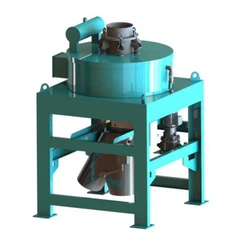
Suitable for applications that do not require high magnetic force, such as small motors, sensors, speakers, magnetic separators, etc. These applications are cost-sensitive, and N35 magnets can meet the needs at a lower price.
What Is an N52 Magnet
N52 is the grade with the highest magnetic energy product in the neodymium magnet series. It has the strongest magnetic force and maximum energy output, so it is often used in fields that require high magnetic force.

Application of N52 Magnet
Suitable for applications with extremely high magnetic requirements, such as high-performance motors, generators, magnetic fixtures, magnetic levitation systems, high-end audio equipment, etc. These applications require a strong magnetic field strength to achieve high performance.
What Is the Difference Between N35 and N52 Magnets?

Magnetic Properties
The main difference between N35 and N52 magnets is the magnetic performance level, where N52 has a higher magnetic energy product, which means that its magnetic force per unit volume is stronger, and its remanence and coercivity are better. N52 has a higher magnetic energy product of about 52 MGOe, which is about 35 MGOe higher than N35, providing stronger magnetic force and remanence, but slightly lower coercivity and maximum operating temperature.
Temperature Stability
N35 magnets have relatively good temperature stability and can usually maintain normal working performance in a temperature environment of about 80°C. Although N52 has a stronger magnetic force, its temperature stability is relatively poor. The operating temperature generally does not exceed 60°C, and the risk of demagnetization is higher in high-temperature environments. If high temperature applications are required, N35 is more stable than N52.
Ingredients and Process
Both use neodymium, iron, and boron as their main components, but N52 achieves a higher magnetic energy product through a more precise composition ratio and optimized sintering process. Both use powder metallurgy, but N52 has stricter requirements on raw material purity, sintering density, and magnetization process to ensure higher magnetic properties and consistency.
Cost
N52 is one of the highest grades of NdFeB magnets in terms of magnetic energy product. Its magnetic force is significantly stronger than N35, but its cost is also higher because the material purity and process requirements are more stringent. N35 has weaker magnetic properties but is cheaper and is suitable for scenarios that do not require high magnetic force. The cost difference is mainly reflected in the raw materials, processing difficulty, and application requirements.
How to Choose Between N35 and N52 Magnets
Here are some suggestions on how to choose N35 and N52 magnets based on your needs.
Strength Requirements
Strength is the primary consideration. N52 magnets have a higher magnetic energy product of about 52 MGOe, which is about 48% stronger than N35 at about 35 MGOe. They can provide stronger adsorption and more compact magnetic solutions, and are suitable for applications that require high magnetic force, such as precision motors or industrial fixtures. Although N35 has a slightly weaker magnetic force, its coercivity is usually better than N52, and it has better stability in long-term use, making it more suitable for ordinary fixed or electronic equipment, where the magnetic requirements are not extreme.

Durability Requirements
When choosing between N35 and N52 magnets, durability is an important consideration. N35 magnets have better durability and can work stably at higher temperatures, making them suitable for scenarios that require high long-term stability; while N52 magnets have stronger magnetic force but are sensitive to temperature and have relatively weaker durability, making them more suitable for short-term high-intensity applications in low-temperature environments.
Temperature Conditions
N35 is suitable for high-temperature environments and can withstand temperatures up to 80°C. However, its magnetic properties decay slowly at high temperatures, making it suitable for applications where the ambient temperature fluctuates greatly or where long-term heat resistance is required. N52 has the strongest magnetic force and can withstand temperatures up to 80°C after special treatment (adding heavy rare earth), but its magnetic force decays faster than N35 at high temperatures, making it suitable for short-term high temperatures or scenarios with strict magnetic requirements.
Cost
When choosing between N35 and N52 magnets, cost is one of the key factors to consider. Although N35 magnets have lower magnetic properties, they are relatively cheap and suitable for applications with limited budgets or low magnetic requirements; while N52 magnets have higher magnetic energy product and stronger magnetic force, but the cost is significantly higher, and may require additional plating or structural reinforcement due to high magnetism, further increasing the total cost.
Size and Space Limitations
Whether to choose N35 or N52 magnets depends on the size of the magnet and space limitations: Although N52 magnets have higher magnetic energy product and stronger magnetic force, they may be more easily demagnetized due to their lower coercive force at the same size, and should be used with caution, especially in confined spaces. N35 magnets have higher coercive force and are more stable in limited spaces or harsh environments. If the installation space is small, N52 can be preferred, but it is necessary to ensure that its thickness or diameter is sufficient to avoid demagnetization.
Which One Is Stronger: N35 or N52 Magnet?

The performance indicators of N52 magnets are higher than those of N35 magnets. In the same volume, N52 magnets can generate stronger magnetic fields and have greater suction. However, the cost of N52 magnets is relatively higher, and the performance may decline faster than N35 magnets in high-temperature environments. Both N35 magnets and N52 magnets are neodymium iron boron magnets. Their main components are the same; both are composed of neodymium, iron, boron, and other elements, but N52 magnets have stronger performance.
|
Parameter |
N35 |
N52 |
|
Magnetic Energy Product (BHmax) |
About 35 MGOe (Mega Gauss Oersted) |
About 52 MGOe (Mega Gauss Oersted) |
|
Remanence(Br) |
About 1.17 T (Tesla) |
About 1.48 T (Tesla) |
|
Coercivity (Hc) |
About 868 kA/m |
About 827 kA/m |
|
Maximum Operating Temperature |
80°C |
80°C |
Precautions in the Practical Application of Magnets
Size Effect
Large-sized magnets usually have higher remanence and magnetic energy product, while small-sized magnets may have reduced coercive force due to the demagnetization field effect and are prone to demagnetization. Secondly, the shape and aspect ratio need to be optimized, and thin or slender magnets need to reduce the demagnetization effect by increasing the thickness or using a back iron structure.
Plating Selection
The coating can protect the magnet from corrosion, wear, and oxidation, and extend its service life. NdFeB magnets often need coating to prevent oxidation. Common coating materials include nickel, zinc, etc. However, the coating material and thickness will affect the magnetic properties. Too thick a coating may reduce the magnetic flux, and some materials may introduce hysteresis loss. The use environment should also be considered when selecting the coating.
Safety Warning
Strong magnetic fields may interfere with pacemakers and pose risks to pregnant women and fetuses, so a safe distance should be maintained during use. Hard magnetic materials are easy to break, and the fragments are sharp and can cause cuts, so protective equipment should be worn during operation. The mutual attraction or repulsion between magnets may cause accidental movement or collision, damage equipment, or injury to people, so they must be firmly fixed during installation and use to avoid direct contact.
Temperature Effect
The magnetic properties of magnets change with temperature. Most magnets will weaken when the temperature rises. NdFeB magnets may lose some of their magnetism or even completely demagnetize at high temperatures. Therefore, when choosing magnets, it is necessary to select appropriate materials according to the temperature range of the use environment. SmCo magnets with high Curie temperature can be selected in high-temperature environments. For temperature-sensitive applications.
FAQ
What Is the Difference Between N35 and N52 Magnets?
Not necessarily. The magnetic properties of N52 magnets (such as energy product and remanence) are better than N35, but N35 may be more stable under high temperature, mechanical stress, or corrosion environment, and the cost is lower. Therefore, the choice depends on the specific needs, and N52 is not better in all cases.
Can the Effect of N52 Be Achieved by Increasing the Size of N35 Magnet?
Increasing the size of N35 can improve the magnetic properties, but it cannot completely replace N52. N52 still has advantages in magnetic energy product, remanence, and coercivity, especially suitable for space-constrained or high-temperature environments. If the performance requirements are not high and a large size is allowed, N35 can be used as an economical alternative.
N52 Magnets More Difficult to Process Than N35 Magnets?
N52 magnets are more difficult to process than N35 magnets. Due to their higher hardness and brittleness, they are prone to cracking and edge collapse during processing. Precision equipment, such as diamond tools, is required to strictly control feed speed and cooling conditions. Although the loss rate is higher and the technical requirements are more stringent, good processing results can still be obtained by optimizing the process.
N52 Magnets More Susceptible to Rust Than N35 Magnets?
N52 magnets are more susceptible to rust than N35 because their neodymium iron components are highly active and easily oxidized when exposed to moisture. Wet environments, damaged coatings, or contact with corrosive substances will accelerate rust. It is recommended to use surface treatments such as nickel plating and zinc plating. In harsh environments, a higher protective coating should be used.
How to Tell If the N52 Sold by the Merchant Is Genuine?
Check the 52MGOe magnetic energy product test report; measure the magnetic field strength; check whether the coating process is fine; compare the N50 magnetic strength. It is recommended to choose a regular manufacturer that can provide a demagnetization curve report, and be cautious if the price is too low.
Summarize
N52 magnets are indeed stronger than N35 in absolute magnetic performance, and are a high-performance choice among NdFeB magnets. However, N35 is still a more economical and practical choice in many conventional applications due to its better cost performance and temperature stability. The final choice depends on your specific needs, budget, and working environment conditions.