








Sintered NdFeB permanent magnet material has excellent performance and is widely used in automobiles, home appliances, wind power, consumer electronics, and other fields. It is the most important type of permanent magnet material on the market. In recent years, with the vigorous development of the electronic information industry, wind power, and new energy vehicles, the demand for NdFeB has been increasing, and the annual output of sintered NdFeB has gradually increased. A large amount of production waste is generated during the production process of sintered NdFeB magnets. At the same time, more and more electromechanical equipment containing NdFeB magnets is being scrapped, and a large amount of NdFeB waste is also generated. The content of rare earth elements in NdFeB materials accounts for more than 30%. Rare earth resources are non-renewable. Using economical and effective methods to recycle valuable substances in NdFeB waste can create certain economic value, save resources, and reduce environmental pollution.
Generation of sintered NdFeB waste
In the production of sintered NdFeB, every process from raw material preprocessing to final product testing inevitably produces waste or waste products. The waste generated during the production process can reach about 25%-30% of the total weight of the raw material.
Since each company has different process techniques, shape specifications, etc., the loss rate in the machining process is different, which ultimately results in a different total loss rate. However, the material loss rate in the NdFeB production process is very high. It is an undoubted fact that machining losses and defective surface treatment products are the units that generate the most waste in the entire NdFeB production process.
Generation of sintered NdFeB waste
Raw material preparation
Various losses of single raw materials will be produced during raw material pretreatment, such as metallic gold, pure iron, ferroboron, metallic dysprosium, cobalt, etc.
Smelting, Casting
An oxide scale will be produced during the smelting and casting process, which is a severely oxidized scrap of iron and boron.
Crushing, Milling
Ultrafine powder (particle size below 2um) produced in the pulverizing process and magnetic powder that catches fire due to exposure to air.
Orientation, Pressing
Alloy powder scattered during magnetic field molding
Sintering, Tempering
During the sintering process, some slightly oxidized titanium iron boron block waste will be produced.
Machining
Grinding powder, a large amount of leftover materials and processing damaged waste produced by mechanical processing.
Surface Treatment
Surface treatment defective products.
Finished Product Testing
Unqualified products in finished product testing
Finished Product Scrapped
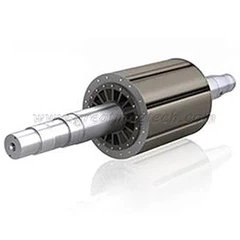
Dismantling of scrapped motors and scrap magnets.
Recycling method of sintered NdFeB waste
The waste recycling of NdFeB materials is usually divided into two directions: one is to separate and extract various elements, especially rare earth elements, in the NdFeB waste to prepare oxides or other compounds with a certain purity, which can be used as raw materials for different applications. fields; the second is to use waste materials to prepare NdFeB magnets or other products with certain functions, such as preparing regenerated sintered magnets, absorbing materials, etc.
1. Extraction of waste elements
The extraction of waste elements can be divided into two types: wet recycling and dry recycling. Wet methods include hydrochloric acid dissolution method, double salt precipitation method, etc. Dry methods include oxidation method, chlorination method or molten metal extraction method, etc. Compared with wet recycling, dry recycling is more environmentally friendly. NdFeB waste with a high degree of oxidation, such as slurry materials and powders, is generally recycled using the method of separation and extraction of such elements. (Molten metal extraction methods in dry recycling require lightly oxidized scrap)
2. Preparation of NdFeB from waste materials
The recycling method of using waste materials to prepare NdFeB permanent magnets has the advantages of being direct and efficient. For bulk waste with a low degree of oxidation, it can be used to prepare regenerated NdFeB permanent magnets, which can make full use of the complete grain boundary structure of NdFeB bulk waste without having to go through purification processes such as dissolution and separation. It can be used to prepare magnets after additional processing.
Regenerated sintered NdFeB standard GB/T 34490-2017
1. Raw material selection
The waste NdFeB used in the preparation of regenerated sintered NdFeB permanent magnet materials includes two categories: one is the flake and block sintered NdFeB waste produced during the production process; the other is various magnetic materials that are scrapped after use. Coated flakes, blocks and other shapes of sintered NdFeB waste disassembled from devices. The main component of the used waste sintered NdFeB permanent magnet material should be sintered NdFeB, and it should be magnetizable.
2. Raw material classification
Samples were taken to detect the total rare earth content and heavy rare earth (dysprosium, terbium) content of scrap sintered NdFeB, and the waste materials were classified into the following five categories based on the test results. Waste-sintered NdFeB materials with a rare earth content of less than 28.5% are not suitable for manufacturing recycled magnets.
3. Material recycling
After the waste sintered NdFeB is processed according to the prescribed process, regenerated sintered NdFeB is made. The regeneration process includes raw material pretreatment, raw material crushing, raw material inspection, performance regeneration, etc.
Experiments show that the coercivity of the magnet after adding 2% PrNd has returned to 102% compared to the primary product, the remanence and magnetic energy product are 95% and 90% of the primary product respectively, and the squareness has decreased. Using the grain boundary diffusion method, adding dysprosium to the sintered scrap NdFeB powder can significantly increase the coercive force of the magnet.
Manufacturing process of regenerated sintered NdFeB
Raw material pretreatment
Batch the waste sintered nickel iron boron permanent magnet raw materials according to the batch production capacity; use physical or chemical methods to conduct appropriate surface treatment to remove coatings, oxidation rust and other impurities.
01
Raw material coarse crushing
Use mechanical crushing, hydrogen crushing or other methods to coarsely crush the pretreated waste sintered titanium iron boron materials and mix them evenly.
02
Raw material testing
Sampling and testing the total rare earth and terbium dysprosium content of waste sintered chromium iron boron permanent magnet materials after coarse crushing by batch, and classifying the waste materials based on the test results.
03
performance regeneration
According to the total rare earth content and terbium and dysprosium content detected, add rare earth metal or alloy powder to adjust the total rare earth content and terbium and dysprosium content of the magnet, and strictly control the oxygen content and other magnesium content to meet the composition requirements. After mixing, fine After crushing, shaping, sintering and heat treatment, the regenerated sintered nickel iron boron permanent magnet material is made.
04
4. Material requirements
The total rare earth content of regenerated sintered NdFeB permanent magnet materials should be ≥30.0%, and the main magnetic properties at room temperature (20°C) should comply with the following regulations. If the buyer has special requirements, the supplier and buyer can agree separately.