













Sintered magnets usually use pure metals or intermediate alloys as raw materials. They use the electromagnetic induction heating principle of alternating magnetic fields to generate eddy currents in the raw materials. The raw materials are smelted by medium and low-frequency induction in a vacuum or inert gas environment so that the raw materials are heated and melted. The melt is stirred to homogenize it. The melting points of rare earth metals are between 800 and 1500°C, Fe and Co are 1536°C and 1495°C respectively, and pure B is as high as 2077°C. The melting points of some high melting point metals used as additives such as Ti, Cr, Mo, or Nb are at 1600~3400℃. Taking into account the suppression of volatilization of rare earth elements, the melting temperature is usually controlled at 1000~1600℃. The high-melting-point elements are melted by the alloying of the rare-earth metal melt, or alloys of high-melting-point elements (usually iron alloys) are directly used as raw materials, such as B-Fe (melting point ~1500℃), Nb-Fe (melting point ~1600℃) alloy, etc. To ensure a low-oxygen environment for smelting and casting, it is necessary to evacuate the melting and casting furnace bodies and fully deflate the components and raw materials in the furnace. The vacuum level usually reaches 10-2~10-3.
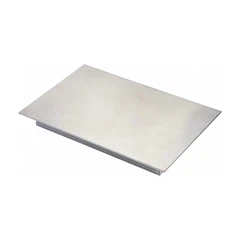
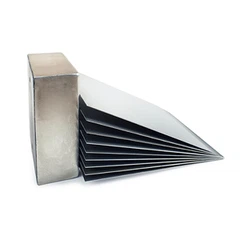
The furnace body is heated The pressure increase rate (internal gas release and external air leakage) also needs to be controlled at a low level. For example, for a smelting furnace with a capacity of 1t, the pressure increase rate should be lower than 5×10⁻⁴~1×10⁻³ L/s. Vacuum smelting can fully deflate the molten liquid, remove low-boiling impurities and harmful gas elements, and improve the purity of the alloy. However, because the vapor pressure of rare earth metals is very low (less than 1 Pa), the volatilization loss is very considerable, so it is usually used during the smelting process. The furnace body is filled with inert gas to increase the ambient air pressure to suppress the volatilization of rare earths. It is more convenient to use high-purity argon gas, which is generally filled to a level of 50kPa. After the alloy melt is homogenized, vented, and slagging is fully completed, casting can begin. Alloy casting is a very critical process because the composition, crystallization state, and spatial distribution of the phases are crucial to the performance of the sintered magnet. The alloy ingot has experienced heavy "cannonballs", 20mm thick "books", and 5mm "pancakes" "Currently, it has developed to rapid-setting flakes with a thickness of only 0.3mm. Industry insiders have made various efforts to avoid component segregation and the generation of impurity phases and to reasonably distribute the distribution of neodymium-rich phases.
1. Smelting
Rare earth raw materials usually take the form of pure metals and rare earth alloys are often selected due to cost reasons, such as praseodymium and neodymium metal, lanthanum and cerium metal, mixed rare earth, and dysprosium ferroalloys, etc.; high melting point element components (such as: B, Mo, Nb, etc.) It is mostly added in the form of ferroalloy. Nd-Fe-B magnets have the characteristics of multi-metallic phases. The Nd-rich phase is a necessary condition for high coercivity, and the B-rich phase must also coexist. Therefore, the rare earth and B in the original formula are usually required to be higher than the positive components of R2Fe14B, but Sometimes to adjust the composition of the grain boundary phase (especially when Cu, Al, and Ga are added), the B content is slightly lower than the positive component. Due to the reaction between rare earth metals and crucible materials and volatilization during smelting and sintering, a certain amount of loss of rare earth metals needs to be considered when formulating. To reduce the impurity content in the alloy, the purity of the raw materials must be strictly controlled, and the oxide layer and attachments on the surface must be fully removed. The heat source of medium and low-frequency induction melting is the induced eddy current formed in the raw material by the alternating magnetic field. The skin effect of the eddy current causes the current to concentrate on the surface of the raw material. If the size of the raw material block is too large, the eddy current cannot penetrate the center of the block, and only the core can be melted by heat conduction, which is very unrealistic in actual production. Therefore, the size of the raw material must be adjusted according to the frequency selection and controlled to 3 to 6 times the skin depth. The figure below shows the relationship between power frequency - skin depth - and raw material size. It can be seen that the higher the frequency, the more significant the skin effect is, and the smaller the size of the raw material required.
| Power Frequency/Hz | 50 | 150 | 1000 | 2500 | 4000 | 8000 |
| Skin Depth/mm | 73 | 42 | 16 | 10 | 8 | 6 |
| Optimum Raw Material Size/mm | 220-440 | 125-250 | 50-100 | 30-60 | 25-50 | 15-35 |
The choice of melting frequency is subject to another important function of induction melting - electromagnetic stirring, which uses the interaction of the force between the molten metal and the alternating magnetic field to promote the melting of unmelted solids and the homogenization of the molten metal. The electromagnetic force The magnitude is inversely proportional to the square root of the current frequency. Too high a frequency will weaken the electromagnetic stirring effect of the alternating power supply. The frequency band used in actual production is around 1000~2500Hz, and the raw material size needs to be controlled below 100mm.
The stacking of raw materials in the crucible must take into account the spatial distribution of the induced magnetic field and temperature during the melting process. Usually, the induction coil is wound around the outside of the crucible. The magnetic field is strongest on the inside of the crucible and gradually weakens toward the center, but the sides, bottom, and top of the crucible The opening is the main way for heat to escape, so the temperature of the lower side of the crucible is in the middle, the temperature of the upper layer and the middle of the bottom is lower, and the temperature of the middle part is the highest. Therefore, when loading, it is advisable to place small pieces of low-melting point materials densely at the bottom of the crucible; high-melting point materials and large pieces of materials should be placed in the middle and lower parts; large pieces of low-melting point materials should be placed in the upper part and be loose to prevent bridging. Nowadays, continuous smelting-casting technology has been widely used. Raw materials are continuously added to the crucible at high temperatures through a charging chamber. To control the volatilization of rare earth materials, pure iron is usually added first to melt it, then high melting point metals or alloys are added sequentially, and finally, rare earths are added.
2. Casting
Rare earth binary or ternary alloys inevitably generate α-Co or α-Fe phases under slow (near equilibrium) cooling conditions. Their soft magnetic properties at room temperature will seriously damage the permanent magnet properties of the magnets and must be quickly Cooled to inhibit their formation.
To achieve the required rapid cooling effect, traditional ingot mold casting technology has been working towards reducing the thickness of the alloy ingot. The advantages of ingot mold casting are low equipment cost, simple operation, and the ability to meet general magnet production requirements. The disadvantage is that the grain size is uneven and α-Co or α-Fe phases often precipitate. Long-term heat treatment of alloy ingots at temperatures below the melting point of the alloy can help eliminate the α-Co or α-Fe phase, but it will cause the accumulation of Nd-rich phases, which is not conducive to the optimal distribution of grain boundary phases in sintered magnets.
To further reduce the thickness of the alloy ingot, a "disc-scraper" structure similar to spreading a pancake was developed, making the alloy thickness reach about 1cm. However, the increase in the alloy area brought a lot of trouble to the collection of large-capacity smelting furnaces. . Another effective technology development path goes in the opposite direction, starting from the extremely high cooling rate for preparing fast-quenching Nd-Fe-B alloys, and trying to reduce the cooling rate to prepare fast-cooling crystalline alloys, which are called strips The technology of casting or quick-setting flakes (strip casting or SC) came into being. It pours the molten alloy through a diversion trough onto a rapidly rotating water-cooled metal wheel to obtain a 0.2~0.6mm thickness, ideal phase composition and texture. Alloy flakes. In the strip-cast alloy structure, the uniform distribution of Nd-rich phase and the suppression of α-Fe reduce the total rare earth content, which is beneficial to obtaining high-performance magnets and reducing magnet costs; the disadvantage is that due to the reduction in the volume fraction of Nd-rich phase , compared with magnets produced by ingot mold casting, the brittleness of the magnets increases and post-processing becomes more difficult.