
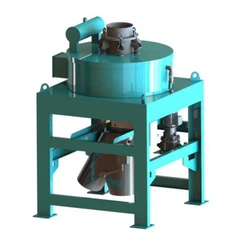


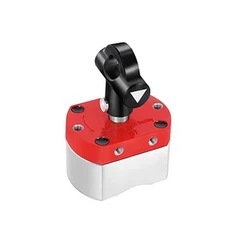

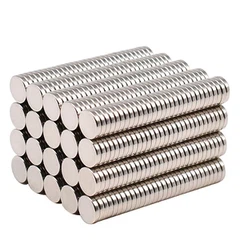
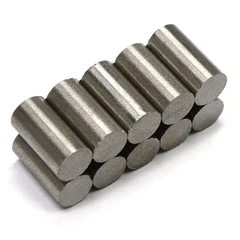


















"Ferromagnetic substances" such as iron have a special structure inside. It turns out that the inside of a ferromagnetic substance is composed of countless extremely tiny "small magnets". These small magnets can rotate freely, and their directions are usually chaotic, their magnetism cancels each other out, and the whole object does not show magnetism. Once they meet the magnets, the "small magnets" inside the ferromagnetic substance are reordered, in the same direction, and the magnetism is superimposed on each other so that the ferromagnetic substance shows macroscopic magnetism. Only very few substances in the world are ferromagnetic substances, such as iron, cobalt, and nickel. Appropriate addition of other elements to ferromagnetic substances can make the countless tiny "small magnets" inside rotate more flexibly or vice versa, so there are "soft magnets" and "hard magnets". The silicon steel sheet of the transformer is a low-frequency soft magnetic substance, the magnetic rod in the radio is a high-frequency soft magnetic substance, and the magnet is a hard magnetic substance.
Determined by the characteristics of magnets. If explained in terms of atomic current, the magnetic field generated by the current magnetizes other objects. Magnetized objects generate electric fields. The interaction of electric fields generates force.
Most matter is composed of molecules. Molecules are composed of atoms, and atoms are composed of nuclei and electrons. Inside the atom, the electron rotates continuously and revolves around the nucleus. Both of these movements of electrons produce magnetism. But in most materials, the directions of electron movement are different and chaotic, and the magnetic effects cancel each other out. Therefore, most substances do not exhibit magnetism under normal conditions.
Ferromagnetic substances such as iron, cobalt, nickel, or ferrite are different. The electron spins in it can spontaneously arrange in a small range to form a spontaneous magnetization zone. This spontaneous magnetization zone is called a magnetic domain. After the ferromagnetic substance is magnetized, the internal magnetic domains are arranged neatly and in the same direction to strengthen the magnetism and form a magnet. The magnetization process of the magnet is the magnetization process of the iron block. The magnetized iron block and the magnet with different polarities generate attractive force, and the iron block is firmly "sticked" with the magnet. We say that magnets are magnetic.
Determined by the characteristics of magnets. If explained in terms of atomic current, the magnetic field generated by the current magnetizes other objects. Magnetized objects generate electric fields. The interaction of electric fields generates force.
Most matter is composed of molecules. Molecules are composed of atoms, and atoms are composed of nuclei and electrons. Inside the atom, the electron rotates continuously and revolves around the nucleus. Both of these movements of electrons produce magnetism. But in most materials, the directions of electron movement are different and chaotic, and the magnetic effects cancel each other out. Therefore, most substances are not magnetic under normal conditions.
Magnets do not work on metals such as gold, silver, copper, aluminum, lead, etc.