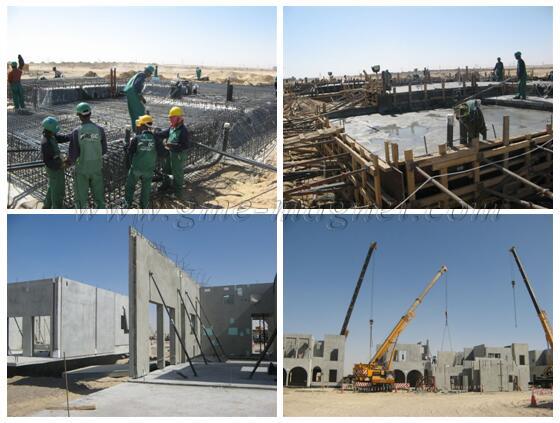
























The climate projections of the World Meteorological Organization (WMO) show that past and present practices will affect the climate for decades to come. Such a forecast is usually about what will happen in the coming decades if some influential condition occurs compared to the forecast. For predictions that extend to the future, assume scenarios and scenarios in which assumptions and judgments may occur. Therefore, in addition to working to reduce climate change, it is unavoidable that designers / constructors will also need to prepare for climate change.
After catastrophic flooding in Canada and the United States in recent years, and the devastating wildfires of 2016 in Fort McMurray, Alberta, people recognize that climate change is one of the greatest challenges facing the planet. Part of the job of creating a built environment for design / construction professionals has now become to ensure that buildings can safely withstand these extreme weather events. In other words, today's structure needs to show resilience.
The Global Rockefeller Foundation defines this term as:
Enables people, communities, and systems to better withstand catastrophic events, whether natural or artificial, and to bounce faster and become more powerful in these shocks and pressures.
Increased resilience is a common responsibility of citizens, the private sector and governments. This requires bold decisions and investments, which are often made in the short term for the long term. For example, should we reduce the pressure on house prices by relaxing the building codes to make cheaper and lighter construction methods at the expense of safety? This article examines the wide-ranging impact of resilience in the built environment and explores how durable materials such as precast concrete can help provide the strength and stability needed to withstand the impending storms, and metaphor.
According to Rockefeller's definition, resilience can be thought of as maintaining the functional and structural adaptability of systems (communities) in the face of turbulent internal and external changes. The key to disaster recovery is not just getting the basic services up and running, but getting people back to work. This means that buildings must not only resist the devastation caused by disasters, but also be safe and suitable for living as soon as possible.