





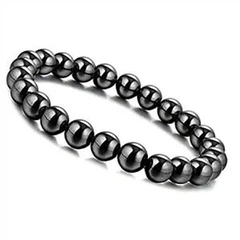



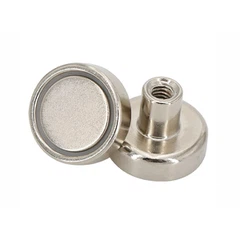

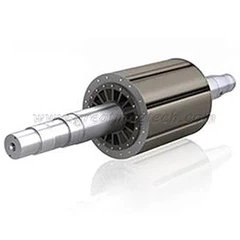











35% of the global rare earth consumption comes from rare earth permanent magnet materials, accounting for about 91% of the consumption value. Benefiting from the rapid development of new energy vehicles and the electronics industry, rare earth permanent magnet materials account for the highest proportion of global rare earth consumption at 35%.

The global distribution of rare earth resources is highly concentrated, with China accounting for nearly 40%. According to data released by the United States Geological Survey (USGS), the total reserves of rare earth resources in the world are about 120 million tons, of which China's reserves are 44 million tons, accounting for about 36.7%, and Vietnam's reserves are 22 million tons, accounting for about 18.3%. Brazil's reserves are 21 million tons, accounting for 17.5%, and Russia's reserves are 12 million tons, accounting for 10.0%. The four countries together account for more than 80% of the world's total reserves, and the concentration of resources is relatively high.
The proportion of permanent magnet materials in China's rare earth consumption is much higher than that of other fields, exceeding 40%. According to data from Zhiyan Consulting, in 2019, permanent magnet materials accounted for more than 40% of China's rare earth consumption structure, smelting, machinery, petrochemicals, and glass ceramics accounted for 12%, 9%, and 8%, respectively. Hydrogen storage materials and luminescence Materials each accounted for 7%, catalytic materials, polishing materials, and agricultural textiles each accounted for 5%. From the perspective of domestic rare earth permanent magnet production, sintered NdFeB magnets are the only rare earth functional materials that have achieved positive output growth, which proves that the high prosperity of the high-performance magnetic material industry is acting on the upstream product structure adjustment.
Rare earth permanent magnet materials have excellent performance compared with metal and ferrite permanent magnet materials. Nd-Fe-B is the most magnetic permanent magnet material so far, and it is the most widely used. Permanent magnets are magnets that can maintain their magnetism for a long time after being magnetized and can be divided into three categories: metal permanent magnet materials, ferrite permanent magnet materials, and rare earth permanent magnet materials. Although metal permanent magnet materials and ferrite permanent magnet materials have the advantages of cheap price and sufficient raw materials, their maximum magnetic energy product (B·H)max is usually less than 100 kJ/m3, and their magnetic properties are relatively poor, so they are gradually replaced by rare earth permanent magnets. replaced by magnetic materials. In the development of rare earth permanent magnet materials, it has experienced three stages of development: the first generation of SmCo5, the second generation of SM2Co17, and the third generation of Nd2Fe14B. At present, the fourth generation of iron-nitrogen (carbon) permanent magnets is still in the research and development stage, which is far from industrialization. There is still some distance.