

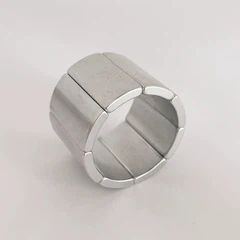


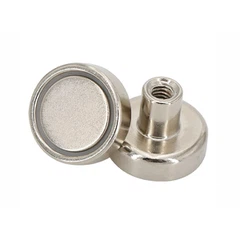




A ring magnet looks simple, but the hole changes how you can use it. You're not just sticking a magnet to a surface. You can mount it on a shaft, bolt it into a fixture, or slide it over a tube without losing alignment.
That center hole also opens up cleaner designs. You can run a screw, cable, bearing, or sensor through the middle while the magnet does its job around it. In many applications, that means better stability, easier assembly, and less shifting over time.
If you've ever struggled to mount a block or disc magnet securely, a ring magnet often solves the problem in one step.
What Is a Ring Magnet?
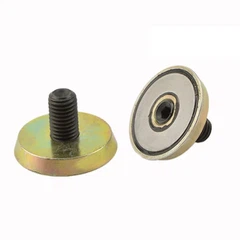
A ring magnet is exactly what it sounds like: a magnet shaped like a donut. It has an outer diameter, an inner hole, and a thickness. That hole is not just for looks. It lets you mount the magnet around a shaft, bolt, or tube, so it stays centered and secure.

Ring magnets can be made from different materials, like neodymium, ferrite, or samarium cobalt. They can also be magnetized in different ways, which changes how the magnetic field works.
Key features you should pay attention to include the size of the hole, the magnetic strength (grade), and the coating or surface finish. Small differences here can change how well the magnet fits, how long it lasts, and how safe it is to use in real conditions.
Why Choose a Ring Shape?
Why would you pick a magnet with a hole in it? The ring shape is a practical choice, not an accident.
That center hole solves specific problems. It lets you mount the magnet directly onto a rod, axle, or bolt. Things can pass through it, like a wire or a stream of air. This integrates the magnet into a system rather than just adding it on.
You also save on material and weight without losing much magnetic power. The ring focuses the magnetic field in a useful way.
Think of it as a multitool. The hole adds function. It turns a simple magnet into a component you can build something with.
The Best Uses for Ring Magnets
Ring magnets show up in so many products for one simple reason: you can mount them accurately, and they keep working without drifting out of position.

Motors and Generators
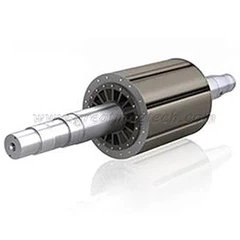
In motors, a ring magnet can sit around a shaft or inside a rotor with clean alignment. That helps the magnetic field stay consistent as it spins. You also see ring magnets in speed and position sensors, where a stable field makes the signal more reliable.
Speakers and Audio Devices
Many speakers use ring-shaped magnets around the voice coil gap. The hole keeps the moving parts centered. That makes the sound cleaner and reduces rubbing or distortion.
Magnetic Couplings and Bearings
If you need torque transfer without contact, ring magnets are a natural fit. They can face each other across a small gap, creating a coupling that reduces wear. In some designs, they also support magnetic bearings where low friction matters.
Magnetic Separators and Filtration
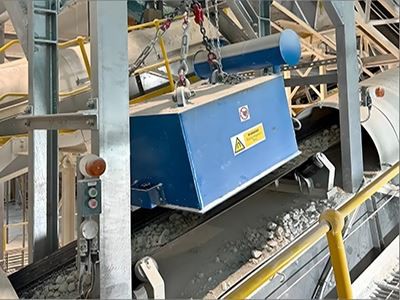
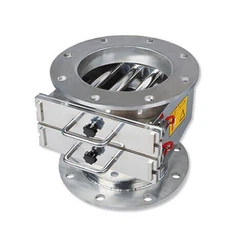
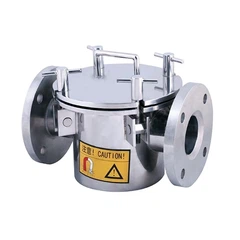
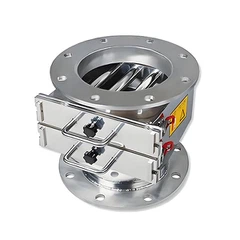
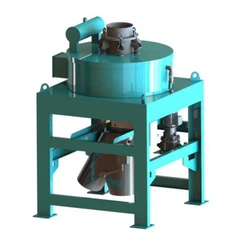
Ring magnets are used in some separation systems where material flows through a pipe or housing. The hole allows a rod, tube, or core to pass through while the magnet attracts ferrous particles around it.
Medical and Lab Devices
In labs, you often need a small, repeatable holding force. Ring magnets can secure fixtures, lids, or tool holders with a screw through the center. They're also common in devices where parts must align every time.
Robotics and Automation
Ring magnets help with quick positioning and simple pick-and-place tasks. You can mount them on end-effectors, jigs, or locator pins. The hole makes mounting easy and keeps the magnet from rotating under vibration.
DIY and Mounting
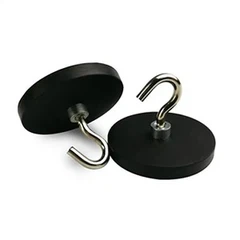
For practical builds, ring magnets are great for brackets, hooks, and removable panels. You can bolt them down and still get a strong holding force. It's a clean solution when you want something secure but easy to remove.
Common Materials for Ring Magnets
|
Material |
Strength (For Size) |
Cost |
Temperature Resistance |
Corrosion Resistance |
Typical Industries |
|
NdFeB (Neodymium) |
Very high. Best when you need a strong pull in a compact ring. |
Medium–High |
Low–Medium (standard grades), better with high-temp grades |
Low without coating. Needs Ni, epoxy, or other protection in wet/salty use. |
Motors, sensors, robotics, speakers, consumer electronics |
|
Ferrite (Ceramic) |
Low–Medium. A larger ring is needed for the same force. |
Low |
High (handles heat well) |
High. Performs well in humid environments. |
Simple motors, speakers, magnetic separators, and general industrial use |
|
SmCo (Samarium Cobalt) |
High. Strong and stable, especially at high temperatures. |
High |
Very high (excellent high-temp stability) |
High. Better than NdFeB in harsh environments. |
Aerospace, medical devices, high-temp motors, defense/precision systems |
|
AlNiCo |
Medium. Good stability, but lower coercivity. |
Medium |
Very high |
High |
Sensors, instruments, legacy motor designs, temperature-stable applications |
Choose NdFeB for maximum strength in a small space, ferrite for low cost and good corrosion resistance, SmCo for high heat and harsh conditions, and AlNiCo when temperature stability matters more than raw pull force.
How to Choose the Right Ring Magnet
Picking the right ring magnet means balancing four main factors.
Size
Start with your space. You need three measurements: the outer diameter, the inner diameter (hole size), and the thickness. The hole must fit your shaft or bolt. Thicker magnets are generally stronger.

Strength or Grade
This is about magnetic power. A higher grade number (like N52) means a stronger magnet. But stronger isn't always better. Match the strength to your task. Using a magnet that's too powerful can be unsafe and wasteful.
Coating
If there's moisture, salt, chemicals, or sweat, you need the right coating. Nickel is common, epoxy is better for harsh environments, and stainless covers can help in special cases.
Temperature
Every magnet material has a limit. Exceed its maximum operating temperature, and it will permanently lose strength. Check the specs for your magnet's grade. If your application gets hot, you may need a magnet rated for higher temperatures, even if it's slightly less powerful at room temperature.
Tolerances, Magnetization, and Poles
Even a strong ring magnet can perform poorly if the fit or magnetization is wrong. This is the part people skip, then wonder why the assembly feels inconsistent.
Tolerances
Tolerances tell you how much a magnet's dimensions might vary from its stated size. Ring magnets need a clean fit. If the inner hole is too tight, you risk cracking the magnet during press-fit. If it's too loose, the magnet can shift and lose repeatability. Always consider your mounting method and allow a small clearance for real-world parts.
Magnetization
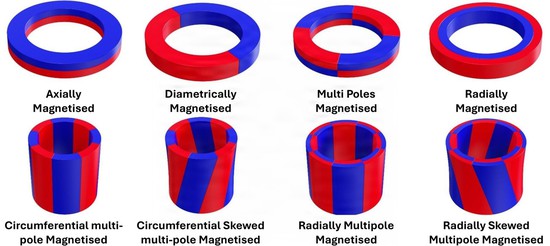
Axial magnetization means the north and south poles are on the flat faces. This is common for clamping and holding, where the magnet pulls straight toward a steel surface.
Radial magnetization means the poles run around the ring, from the inner wall to the outer wall. This is useful in motors and sensors, where you need a field that works around the circumference.
Poles
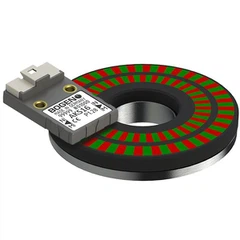
Some ring magnets are multi-pole, which can improve sensor signals and smooth motor behavior. If you're using a Hall sensor or an encoder-style setup, pole count matters just as much as strength.
Common Mistakes
It's easy to make a few simple errors when working with ring magnets. Avoiding these common mistakes saves time and money.
Cracking and Chipping
Neodymium magnets are brittle. They can crack if they slam together. They can also chip if forced onto a shaft that's a tiny bit too big.
Always bring magnets together carefully. Never machine or drill them yourself.
Forcing a Tight Fit
Neodymium and ferrite magnets are hard but brittle. If you press-fit a ring magnet with no clearance, it can crack without warning. Use the right tolerance, add a chamfer, and avoid hammering parts into place.
Overheating the Magnet
Heat can permanently reduce strength. Don't assume "it's fine" because the part feels warm. Check your operating temperature and pick a grade or material that can handle it.
Wrong Coating for the Environment
That shiny nickel coating works great indoors. But put it in a damp, humid, or salty environment, and it can still corrode over time.
For harsh conditions, you need a more robust coating like epoxy or a heavy nickel-copper-nickel plating. The wrong choice leads to rust and a weakened magnet.
Picking the Wrong Magnetization
Axial vs radial magnetization is not a detail. It changes how the field works. Axial is best for a straight pull. Radial is often needed for motors and sensors. If you choose the wrong one, performance will never "tune in."
FAQs
Q: Are ring magnets stronger than disc magnets?
A: Not automatically. A ring magnet can be very strong, but the hole reduces volume. Strength depends on material, size, grade, and your air gap.
Q: Which is better for ring magnets: neodymium or ferrite?
A: Neodymium is best when you need high strength in a small space. Ferrite is better when cost, corrosion resistance, or higher temperature tolerance matter more.
Q: When do you need radial magnetization?
A: Radial magnetization is often used in motors, generators, and sensor/encoder designs where the magnetic field needs to wrap around the ring's circumference.
Q: Can you drill or machine a ring magnet?
A: It's not recommended. Magnets are brittle and can crack, and machining dust can be hazardous. It's better to order the correct size and tolerance from the start.
Q: How do I safely separate two strong ring magnets that are stuck together?
A: A: Don't try to pull them apart by hand. Slide them apart. Push one magnet sideways off the edge of the other. Keep your fingers clear to avoid pinching. You can also use a non-magnetic spacer, like a wooden wedge, to lever them apart.
Q: Can ring magnets get wet?
A: A: It depends entirely on the coating. Standard nickel-plated neodymium magnets have a thin protective layer but can corrode with prolonged exposure.
Conclusion
So, there you have it. The simple ring magnet, with its clever center hole, is more than just a shape. It's a practical solution. It turns a basic magnetic force into a functional component for motors, speakers, filters, and DIY projects.
Its real power lies in how it fits into your design, literally. By thinking about size, material, coating, and especially that critical choice between axial and radial magnetization, you can solve specific mechanical problems.
The goal is to match the magnet to the job. Consider your environment, the required strength, and the physical space. Avoid the common pitfalls like cracking, heat, or corrosion by making informed choices from the start.
If you want a quick recommendation, reach out to the Great Magtech team with your application details and drawings. We can help you select a ring magnet that fits, lasts, and performs consistently in real-world conditions.